

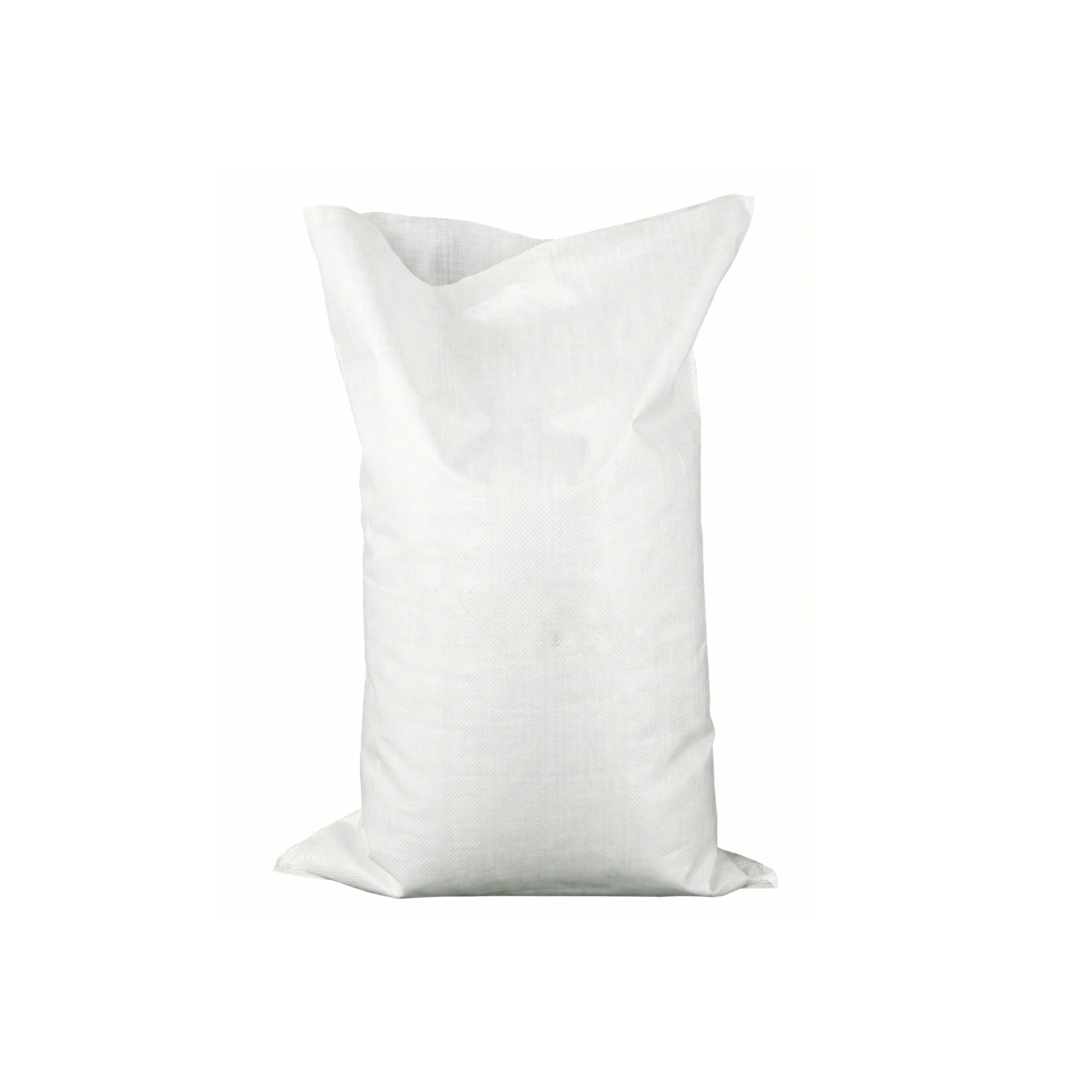
Choosing between the five sizes and the two finishes of the woven polypropylene bag makes the difference between a smooth logistics operation and a bag torn halfway through loading. This guide helps you decide which size (from 10 to 125 pounds) and which finish (BOPP laminated or unlaminated) fits your actual use, whether repacking groceries, packing grains, handling aggregates on a job site, or exporting local rice.
🎯 Choose the variant in 10 seconds
- If you repack groceries, organize recyclables, or work neighborhood markets: go to the 10 lb bag (33 × 50 cm)
- If you pack roasted coffee, beans, or seeds in a manageable format: go to the 25 lb bag (46 × 76 cm)
- If you distribute flour, sugar, salt, or animal feed: go to the 50 lb bag (56 × 91 cm)
- If you move aggregates, rubble, gravel, or bulk grain on a job site: go to the 100 lb quintal (74 × 114 cm)
- If you pack local rice or export grain to CARICOM: go to the 125 lb rice bag (56 × 97 cm)
What to consider before choosing the variant
Before ordering a pack, cross-check these four criteria against your operational reality. The right size is not the largest available, but the one your loading flow can handle without tearing.
- Actual weight per full bag: a 100 or 125 lb bag when loaded requires two people or mechanical equipment to move it safely. If your operation is manual handling with one worker, stay at 50 lb or less.
- Nature of the load: dense grains (rice, beans, corn) work best in narrow, tall formats like the rice bag (56 × 97 cm). Aggregates, rubble, and loose materials call for wide, stable formats like the quintal (74 × 114 cm).
- Outdoor storage: if you are going to stack in open sunlight for months, choose the Laminated finish (interior BOPP barrier, ≥24 months in Caribbean sun). If your turnover is monthly and under cover, the Unlaminated is sufficient (≥12 months in the sun).
- Turnover volume: the small formats (10 and 25 lb) come in packs of 500 and 250 units because they turn over faster. The large ones (100 and 125 lb) come in packs of 100 due to their weight per pack.
10 lb bag (33 × 50 cm): the small high-turnover format
- Comfortable one-handed handling
- Pack of 500 units, designed for high turnover
- 95 g/m² weight and 1,000D denier — same fabric as the 25 lb
- Capacity limited to 4.5 kg — not suitable for large grain loads
- Small format, higher unit cost if you need to move large volumes
Dimensions of 33 × 50 cm (13 × 20 in) and nominal capacity of 4.5 kg (10 lb). Virgin PP tape fabric of 1,000 D × 1,000 D, mesh 12 × 12 threads/in and weight 95 g/m². Offered in Unlaminated version (SKU 100610) and BOPP Laminated (SKU 100620), both in packs of 500 bags. It is the most in-demand format in corner stores, scrap yards, and small distributors that need to repack into manageable portions.
25 lb bag (46 × 76 cm): the manageable everyday format
- Load manageable by a single person
- Universal size for packing and repacking
- Pack of 250 bags, a balance between turnover and volume
- Insufficient for bulk grain on a job site or aggregates
- Requires many units for large wholesale volumes
Dimensions of 46 × 76 cm (18 × 30 in) and nominal capacity of 11.3 kg (25 lb). Same technical specs as the 10 lb (95 g/m², 1,000 D × 1,000 D, mesh 12 × 12). Available Unlaminated (SKU 113654) and BOPP Laminated (SKU 754554), in packs of 250 bags. It is the workhorse of local coffee roasters, small mills, and nearby agricultural distributors.
50 lb bag (56 × 91 cm): the Dominican market standard
- Universal size of the food and agricultural industry in the DR
- 105 g/m² weight calibrated for medium loads
- Compatible with any industrial bag-mouth sewing machine
- 22.7 kg when full: comfortable for an adult worker, heavy for prolonged handling
- Insufficient for aggregates in civil construction
Dimensions of 56 × 91 cm (22 × 36 in) and nominal capacity of 22.7 kg (50 lb). Reinforced fabric at 105 g/m² (up 10 g/m² compared to the 25 lb due to the higher nominal load). Tape of 1,000 D × 1,000 D, mesh 12 × 12. Available Unlaminated (SKU 324453) and BOPP Laminated (SKU 754211), in packs of 250 bags. It is the standard presentation of mills, poultry plants, and fertilizer distributors in the Dominican Republic.
100 lb quintal (74 × 114 cm): the wide format for construction and bulk
- Reinforced fabric: 120 g/m² weight and 1,100 D × 1,100 D denier
- Wide and stable geometry, ideal for loose materials
- Compatible with palletizing and mechanical handling
- 45.4 kg when full: requires two workers or mechanical equipment
- Too wide for packing rice: prefer the 125 lb for fine grain
Dimensions of 74 × 114 cm (29 × 45 in) and nominal capacity of 45.4 kg (100 lb). Reinforced fabric at 120 g/m² with tape of 1,100 D × 1,100 D, mesh 12 × 12. Available Unlaminated (SKU 654783) and BOPP Laminated (SKU 764111), in packs of 100 bags. It is the standard format for builders, contractors, and aggregate plants that need to move material in bulk.
125 lb rice bag (56 × 97 cm): the rice industry standard
- Most resistant fabric in the line: 125 g/m² and 1,200 D × 1,200 D denier
- Narrow, tall geometry optimized for dense grains
- Format recognized in the Dominican rice industry
- Not suitable for aggregates or loose rubble due to its narrow shape
- 56.7 kg when full: handling exclusively with mechanical equipment
- Not designed for export green coffee or cocoa beans (international standard: jute IJO 98/01)
Dimensions of 56 × 97 cm (22 × 38 in) and nominal capacity of 56.7 kg (125 lb). It is the most reinforced format in the catalog: 125 g/m² and tape of 1,200 D × 1,200 D, mesh 12 × 12. Available Unlaminated (SKU 487326) and BOPP Laminated (SKU 562478), in packs of 100 bags. It is the standard presentation of rice mills, exporters, and dense-grain operators in the Dominican Republic.
Comparison table of the five variants
| Feature | 10 lb | 25 lb | 50 lb | 100 lb (quintal) | 125 lb (rice) |
|---|---|---|---|---|---|
| Ideal use | Repacking, recycling, markets | Coffee, beans, seeds | Flour, sugar, fertilizer | Aggregates, rubble, bulk | Rice, dense grains |
| Dimensions | 33 × 50 cm (13 × 20 in) |
46 × 76 cm (18 × 30 in) |
56 × 91 cm (22 × 36 in) |
74 × 114 cm (29 × 45 in) |
56 × 97 cm (22 × 38 in) |
| Nominal capacity | 4.5 kg (10 lb) | 11.3 kg (25 lb) | 22.7 kg (50 lb) | 45.4 kg (100 lb) | 56.7 kg (125 lb) |
| Fabric weight | 95 g/m² | 95 g/m² | 105 g/m² | 120 g/m² | 125 g/m² |
| Tape denier | 1,000 D × 1,000 D | 1,000 D × 1,000 D | 1,000 D × 1,000 D | 1,100 D × 1,100 D | 1,200 D × 1,200 D |
| Units per pack | 500 | 250 | 250 | 100 | 100 |
| Unlaminated SKU | 100610 | 113654 | 324453 | 654783 | 487326 |
| BOPP Laminated SKU | 100620 | 754554 | 754211 | 764111 | 562478 |
Choosing the BOPP Laminated finish adds an interior barrier of biaxially oriented polypropylene (≈20 g/m², 18–25 µm) that protects against moisture and dust. It raises UV resistance to ≥24 months in Caribbean sun (≥3,000 h QUV) versus ≥12 months (≥1,600 h QUV) for the Unlaminated. Available in all five sizes with a surcharge proportional to the base bag.
Use case → recommended variant matrix
| If your case is… | Recommended variant |
|---|---|
| Repacking groceries in corner stores, organizing recyclables, or neighborhood markets | → 10 lb bag (33 × 50 cm) |
| Local coffee roasters, distribution of beans or seeds | → 25 lb bag (46 × 76 cm) |
| Mills, poultry plants, or wholesale fertilizer distributors | → 50 lb bag (56 × 91 cm) |
| Aggregates, rubble, gravel in civil construction, or palletized bulk materials | → 100 lb quintal (74 × 114 cm) |
| Rice mills, rice exporters to CARICOM, or dense grains | → 125 lb rice bag (56 × 97 cm) |
| Stacking in open sunlight for months or moisture-sensitive merchandise | → Any size in BOPP Laminated finish |
| Under-cover storage with fast turnover (weekly or monthly) | → Any size in Unlaminated finish |
When you are going to stack more than five bags on a pallet, orient the seams toward the center of the stack and leave the outer tapes in contact with each other. The anti-slip additive built into the tape profile works better face to face than with the seam in between, and it noticeably reduces sliding during transport on Dominican roads. Combine the pallet with a polypropylene sling instead of a wooden pallet if your operation is high turnover and you need to save dead weight on each shipment.
Do not use the 125 lb rice bag (56 × 97 cm) for aggregates, rubble, or gravel even if the nominal capacity allows it. The narrow, tall format is optimized for dense grains like rice; with loose aggregates the load shifts inside the bag, deforms the geometry, and increases the risk of tearing when lifting it. For aggregates use the 100 lb quintal (74 × 114 cm), with a wider and more stable base.
Frequently asked questions
What is the real difference between the Laminated and the Unlaminated bag?
The Laminated carries a BOPP film on the interior face that acts as a moisture and dust barrier. It raises resistance to Caribbean sun to ≥24 months (≥3,000 h QUV) versus the ≥12 months (≥1,600 h QUV) of the Unlaminated. The Unlaminated is more economical and sufficient for under-cover storage with fast turnover; the Laminated is justified when there is stacking in open sunlight or the merchandise is moisture-sensitive.
Can I use the 100 lb quintal to pack rice?
Yes, but the standard of the Dominican rice industry is the 125 lb bag (56 × 97 cm), with a narrower and taller format, optimized for dense grains. The 100 lb quintal (74 × 114 cm) is wider and is used mainly for aggregates, rubble, and bulk materials, where the wide geometry favors filling and stability when stacking.
Are these bags suitable for export green coffee and cocoa beans?
No. For green coffee and cocoa beans intended for export, the international standard is the jute bag (IJO 98/01 standard), not woven polypropylene. These PP bags are designed for local rice, beans, corn, flours, sugar, salt, local roasted coffee, fertilizers, and aggregates, but not for export green grains.
