

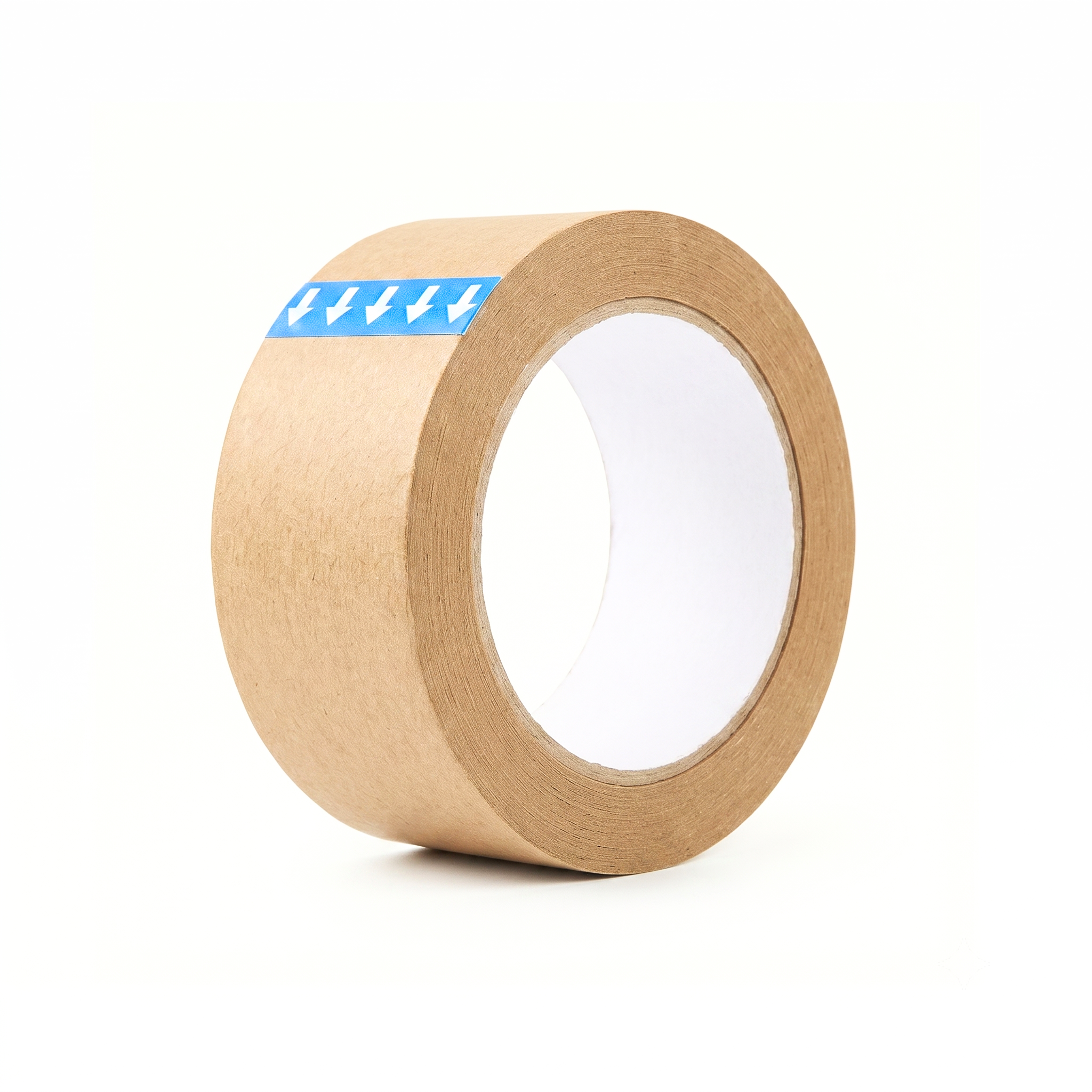
This guide covers the application of self-adhesive kraft paper tape: box preparation, T-application over the center seam, activation pressure, corner reinforcement, and hand-tearing. Follow these steps for a good-looking, recyclable seal that holds up in transit without peeling off.
Product Specifications
The tape is 80 gsm natural kraft paper with hot-melt synthetic rubber adhesive that bonds without water, manufactured by Fortemo in two widths with 50 m per roll. The table shows the two available variants:
| Specification | 48 mm × 50 m | 75 mm × 50 m |
|---|---|---|
| SKU | 610810 | 610811 |
| Tape width | 48 mm (2 in) | 75 mm (3 in) |
| Length per roll | 50 m (55 yd) | 50 m (55 yd) |
| Material | 80 gsm kraft paper | 80 gsm kraft paper |
| Adhesive | Synthetic rubber hot melt | Synthetic rubber hot melt |
| Color | Natural kraft (matte brown) | Natural kraft (matte brown) |
| Rolls per case | 36 rolls | 24 rolls |
| Application method | Manual or with dispenser, no water | Manual or with dispenser, no water |
| Brand | Fortemo | Fortemo |
Step-by-Step Guide for Use
Sealing with kraft tape follows the same logic as plastic tape (T-seal with reinforcements), with two paper specificities: activation pressure matters more, and it's torn by hand. The steps cover the complete process:
Prepare the box with a clean, dry surface
Close the flaps with the two long ones over the two short ones and wipe the sealing area with a dry cloth. The synthetic rubber hot melt adheres on first contact to clean cardboard; on dust or moisture, the paper doesn't allow for repositioning like plastic film.
Apply the T-seal over the center seam
Adhere 5-7 cm to the side, cross the flap seam along the center line, and go down another 5-7 cm on the opposite side. Apply the paper flat, guiding it with your palm: unlike plastic, kraft does not re-tension afterwards, so it must be wrinkle-free from the first pass.
Press firmly along the entire length to activate the adhesive
Run your palm firmly over the entire applied section, from the center outwards. The initial tack of the hot melt is high, but the full structural grip is achieved with this activation pressure on the corrugated board; this is the step that differentiates a professional kraft seal from one that lifts at the edges.
If your brand values presentation, label or stamp directly on the tape: matte kraft accepts pens, markers, and ink stamps without smudging. A stamp with your logo on the seal makes the closure part of the packaging without additional labels; and for volume, the tape supports custom printing upon request.
Reinforce heavier boxes with an H-seal
For boxes loaded near the practical limit of the paper (25-30 kg), add two perpendicular sections at the ends of the joint, forming the classic H. The 75 mm width is especially effective here: a single pass covers the flap and reinforcement on large e-commerce boxes.
Tear by hand with a dry side pull
The great operational advantage of paper: hold the tape against the edge of the box and tear with a dry side pull, no scissors or blades needed. The tear comes out straight along the paper's grain and leaves the roll ready for the next box, speeding up repetitive sealing at the packing station.
Complementary Products
Kraft tape covers presentation and recyclable sealing; these complements solve bulk packaging that requires plastic tape, fragility signaling, and serial application:
Transparent PP Tape is the structural seal for boxes that will travel in rain or intense condensation. FRAGILE PP Tape adds delicate handling signaling to the seal. The Tape Dispenser speeds up serial sealing when packing station volume increases.
Maintenance and Care
Kraft paper is more sensitive to warehouse conditions than plastic film. Three rules maintain the tape at its stated strength:
- Indoor and dry storage: Paper is hygroscopic; in a humid environment, it absorbs water, loses stiffness, and tears unevenly. Store boxes closed, on shelves, and away from damp walls.
- FIFO rotation: Use older rolls first so that the hot-melt adhesive retains its high initial tack, which allows for adhesion without re-wiping.
- Handling an open roll: Keep the tab folded and the roll on its edge. Kraft laid flat on a dirty surface will lift fibers when peeled off and ruin the first few turns.
Do not apply kraft tape to wet cardboard or use it as the sole seal for boxes that will be exposed to rain or heavy condensation: paper absorbs water and loses tear resistance. For such transits, seal with plastic tape and reserve kraft for presentation and indoor recyclable packaging.
Frequently Asked Questions
How many boxes can I seal with a 50 m roll?
With a standard T-seal (around 1.2 m per average shipping box), a 50 m roll covers about 40 boxes. With H-reinforcement, consumption increases to 1.5-1.7 m per box, about 30 boxes per roll. The 75 mm width uses the same meters but covers more flap per pass.
Is it the same as gummed paper tape?
No. Traditional gummed tape uses a water-activated adhesive, requiring a water dispenser and a learning curve. This is self-adhesive: the synthetic rubber hot melt bonds on first contact, applied by hand or with a conventional dispenser, maintaining the presentation and recyclability of paper.
Does the adhesive bleed or stain the paper?
Not under normal use: the hot melt is calibrated for 80 gsm glued kraft and does not migrate to the visible side, which remains matte and writable. If a roll is stored crushed or in the sun for weeks, occasional bleed may appear on the first few turns; discard them and the rest of the roll will work normally.
