

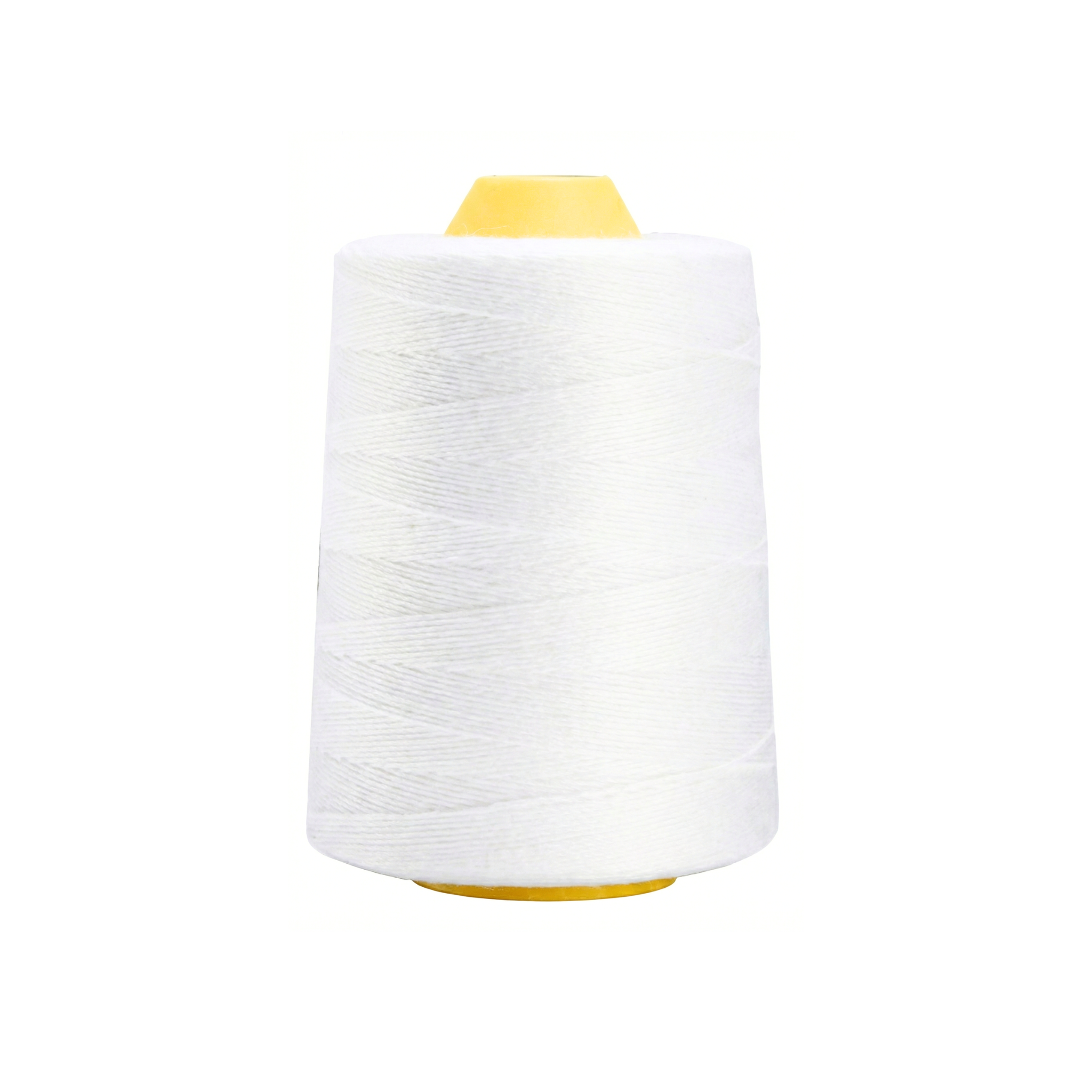
This guide covers bobbin changing and threading the thread for the portable sewing machine: stopping and unplugging, removing the previous bobbin, fitting the new one, threading following the marked sequence and testing on a scrap before a real bag. Follow these steps so that bag closing is not interrupted by broken thread, poor threading or improper tension.
Product specifications
The thread for the portable sewing machine is an industrial polyester (PES) thread in a 150 g bobbin format, sized for sewing raffia (polypropylene) bags, big bags, natural fiber bags and lightweight tarpaulins. It has calibrated strength and elasticity to work with the 90 W motor of the portable machine without skipped stitches.
| Specification | Standard bobbin |
|---|---|
| SKU | 342652 |
| Material | Polyester (PES) |
| Weight per bobbin | 150 g (0.33 lb) |
| Box | 100 bobbins |
| Compatibility | 90 W portable sewing machine |
Step by step to use it
Changing the bobbin is a routine operation. The difference between a clean change and one with problems lies in correct threading: 90 seconds done well save 10 minutes of skipped stitches afterward.
Stop the machine and unplug it
Before handling the bobbin or needle, unplug the machine from the power supply. This is the basic safety rule: a plugged-in machine with the trigger accidentally pressed is a serious puncture risk. Wait 30 seconds for any residual motor movement to stop.
Remove the previous bobbin
Lift the spool holder catch and remove the empty or nearly empty spool. If a few meters of thread remain, do not waste them: keep them for occasional repairs with a hand needle. The tip of the remaining thread can be released by pulling the free end.
Fit the new bobbin
Place the new bobbin on the spool holder, checking that it turns freely. The thread feed direction must be the one marked by the manufacturer on the machine (generally from the upper face of the bobbin). Close the spool holder catch.
Thread following the marked sequence
Pass the end of the thread through the guides marked on the body of the machine, in the numbered order. The guides include the tension spring, the guide eyes and the final needle. Finish by passing through the needle on the side indicated on the head and leave 10 cm (4 in) of free thread behind.
Test on a scrap before a real bag
Plug the machine back in and make a short seam on a scrap of the same material you are going to sew. Check that the chain stitch comes out uniform, without skipped stitches and with balanced tension. Only when the test is satisfactory, move on to sewing real bags. That precaution avoids ruining a good bag due to faulty threading.
Always keep 3-4 spare bobbins at the sewing station, not in the general warehouse. A bobbin lasts approximately 80-120 standard bags. When it runs out in the middle of a closing, the line stops. Keeping nearby stock allows changing in 90 seconds without moving to fetch a replacement. For intensive production, calculate daily consumption and keep 2 days of stock next to the machine.
Do not use domestic sewing thread (cotton, blend with fine polyester) instead of the industrial thread sized for the portable machine. Domestic thread is too fine and breaks constantly with the speed and tension of the 90 W motor. The chain stitch comes out incomplete and the bags open at the slightest effort. Always use specific 150 g PES industrial thread.
Complementary products
The thread is a consumable: it forms a system with the machine and the bags it sews.
The portable sewing machine is the tool with which this thread works: the bobbin sizing is calibrated for that specific machine. The big bag with open top and flat bottom is one of the most frequent formats that this combination closes. The geobag also requires final sewing after filling on an earthmoving site.
Maintenance and care
The thread on a bobbin keeps for years in basic conditions, but some guidelines must be respected:
- Storage: in a dry, shaded place. Permanent humidity causes the polyester to gradually lose elasticity; prolonged sunlight discolors and weakens the thread on the surface.
- Shelf life in storage: in dry, dark conditions, 3-5 years without losing properties. Bobbins with dust or surface moisture may skip stitches: clean with a dry cloth before fitting.
- Inspection when loading: when you fit a new bobbin, visually check that it has no breaks, visible knots or stretches of thread covered in dust. A bobbin with defects causes problems throughout its run.
- Stock rotation: when you receive a new box, store it behind the old stock (FIFO). An old bobbin with polyethylene deteriorated by light produces more breaks per hour.
Frequently asked questions
How many bags do you sew with one bobbin?
With a standard raffia bag (50 cm mouth sewn with a single fold), a 150 g bobbin covers 80-120 closings. With a big bag with a large mouth sewn with a double fold, it drops to 50-70 closings. With short repair seams (15-20 cm), it exceeds 200 closings per bobbin.
What is the right thread thickness?
The standard bobbin uses polyester thread of approximately 14/3 (TEX 105), a good balance between speed, strength and consumption for typical 25 kg bags. For very heavy big bags (1000-1500 kg) some professionals use higher-weight thread (TEX 135-150), although consumption and speed drop. For small thin fertilizer bags, finer thread of the TEX 80 type gives a more discreet seam.
Why does my thread break constantly?
The usual causes are: a nicked needle (replace it), excessive tension (loosen the tension spring), faulty threading (review it step by step), excessive speed (advance more slowly) or thread deteriorated by incorrect storage. Switch to a new bobbin: if the problem persists, it is in the machine, not in the thread.
