

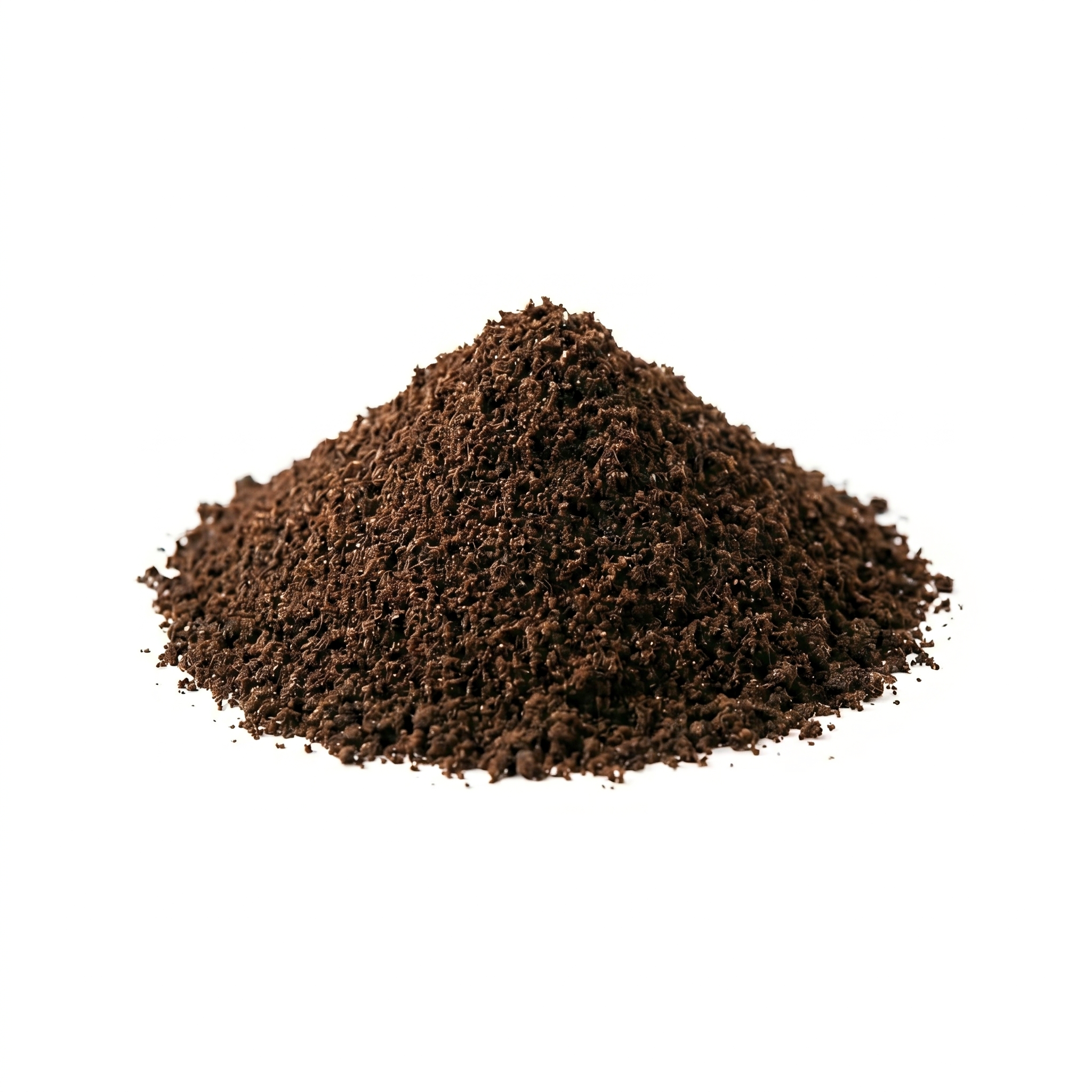
This guide covers how to use the universal substrate: pre-hydration, filling the pot without compacting, transplanting the seedling or cutting, abundant settling watering, and starting fertigation at 3-4 weeks. Follow these steps to prepare pots and planters with a ready-to-use substrate for ornamental, vegetable and indoor plants.
Product specifications
| Specification | 250 L bale |
|---|---|
| SKU | 520250 |
| Particle size | Medium (0 - 20 mm) |
| pH | 5.5 - 6.5 |
| Fertilization | NPK 14:16:18 (1.7 kg/m³) |
| Organic matter | > 80% |
| Approx. expanded volume | 250 L (66 gal) |
Step-by-step instructions
Pre-hydrate the substrate
Open the bale and pour the contents onto a clean surface. Water with room-temperature water until evenly moist and let it rest for 2 - 4 hours so the fiber expands. Do not use the substrate dry directly: water does not penetrate well during the first few hours.
Fill the pot without compacting
Fill the pot or container up to two thirds. Settle it gently by tapping the base against the ground: the substrate settles on its own, without manual pressure. Leave one cm free from the rim to make watering easier without overflowing.
Transplant the seedling or cutting
Make a central hole, release the seedling from its tray without breaking the root ball, and place it centered. Complete the filling around the root ball and firm it lightly with your fingertips. The plant's collar should sit flush with the substrate, not buried.
Abundant settling watering
Water until you see water draining from the bottom of the pot. This watering closes the air pockets around the root ball and ensures seedling-substrate contact. Wait until the top layer dries slightly before the next watering.
Start fertigation at 3-4 weeks
The initial fertilization covers the first 3 - 4 weeks. After that time, start fertigation with a soluble NPK adapted to the crop. For long crops (more than 6 - 8 months in the same pot), mix in 10 - 20% perlite from the start to extend root aeration.
Complementary products
For long crops or species sensitive to waterlogging, mix in 10 - 20% perlite or vermiculite with the bale. Coconut fiber is an additional option for hybrid peat-coir mixes that take advantage of the best of both substrates.
Maintenance and care
Water when the first 2 - 3 cm layer is dry to the touch. In a Caribbean climate this usually means daily watering or every other day, depending on sun exposure and pot size. Avoid permanent waterlogging: overwatering is the most common cause of failures in professional cultivation.
Measure the electrical conductivity (EC) of the drainage water every 2 - 3 weeks. If the EC rises above 2.5 mS/cm, you are accumulating salts in the substrate and must perform a flush with abundant watering of fertilizer-free water to avoid root burn.
Frequently asked questions
How many 5 L pots can I fill with a 250 L bale?
A 250 L bale fills approximately 50 pots of 5 L or 25 pots of 10 L. If you plan to grow in 15 - 20 L pots, the same bale covers between 12 and 16 units. Always allow an extra 10% for settling and replacements during cultivation.
When should the substrate in a pot be replaced?
In long-cycle ornamental crops, replace the substrate every 18 - 24 months or when you notice visible compaction, very slow drainage, or a drop in vigor. In container vegetable crops, replace every production cycle (3 - 8 months depending on the species), because vegetables leave exudates that affect the next crop.
Can I use it for in-ground gardening (not in pots)?
Yes, it works as an organic amendment for poor or clay soils. Mix 30 - 50 L per square meter into the first 15 - 20 cm of soil before planting. It improves water retention and structure and provides quality organic matter. For in-ground gardening it is more economical to apply local compost supplemented with this peat.
