

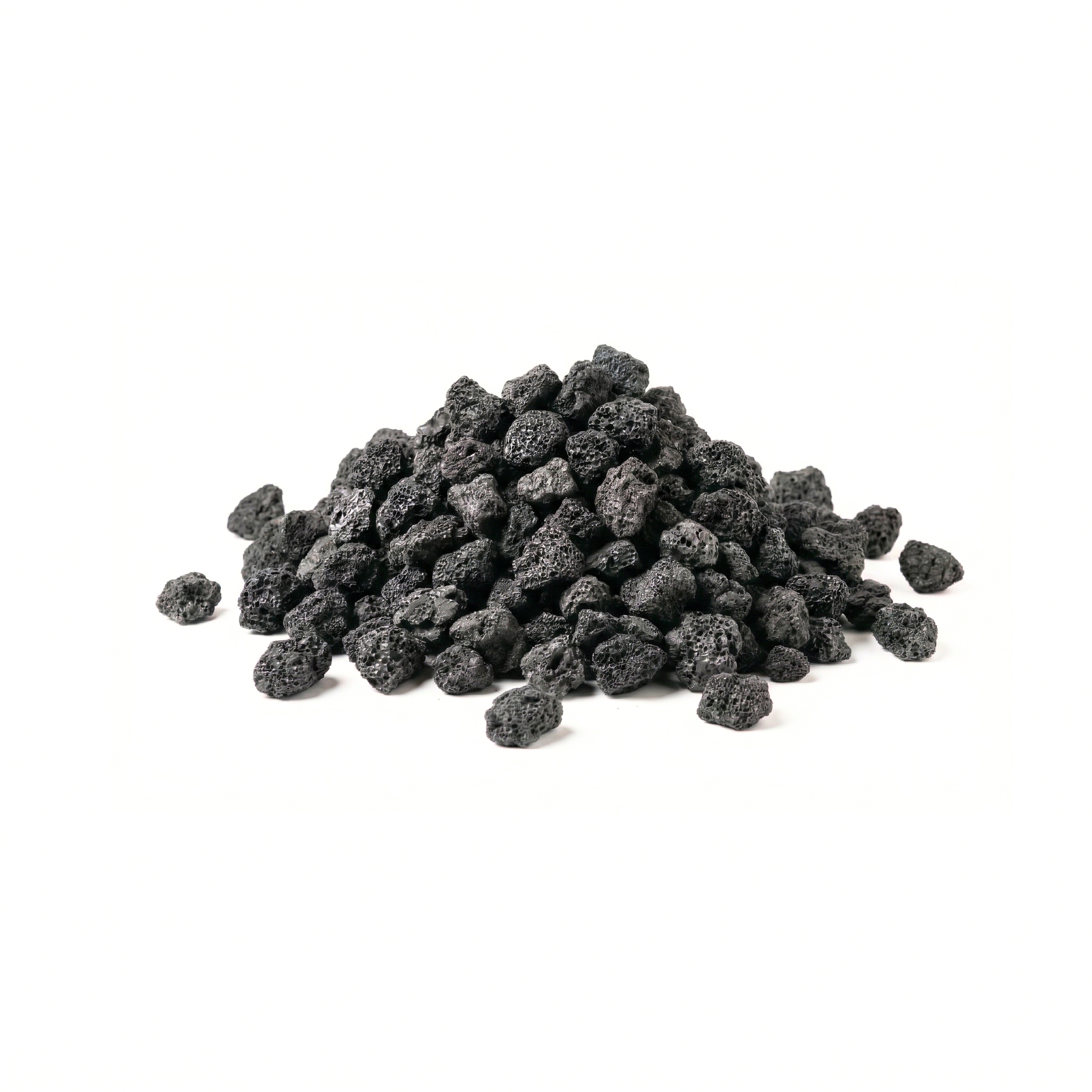
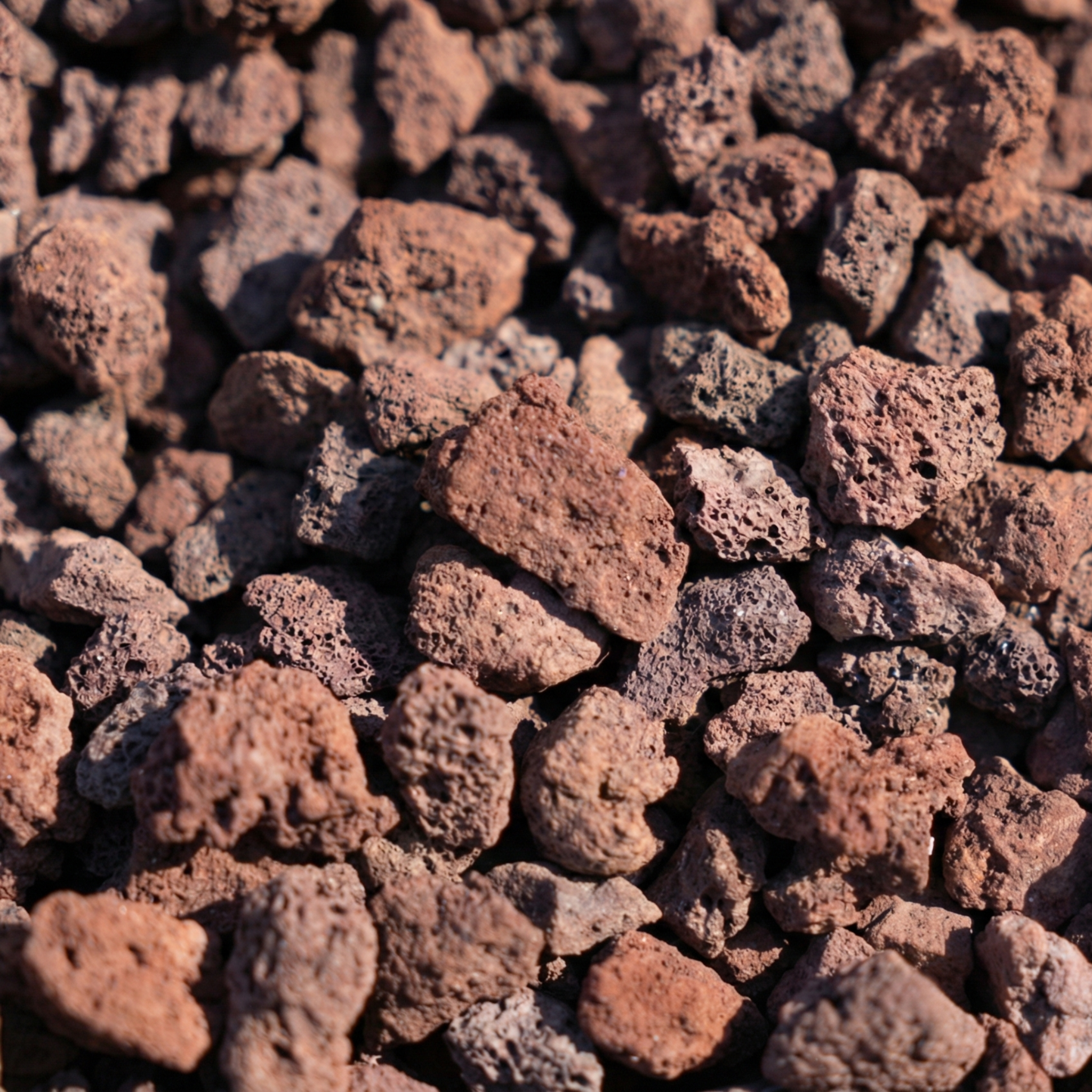
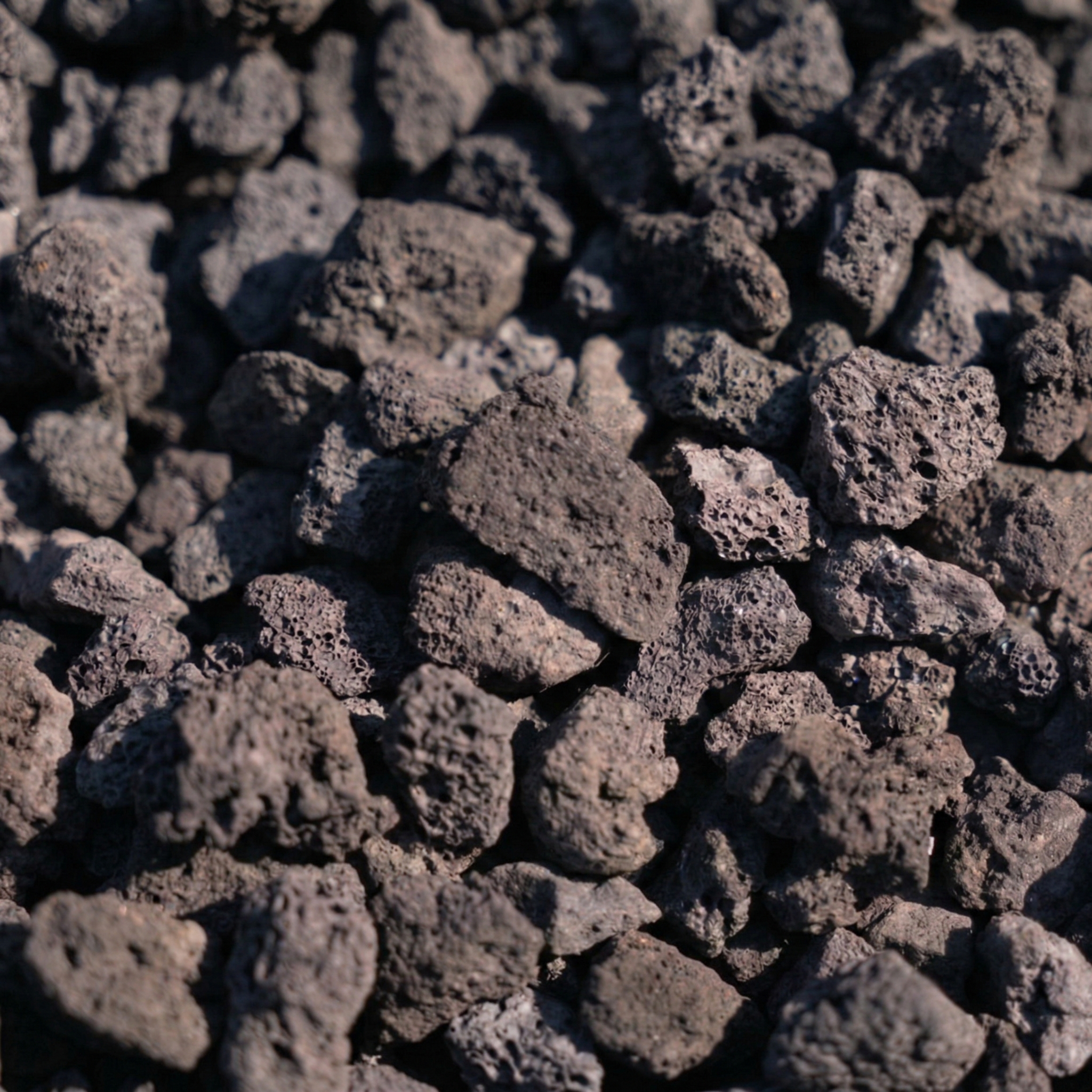
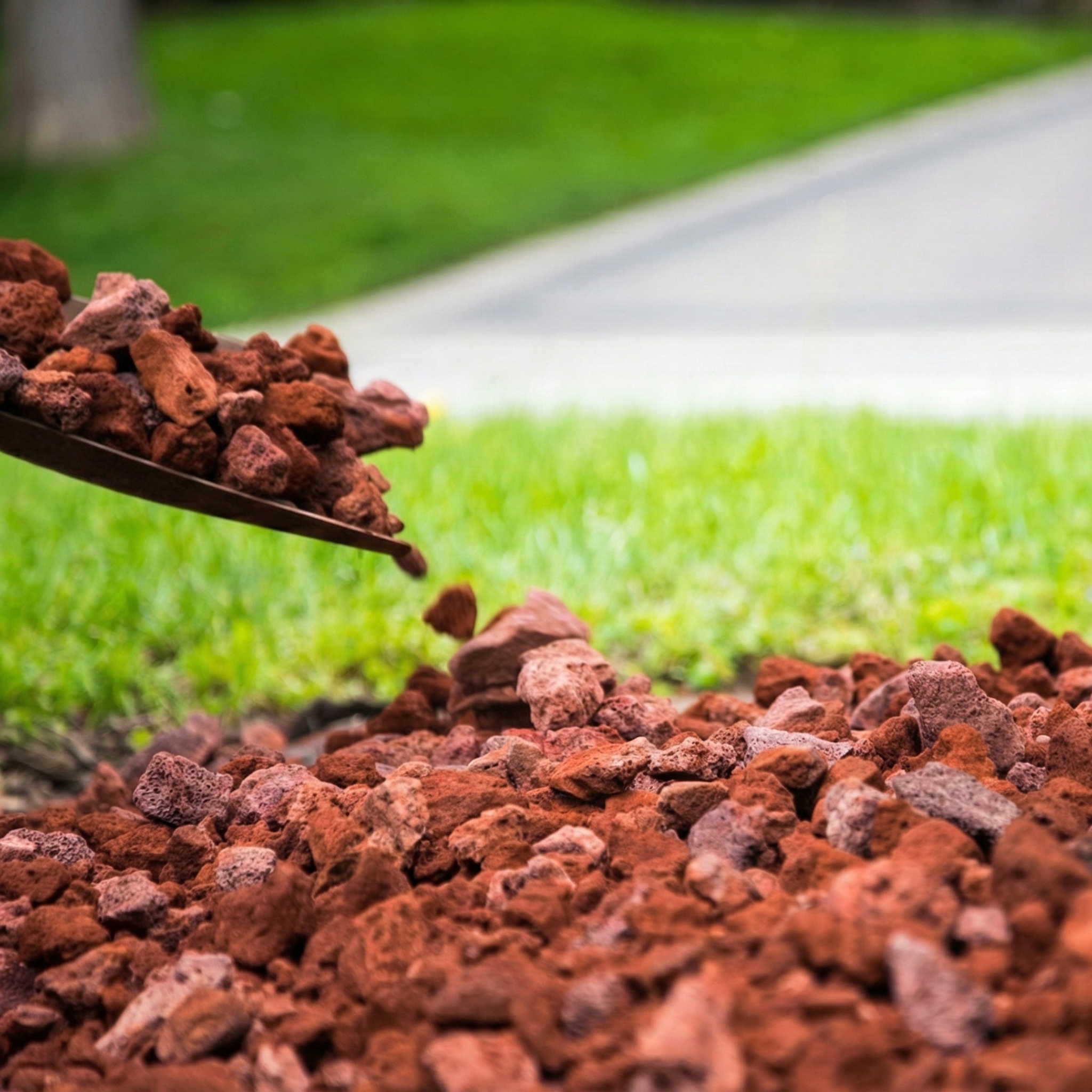
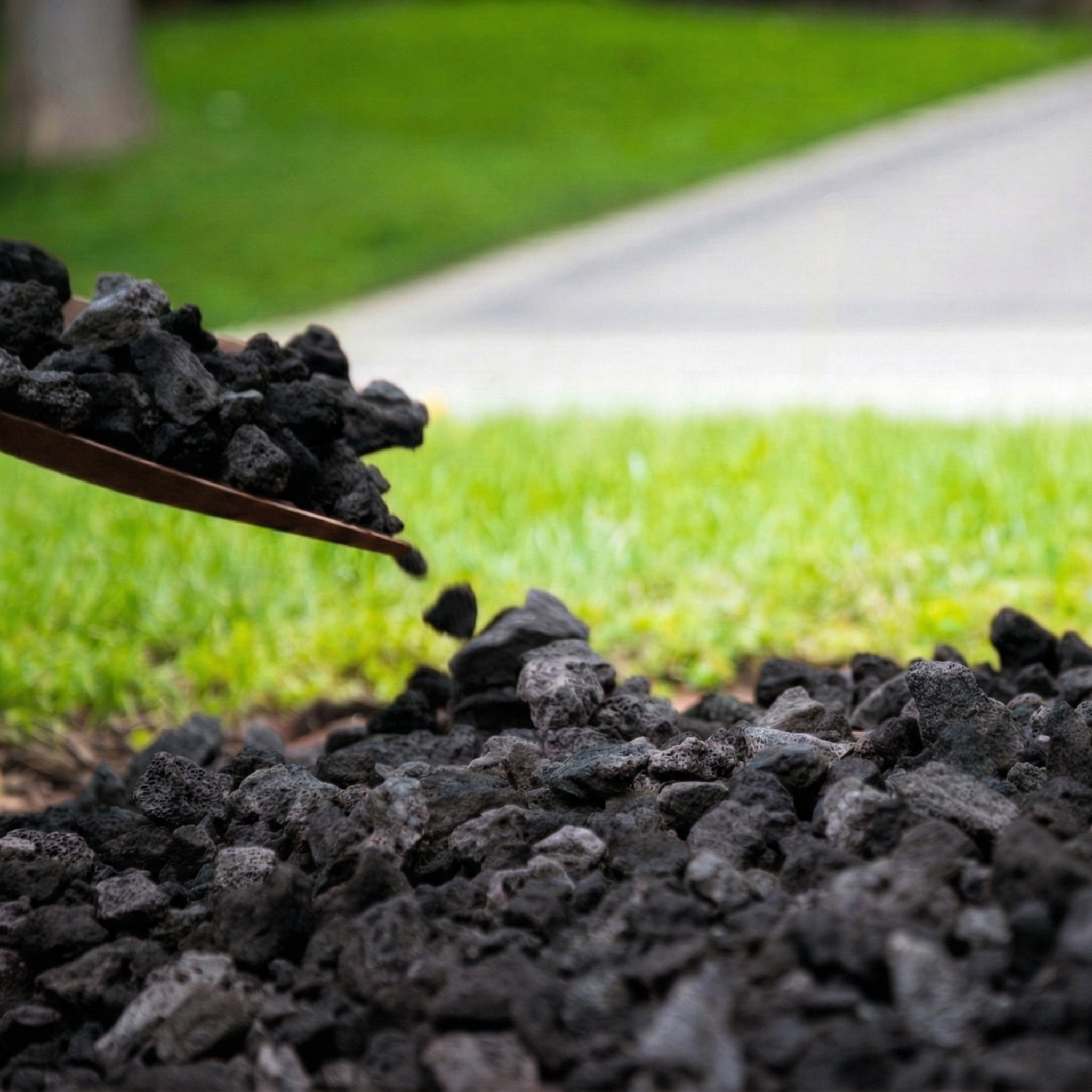
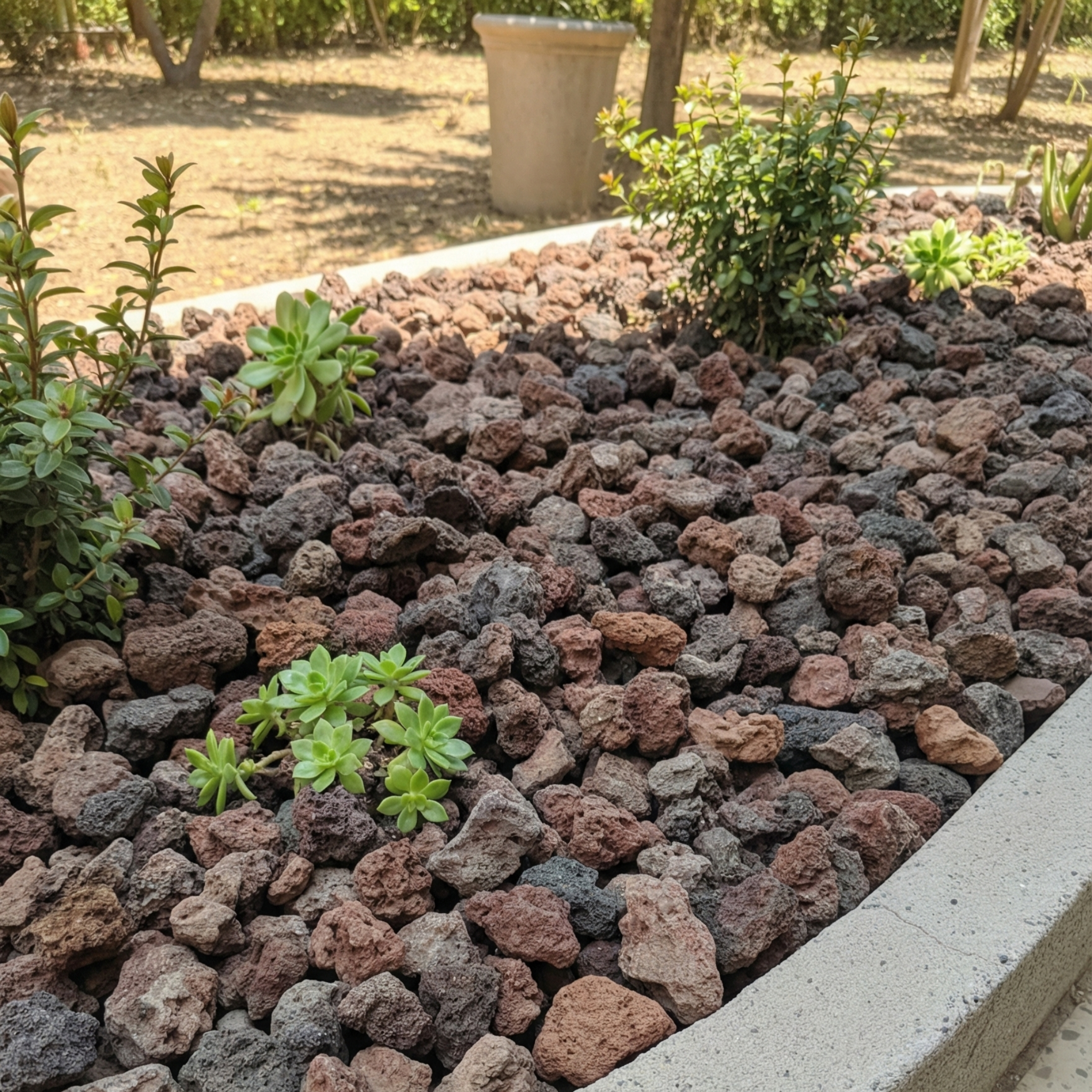
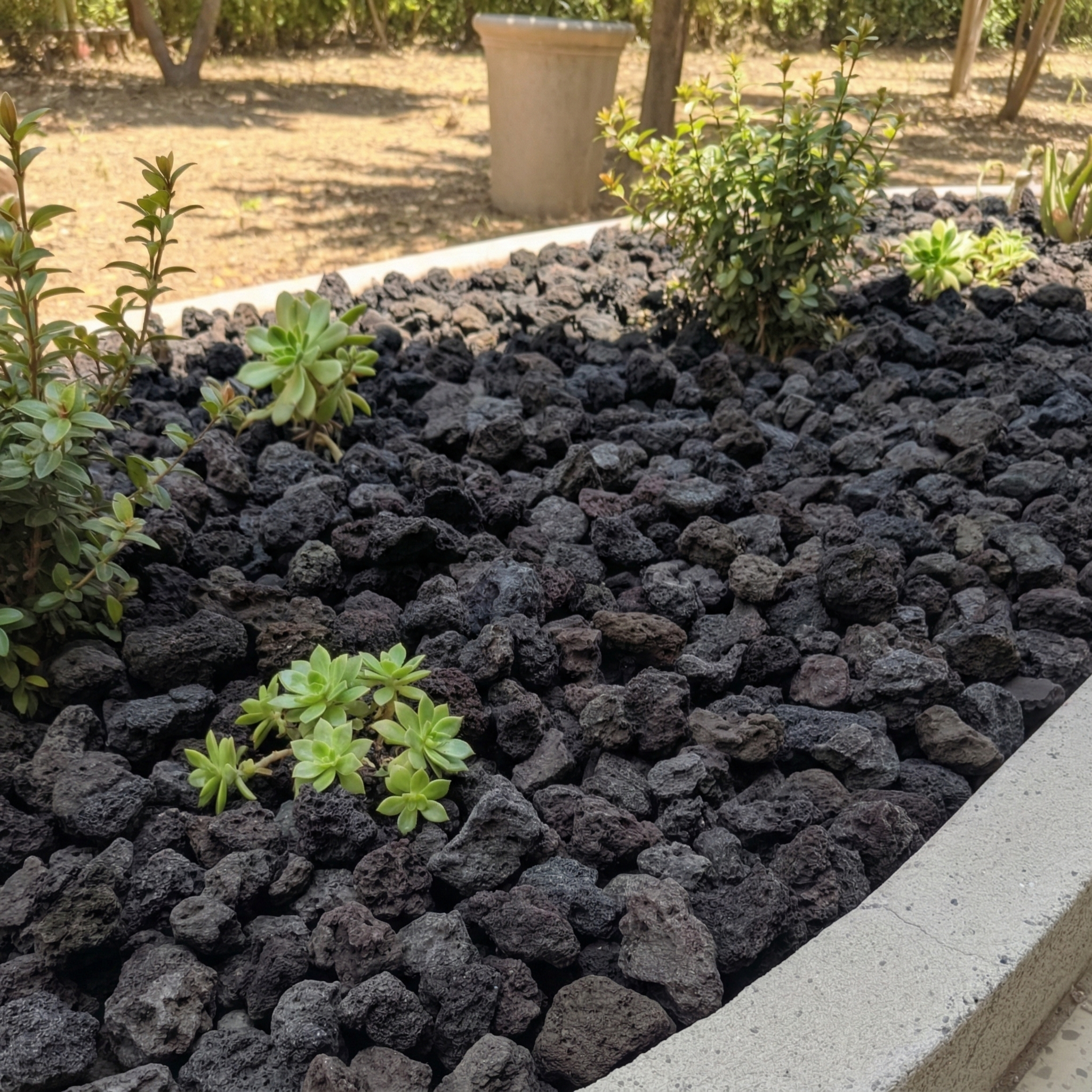


Improving pot drainage in a Caribbean climate, where frequent watering and heat lead to root rot in compacted substrates, while also decorating the garden with mineral cover that controls weeds and protects the root zone from extreme heat, requires volcanic rock with calibrated granulometry and stable mineralogy. This volcanic rock—also known as volcanic scoria, lava rock, or pozzolana—is marketed by Gardese in an extra-coarse format (10-20 mm) in 25 kg bags, in red and black varieties, designed for home and professional gardening, hydroponics, xeriscaping with cacti and succulents, and decorative landscaping applications.
Main benefits
- Balanced drainage and water retention: the porous structure absorbs water and gradually releases it into the substrate, reducing watering frequency and preventing waterlogging, a critical condition for cacti, succulents, orchids, and Mediterranean plants in the humid Caribbean climate.
- Thermal insulation in the root zone: the low thermal conductivity of the material protects roots from temperature peaks in the Caribbean summer when pots heat up in the sun, a condition that stresses sensitive crops.
- Lightweight for large pots and balconies: being low-density volcanic rock, it weighs significantly less than conventional sand or gravel, a decisive advantage in elevated gardening where structural load matters.
- Sterile and durable mineral: it does not decompose, does not harbor insects or pests, does not attract termites, does not compete with the plant for nutrients, and does not need repositioning season after season like wood barks or organic mulch.
- Decorative function with two colors: the red format adds warmth and contrast against garden green; black defines modern and minimalist lines. Both maintain their color for years without fading.
Typical applications and uses
- Decorative cover (mineral mulch) over garden soil, flowerbeds, and outdoor pots with weed control.
- Drainage layer at the bottom of pots and planters for controlled water flow.
- Improvement of compacted substrates by providing aeration and preventing root asphyxiation.
- Substrate for xeriscaping and collections of cacti, succulents, and low-water plants.
Quality and durability
An economical volcanic rock fails in two ways: its mineralogy includes high proportions of powdery fines (which reduces useful volume and leaves sediment after the first watering) and its granulometry is irregular with stones of very disparate sizes (which produces uneven drainage and an irregular aesthetic appearance). Gardese works with calibrated volcanic rock in a uniform extra-coarse format, which distinguishes professional gardening volcanic rock from a generic bag mixed with fines.
Generally no. Natural volcanic rock has a neutral to slightly acidic pH, a range compatible with the vast majority of ornamentals, fruit trees, vegetables and lawn, with no need for corrections. For crops with very specific pH requirements (blueberries, gardenias, azaleas, which need pH 4.5-5.5) it's worth measuring the lot's pH before mixing with acidic substrate to confirm compatibility. In decorative or drainage applications the pH effect is marginal due to limited contact with the root zone.
It depends on the goal. Volcanic gravel is porous, retains moisture and releases water progressively to the substrate; it also works as thermal insulation in the root zone and helps with weed control. White stones are dense, do not retain water and serve a purely aesthetic function; they reflect light, which in a Caribbean climate can raise the surrounding temperature. Volcanic gravel weighs significantly less by volume — a decisive advantage in large pots and balconies where structural load matters. For low-maintenance gardens, volcanic gravel performs better.
No. Volcanic gravel is igneous rock formed by rapid cooling of lava, mineralogically stable and weather-resistant. It does not decompose like wood mulch, pine bark or organic materials that lose volume after months. UV radiation and water do not affect it structurally. The reddish color holds up for years; in decorative applications it may darken slightly from accumulated dust and organic matter, recoverable with a surface rinse from a hose. It is a durable investment that requires no replenishment.
Yes. Lava rock is widely used in gas grills and barbecues as a heat diffuser: it spreads temperature evenly above the burner, retains heat and reduces flare-ups from grease drips. Rinse the stones with water before the first load to remove natural dust, and let them dry in the sun. Replacement is recommended when carbonized grease builds up to a level that cleaning won't remove. The decorative garden volcanic gravel (unwashed) performs the same technical function, but check that the format is appropriate.
Still have questions?
Ask us and we will gladly help you with whatever you need.
| Color | Red |
|---|---|
| Thickness | 10 - 20 mm (0.4 - 0.8 in) |
| Weight | 25 kg (55 lb) |
| Sack: Width | 50.0 cm (19.69 in) |
|---|---|
| Sack: Height | 15.0 cm (5.91 in) |
| Sack: Depth | 80.0 cm (31.5 in) |
| Sack: Weight | 25.0 kg |
Payment & Security
