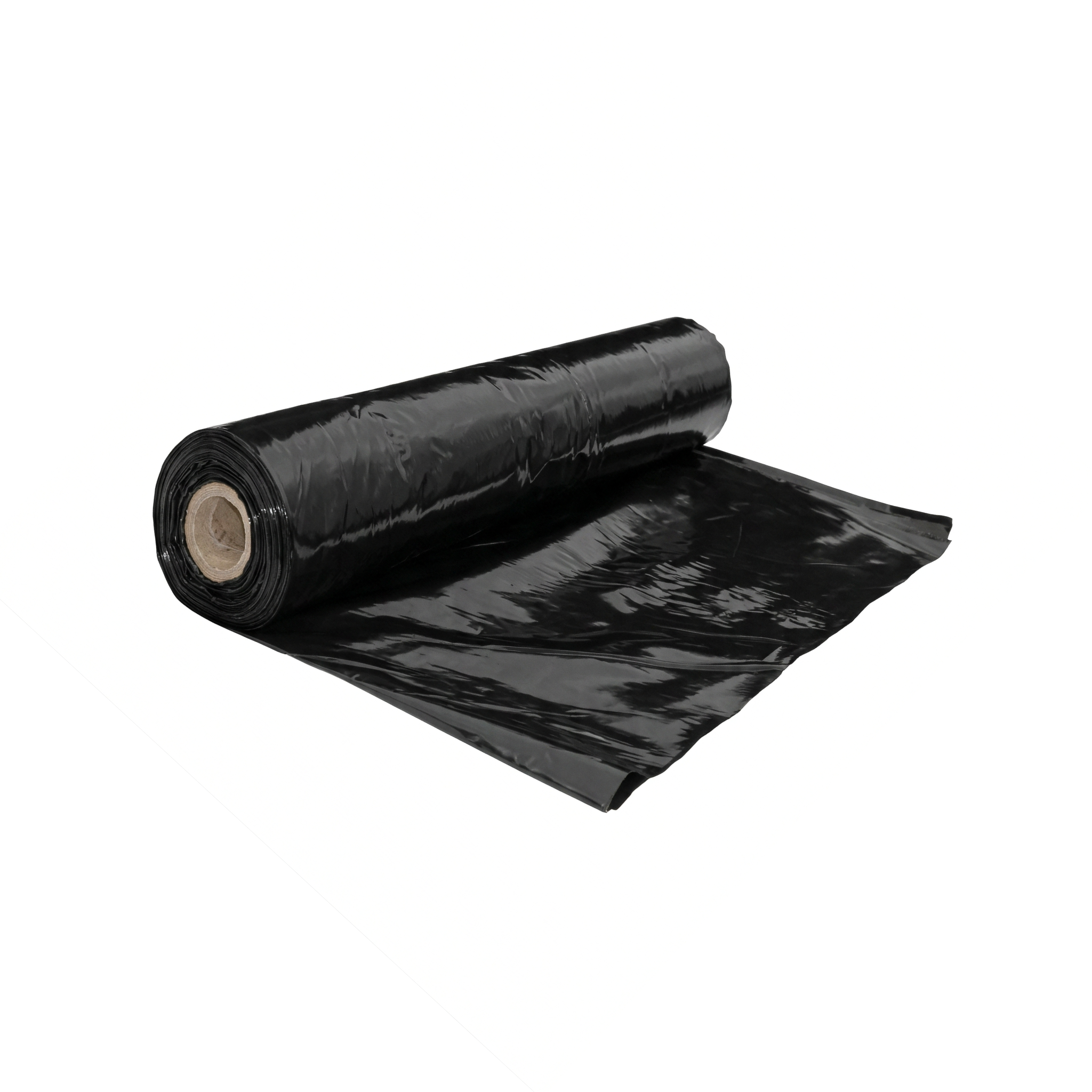
Agricultural ground plastic, also known as mulch, comes in three color combinations: black, black and silver, and black and white. All three variants share the same thickness of 25 µm (gauge 100), the same width of 1.2 m, and the same length of 1000 m per roll (1,200 m² coverage). What changes significantly between them is how they perform with crops and the Dominican climate. This comparison will help you decide which top surface is best suited for your farm's agronomic cycle.

Agricultural plastics

Explore our complete range of solutions.

Explore products

🎯 Choose the variant in 10 seconds

  • If your situation involves a cold cycle, first transplant, or crops that need soil warming: go to the black variant
  • If your situation involves a warm cycle, pest management (aphids, whiteflies), or high-value crops: go to the black and silver variant
  • If your situation involves a hot summer, fruits sensitive to overheating (strawberry, lettuce): go to the black and white variant

What to consider before choosing the variant

All three variants are mechanically identical: 25 µm thick (gauge 100), tensile strength > 3.0 N, tear strength > 1.5 N, elongation at break > 320%, and the same coverage per roll. The decision is agronomic, not mechanical. These are the key criteria:

  • Bottom side always black: In all three, the side touching the ground is black. This ensures total light blocking and prevents weed germination. The difference lies in the top side, which defines how the incoming light behaves.
  • Soil temperature: Black absorbs radiation and warms the soil — an advantage in cold cycles or early transplants, a disadvantage in mid-summer. Silver and white reflect radiation upwards and keep the soil cooler.
  • Flying pest stress: Silver reflects UV light onto the undersides of leaves and disorients aphids, whiteflies, and thrips, reducing pressure from insect-transmitted viruses. This is the most differentiating factor compared to standard black.
  • Fruits in contact with the soil: In crops like strawberries, melons, or zucchini, the white side reflects light onto the lower surface of the fruit, improving coloration and uniform ripening. Pure black tends to excessively heat the root zone in summer.
  • Cost per m² covered: Being identical in dimensions (1.2 m × 1,000 m), the coverage is the same (1,200 m² per roll). When planning, calculate bed linear meters ÷ 1.2 m × number of beds, plus 5-7% for overlaps and edges.

Black variant: the classic for warming the soil

IDEAL FOR Early transplant, cold cycles and total weed blocking
✓ Pros
  • Warms the soil: ideal for starting the cycle
  • Total light blocking: zero weed germination
  • The most versatile for standard crops
  • Available and most widely used in DR
✕ Cons to consider
  • Root overheating in mid-summer
  • No repellent effect on flying pests
  • No reflection towards the crop

Black mulch is the historical standard for covered-bed cultivation. It warms the soil, completely blocks the light needed for weeds to germinate, and retains moisture underneath. It is the standard option for tomatoes, peppers, melons, watermelons, and most cucurbits planted in cool seasons or with cycles starting before peak heat. In very hot months, it is advisable to combine it with more frequent drip irrigation to compensate for the bulb temperature.

Black and silver variant: the flying pest repellent

IDEAL FOR Management of aphids, whiteflies, thrips and high-value crops
✓ Pros
  • Reflects UV: disorients flying pests
  • Reduces pressure from insect-transmitted viruses
  • Soil cooler than with pure black
  • Black underside: same weed blocking
✕ Cons to consider
  • Higher cost per m² than standard black
  • Intense reflection: visual discomfort when working
  • Less soil warming during cold starts

Black and silver mulch is the technical option when flying pest pressure is high or when the crop is susceptible to viruses transmitted by insect vectors (TSWV in tomato, geminiviruses in cucurbits, etc.). The silver reflects ultraviolet light to the underside of leaves, disorienting the flight of aphids, whiteflies, and thrips, reducing landing on the crop during the first weeks after transplanting — precisely when the plant is most vulnerable. When the foliage closes and covers the silver, the effect is neutralized, but the critical window has already passed.

Black and white variant: the cool option for summer and sensitive fruits

IDEAL FOR Hot summer, strawberries, lettuce and crops sensitive to overheating
✓ Pros
  • White side reflects: cooler soil
  • Improves fruit coloration in contact
  • Ideal for crops in the hot Dominican summer
  • Black underside: total weed blocking
✕ Cons to consider
  • Does not warm the soil during cold starts
  • No UV repellent effect on insects
  • Higher cost than standard black

Black and white mulch is the natural choice for summer crops and fruits that rest on the ground: strawberries, melons, lettuce, zucchini, cabbage. The white side reflects light onto the lower surface of the fruit, which improves coloration and uniform ripening, and at the same time keeps the soil cooler than pure black under the Caribbean sun. For strawberries in summer production or short-cycle lettuce, this variant provides the most agronomic benefit.

Comparison table of variants

All three variants are identical in mechanical properties and presentation. The choice is made based on the top surface, which defines the agronomic behavior.

Feature Black Black and silver Black and white
Ideal use Warm soil in cold cycle Repel flying pests Cool soil in summer
SKU 686543 764009 863097
Top side Black Silver White
Bottom side Black Black Black
Thickness 25 µm (Cal. 100) 25 µm (Cal. 100) 25 µm (Cal. 100)
Width × length 1.2 m × 1,000 m 1.2 m × 1,000 m 1.2 m × 1,000 m
Coverage per roll 1,200 m² 1,200 m² 1,200 m²
Tensile strength > 3.0 N > 3.0 N > 3.0 N
Tear strength > 1.5 N > 1.5 N > 1.5 N
Elongation at break > 320 % > 320 % > 320 %
Weed blocking Total Total Total
Thermal effect on soil Warms Cools (reflects) Cools (reflects)
Effect on UV pests Repels flying insects

Use case matrix → recommended variant

If your case is… Recommended variant
Tomato or bell pepper transplanted in cool season → Black
Standard crop without high pressure from flying pests → Black
Tomato or cucurbits in an area with high whitefly pressure → Black and silver
High-value crop susceptible to viruses from insect vectors → Black and silver
Strawberry, melon, or zucchini in summer cycle → Black and white
Lettuce or leafy crops at risk of overheating → Black and white
💡 Dodom Expert Tip:

Combine variants according to your planting schedule. If you start a tomato or bell pepper crop in January-February (cool cycle), use standard black to allow the soil to warm up for the first 30–40 days. If the same bed goes to a second melon cycle in May-June, remove the black and reinstall with black and white to avoid root overheating. The investment in switching will be recouped in uniform fruit set and reduced water stress.

⚠️ Common mistake to avoid:

Do not install silver or white upside down. The reflective side always goes up; the black side goes to the ground. If you place it upside down, you completely lose the agronomic effect (UV repellency or reflectance towards the fruit) and only benefit from weed blocking. Before unrolling, open a few centimeters and confirm which side faces the sun.

Not sure which top side is best for your farm?

Tell us your crop, planting season (transplant month), if you have historical whitefly or aphid pressure, and the m² to cover. You will receive the exact top side recommendation and the roll calculation based on your beds.

Frequently Asked Questions

Which one yields more linear meters of bed?

All three yield the same. Each roll is 1.2 m × 1,000 m (1,200 m² of coverage). For a covered bed 80 cm wide with 20 cm overlap on each side, you would use 1.2 m of plastic per linear meter of bed, meaning 1,000 linear meters per roll. Subtract 5–7% for cuts and overlaps at the headlands.

How long does one season of use last?

With a thickness of 25 µm (100 gauge), the mulch is designed for one crop cycle. In standard Dominican conditions (high insolation and moderate handling), it easily withstands 4–6 months under the sun. For longer cycles or double cropping on the same bed, it is advisable to check its condition after 4 months and plan for replacement if tears appear at the headlands.

Is it necessary to combine it with drip irrigation?

Yes, almost always. Since the plastic blocks rain and overhead irrigation from reaching the covered soil, the only efficient way to apply water and fertigation is through buried drip irrigation under the bed. Combine this mulch with drip irrigation tape or pressure-compensating drip irrigation hose depending on the length of your bed and the terrain's slope.