
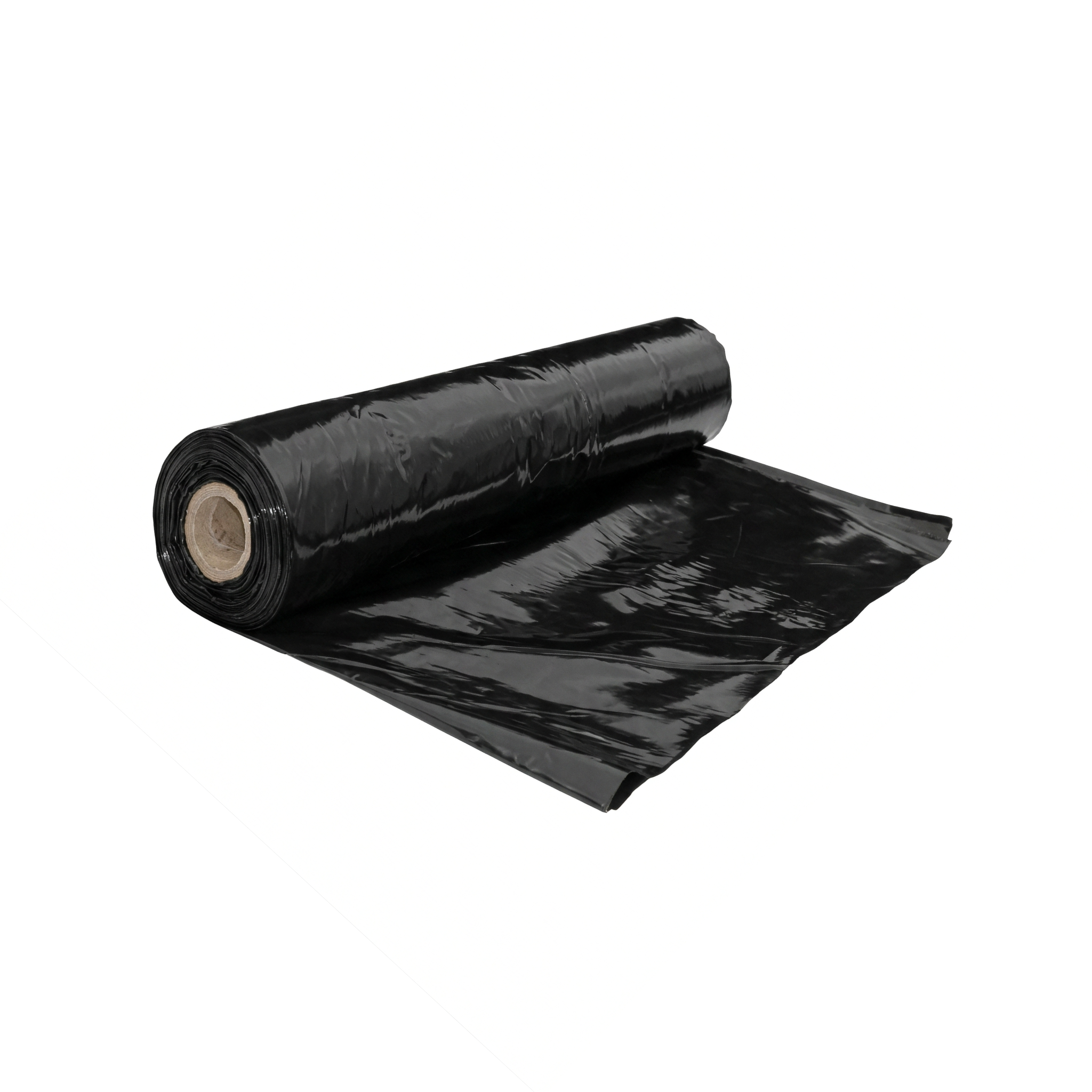
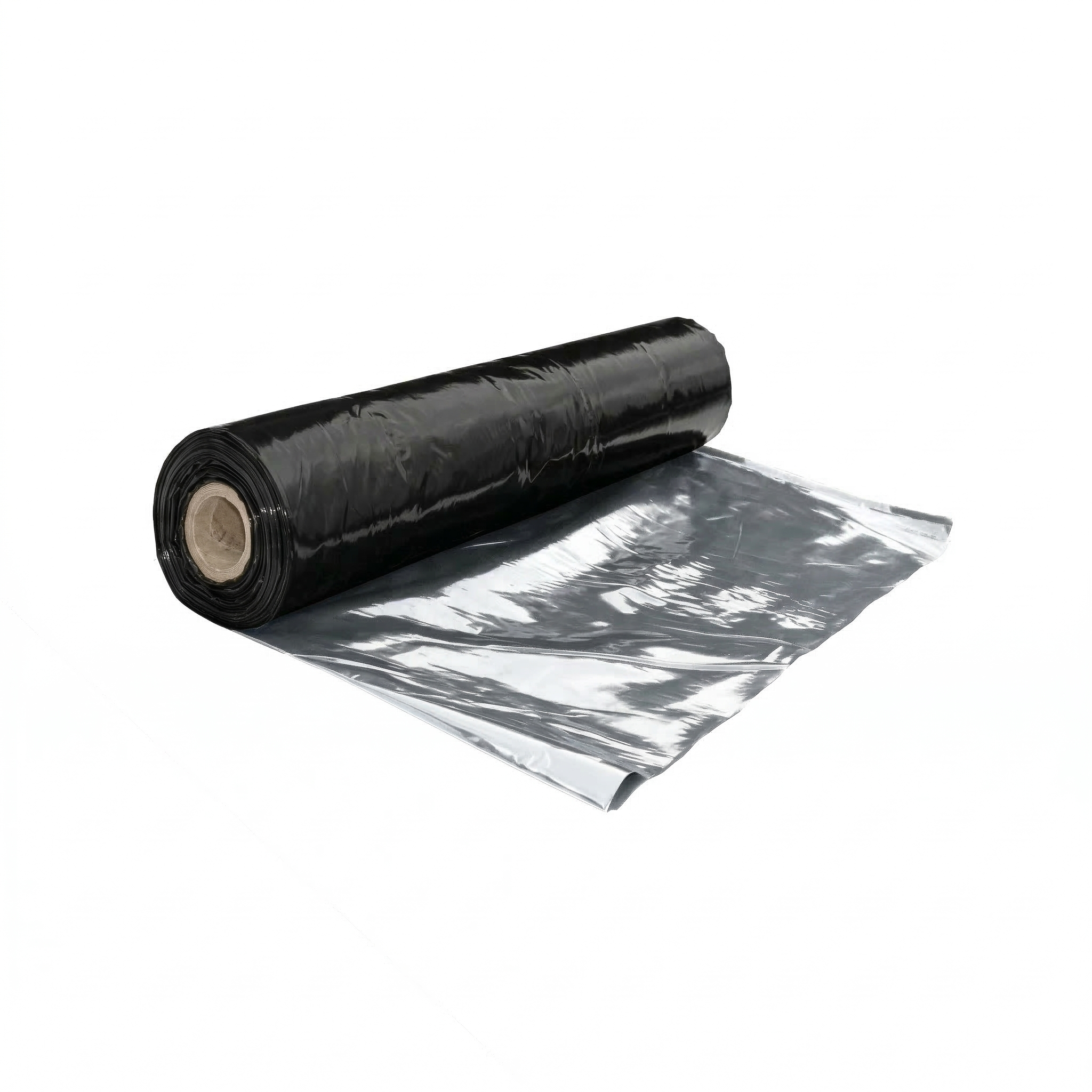
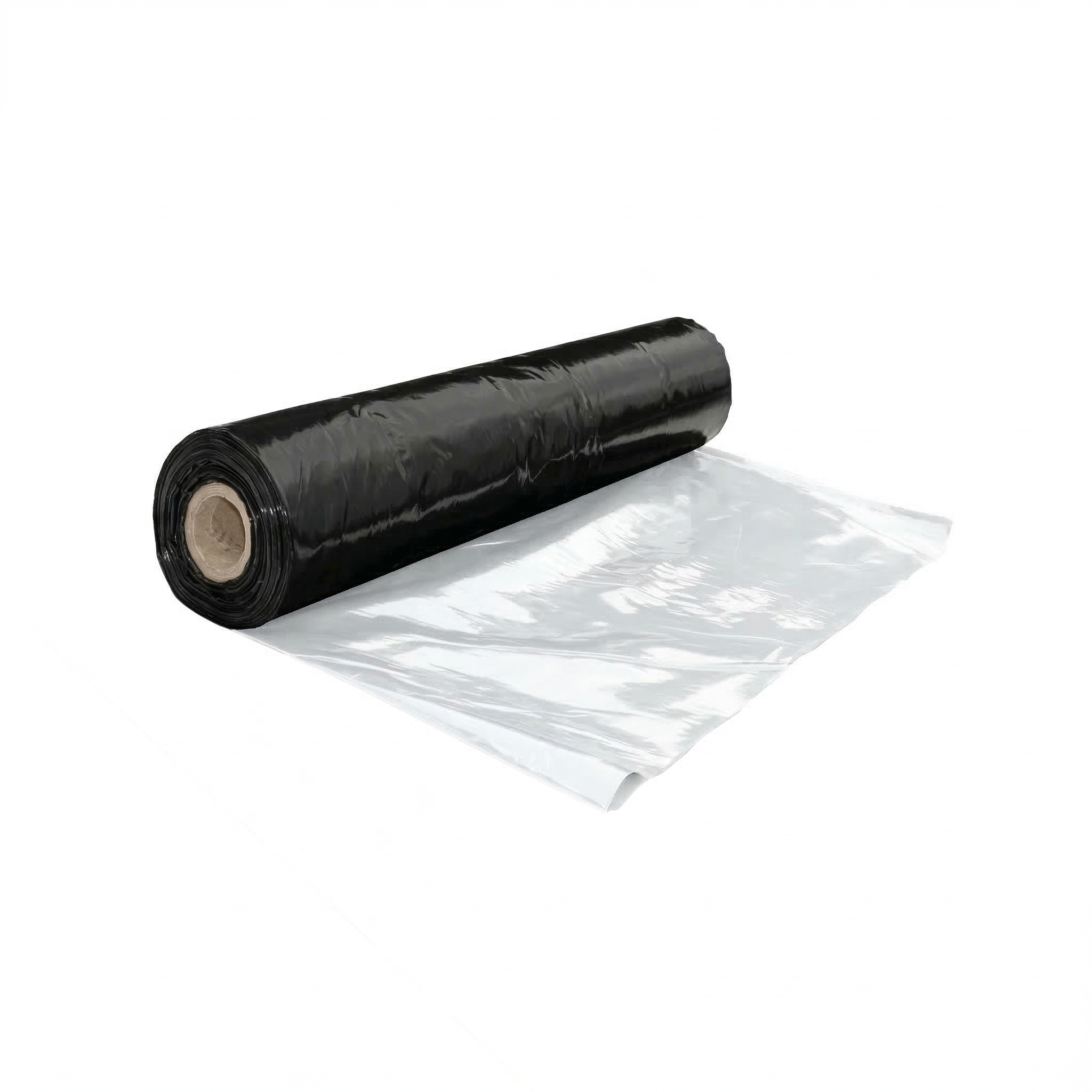
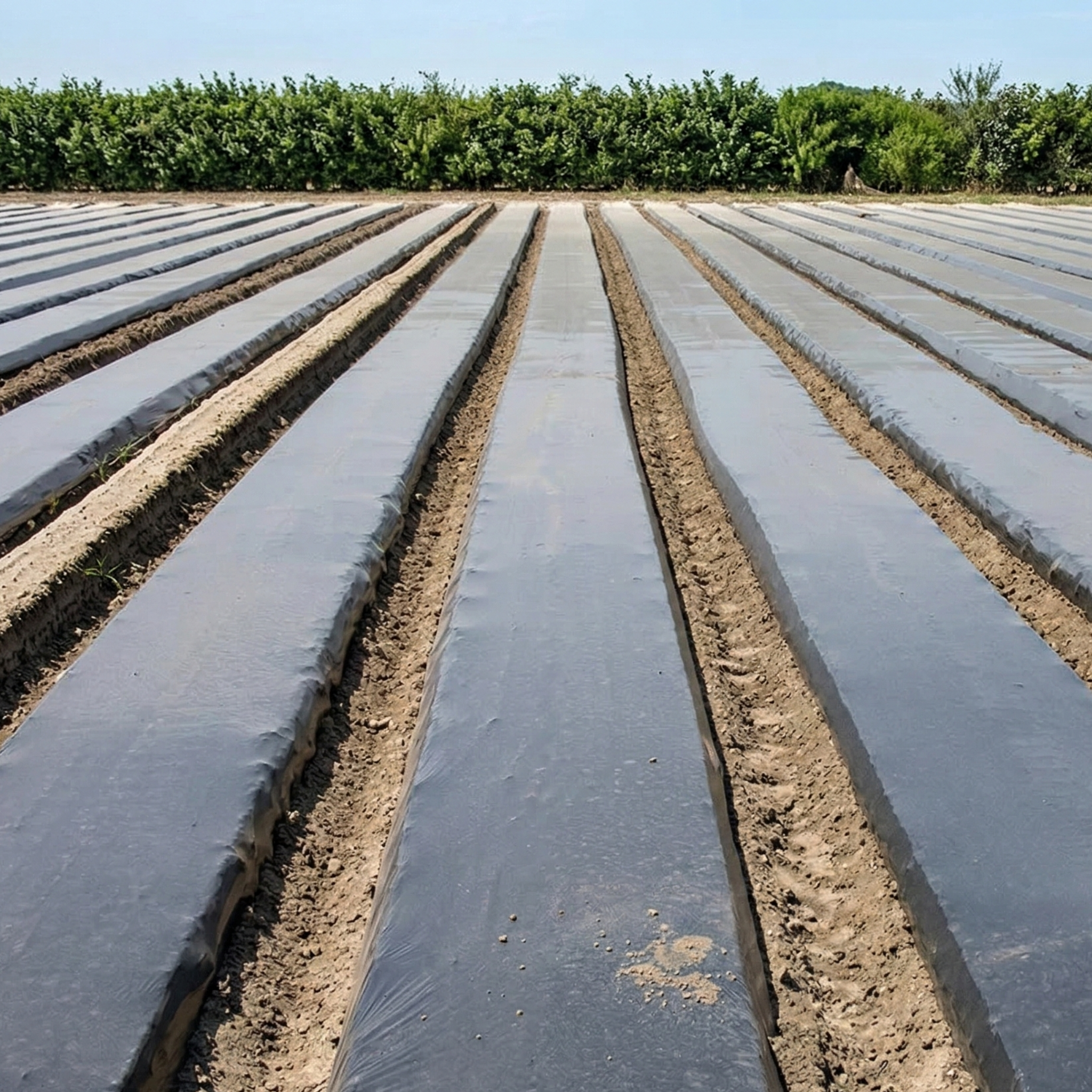
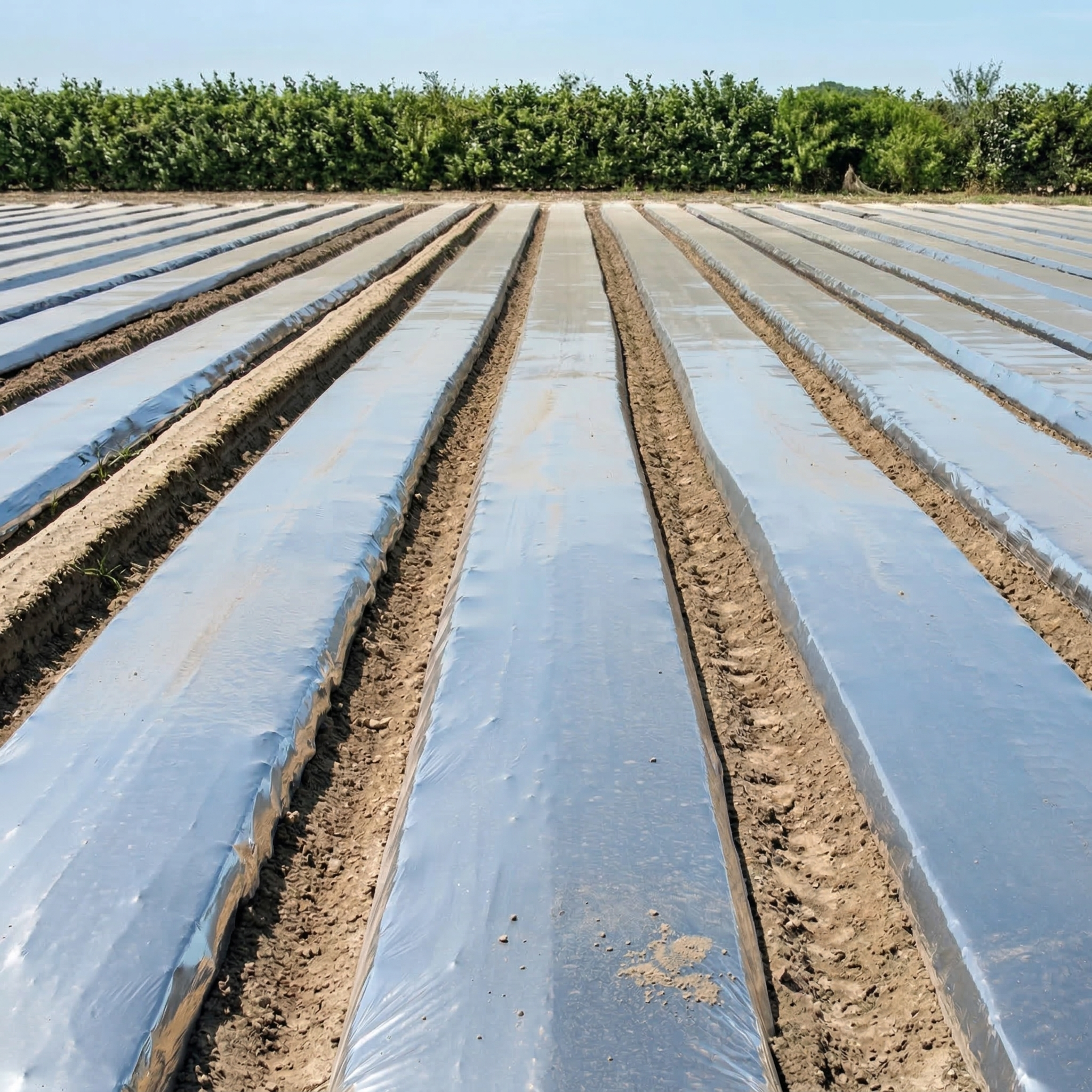
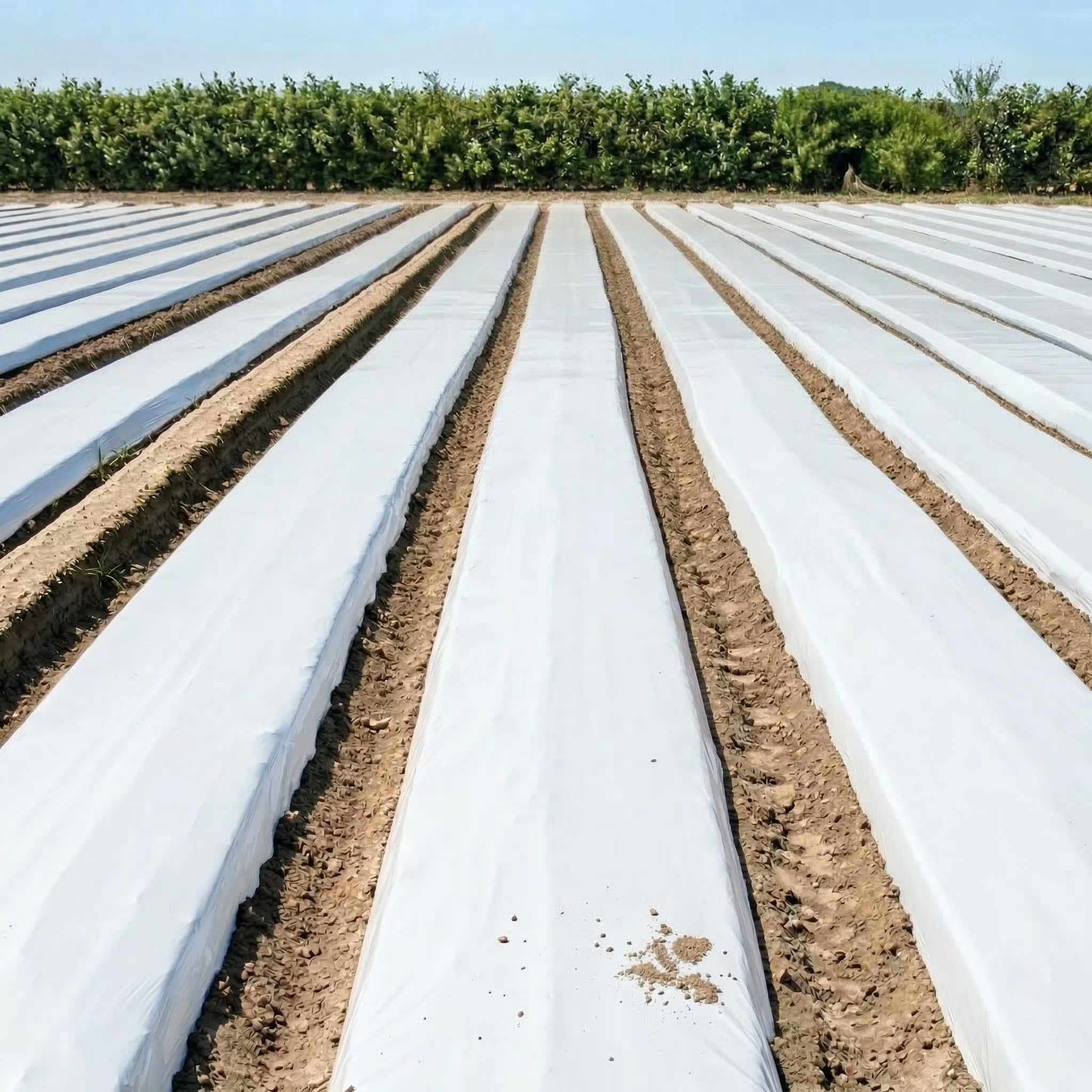


Controlling weeds in commercial crops without resorting to chemical herbicides that leave residues in harvests and compromise organic certification, while preserving soil moisture and keeping fruit clean without contact with the ground, requires polyethylene mulching plastic with UV additives adapted to Caribbean radiation and a color option suitable for the crop. This agricultural soil plastic—also called agricultural mulch, plastic mulching, or soil agrofilm—is manufactured by Gardese in 25 µm (gauge 100) LDPE, in three finishes (black, black-silver, black-white), in rolls 1.2 m wide and 1000 m long, designed for vegetables, berries, melons, pineapples, and row crops with drip irrigation.
Key Benefits
- Weed control by light blocking: Opaque plastic interrupts photosynthesis of spontaneous weeds in the growing bed, eliminating competition for water and nutrients and reducing or suppressing herbicide application, a decisive advantage for certified organic production.
- Soil moisture conservation: The impermeable cover eliminates direct evaporation, significantly reducing irrigation needs and maintaining stable moisture in the root zone for days after each application.
- Three color finishes for different crops: Black absorbs heat and raises soil temperature (ideal for watermelon, melon, pineapple in cold or seasonal soil); black-silver reflects light to the crop, increasing photosynthesis and repelling aphids; black-white maintains moderate temperature (optimal for strawberries, lettuce, and heat-sensitive crops).
- Compatible with subsurface drip irrigation: The drip tape is installed under the plastic before setup, allowing direct fertigation to the root system without evaporation and without water contact with the sun-exposed surface.
- Clean fruit without soil contact: The plastic physically separates fruit and soil, eliminating stains, contact rot, and bacterial contamination in crops such as strawberries, watermelons, melons, and cucumbers, a critical condition for export fruit.
Typical applications and uses
- Row horticultural crops: tomato, bell pepper, cucumber, zucchini, eggplant, young citrus in transition to open field.
- Strawberry and other berry production where fruit requires separation from the soil.
- Cucurbits (watermelon, melon, cucumber) and pineapple in areas with persistent weed problems or scarce water.
- Certified organic production that needs to control weeds without glyphosate or residual herbicides.
Quality and durability
An inexpensive mulching plastic fails in two ways: the LDPE is low-quality recycled material (which tears at the first pass of the tractor or manual installation) and lacks an adequate UV additive (which causes embrittlement and disintegration after a few months, leaving microfragments in the soil). Gardese works with controlled LDPE and UV additives calibrated for the Caribbean climate, which differentiates a professional crop mulch from a generic plastic that disintegrates before harvest.
Which irrigation systems is this mulch film compatible with?
Which crops perform best with plastic mulch?
Does the material withstand the intense solar radiation of the Dominican Republic?
How does this plastic help reduce the use of chemical herbicides?
Still have questions?
Ask us and we will gladly help you with whatever you need.
| Material and construction | |
|---|---|
| Color | Black |
| Dimensions and format | |
| Coverage area | 1200 m² (12916.7 sq ft) |
| Nominal width | 1.2 m (4 ft) |
| Maximum misalignment | ≤30 mm (≤1.18 in) |
| Width limit deviation | +40 mm / -10 mm (+1.57 in / -0.39 in) |
| Thickness limit deviation | +0.006 mm / -0.005 mm (+0.00024 in / -0.00020 in) |
| Average thickness deviation | +15% / -12% |
| Nominal thickness | 25 µm (100 gauge) |
| Nominal length | 1000 m (3280 ft) |
| Strength and performance | |
| Right-angle tear load (longitudinal/transverse) | >1.5 N (>0.34 lbf) |
| Tensile load (longitudinal/transverse) | >3.0 N (>0.67 lbf) |
| Nominal strain at break (longitudinal/transverse) | >320% |
| Presentation and packaging | |
| Presentation | Roll 1.2 m (4 ft) wide × 1000 m (3280 ft) long |
| Roll: Width | 22.0 cm (8.66 in) |
|---|---|
| Roll: Height | 22.0 cm (8.66 in) |
| Roll: Depth | 120.0 cm (47.24 in) |
| Roll: Weight | 28.2 kg |
Official GARDESE warranty
What's covered
Confirmed defect: replacement or refund of the amount paid.
What's not covered
Pago & Seguridad

