

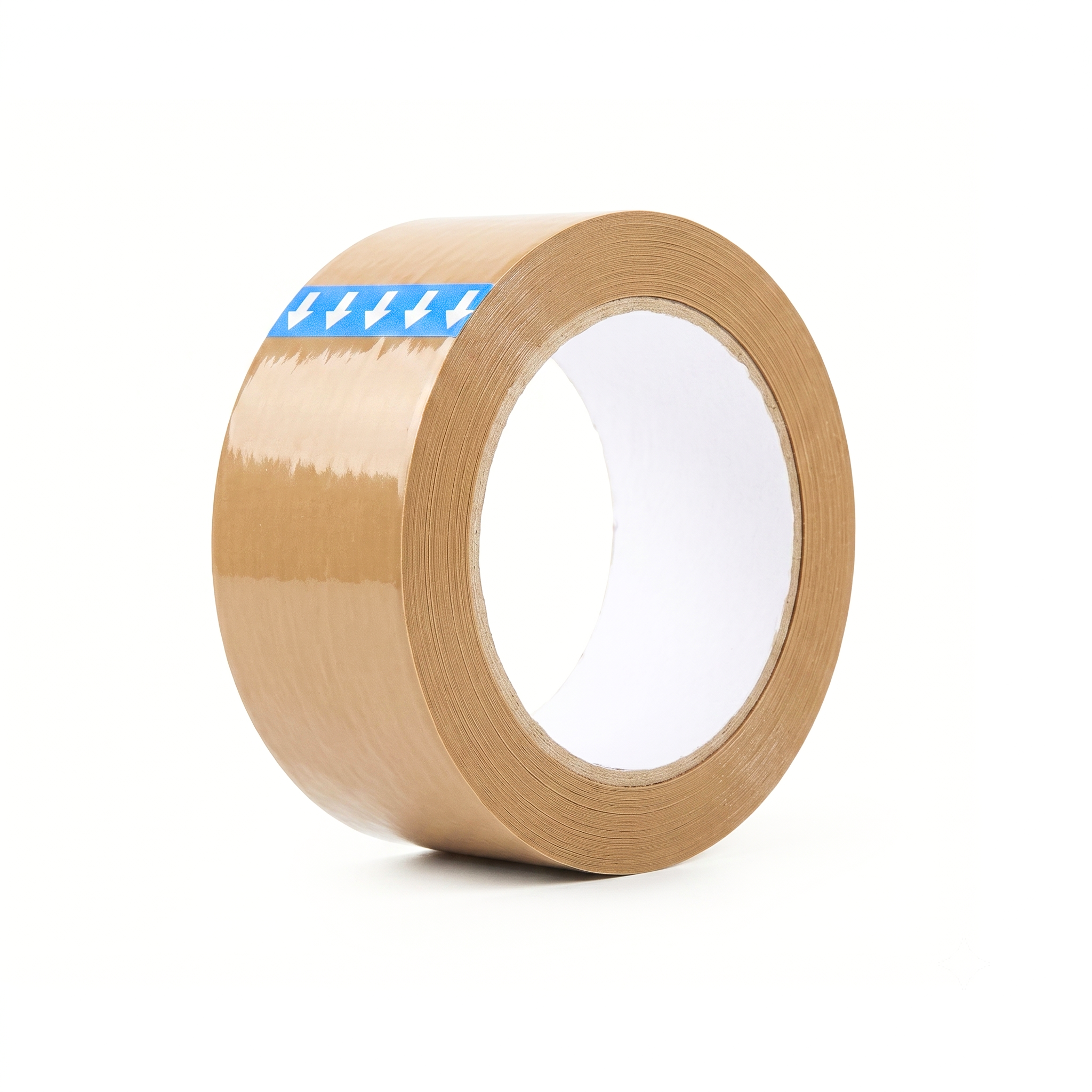
This guide covers the manual application of brown PP adhesive tape: box preparation, T-application over the central seam, tension and angle control, corner reinforcement, and clean cutting. Follow these steps to ensure every box you seal arrives closed at its destination, with an opaque, uniform finish that reveals no contents.
Product Specifications
The tape is BOPP (biaxially oriented polypropylene) with non-yellowing, non-drying acrylic adhesive, manufactured by Fortemo in two widths with 100 m per roll. The table below shows the specifications for the two available variants:
| Specification | 50 mm × 100 m | 76 mm × 100 m |
|---|---|---|
| SKU | 360820 | 360845 |
| Tape Width | 50 mm (2 in) | 76 mm (3 in) |
| Length per roll | 100 m (110 yd) | 100 m (110 yd) |
| Film Material | BOPP | BOPP |
| Adhesive | Acrylic | Acrylic |
| Color | Brown (havana) | Brown (havana) |
| Rolls per box | 72 rolls | 48 rolls |
| Core | 76 mm (3 in) | 76 mm (3 in) |
| Application method | Manual or with dispenser | Manual or with dispenser |
| Brand | Fortemo | Fortemo |
Step-by-step guide
A well-sealed box with this tape requires three elements: a clean surface, the correct application angle, and constant tension during adhesion. The steps below cover the complete process, from preparing the box to cutting the tape without it curling back on itself.
Prepare the box before applying tape
Close the four top flaps of the box, ensuring the two long flaps rest on the two short ones. Clean the adhesion area with a dry cloth to remove dust, grease, or moisture: acrylic adhesive needs a clean surface to achieve full grip from the first contact.
Apply the first section in a T-shape over the central seam
Start by sticking 5-7 cm of tape on one of the side faces of the box, just below the flap joint. Bring the tape up across the joint, run it along the central line on top, and bring it down another 5-7 cm on the opposite side face. This is the main seal and should be centered to distribute tension evenly across both flaps.
Maintain constant tension and angle during application
Pull the roll with your free hand while applying the tape with your palm or a manual dispenser. The tape should stick without wrinkles and with the film flat, not overly stretched. If stretched to the maximum, it contracts when peeled off and can lift the flaps in transit; with the brown color, any wrinkles are also more noticeable on the cardboard.
Standardize the width according to your line: 50 mm for general parcel shipping and 76 mm for large or heavy boxes with wide flaps. Mixing widths on the same table requires constantly changing dispensers; separating stations by format streamlines sealing and prevents operators from using wide tape (more expensive per meter) on small boxes.
Reinforce the corners of the joint with two extra seals
Apply two short sections perpendicular to the central seal, one at each end of the joint, covering about 4-5 cm on each side. These H-reinforcements block lever opening when the box moves inside the truck and prevent most breakages during long shipments.
Cut the tape at an angle, not with a dry pull
Use the dispenser blade or scissors and cut at 45° to the edge of the tape. A straight cut leaves the end perpendicular, and the tape tends to peel off the roll on the next use. The diagonal cut maintains a clean tab that, on brown film, is easy to locate for starting the next time.
Complementary Products
Brown PP tape is the basis for opaque sealing, but it rarely works alone in a real logistics operation. These complements cover sealing where labels need to be read under the tape, signaling delicate packages, and single-pass application:
Clear PP tape is the alternative when labels or codes placed under the seal need to be visible. FRAGILE PP tape is applied over the brown seal to signal delicate packages without losing the main closure. The tape dispenser applies the seal in a single continuous pass with tension brake, the natural progression when sealing more than 30 boxes in a row.
Maintenance and Care
Brown PP tape retains its adhesion for years if stored correctly. Three basic rules prevent the most common problems (loss of grip, uneven color between rolls, tape curling):
- Storage between 10 °C and 30 °C: Store unopened boxes in their original packaging, horizontally on the shelf, away from direct sunlight. UV radiation degrades the adhesive and causes uneven brown tone between rolls.
- FIFO Rotation: Use older rolls first. PP tape is stable, but rotating inventory prevents a roll from sitting at the bottom of the shelf and losing stickiness.
- Handling open rolls: After using a roll, leave it with the tab folded or resting on its edge, not flat. If rested flat, the adhesive sticks to the shelf and when peeled off, it rips off the entire first unusable layer of tape.
Do not apply tape to damp, dusty, or greasy cardboard: acrylic adhesive needs a clean surface to bond. Also, do not store rolls in an uncovered yard, rooftop, or basement: direct UV radiation degrades the adhesive, and the roll loses grip even if the color still looks correct, leading to partial unsealing in transit.
Frequently Asked Questions
How many standard shipping boxes can I seal with a 100 m roll?
It depends on the size of the box and the number of seals. For an average shipping box (30x20x15 cm) with one T-seal and two H-reinforcements, it consumes about 1.2 m per box: one roll covers approximately 80-85 boxes with that configuration. With the 76 mm width, the linear consumption is the same, but each pass covers more flap surface.
Can I use this tape in an automatic taping machine?
It is not recommended. The 100 m roll is designed for manual dispensers or hand-held applicators. Automatic taping machines use longer rolls to reduce stops; consult the machine tape line if your volume has scaled to automatic sealing.
Does the brown tape leave residue when peeled off the box?
It is formulated as a permanent seal, not a removable tape: when peeled off cardboard, it usually removes fiber from the surface, a sign that the grip did its job. For temporary closures or surfaces that need to remain clean (masking, provisional labeling), use paper tape, designed to be removed without leaving residue.
