

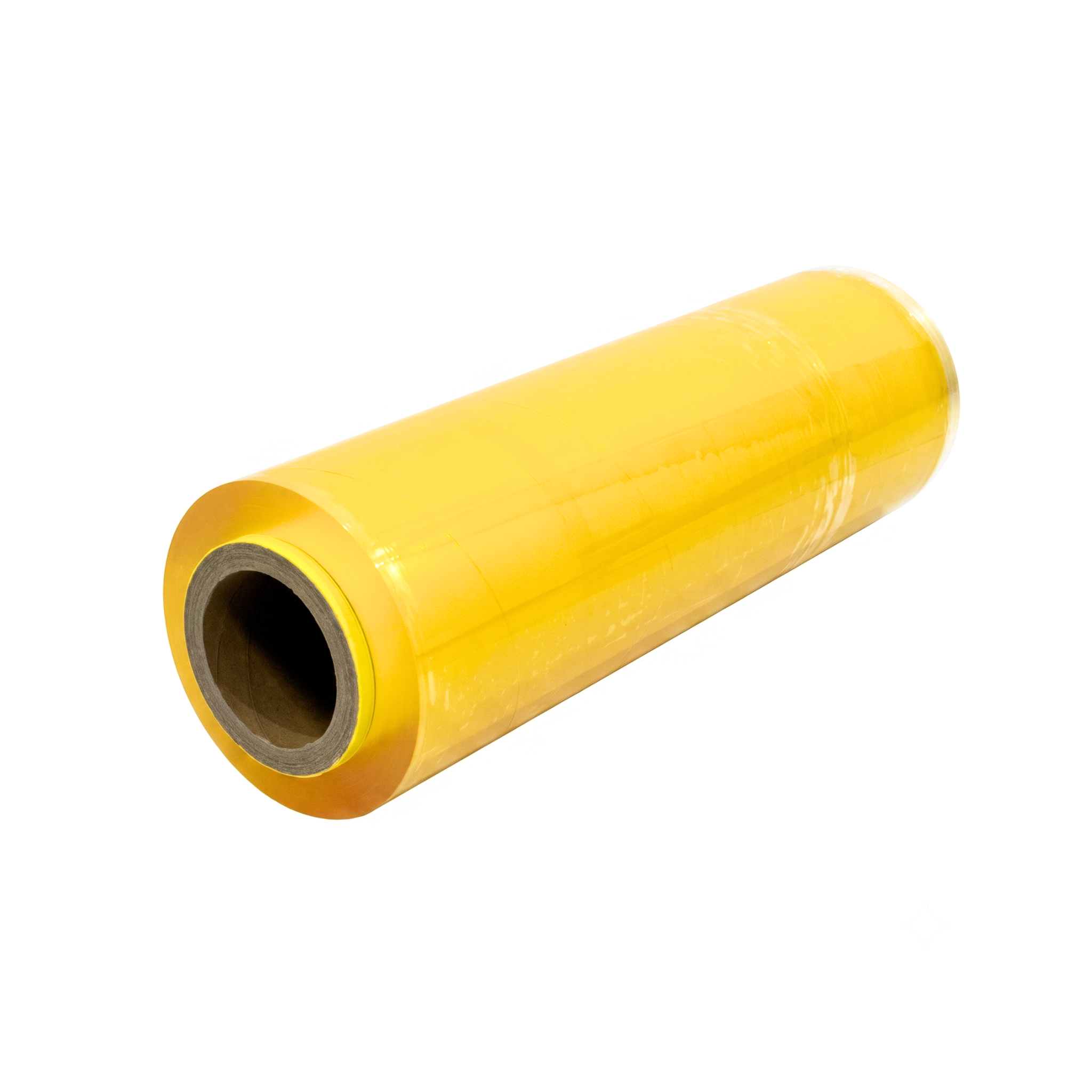
This guide covers the use of counter and display case polyvinyl chloride (PVC) cling film: mounting the roll in its dispenser box, pulling and cutting with the saw, wrapping trays with cling seal, folding under the base, and checking the seal throughout the day. Follow these steps to ensure each tray is instantly sealed, glossy, and wrinkle-free.
Product specifications
The film is food-grade PVC with high transparency and superior cling, manufactured by Fortemo in two widths with 300 m per roll and a dispenser box with a cutter. The table shows the two available variants:
| Specification | 30 cm × 300 m | 45 cm × 300 m |
|---|---|---|
| SKU | 620210 | 620211 |
| Roll width | 30 cm (12 in) | 45 cm (18 in) |
| Length per roll | 300 m (984 ft) | 300 m (984 ft) |
| Thickness | 10 µm | 10 µm |
| Material | Food-grade PVC, suitable plasticizer | Food-grade PVC, suitable plasticizer |
| Certification | FDA and EU food contact regulations | FDA and EU food contact regulations |
| Adhesion | Superior cling, seals on contact | Superior cling, seals on contact |
| Packaging | Box of 6 rolls, with dispenser and cutter | Box of 6 rolls, with dispenser and cutter |
| Brand | Fortemo | Fortemo |
Step-by-step guide to use
The counter workflow with cling PVC is designed for speed: pull, cut, wrap, and to the display case. The following steps organize this routine to ensure a firm seal throughout the day and an attractive display for the customer:
Mount the roll and secure the box to the packing station
Place the roll so the film comes out flat through the slot and the cutter is clear. At the counter, it's advisable to secure the dispenser box to the edge of the packing table: with the high cling of PVC, an unsecured box lifts with the film when pulled, causing the roll's start to be lost.
Pull the right amount and cut with a swift motion
Pull out enough film to cover the tray plus 5 cm on each side and cut against the saw with a swift wrist motion. The cutter provides a clean and continuous cut with each pull; excessively long cuts are the primary source of waste in high-paced counters.
Wrap gently, stretching: the cling instantly seals the contour
Center the film over the tray, gently stretch it towards the edges, and press the contour against the tray: the PVC clings on contact to tray, glass, and plastic, and film to film at the closure. When well-stretched, the surface is smooth and shiny, with no wrinkles to detract from the product.
Dry the edge of the tray before wrapping: PVC cling instantly adheres to a smooth, dry surface, but moisture from the display or product juice on the contour is the number one cause of trays opening in the display case midday. Ten seconds of wiping per tray saves all the re-wrapping in the afternoon.
Fold excess film under the tray base
Gather the excess film on all four sides and fold it under the base, pressing it so the cling adheres to the bottom. The display side remains clean and taut, and the weight of the tray itself keeps the folded-under edges secure during handling in the display case and on shelves.
Rotate the display case and check the seal throughout the day
When restocking, check that the film remains taut and adhered around the edges; a tray that has lost its seal can be re-wrapped in seconds with a new piece of film. Label the date and price on the film, not underneath it, so that weighing and scanning do not require opening the wrapping.
Complementary products
Cling PVC is the film for display cases; these complements cover the kitchen, palletized transport, and dispatch:
Food-grade polyethylene (PE) film is the kitchen and cold room companion: plasticizer-free, preferred for fatty foods, dairy, and raw meat, and suitable for freezing and gentle microwave use. Manual stretch film palletizes already-packaged product boxes for transport to branches. Transparent PP tape seals dispatch boxes.
Maintenance and care
Cling PVC retains its cling and transparency with three handling rules at the point of sale:
- Cool and dry storage: keep boxes closed, away from direct sunlight and heat sources. Prolonged heat degrades the plasticizer, and the film loses elasticity and cling.
- FIFO rotation: use the oldest boxes first; a roll that ages in storage loses contact stickiness before transparency, which is noticeable in trays that open up.
- Clean and dry dispenser box: clean the slot and cutter of grease and juices at the end of the day; grease in the slot causes the film to slip, stick to itself, and the start of the roll to be lost.
Do not use cling PVC in the oven or on very hot or high-temperature fatty foods: it is designed for cold display and preservation; for gentle microwave heating, prefer PE film. Also, do not use it as palletizing film: its function is to seal and display trays, not to secure loads.
Frequently Asked Questions
How do I avoid losing the start of the roll?
At the end of each service, leave the end of the film resting on the edge of the dispenser box, slightly outside the slot, or fold a small tab at the corner. With the high cling of PVC, a loose end sticks to the roll, and finding it later takes more time than with any other film; the tab eliminates that wasted time.
How many trays does a 300 m roll wrap?
With a typical consumption of 45-55 cm per counter tray, a 300 m roll yields between 550 and 650 trays. In supermarket operations with weighing and labeling, this is the reference for scheduling roll replenishment per display case without running short on weekends.
Does the shine get lost in the cold room or cold display case?
No: the transparency and shine of PVC are maintained in cold display temperatures, which is its working environment. What can temporarily fog it is surface condensation when moving the tray from the cold room to the warm counter; it dissipates on its own in minutes or can be accelerated by wiping the wrap with a dry cloth.
