
This guide covers applying hot-melt adhesive for geomembrane: preparing the surfaces, melting the adhesive, applying it to both faces, pressing the seam and curing. Follow these steps to achieve a bond as watertight as the liner itself and able to withstand immersion in water.
Product specifications
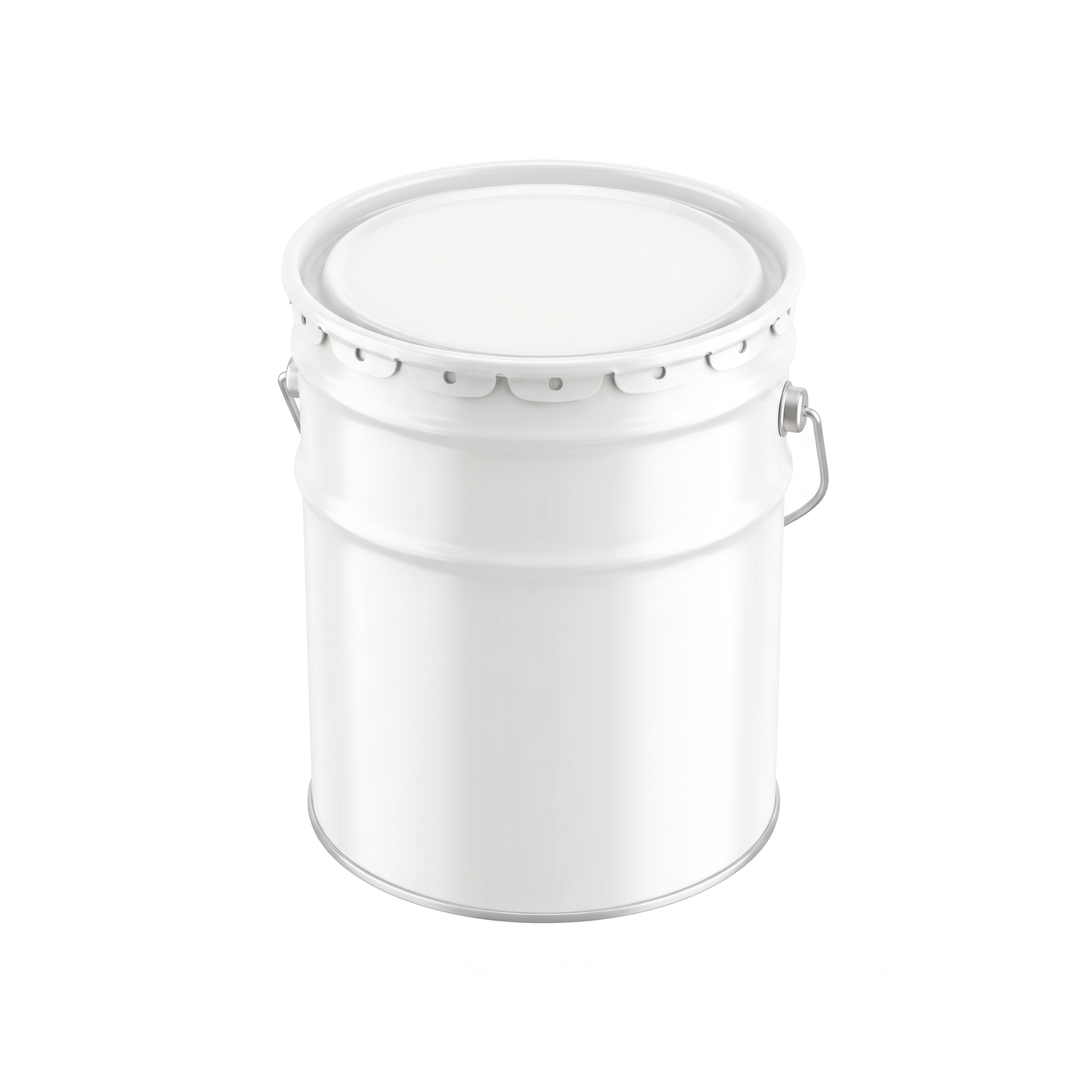
Hot-melt adhesive is an adhesive for geosynthetics that melts and is applied hot to seal HDPE geomembrane, composite membrane and drainage boards. It comes in a bucket with a built-in electric heater: when you open the lid, the adhesive already has two heating elements (spikes) embedded in it and a plug with a cable ready to connect, so it melts inside the bucket itself.
| Specification | Hot-melt adhesive |
|---|---|
| SKU | 126350 |
| Format | 15 kg (33 lb) bucket with built-in electric heater |
| Melting system | Two integrated heating elements (spikes) + plug with cable |
| Peel strength (2 h) | ≥4.0 kN/m (or failure of the base material) |
| Shear strength (2 h) | ≥0.4 MPa (high strength ≥0.8 MPa) |
| Adhesion strength | ≥1.5 MPa |
| Permeability coefficient | ≤3.5 × 10⁻¹² cm/s |
| Retention after 7 days in water | ≥80 % |
Step-by-step application
The strength of the seam depends on the melting temperature and on applying the adhesive to both faces. Follow these five steps in order:
Prepare the surfaces
Both faces to be joined must be clean, dry and free of dust and grease. Define the overlap or cut the patch leaving a bonding width of at least 5 cm. A dirty or damp surface is the most common cause of a weak seam.
Melt the adhesive in its own bucket
Open the lid: the bucket comes ready with two heating elements (spikes) already embedded in the adhesive and a plug with a cable ready to connect. Plug it into the power supply and let the adhesive melt inside the bucket itself —without transferring it to another container— until it reaches a fluid, uniform viscosity. Do not overheat it: if it starts to smoke, it oxidizes and loses strength.
Apply to both faces
Spread the hot adhesive with a metal roller or a gun over the two surfaces to be joined. Applying it to a single face greatly reduces the strength of the seam, so do not skip either one.
Press immediately
Join the two faces and apply pressure right away (by stepping on it, with a roller or with a rubber mallet) for full contact. In cold weather, work in sections of no more than 40 cm and quickly; if the base is uneven, place a board about 35 cm under the seam.
Let it cure without moving it
Avoid any movement of the seam until it cools. When properly applied, the bond reaches an adhesion of ≥1.5 MPa and retains ≥80 % of its strength after 7 days of immersion in water.
Temperature is everything. Let the bucket's heating elements bring the adhesive until it flows like warm honey, never until it smokes: the smoke point marks the start of degradation. On long days, keep the roller inside the hot adhesive between applications so you don't waste time reheating.
Complementary products
The adhesive is the solution for details and repairs. For a complete job, these products go with it:
The HDPE geomembrane is the liner you will seal and repair with the adhesive. The HDPE welding rod is the filler material for extrusion-welding the long seams between sheets; the adhesive is reserved for the finishing touches and repairs where the welder cannot reach.
Storage and conservation
Hot-melt adhesive is sensitive to heat, cold and humidity, and its bucket has a built-in electric heater. Store it well to preserve its properties and its safety until the moment of application.
Temperature: the critical factor
Keep the bucket in a cool place, between 5 and 30 °C. Do not expose it to the weather or to direct sunlight: above 35 °C the adhesive softens, releases oil and loses properties. Nor should it drop below -5 °C, because the adhesive solidifies and cakes; afterwards, melting with the heating elements will be slower and the bond will lose strength. Keep it at least 3 metres away from boilers, heaters, open flames, welding equipment or transformers.
Dry and ventilated environment
Store the bucket in a ventilated, dry space, on pallets or racks raised at least 10 cm off the floor, to avoid moisture, rust and water ingress through the base. Protect it from rain: if water gets in, the adhesive separates into layers and becomes unusable.
Position and stacking
Always store the buckets upright; do not invert them or lay them down, because they contain the electric heating elements inside and you could damage the heater or cause the adhesive to leak through the lid. Do not stack more than two buckets: the extra weight crushes the seal and causes leaks.
Safety and compatibility
This adhesive contains hydrocarbon-based additives and, in the presence of a flame, releases flammable gases. That is why smoking or using open fire is prohibited in the storage area. Keep it separate from strong acids and bases, solvents and flammable or explosive products.
Shelf life and temporary protection
Once the bucket is opened, try to use it up within a month. If you have to leave it outdoors for a short time —for example, during loading or transport on site—, cover it with a waterproof tarp that also blocks the sun. Do not leave it outdoors overnight, exposed to prolonged sun or to sub-zero temperatures.
Do not use adhesive that has frozen, gotten wet or separated into layers: even if you melt it again, it has already lost strength and must be discarded. And do not leave it plugged in unattended to soften it in cold weather, because overheating also ruins it.
Maintenance and care
Unplug it when you are not melting and let the cable and the heating elements cool before closing the bucket. After applying, inspect the cooled seams by running your hand along the bead: they should be continuous, with no detached areas or gaps.
Do not overheat the adhesive or apply it on dirty, damp or greasy surfaces. Overheating (until it smokes) oxidizes the product and ruins the bond; dirt prevents the seam from gripping. Both mistakes produce joints that look well made but fail under pressure or immersion.
Frequently asked questions
Do I have to transfer the adhesive to another pot to heat it?
No. The bucket comes ready: when you open the lid you will find two heating elements (spikes) already embedded in the adhesive and a plug with a cable. Just connect it to the power supply and the product melts inside the bucket itself, without transferring it.
Is it necessary to apply the adhesive to both surfaces?
Yes. Applying the adhesive to a single face considerably reduces the strength of the bond. For a full-strength seam, coat both surfaces before joining and pressing them.
How do I know if I overheated it?
The reference point is smoke: as long as it does not smoke, the temperature is right. If it starts to smoke, it is already overheated and oxidizing; lower the heat and, if it has broken down, do not use it for critical seams.