
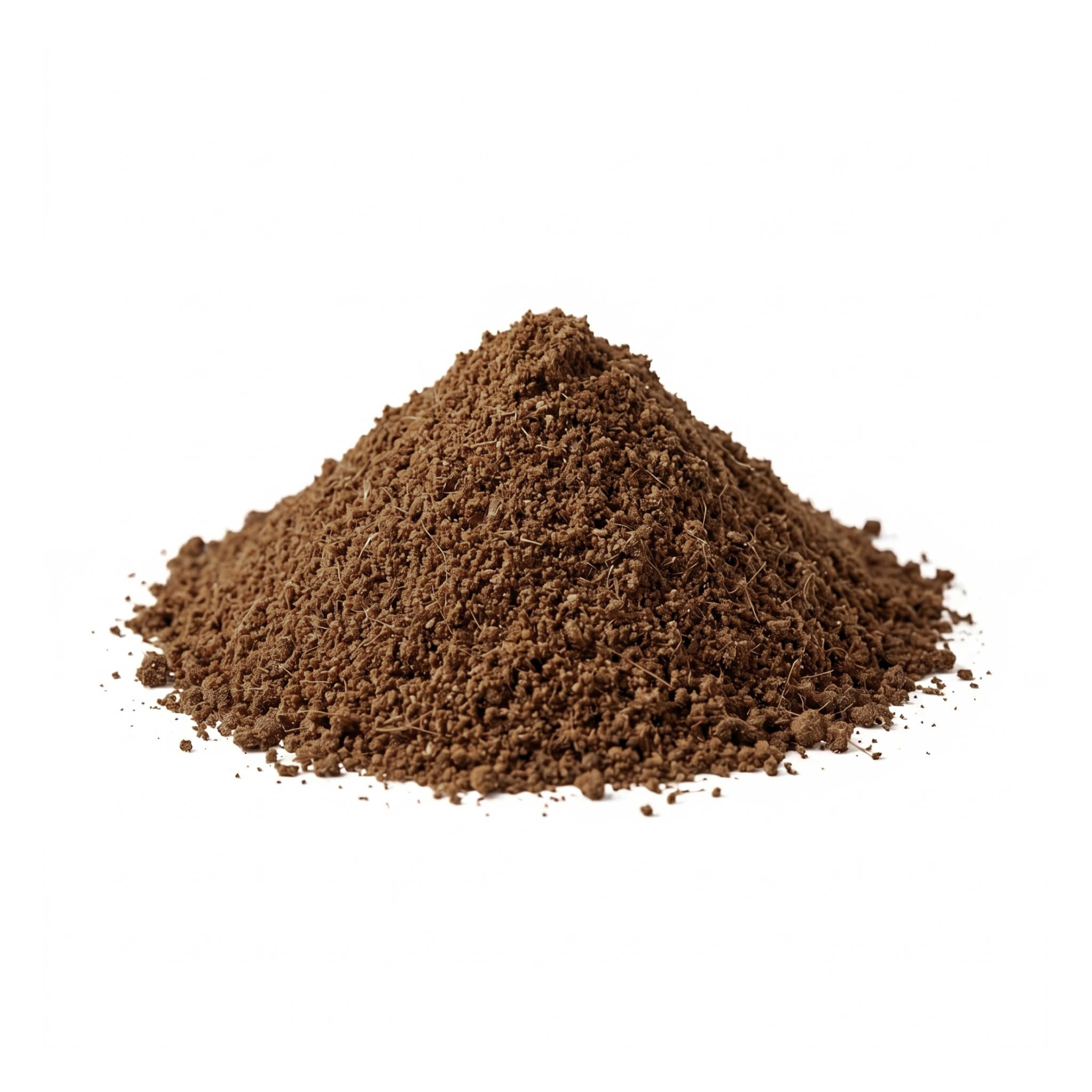
You have just purchased a bale of Acidophilic substrate and are going to plant blueberries, coffee, gardenias, anthuriums or amend calcareous soils for crops that demand a low pH. This guide covers calculating the fertilization to add, preparation, planting and pH monitoring during the first three months in the Dominican climate.
Product specifications
| Specification | 250 L bale |
|---|---|
| SKU | 540250 |
| Particle size | Coarse (6 - 20 mm) |
| pH | < 4.5 (natural) |
| EC (1:1.5) | < 0.3 mS/cm |
| Fertilization | Unfertilized (add 100-150 g NPK/100 L) |
| Approx. expanded volume | 250 L (66 gal) |
Step by step to use it
Calculate the NPK to add
For 250 L of peat, calculate 250 to 375 g of compound NPK (100 - 150 g per 100 L). Use an NPK suited to acid-loving crops, ideally a 12-12-17 or a balanced formula with low calcium content. Have the NPK weighed and ready before hydrating.
Hydrate and mix in the NPK
Open the bale, pour the contents onto a clean surface and water until evenly moist. While the fiber expands, sprinkle in the calculated NPK and mix with a fork until evenly distributed. Let it rest for 12 - 24 hours before use.
Plant in a pot, furrow or raised bed
For blueberries in a raised bed, spread a 25 - 30 cm layer in the furrow. For gardenias or anthuriums in pots, fill to two thirds. To amend calcareous soils, mix 20 - 30 L of acidophilic peat per square meter into the first 15 - 20 cm of soil.
Initial watering with low-alkalinity water
Water abundantly to settle the plant. If the irrigation water has a pH above 7.0, acidify it with citric or nitric acid to pH 5.5 - 6.0 before applying it. Alkaline water progressively neutralizes the substrate's pH and ruins the crop within months.
Monitor pH and fertigate
Measure the pH of the drainage water every 3 - 4 weeks with a pH meter or strips. If it rises above 5.5, acidify the irrigation water with citric acid. Fertigate with a soluble acidophilic NPK every 2 - 3 weeks depending on crop vigor, always keeping the dose low and steady.
Not sure which NPK to use for your acid-loving crop?
Every acid-loving crop has its optimal recipe: blueberries prefer low-calcium formulas, gardenias tolerate standard NPK, anthuriums need different potassium balances. Tell us the crop and we will guide you on the recipe.
Complementary products
For blueberries in a raised bed, pumice and expanded clay at the bottom of the furrow improve drainage. Perlite and vermiculite are mixed with the acidophilic substrate at 10 - 15% for small-pot crops. The universal substrate works for semi-acidophilic mixes in a 30 acidophilic / 70 universal ratio.
Maintenance and care
The substrate's pH rises slowly with each watering: monitor it every 3 - 4 weeks and add acidifying amendments if necessary (elemental sulfur for one-off corrections, or acidified watering for maintenance). In perennial crops such as blueberry or coffee, plan an annual mulching with pine bark or fresh peat to replenish the acidity lost to leaching.
For blueberries in the DR, the commercial secret lies in keeping the pH between 4.0 and 5.0 throughout the entire life of the crop (8 - 15 years). A cheap field pH meter and a monthly drainage-water measurement protocol pay for themselves in the first season through the difference in yield.
Do not mix acidophilic substrate with garden compost, plant ash or calcareous soils if the crop is acid-loving: any of those components neutralizes the acidity within weeks. If you need to cut costs, mix it with perlite or vermiculite (inert) or with universal substrate in a controlled ratio.
Frequently asked questions
Why does my acid-loving crop turn yellow even though I use this substrate?
Yellowing in acid-loving crops almost always indicates iron chlorosis from a progressive rise in pH. Measure the pH of the drainage water: if it exceeds 5.5, neutralization is already happening. The most common cause in the DR: watering with tap water at pH 7.5 - 8.5. Acidify the irrigation water with citric acid down to pH 5.5 - 6.0 before applying it.
How long does a bale last in a perennial crop?
In perennial crops such as blueberry, the applied acidophilic substrate is consumed slowly: physical structure lasts about 4 - 6 years, effective acidity 2 - 3 years if not supplemented. Plan an annual mulching contribution and check the pH periodically. For potted ornamentals, re-pot the substrate every 18 - 24 months.
Can I use the same bale for blueberries and for soil amendment?
Yes, but the quantities change drastically. For blueberries in a raised bed use a 25 - 30 cm layer of pure substrate. For amending a calcareous soil in vegetable growing, 20 - 30 L mixed into the first 15 - 20 cm per square meter is enough. The 250 L bale covers 8 - 12 m² of amendment or 4 - 6 linear meters of furrow for blueberries.