

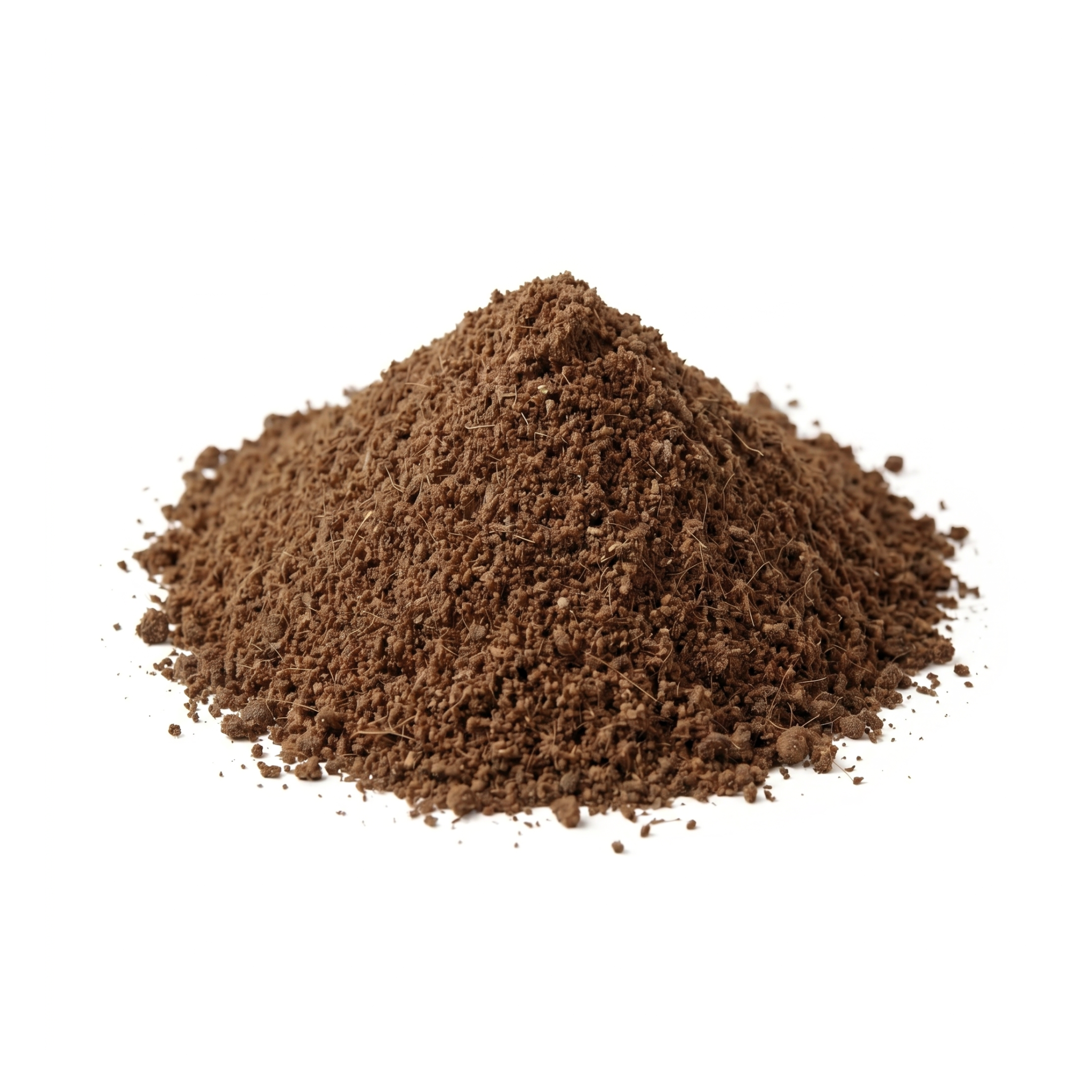
This guide covers preparing and using blond peat (sphagnum): opening the bale by breaking it up, gradual hydration, adjusting the pH to suit the crop, adding nutrients and improving the mix, and applying it according to use. Follow these steps to use blond peat as the base for professional substrates: germination, horticultural mixes or acid-loving crops.
Product specifications
Dodom blond peat comes in a single variant: a compacted 250 L bale of medium-grade sphagnum peat. It is a pale, fibrous and lightly decomposed peat, with no added lime or fertilizer. Here are its technical details:
| Specification | Blond peat (250 L bale) |
|---|---|
| SKU | 530250 |
| Material | Blond sphagnum peat |
| Particle size | Medium (0 - 20 mm) |
| Format | Compacted 250 L bale (66 gal) |
| Color | Light brown |
| pH | Acidic, not limed |
| Fertilization | Unfertilized |
| Organic matter | 100% plant-based origin |
Step by step to use it
The procedure is the same whether you are preparing a substrate for pots or amending the soil in your garden. Follow these five steps in order.
Open the bale and break up the peat
Open the bale and tip the peat into a large container or onto a clean tarp. It comes out compressed from the factory, so crumble it apart with your hands or a shovel until the clumps break up. The goal is for it to be loose and aerated before you hydrate it.
Hydrate the peat little by little
Dry blond peat repels water at first. Add water gradually —warm if possible— and keep mixing until it absorbs evenly. It is ready when, on squeezing a handful, it holds together without water streaming out. Do not waterlog it: you just want it to be moist and fluffy.
Adjust the pH to suit your crop
Blond peat is very acidic by nature. For most plants —vegetables, ornamentals and herbs— you will need to raise the pH with a liming agent, such as agricultural lime or dolomite, to the 5.5 - 6.5 range. If you are going to grow acid-loving plants such as blueberries, gardenias or coffee, leave it as it is: that low pH is exactly what they need. Always measure the pH before continuing.
Raise the pH in small doses and with patience: add part of the liming agent, mix well, water lightly and let the moist peat rest for a few days before measuring again. The pH does not change instantly. Liming all at once usually overshoots the range, and correcting it back down afterwards is much harder.
Add nutrients and improve the mix
The peat contains no fertilizer, so add nutrients to suit your crop with a base NPK fertilizer or well-made compost. If you are going to use it as a potting substrate, mix it with perlite or vermiculite to gain aeration and prevent it from compacting with watering. A common base is blond peat as the main component plus 20 - 30% mineral amendment.
Apply it according to use
You can now use the blond peat. In a pot: fill with the prepared mix and transplant. As a soil amendment: work it into the top 15 - 20 cm of soil to give body to sandy soils or lighten clay soils. On new lawns: spread a thin layer and level it before sowing to encourage more uniform germination.
Do not use blond peat straight from the bale as potting soil for common plants. Without liming it is too acidic and without fertilizer it provides no nutrients: the plant stalls or yellows within a few weeks. Remember that peat is an ingredient, not a finished substrate.
Complementary products
Blond peat performs best when paired with others. These products help you turn it into a balanced substrate:
The perlite provides aeration and prevents the mix from compacting with watering; the vermiculite improves water and nutrient retention, very useful if you are preparing substrate for seedling trays; and the zeolite retains the fertilizer you add to the mix and releases it gradually, reducing leaching from watering.
Maintenance and care
Store any peat you do not use in its closed bale, in the shade and protected from the rain. Stored dry, it keeps its properties for a long time. If the peat dries out completely, it will repel water again: rehydrate it little by little with warm water, just as on first use, before adding it to any mix.
Keep in mind that it is an organic material: inside the pot it decomposes slowly and, over the years, loses some structure. In long-term crops it is advisable to renew part of the substrate from time to time or reinforce it with mineral amendments that last longer.
Frequently asked questions
Do I always have to lime blond peat before using it?
It depends on the plant. For most crops —vegetables, ornamentals and herbs— yes: blond peat is too acidic by nature and the pH must be raised to the 5.5 - 6.5 range with a liming agent. The exception is acid-loving plants such as blueberries, coffee, gardenias or azaleas, which thrive at that low pH and need no liming. Measure the pH and decide based on your crop.
In what proportion do I mix blond peat to make my substrate?
There is no single recipe, but as a reference blond peat is usually the main component of the mix, accompanied by 20 - 30% perlite or vermiculite for aeration and retention. For cacti and succulents more mineral material and less peat is advisable; for seedling trays and plants that require constant moisture, a little more vermiculite. Adjust according to the crop and the climate of your area.
Can I apply blond peat directly onto the garden soil?
Yes, as a soil amendment it is one of its best uses. Work it into the top 15 - 20 cm of soil: in sandy soils it adds body and water retention, and in clay soils it improves aeration. Bear in mind that it also acidifies, so if your soil is already acidic or you are going to plant species that do not tolerate a low pH, use moderate doses or combine it with a liming agent.
