
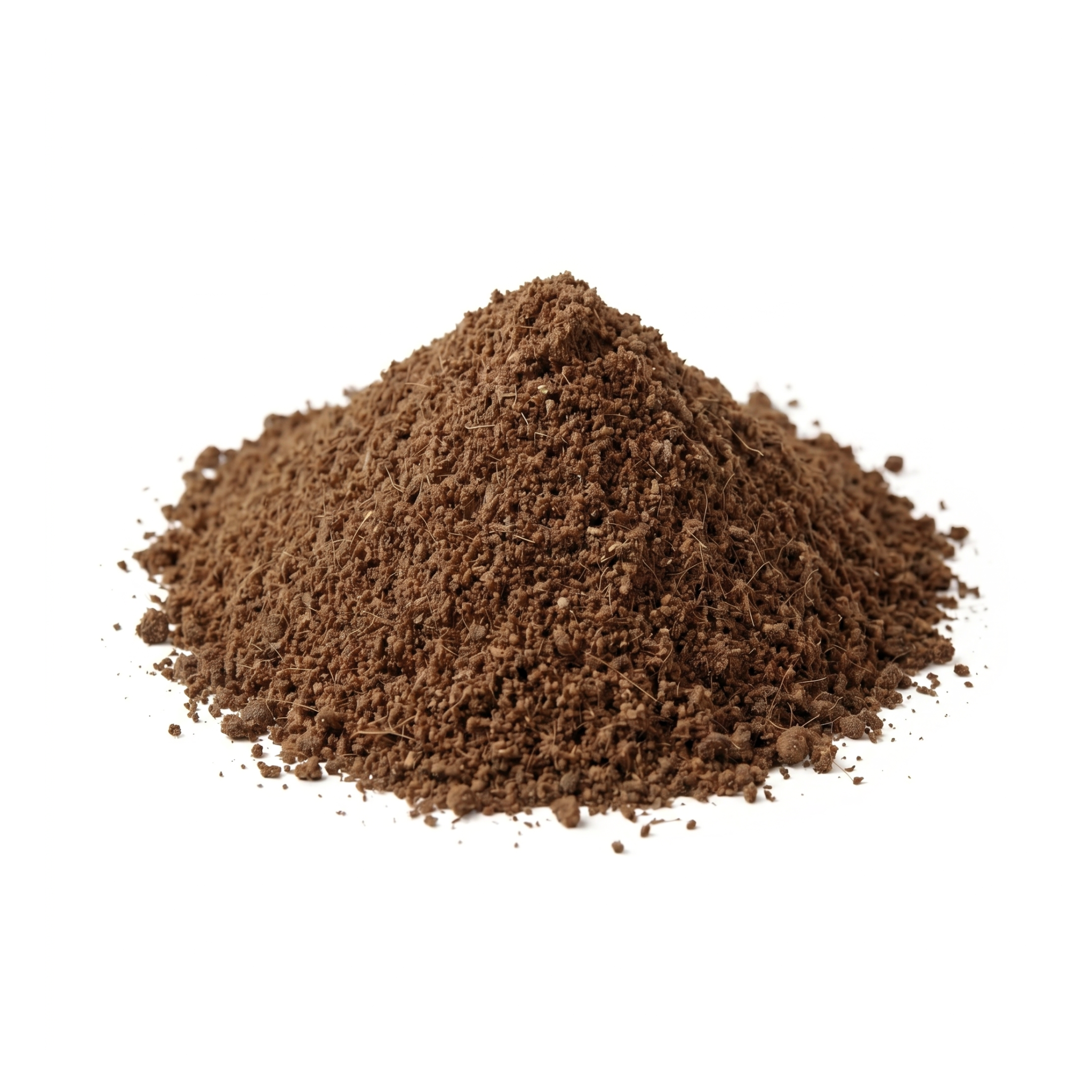

Preparing custom substrates, giving body to sandy soil or lightening a clay one calls for a solid organic raw material, not a ready-made formulated product. This blonde peat —also known as sphagnum peat or peat moss— is exactly that: low-decomposition sphagnum peat with a medium granulometry, the base ingredient with which the grower builds and corrects their own mixes and soils. It arrives in its natural state, without lime or fertilizer, so you can define the recipe.
Key benefits
- Top-grade raw material: light sphagnum peat, fibrous, low-decomposition and with uniform color — the base chosen by demanding growers for their mixes.
- Versatile medium granulometry: the 0-20 mm fraction balances retention and aeration, working both for building substrates and for soil incorporation.
- High water retention: its porous structure absorbs and holds moisture, helping to space out watering cycles.
- No lime, no fertilizer: it is an open-recipe ingredient; you decide how much to lime and feed based on the crop. Its naturally acidic pH also lets you use it to lower the pH of soils and mixes.
- Clean and easy to handle: free of clumps and coarse impurities, it mixes effortlessly.
Typical applications
- Organic base for preparing your own substrates, combined with perlite, vermiculite and lime.
- Improvement of sandy soils —adding body and water retention— and of clay soils —improving aeration—.
- General soil conditioning and pH reduction in overly alkaline ground.
- Establishing new lawns: a thin layer before sowing favors germination.
- Garden amendment and root protection against cold.
Going to grow blueberries, coffee or ericaceous plants directly? For that use, the acidophilic substrate —with a coarser fraction and already formulated as a growing medium— is the specific option.
Quality and origin
The blonde peat comes from peat bogs in northern Europe, where the cold climate produces a fibrous, stable and slow-decomposing peat. That stability is what sets it apart from generic organic material: it keeps its structure and aeration capacity for longer inside the pot or the soil. It is a raw material designed for serious cultivation work, not for makeshift fixes.
What is the difference between blonde peat and the black peat in the ready-formulated substrates?
Is it suitable for vegetable gardens and food crops?
Does blonde peat expire or lose properties in storage?
Does it work as a substrate for cacti, succulents and orchids?
Still have questions?
Ask us and we will gladly help you with whatever you need.
| General | |
|---|---|
| Raw material | Blond sphagnum peat |
| Country of origin | Lithuania |
| Physicochemical properties | |
| Fertilization | Unfertilized — base recipe ingredient |
| Particle size | Medium [0 - 20 mm (0 - 0.79 in)] |
| Organic matter | > 95% |
| pH | < 4.5 (natural, unlimed) |
| Compatibility and use | |
| Recommended use | Preparation of custom substrates, acidification and soil improvement |
| Presentation and packaging | |
| Presentation | 250 L (66 gal) bale |
Official GARDESE warranty
What's covered
Confirmed defect: replacement or refund of the amount paid.
What's not covered
Pago & Seguridad

