

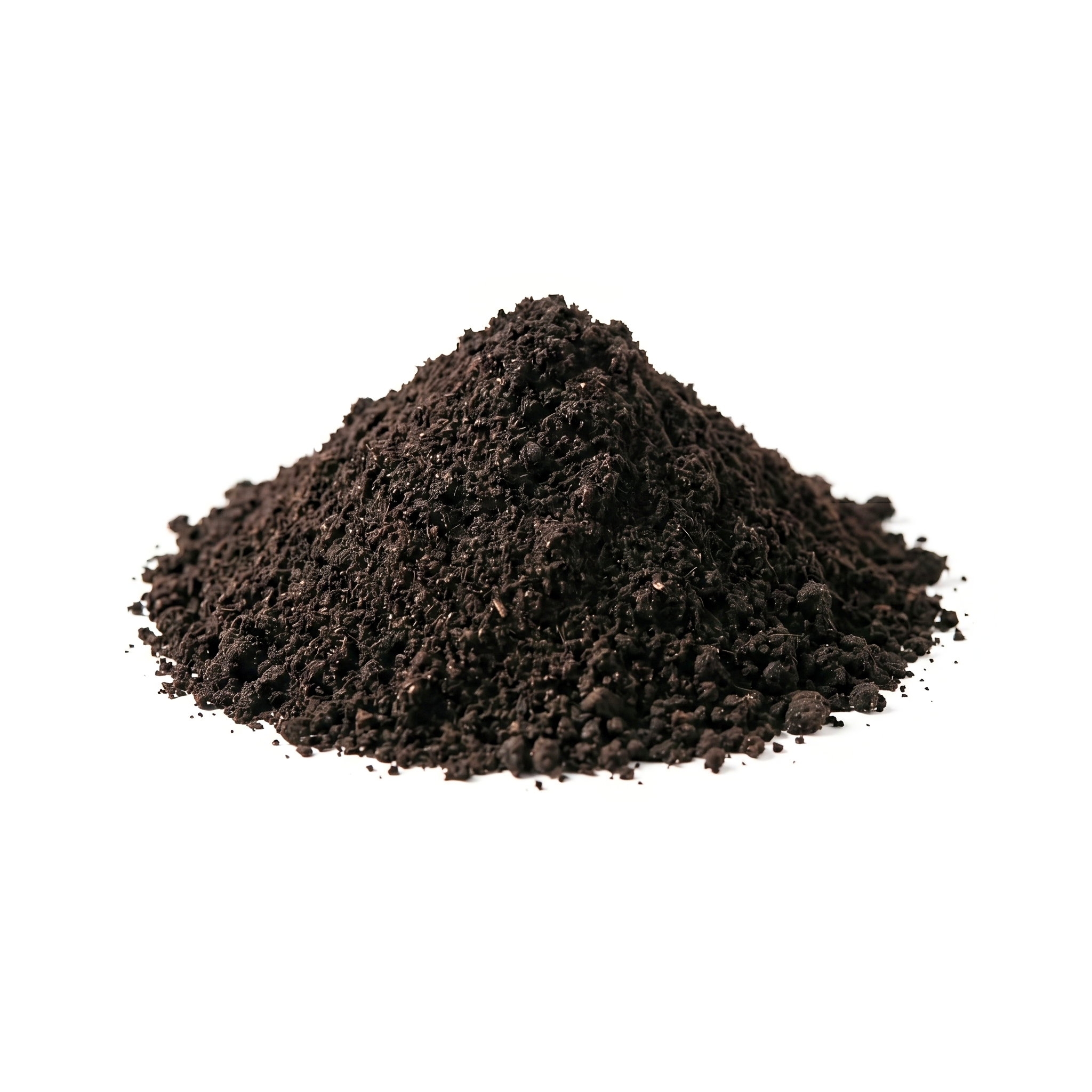
This guide covers the use of germination substrate: hydrating the peat 12-24 h beforehand, filling the trays without compacting, sowing at the correct depth, initial watering by capillarity or fine misting, and maintenance until transplanting. Follow these steps to achieve high germination rates in the tray: uniform moisture, root oxygenation, and seedlings ready to transplant.
Product specifications
| Specification | 250 L bale |
|---|---|
| SKU | 510250 |
| Particle size | Fine (0 - 6 mm) |
| pH | 5.5 - 6.5 |
| Fertilization | Low NPK + microelements |
| Organic matter | > 80% |
| Approx. expanded volume | 250 L (66 gal) |
Step-by-step guide to use it
Hydrate the peat 12-24 h beforehand
Open the bale and pour the contents into a clean tub or tarp. Water with lukewarm water until the substrate is moist and crumbly but not waterlogged. Let it rest for 12 to 24 hours so the fiber expands and absorbs uniformly.
Fill the trays without compacting
Load the tray cells with the hydrated substrate. Push lightly with your hand to settle the material but never press down: compaction eliminates the root aeration the seedling needs. The surface should sit 2 mm below the cell rim.
Sow at the correct depth
As a rule, sow each seed at a depth equal to two or three times its diameter. For very small seeds (lettuce, basil, tomato), simply rest them on the surface and cover them with a thin layer of sifted substrate.
Initial watering by capillarity or fine misting
Water by immersing the tray for 1 to 2 minutes until you see the surface moisten, or apply a very fine mist from above. Avoid direct jets that dislodge the seed. The surface should be uniformly moist to the touch.
Maintain until transplanting
Keep the moisture constant without saturating. When the seedling has 2 - 3 true leaves, it is ready to transplant to a pot or container with universal substrate. The initial fertilization lasts 3 - 4 weeks; afterward, begin soluble fertigation.
Complementary products
To get the most out of your germination bale, pair it with suitable trays and, if you fertilize with intensive watering in hot climates, mix in 10 - 15% perlite or vermiculite to improve aeration.
Maintenance and care
An opened bale lasts indefinitely if you keep it closed in a dry, cool, shaded place. Avoid direct sun exposure and high temperatures that trigger microbial activity. Once opened, it is best to use it up within a few months to preserve the initial pH and fertilization.
In a Caribbean climate, water the trays first thing in the morning and at dusk. Avoid watering at midday: the thermal contrast between the water and the surface stresses the seedling and promotes damage from excess evapotranspiration.
Do not reuse germination substrate after the first seedling cycle. Even if it looks usable, it already contains root exudates, fertilizer residues, and possible invisible pathogens that will ruin the next batch of seeds. Use fresh substrate every cycle.
Frequently asked questions
How long does the original fertilization last without adding anything?
The initial low NPK fertilization covers 3 to 4 weeks of seedling growth, depending on the species and the temperature. When 2 - 3 true leaves appear, begin fertigation with a soluble NPK adapted to the crop (for example, a 0.5 - 1 g per liter solution of a balanced 20-20-20).
Can I use this substrate directly in a small pot without going through a tray?
Technically yes, but you will lose value: the fine structure and low fertilization are optimized for the germination phase. For pots and direct transplanting, use universal substrate with standard NPK and medium structure, which better withstands the watering of a crop in production.
What do I do if the seedlings turn yellow within a week?
Yellowing within a week usually indicates excess watering (the most likely reason in the Dominican climate) or a pH shifted by very alkaline irrigation water. Check that the tray drains well and review the pH of the irrigation water: if it exceeds 7.5, adjust it with citric or nitric acid to pH 6.0 - 6.5 before watering.
