

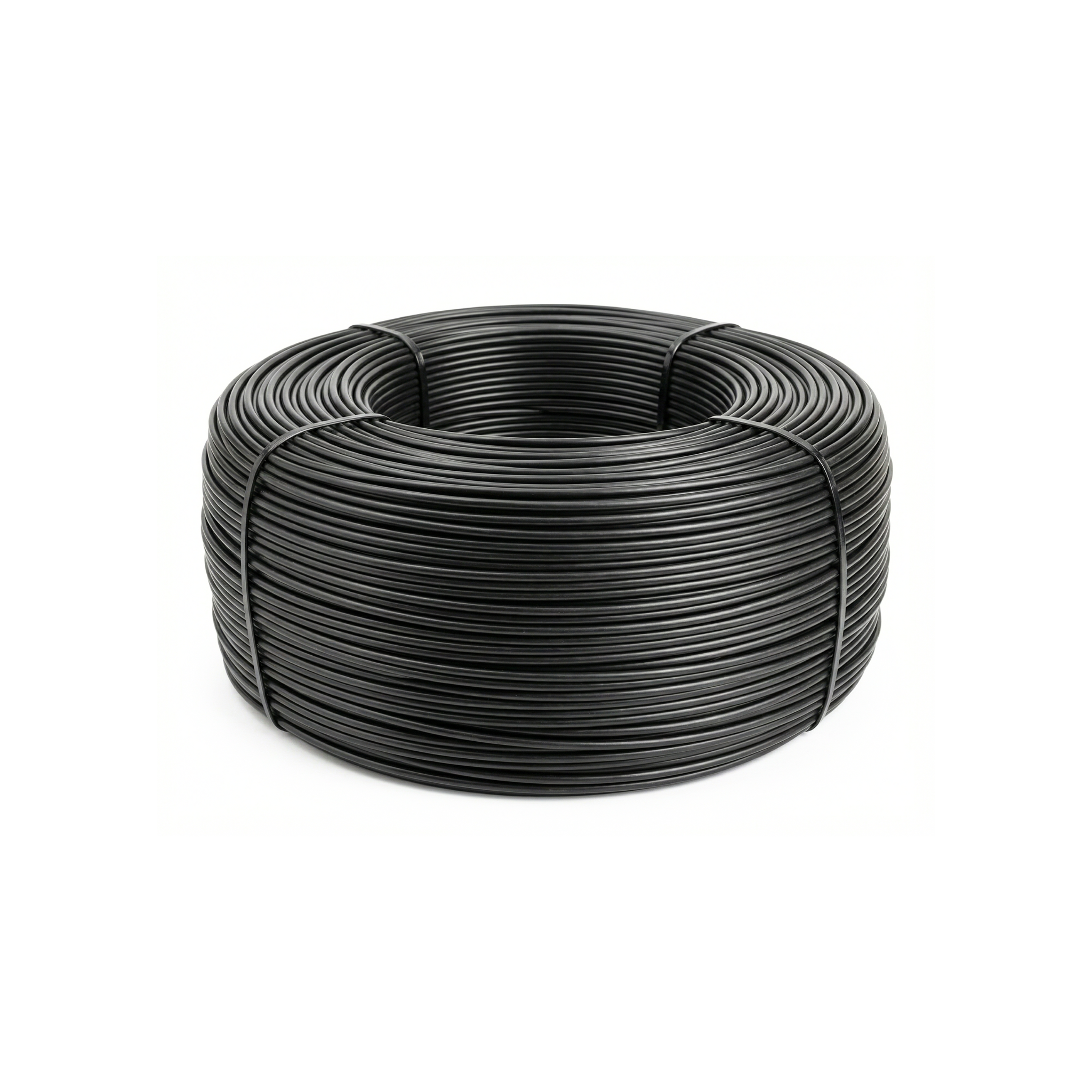
This guide covers the application of an HDPE welding bead: compatibility check, joint cleaning, loading the bead with machine preheating, pre-test, application at a constant speed and final inspection. Follow these steps to weld HDPE geomembrane sheets with a homogeneous bead that withstands pressure and prolonged exposure.
Product specifications
The HDPE welding bead is high-density polyethylene in an extruded rod format, sized to feed manual extrusion welding machines. When the machine melts it, the material is deposited over the joint between two geomembrane sheets and, upon solidifying, becomes molecularly fused with both sheets: the bond is as strong as the base material.
| Specification | HDPE welding bead |
|---|---|
| Material | High-density polyethylene (HDPE) |
| Format | Continuous extruded bead |
| Compatibility | HDPE / LLDPE geomembranes |
| Application | Extrusion welding |
| Melting temperature | 200 to 220 °C (392 to 428 °F) |
Step by step to use it
The bead by itself does nothing: it depends on the operator and the extrusion machine. What is critical is the prior preparation of the joint and the constant travel speed during welding. Follow these steps.
Check compatibility
The bead must be made of the same polyethylene as the geomembrane to be welded. HDPE with HDPE, LLDPE with LLDPE. Mixing types gives weak bonds that may look correct to the eye but fail under pressure.
Clean the joint to be welded
Brush the welding area to remove dust, dirt and the oxidized surface layer of the HDPE. Use a wire brush or abrasive sheet. The surface must be left matte and clean. Any trace of soil or oil contaminates the fusion and creates weak bond zones.
Load the bead and preheat the machine
Insert the bead through the feed inlet of the extrusion machine. Turn it on and let it preheat to the HDPE melting range (200 to 220 °C). Wait for the machine to reach a stable temperature before applying the first bead.
Do the welding test
Apply the bead over two scraps of geomembrane of the same material and let it cool. Pull on the bond by hand: it must break in the base material, NOT in the bead. If it breaks in the bead, adjust temperature and speed before welding the actual job.
Apply the bead at a constant speed
Advance the machine at a uniform speed, leaving a continuous bead of regular thickness over the joint. If you go too slow, too much material is deposited and forms a hump; if you go too fast, the bead comes out thin and porous. The correct speed produces a smooth, glossy bead as soon as it leaves the nozzle.
Inspect the bead
Once cold, visually check the entire run. Any area with pores, lack of material or yellowish color (overheating) must be re-welded by passing a second bead over it. On audited jobs, the spark test or needle test is mandatory to certify watertightness.
Always store the bead in its original wrapping until the moment you load it into the machine. Polyethylene absorbs ambient moisture, and a damp bead produces steam bubbles during fusion: the bead ends up with internal pores invisible to the naked eye. If the bead has been exposed to moisture, run it through an oven at 60 °C for a few minutes before using it.
Do not weld over a dirty surface trusting that the heat will clean it. The melting temperature of HDPE does not burn off sand or grease: what it does is mix them into the bead. The result is a bond with inclusions that looks correct but fails at the first stress cycle. Cleaning with a wire brush before welding is mandatory, with no shortcuts.
Complementary products
The bead by itself is a consumable: it needs the machine and the base material to have a function. These three complementary items are the complete extrusion welding system.
The extrusion welding machine is the tool that melts the bead and deposits it over the joint: it is indispensable. The HDPE geomembrane is the base material to be welded; without compatible material the bead does not fuse. The hot-air welding machine complements the extrusion one for long, straight joints in large-scale work: the bead is reserved for details, patches and transitions.
Maintenance and care
The bead is a consumable: care focuses on storage and handling prior to use.
- Storage: in a covered place, on a pallet, inside the original wrapping. Ambient moisture contaminates the polyethylene and produces pores during fusion.
- Pre-use check: if the bead looks dirty, cracked or discolored, do not load it into the machine: discard it. A bead in poor condition gives bonds with invisible inclusions.
- Handling: avoid impacts and sharp bends. The bead is rigid; if it snaps when bent, the affected batch must not be used in structural joints.
- Traceability on audited jobs: record the bead batch in the job logbook along with the welding date. In the event of a later audit, it is the proof that certified material was used.
Frequently asked questions
Can I use this bead with any extrusion welding machine?
Yes, the bead format is compatible with most manual extrusion machines on the market for HDPE/LLDPE. If your machine requires a specific diameter, check it against the equipment documentation before buying large quantities.
What is the difference between extrusion welding and hot-air welding?
Hot-air welding directly melts the two sheets and joins them by roller pressure: fast on long, straight joints. Extrusion welding adds material (the bead) and welds in areas where the geometry does not allow an automated machine to pass: details, patches, corners, pipe junctions. On a large job both machines are used; they are not alternatives but complementary.
Can I weld geomembranes of different thickness with the same bead?
Yes, as long as they are of the same material (both HDPE or both LLDPE). The bead adjusts to the greater thickness through the extrusion flow rate and the travel speed. The bond comes out balanced and the tensile test must break in the thinner sheet, not in the bead.
