
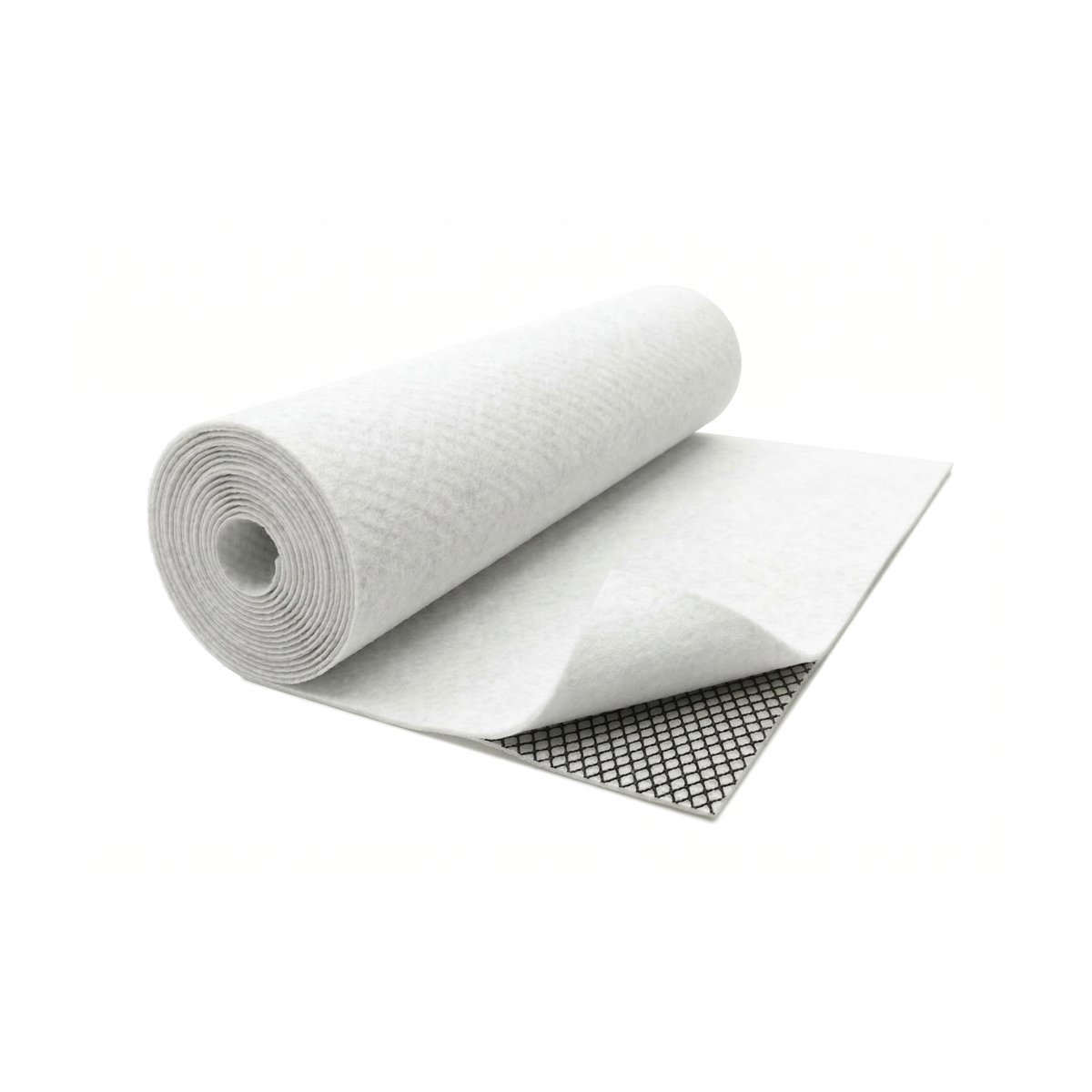
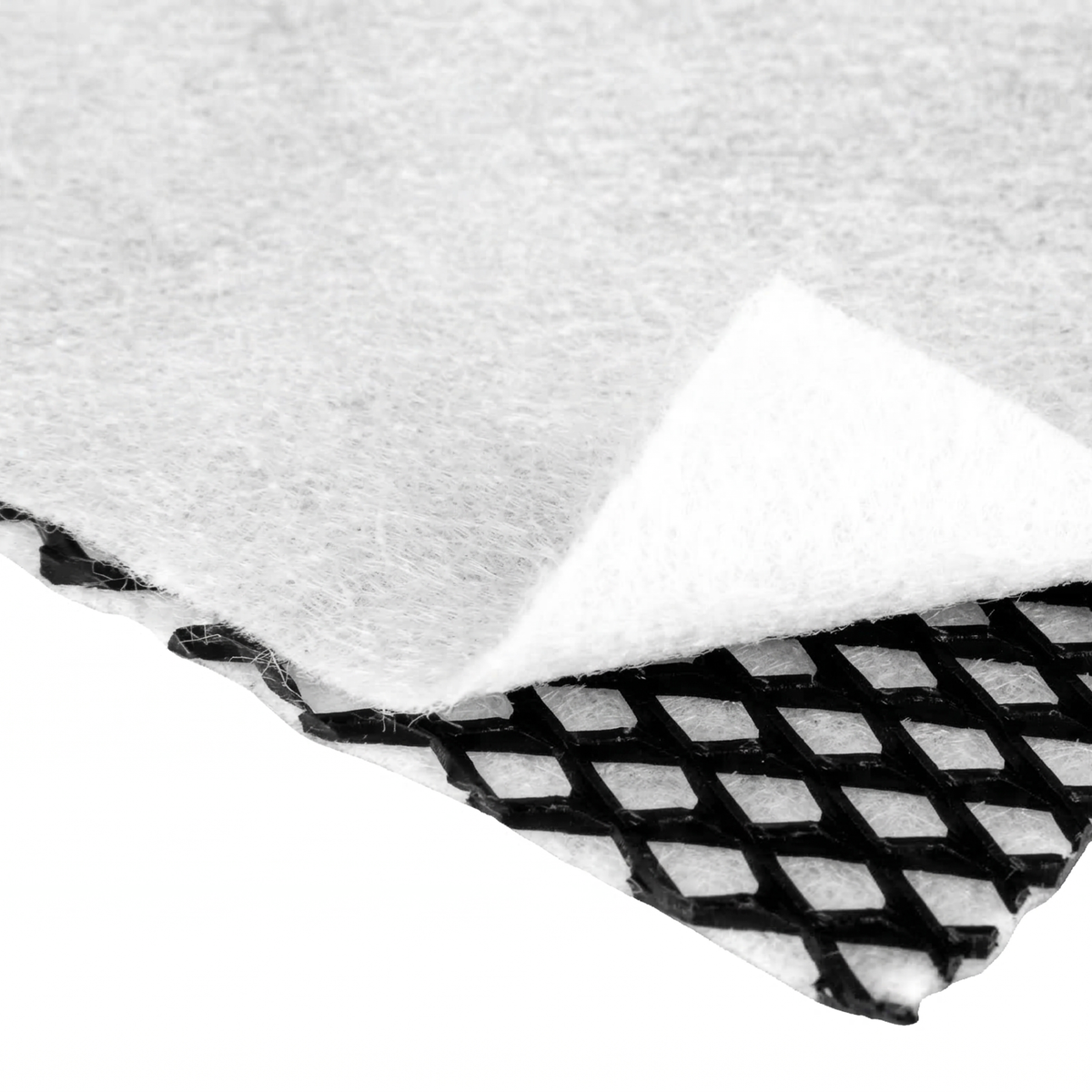
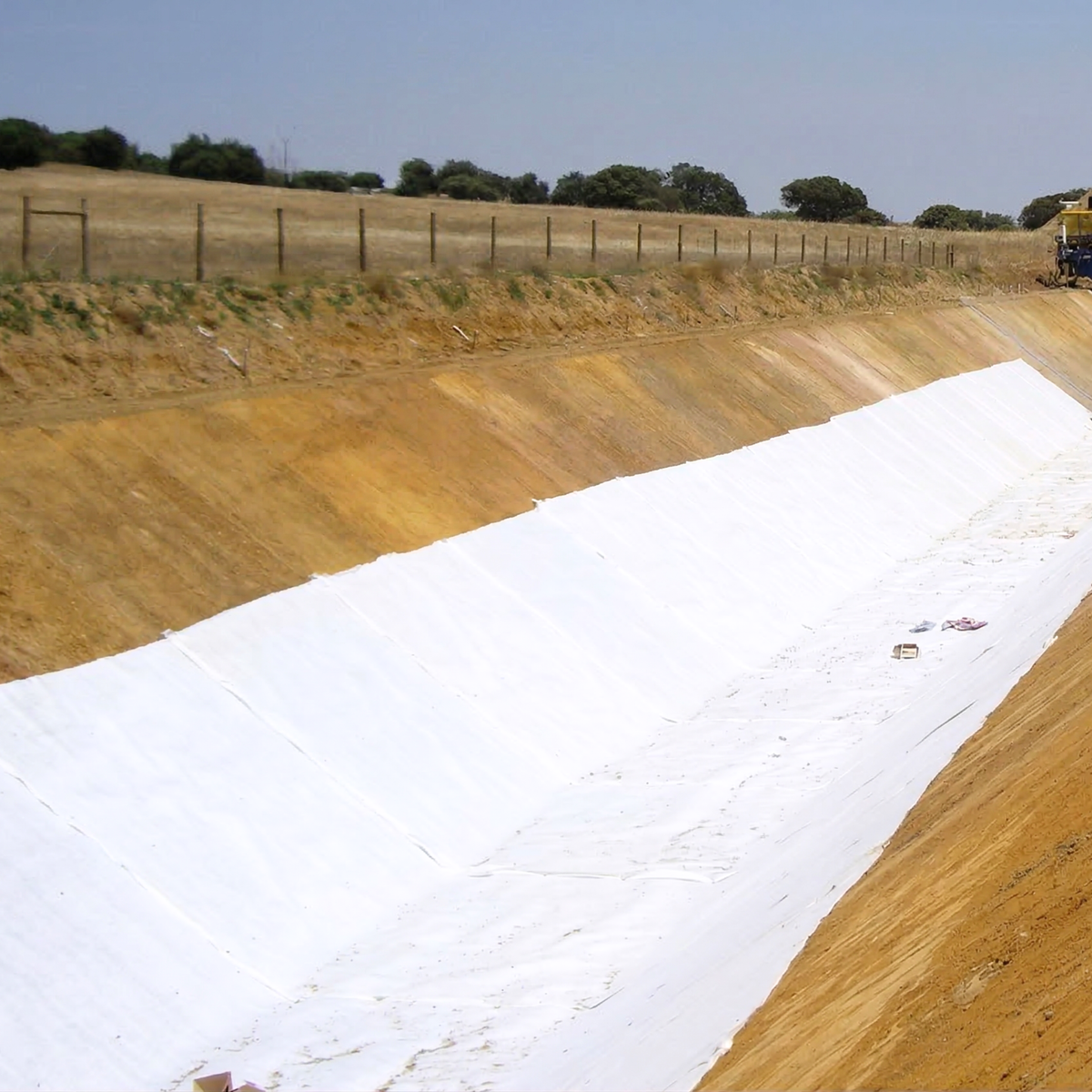
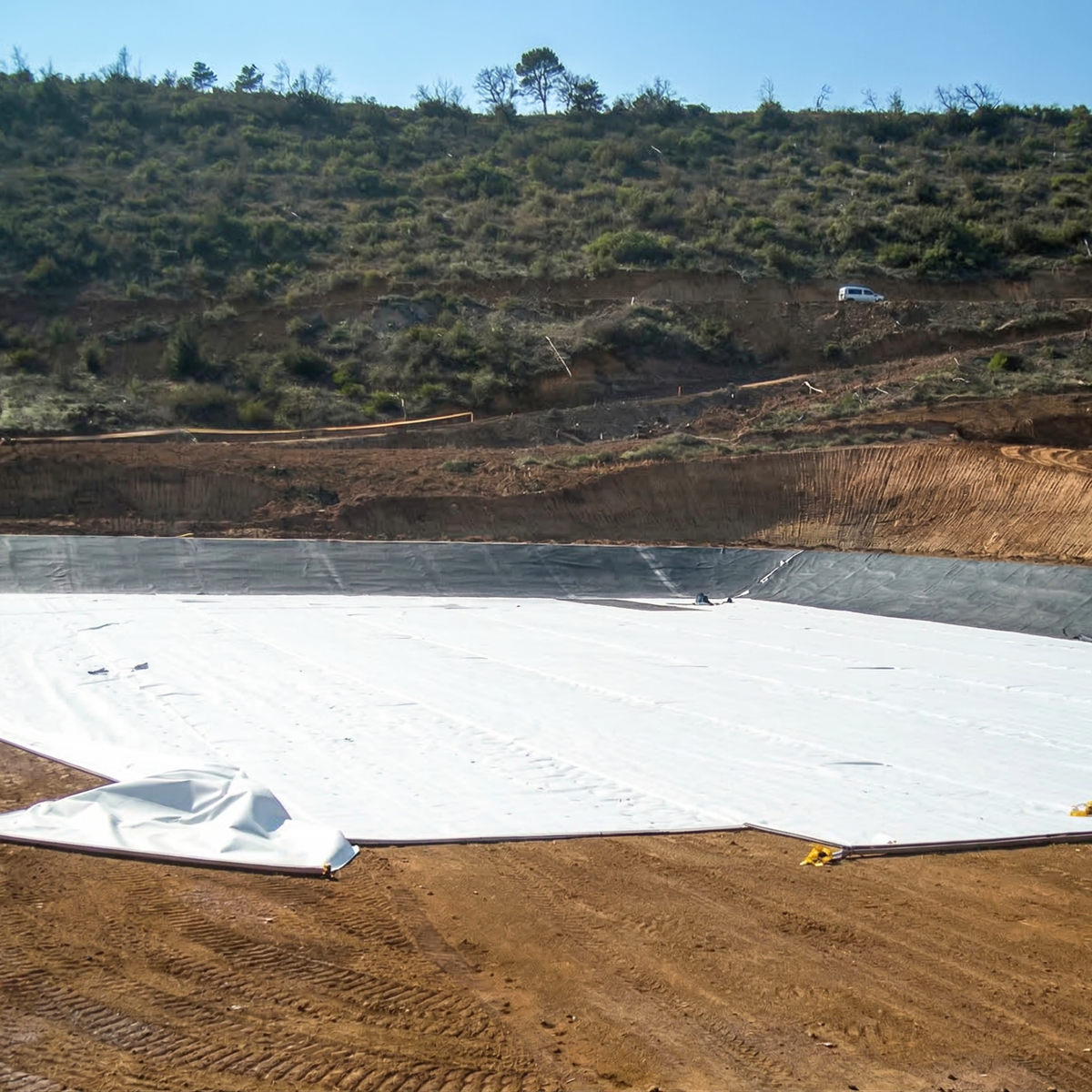
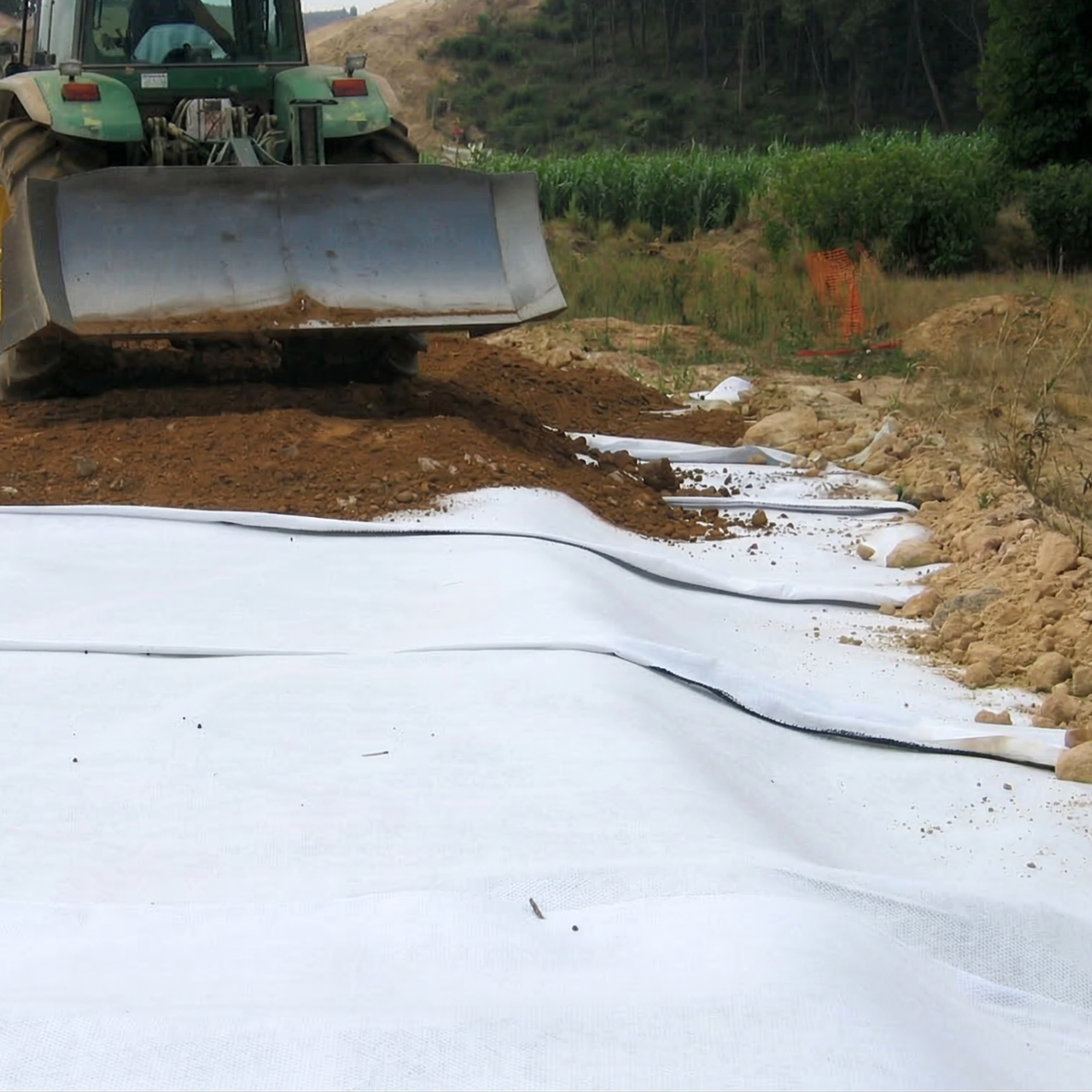
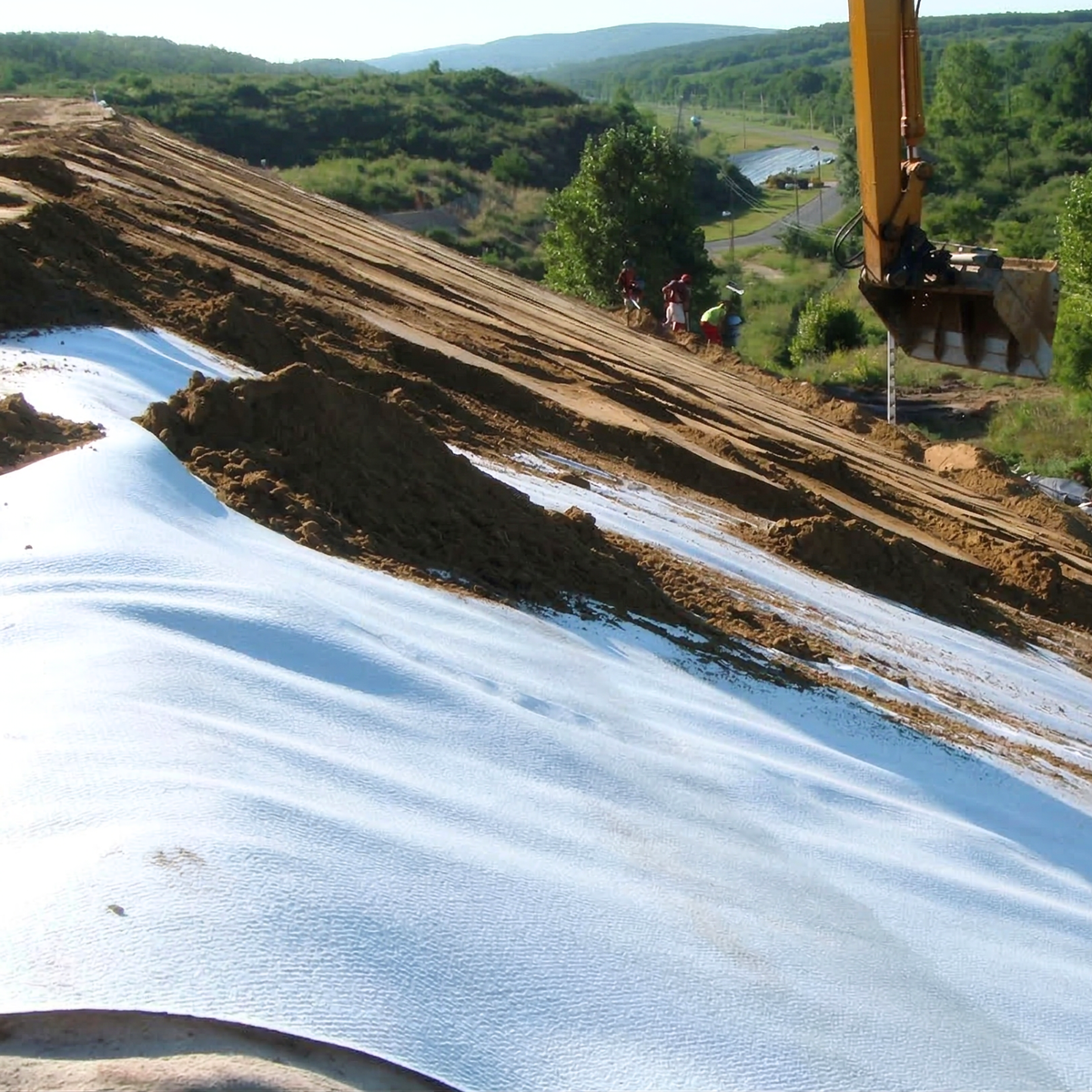


Replacing bulky traditional drainage gravel layers with a thin, high-flow solution in retaining walls, basements, and green roofs where space and weight are critical, without losing hydraulic efficiency or filtration against clogging, requires a geocomposite with a three-dimensional geonet core and lateral filtering geotextiles. This drainage geocomposite —also called geodrain, drainage sheet with geotextile, or macdrain— is manufactured by MOLTEXO with a geonet core between two layers of non-woven geotextile, in a 5.8 m wide and 100 m long roll, designed for retaining walls, basements, foundations, green roofs, landfills, and any professional planar drainage application.
Key benefits
- High-flow planar drainage: the three-dimensional geonet core delivers a water flow capacity that efficiently replaces traditional drainage gravel, saving excavation volume, weight on structures, and the logistical cost of aggregate transport.
- Integrated filtration against clogging: the lateral geotextiles filter fine soil particles, preventing them from entering the drainage core and obstructing the flow channels — a critical condition for the system to last decades with no maintenance.
- Calibrated mechanical resistance: the geocomposite withstands the compression loads of fill or surface traffic without the core being crushed, maintaining drainage capacity even under meters of soil in a retaining wall or vehicle traffic on a drainage platform.
- Double-sided geotextile for versatile use: both faces have filtering geotextile, which allows direct contact with soil in any orientation, removing the need to orient the material during installation and simplifying on-site logistics.
- Fast deployment in manageable rolls: the material is lightweight and rolls out with basic equipment, a clear advantage over gravel + pipe + geotextile systems that require deep excavation, aggregate transport, and complex maneuvers.
Typical applications and uses
- Vertical drainage behind retaining walls and basement walls for relief of hydrostatic pressure.
- Horizontal drainage under foundation slabs and floor slabs in zones with high subsoil moisture.
- Green roofs (landscaped roofs) to evacuate excess irrigation and rainwater, preventing substrate saturation.
- Sanitary landfills, tunnels, and underground works with professional perimeter drainage.
Quality and durability
An economical drainage geocomposite fails on two fronts: the geonet core is thin or collapses under load (which reduces the declared flow capacity and saturates the system within a few years) and the lateral geotextiles are sparse with no effective filtration (which causes migration of fines into the core and clogs the system within months). MOLTEXO works with a structural geonet core and calibrated filtering geotextiles, which separates a professional construction geodrain from a generic composite that saturates before the first year.
Equivalences
Equivalent to these other-brand references:
- Non-woven geotextile + Geonet + Non-woven geotextile · Roll 5.8 m (19 ft) wide and 100 m (328 ft) long
- Solmax MIRAFI G-SeriesTenax TENDRAINSKAPS TNMaccaferri MacDrain 2L 20.2Pavco Wavin Geodrén PlanarSolmax FABRINET DCNAUE Secudrain 201 WD 601 201RBK Builds Drainage Geocomposites (RD family)MYR Serviplast Dominicana Geodrains (RD family)
Brands and references mentioned belong to their respective owners; cited only for comparison and compatibility.
What is the critical role of the geotextile in this geocomposite?
Can it really replace traditional gravel drainage?
Does it work installed both vertically and horizontally?
How are the geocomposite rolls joined on site?
Still have questions?
Ask us and we will gladly help you with whatever you need.
| Material and construction | |
|---|---|
| Composition | Geotextile + Geonet + Geotextile |
| Mass per unit area (geotextile) | 150 g/m² (4.4 oz/yd²) per layer |
| Mass per unit area (total) | ≥1000 g/m² (29.5 oz/yd²) |
| Dimensions and format | |
| Roll width | 5.8 m (19.0 ft) |
| Roll length | 100 m (328.1 ft) |
| Coverage area per roll | 580 m² (6243.1 ft²) |
| Composite thickness | ≥6.0 mm (0.24 in) |
| Mesh core thickness (geonet) | 5.0 mm (0.20 in) |
| Estimated total weight per roll | 580 kg (1278.7 lb) |
| Strength and performance | |
| Tensile strength (mesh core) | ≥13.0 kN/m (890.8 lb/ft) |
| Vertical tensile strength (composite) | ≥14.0 kN/m (959.3 lb/ft) |
| Peel resistance (mesh and geotextile) | ≥0.3 kN/m (20.6 lb/ft) |
| Hydraulics and filtration | |
| Permeability coefficient (geotextile) | ≥0.3 cm/s (0.12 in/s) |
| Hydraulic conductivity (composite) | ≥1.2 × 10⁻⁴ m³/s (0.0042 ft³/s) |
| Presentation and packaging | |
| Presentation | Roll 5.8 m (19 ft) wide × 100 m (328 ft) long |
| Roll: Width | 55.0 cm (21.65 in) |
|---|---|
| Roll: Height | 55.0 cm (21.65 in) |
| Roll: Depth | 580.0 cm (228.35 in) |
| Roll: Weight | 200.0 kg |
Official MOLTEXO warranty
What's covered
Confirmed defect: replacement or refund of the amount paid.
What's not covered
Payment & Security

