

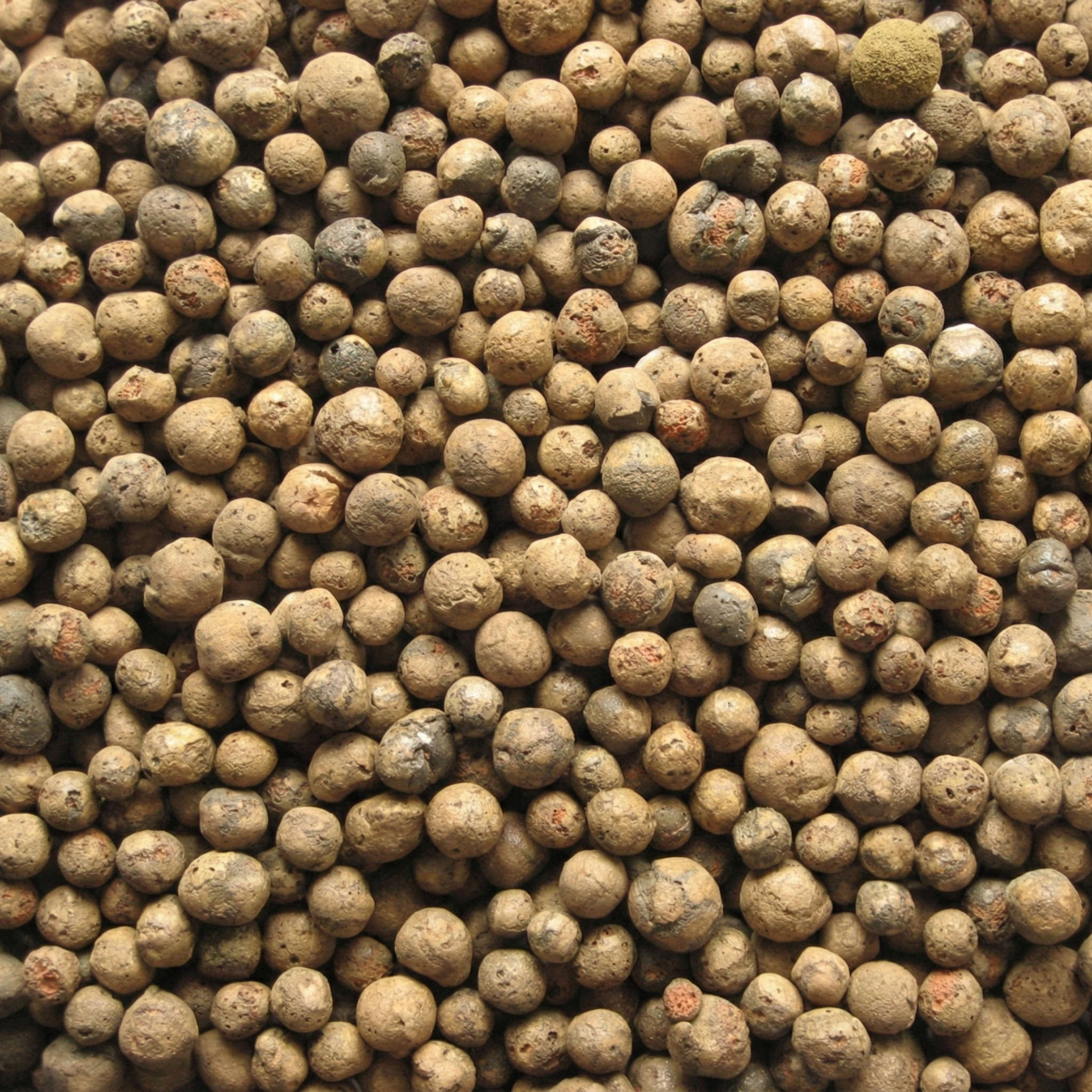


Solving drainage in large pots, replacing gravel in lightweight concrete, or creating a permanent growing medium for hydroponics requires a lightweight ceramic aggregate with calibrated porosity. This arlite—also called expanded clay, LECA, or clay balls—is supplied by Gardese in a 40 L bag with 8-16 mm granulation, designed for professional gardening, hydroponics with recirculating systems, decorative landscaping, and lightweight construction projects where indefinite durability and thermal insulation are critical.
Key Benefits
- Superior drainage with modulated retention: Internal porosity retains moisture but the space between the balls ensures complete drainage, preventing waterlogging and root rot in deep pots.
- Significant structural lightness: Low specific gravity dramatically reduces dead load in tall planters, raised garden beds, and concrete mixes for roofs.
- Thermal and acoustic insulation: The closed cellular structure traps air, improving energy efficiency in roofs, floors, and cavity fillings.
- Indefinite and inert durability: High-temperature ceramic that does not degrade, compact, or rot, is fire and frost-resistant, with a stable neutral pH.
- Controlled Gardese origin: Calibrated ceramic by granulometry and processing that minimizes residual dust, producing a homogeneous material in weight and porosity.
Typical applications and uses
- Drainage base in pots, planters, and green roofs to prevent root rot.
- Permanent growing medium in hydroponics with recirculating systems, NFT, and aquaponics.
- Surface decoration (mulching) in gardening to reduce evaporation and provide a professional finish.
- Lightweight concrete, screed overlays, and leveling fills between beams in construction.
Quality and durability
An inexpensive arlite fails in two points: the granulometric calibration is irregular (which alters drainage behavior) and the thermal processing is inconsistent (which produces balls with variable hardness that break when handled). Gardese works with calibrated expanded clay and controlled firing that ensures uniform hardness, which separates a professional hydroponic or serious construction aggregate from a generic bag that crumbles during use.
Does expanded clay alter the pH of irrigation water or substrate?
Is it reusable after a hydroponic crop cycle?
Does it really work as concrete aggregate for roofs, or only for gardening?
Why use expanded clay and not regular gravel if I just need drainage in a pot?
Still have questions?
Ask us and we will gladly help you with whatever you need.
| Material and construction | |
|---|---|
| Base material | Thermally expanded natural clay |
| Hydraulics and filtration | |
| Drainage capacity | High |
| Physicochemical properties | |
| Electrical conductivity (EC) | Very low (< 0.5 dS/m) |
| pH level | Neutral (~7.0) |
| Grain size | 8-16 mm (0.3-0.6 in) |
| Presentation and packaging | |
| Presentation | 40 L (10.6 gal) bag |
| Sack: Width | 48.0 cm (18.9 in) |
|---|---|
| Sack: Height | 21.0 cm (8.27 in) |
| Sack: Depth | 88.0 cm (34.65 in) |
| Sack: Weight | 11.0 kg |
Official GARDESE warranty
What's covered
Confirmed defect: replacement or refund of the amount paid.
What's not covered
Pago & Seguridad

