

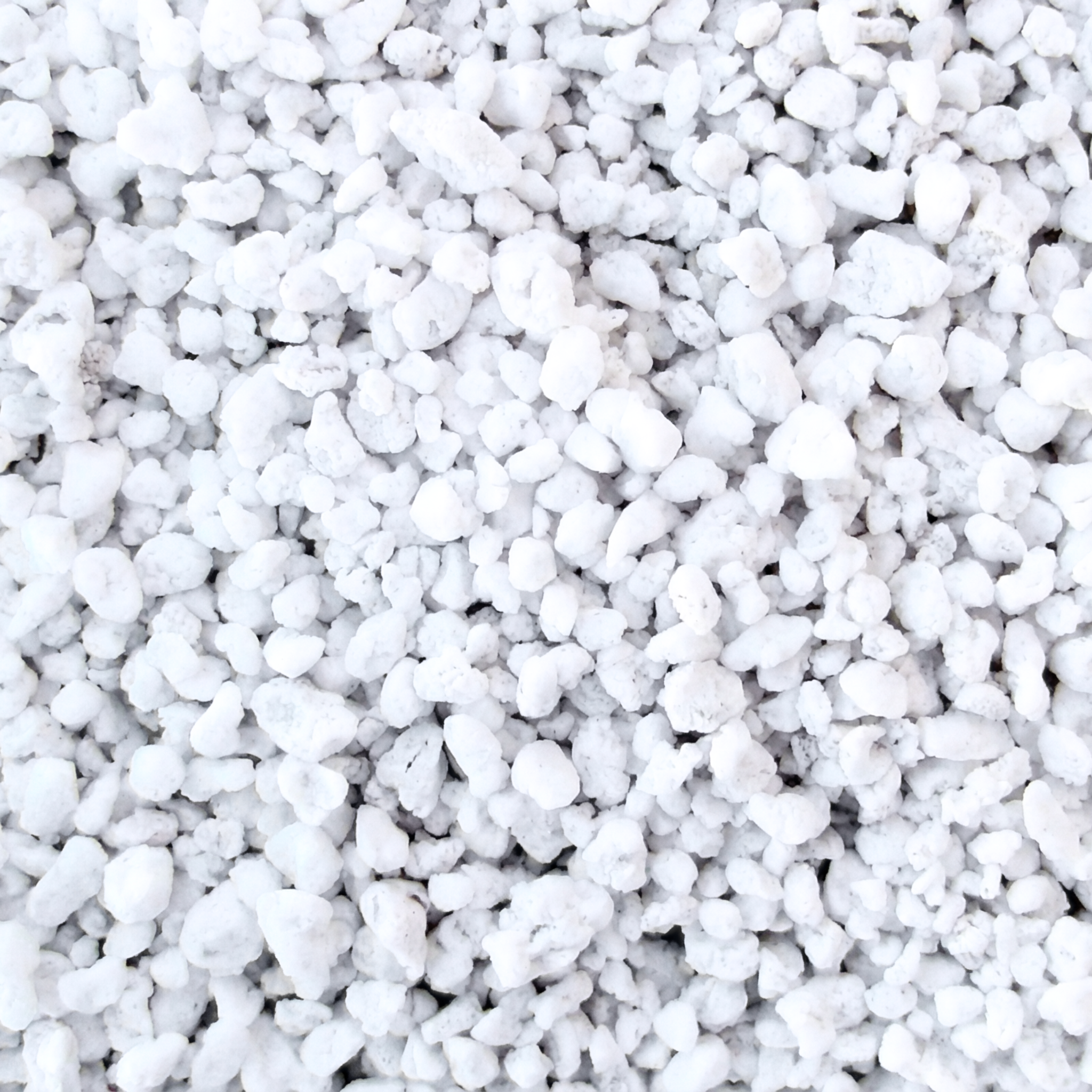
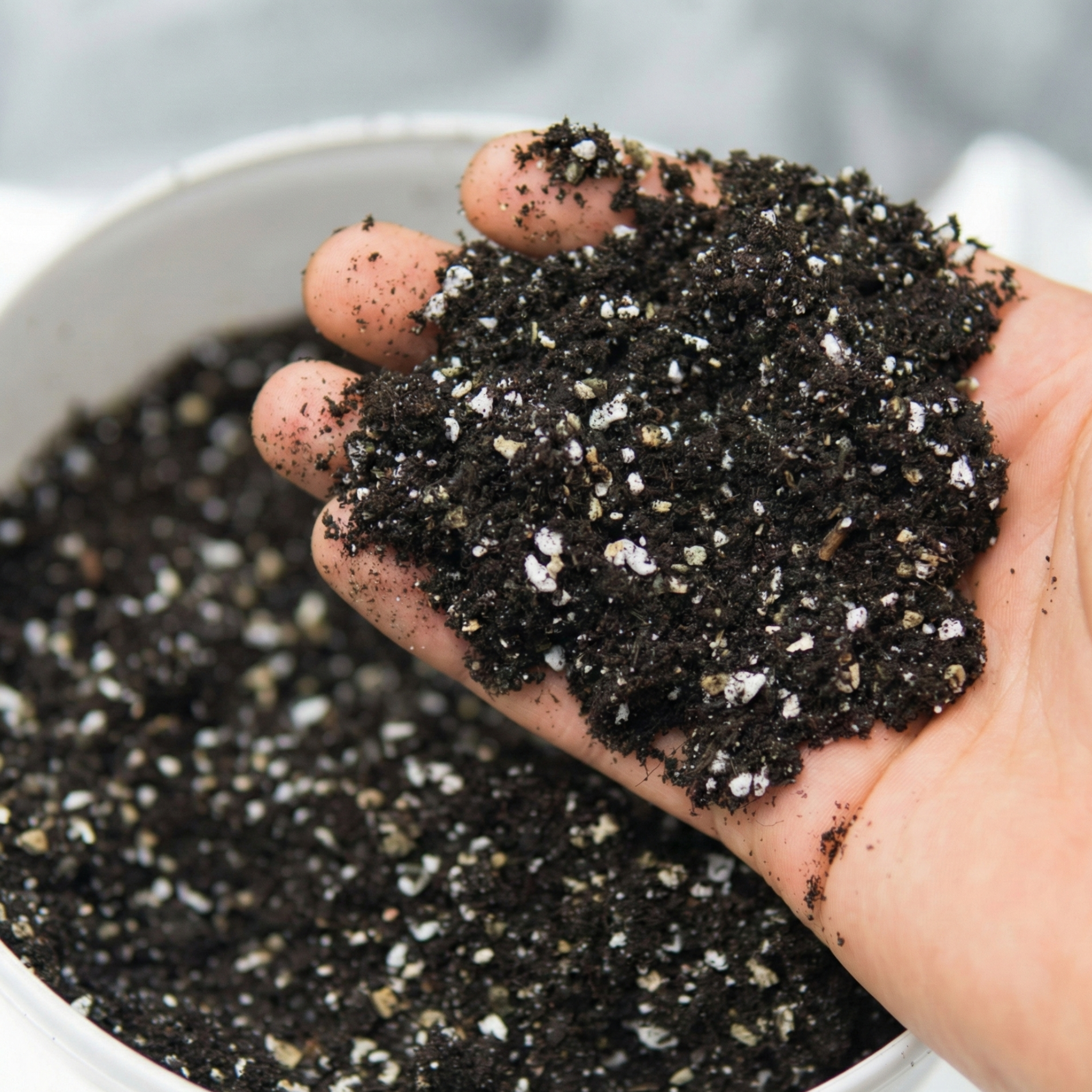


Improving pot drainage, preventing substrate compaction in professional potting, or lightening concrete mixes without sacrificing strength requires a calibrated inert mineral aggregate. This expanded perlite—also known as perlite or expanded volcanic glass—is supplied by Gardese in 60 L bags in two granulometries (Fine 1-3 mm and Medium 3-6 mm), designed for professional gardening, hydroponics, landscaping, nurseries, and lightweight construction projects where aeration and lightness are technical requirements.
Key Benefits
- Superior aeration and efficient drainage: the porous structure creates air cavities in the substrate, prevents waterlogging, and prevents root rot in pots and seedbeds.
- Neutral pH and chemically inert: it does not alter soil acidity or react with fertilizers, nutrient solutions, or construction additives, making it compatible with any mix.
- Structural lightness: very low specific weight significantly reduces dead load in large pots, elevated planters, and concrete mixes for roofs.
- Sterility and durability: sterile inorganic product, free of pests, weed seeds, and pathogens; it does not decompose, does not compact, and maintains its properties indefinitely.
- Selected Gardese origin: calibrated granulometry and controlled processing, which produces a homogeneous material in porosity and weight, a key condition in hydroponics and professional mixes.
Typical applications and uses
- Substrate mixes for pots, seedbeds, and urban gardens: combination with topsoil, coir, or peat moss to improve drainage and structure.
- Hydroponics: inert growing medium for recirculation systems, deep water culture, and vegetative propagation.
- Propagation: rooting of cuttings and germination of delicate seeds in hotbeds or misting.
- Lightweight construction: aggregate for lightweight concrete, leveling mortars, thermal fills, and precast elements.
Quality and durability
An economical perlite fails in two points: the grain comes with excessive fine dust (which reduces effective porosity when settled) and the calibration is irregular. Gardese works with expanded perlite calibrated by granulometry and processing that minimizes residual dust, which separates a professional-grade aggregate for hydroponics or construction from a generic bag that compacts or splashes dust when handled.
What does perlite actually do in a substrate mix?
Does expanded perlite expire, decompose or lose properties over time?
Is it safe for vegetable gardens and edible crops?
What's the difference between perlite and vermiculite?
Do I need a mask to handle it because of the fine dust?
Still have questions?
Ask us and we will gladly help you with whatever you need.
| Dimensions and format | |
|---|---|
| Volume | 100 L (26.4 gal) |
| Physicochemical properties | |
| Electrical conductivity (EC) | Very low (< 0.5 dS/m) |
| Particle size | 1 - 3 mm (0.04 - 0.12 in) |
| pH level | 6.5 - 7.5 |
| Presentation and packaging | |
| Packaging | Bag |
| Sack: Width | 55.0 cm (21.65 in) |
|---|---|
| Sack: Height | 15.0 cm (5.91 in) |
| Sack: Depth | 95.0 cm (37.4 in) |
| Sack: Weight | 4.0 kg |
Official GARDESE warranty
What's covered
Confirmed defect: replacement or refund of the amount paid.
What's not covered
Pago & Seguridad

