
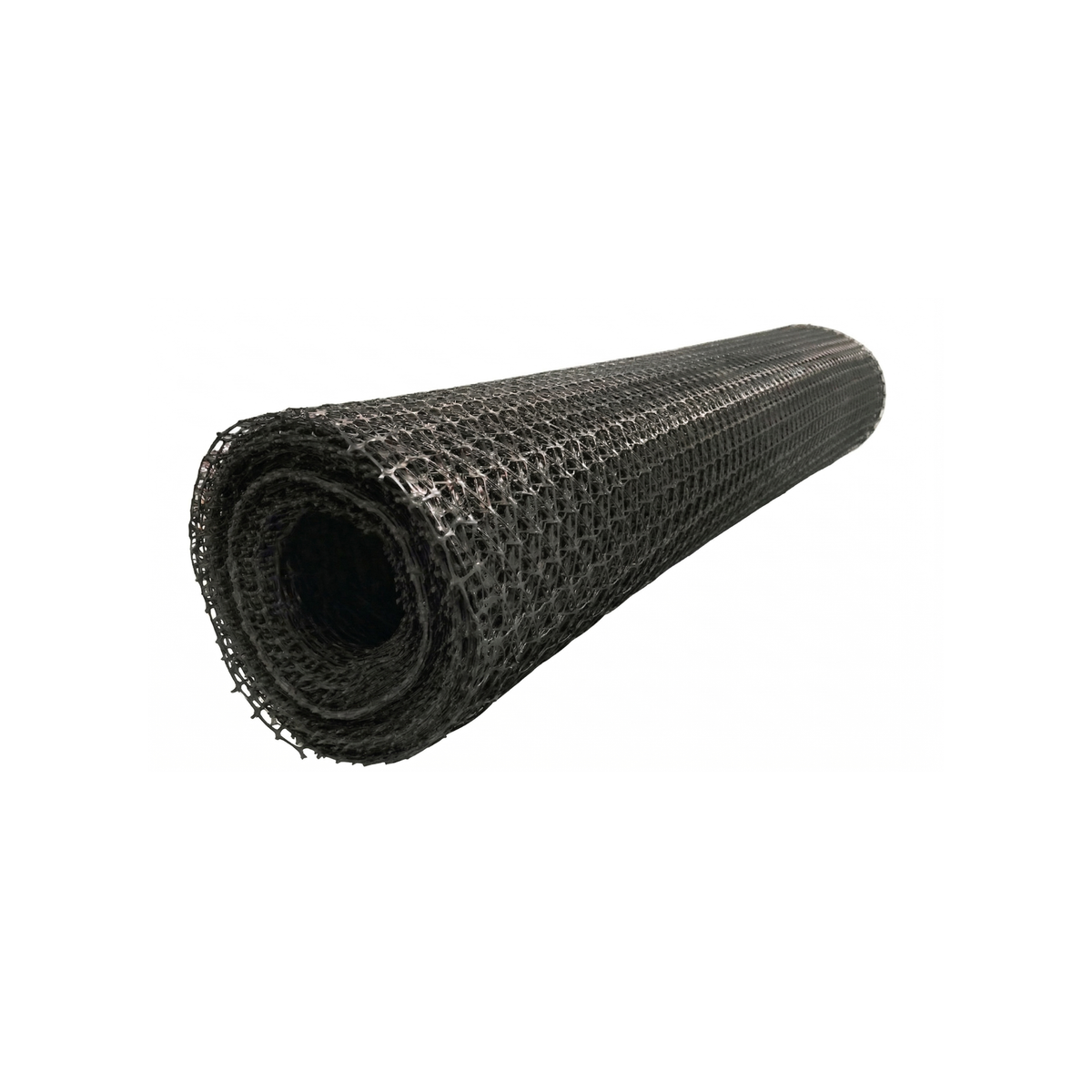

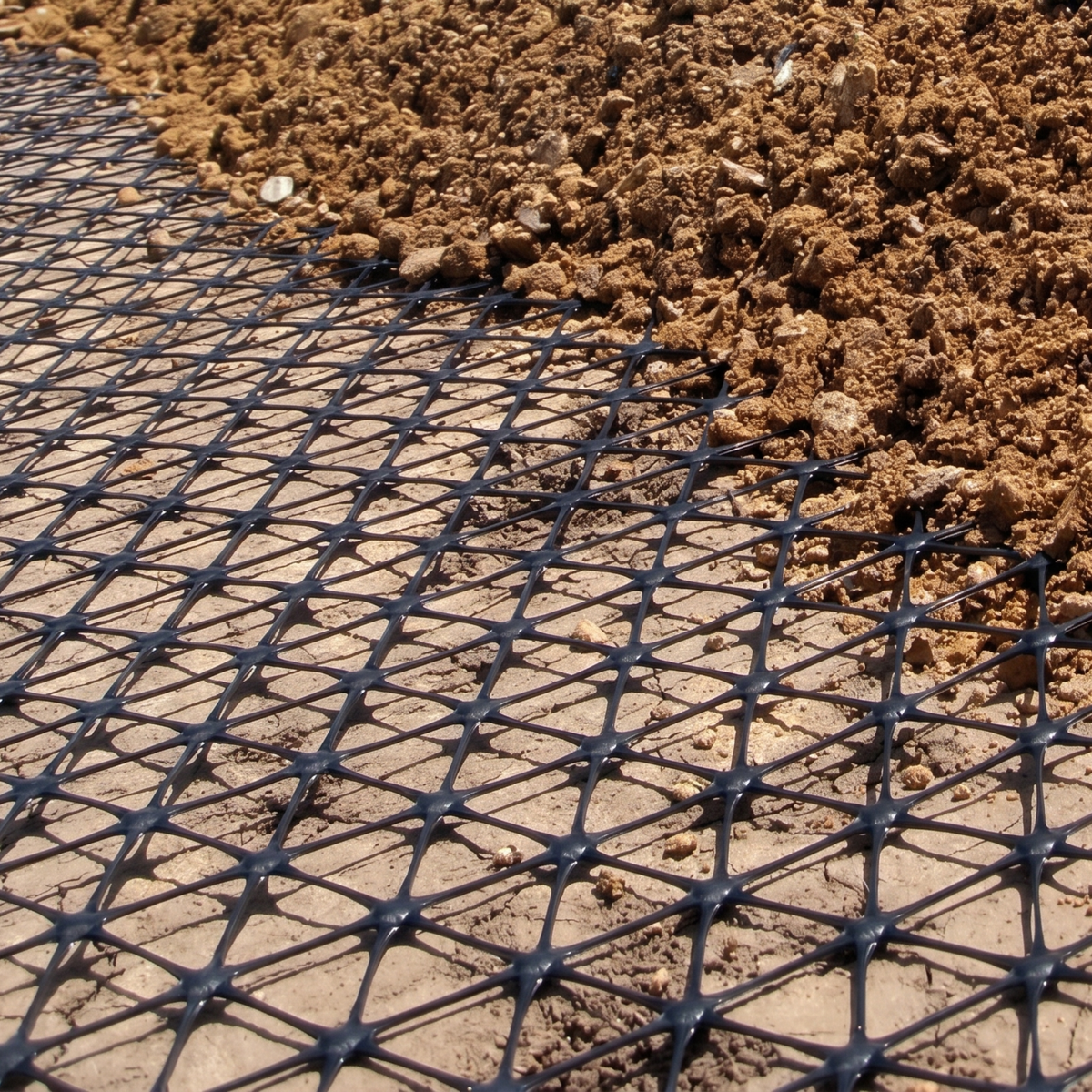
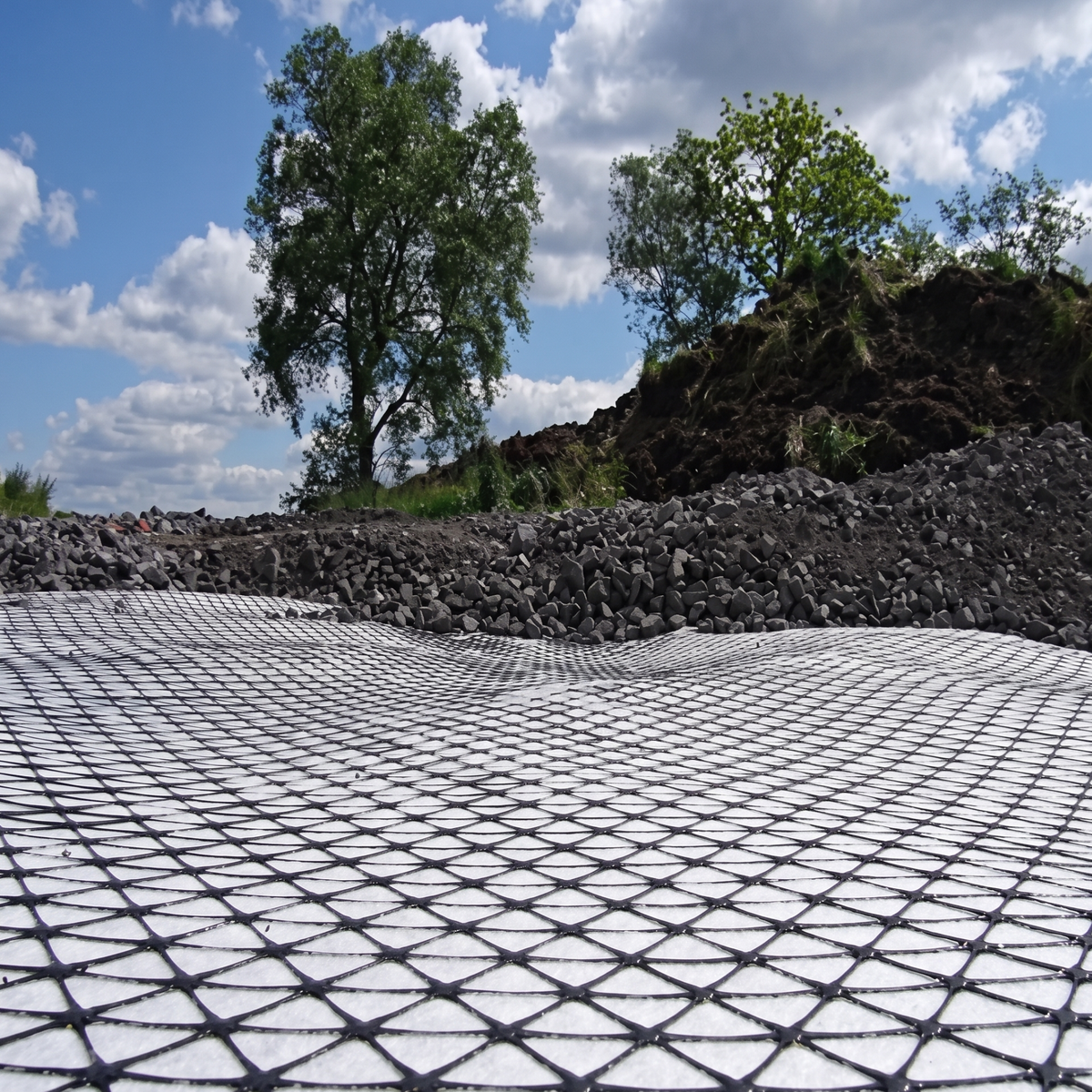


Stabilizing soft, clayey, and marshy soils with continuous vehicular traffic, where classic biaxial geogrids offer limited performance due to the cardinal orientation of loads, requires a triaxial geogrid with an extended geometric structure in three directions and rigid nodes for omnidirectional aggregate confinement. This polypropylene (PP) triaxial geogrid—also known as a triaxial geogrid, TX geogrid, or triaxial subgrade mesh—is manufactured by MOLTEXO from structural PP with a 10 kN/m tensile strength, in rolls 3.95 m wide and 50 m long, designed for road infrastructure, industrial platforms, soft soils with multidirectional loads, and projects where the performance of classic biaxial geogrids is considered insufficient.
Key benefits
- Triaxial multidirectional strength: The geometric structure extended in three directions (at 0°, 60°, and 120°) distributes loads in any cardinal orientation with superior uniformity compared to classic biaxial geogrids, which only work in two directions—a differential condition under complex vehicular traffic and dispersed loads.
- Omnidirectional aggregate confinement: Rigid triangular apertures confine crushed stone and gravel more efficiently than the square apertures of biaxial geogrids, significantly reducing horizontal displacement of the aggregate under cyclic loading.
- Optimized fill thickness: Allows for additional reduction in aggregate base course thickness compared to classic biaxial geogrids in very soft soil conditions, resulting in greater savings in excavation, backfill, and costs for extensive projects.
- Inert structural PP for underground works: Resistant to moisture, biological attack, alkalis, and soil acids, conditions for decades of service life buried under pavement or structural layers.
- Compatible with all granular aggregates and natural soil: Works with crushed stone, gravel, sand, local materials, and cohesive soils under engineering design, providing a flexible condition for projects with locally available materials.
Typical applications and uses
- Reinforcement of bases and subbases for roads, unpaved roads, and industrial roadways with heavy vehicular traffic.
- Stabilization of industrial platforms, commercial parking lots, and staging areas with continuous loads.
- Foundations on marshy, clayey, and low-bearing capacity soils where other solutions require excavation or chemical stabilization.
- Runways in small airports, railway tracks, and specialized infrastructure projects.
Quality and durability
An economical triaxial geogrid fails in two areas: the triangular geometry is not calibrated with correct angles during manufacturing (which reduces the multidirectional effect to that of an irregular biaxial geogrid), and the nodes are not rigid (which causes confinement deformation under load). MOLTEXO works with structural PP and calibrated triaxial geometry, which distinguishes a serious infrastructure project's TX geogrid from a grid with a triaxial label that does not provide the expected additional performance over a classic biaxial geogrid.
Equivalences
Equivalent to these other-brand references:
- 10 kN/m (0.7 kip/ft) · Roll 3.95 m (13 ft) wide and 50 m (164 ft) long
- Tensar TriAx TX140Tensar TriAx TX160Tensar TriAx TX170Tensar InterAx NX750Tensar InterAx NX850Maccaferri MacGrid EG-T
Brands and references mentioned belong to their respective owners; cited only for comparison and compatibility.
What kind of ground is the triaxial geogrid mainly recommended for?
Can it be used in small residential projects or only industrial ones?
Is it affected by groundwater or a high water table?
Still have questions?
Ask us and we will gladly help you with whatever you need.
| Strength and performance | |
|---|---|
| Nominal elongation (≤) | 13.0% |
| Tensile force at 2% elongation (0°, 30°, 60°, 90°) | 3.5 |
| Nominal tensile strength (≥) | 10.0 kN/m (685.2 lbf/ft) |
| Quality control tensile modulus at 2% elongation (0°, 30°, 60°, 90°) | 175 |
| Presentation and packaging | |
| Presentation | Roll 3.95 m (13 ft) wide × 50 m (164 ft) long |
| Standards and certifications | |
| Test methods | EN ISO 10319 (tensile strength) |
| Roll: Width | 36.0 cm (14.17 in) |
|---|---|
| Roll: Height | 36.0 cm (14.17 in) |
| Roll: Depth | 400.0 cm (157.48 in) |
| Roll: Weight | 82.0 kg |
Official MOLTEXO warranty
What's covered
Confirmed defect: replacement or refund of the amount paid.
What's not covered
Payment & Security

