
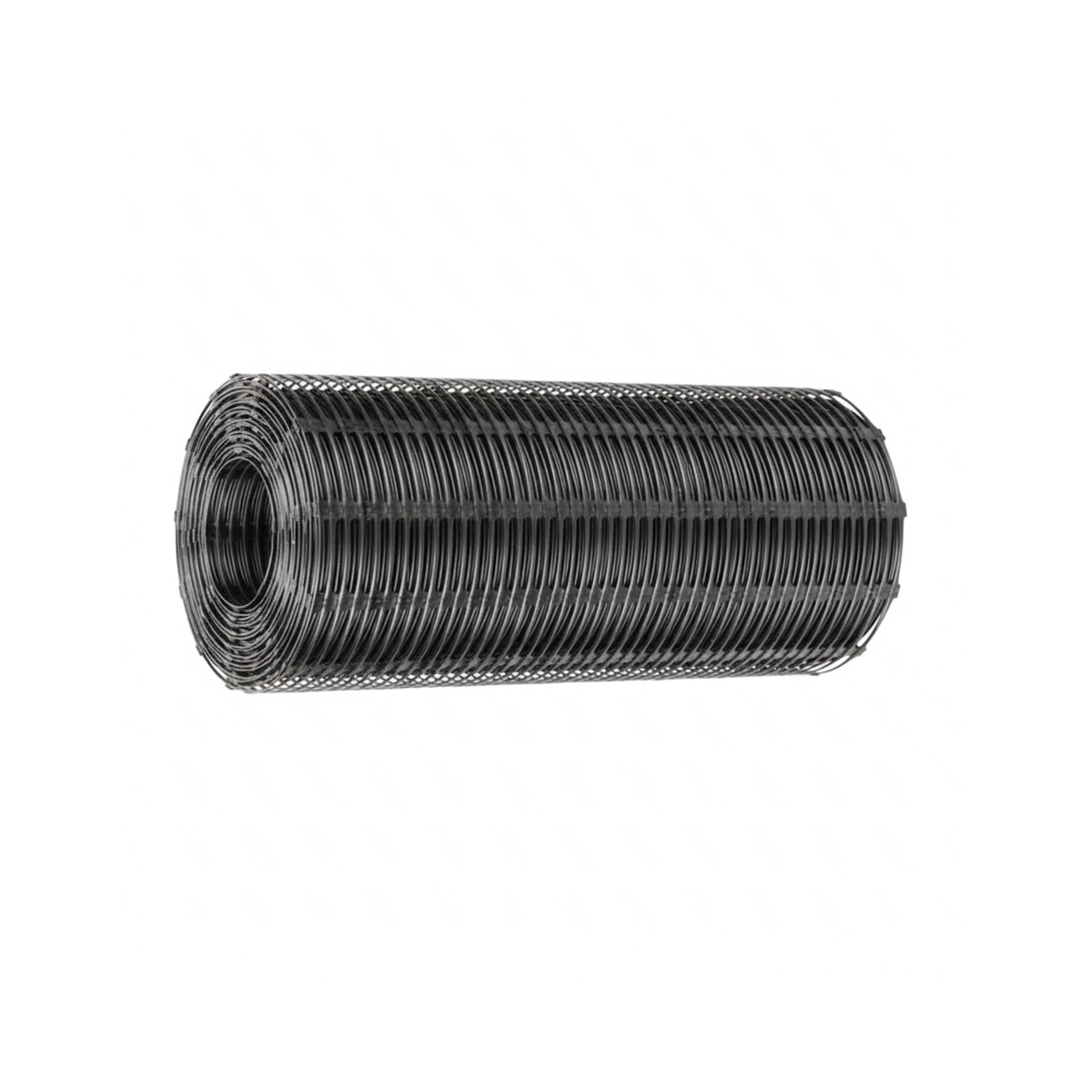
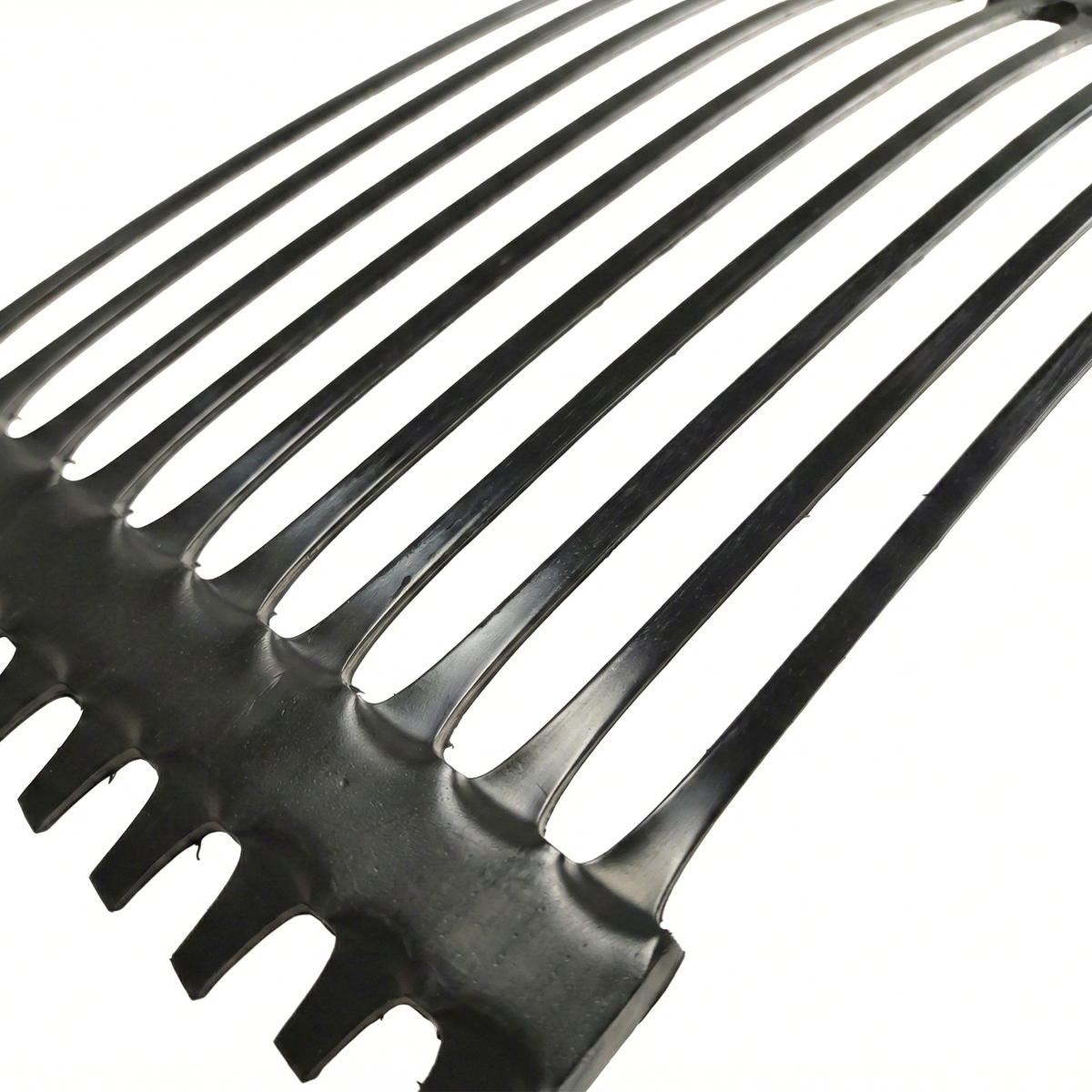
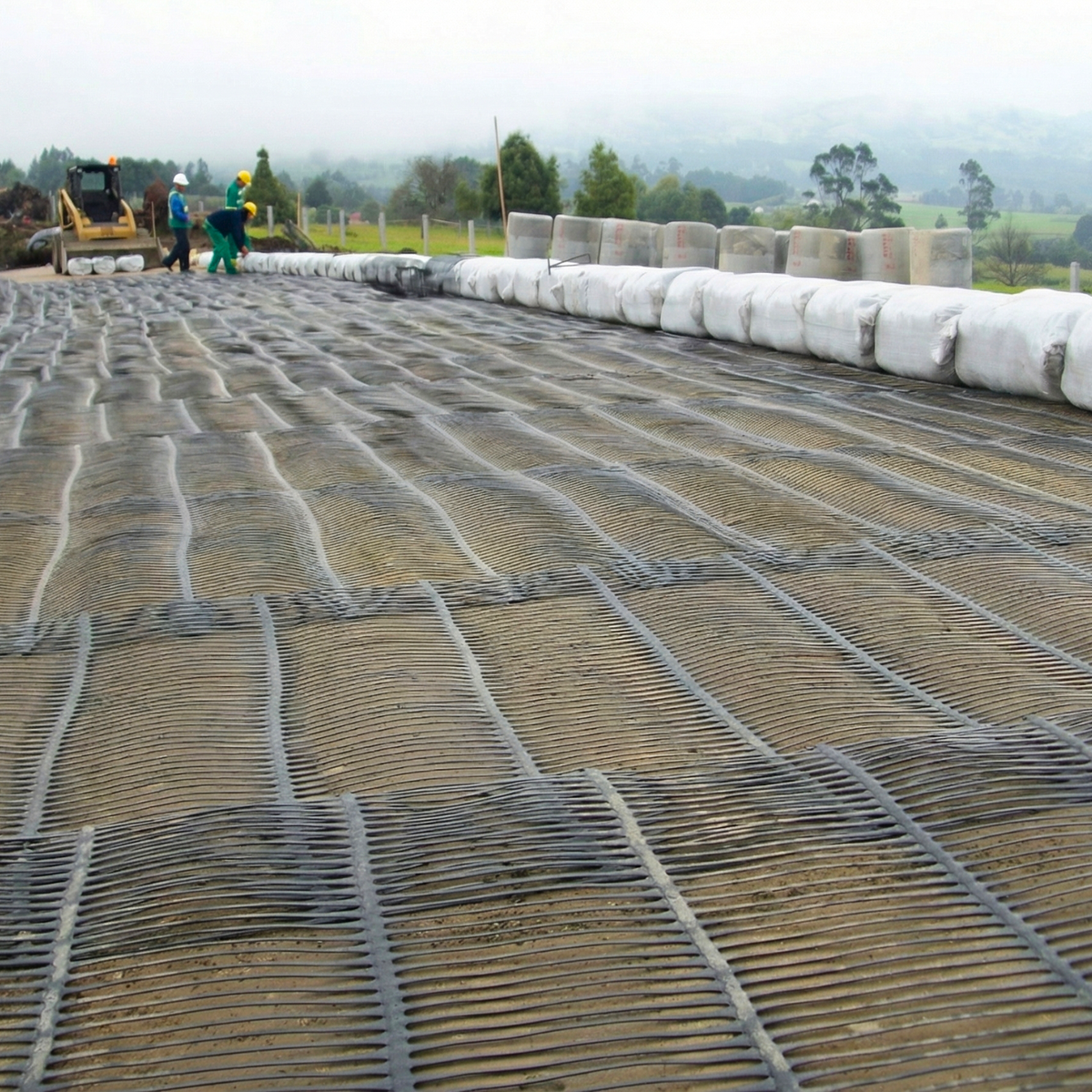


Building retaining walls with reinforced soil and high slopes as a safe and economical alternative to traditional reinforced concrete, where the tensile force of the backfill runs perpendicular to the wall, requires uniaxial geogrid with high tensile strength in one direction, low creep, and rigid nodes. This polypropylene (PP) uniaxial geogrid —also called uniaxial geogrid, mono-oriented geogrid, or MSE reinforcement mesh— is manufactured by MOLTEXO from PP stretched in one direction with a strength of 80 kN/m, in a 3 m wide and 100 m long roll, designed for mechanically stabilized earth (MSE) walls, reinforced slopes, landslide-prone slope stabilization, and bridge abutments.
Key Benefits
- High directional strength for walls and slopes: Longitudinal stretching during manufacturing produces remarkably high tensile strength in the roll direction, a critical condition for MSE walls where the geogrid must withstand the pressure of the backfill for decades.
- Low creep for extended service life: The PP formulation and molecular orientation process minimize deformation under sustained load, an auditable condition for walls with a declared design life of decades that do not allow for progressive movement.
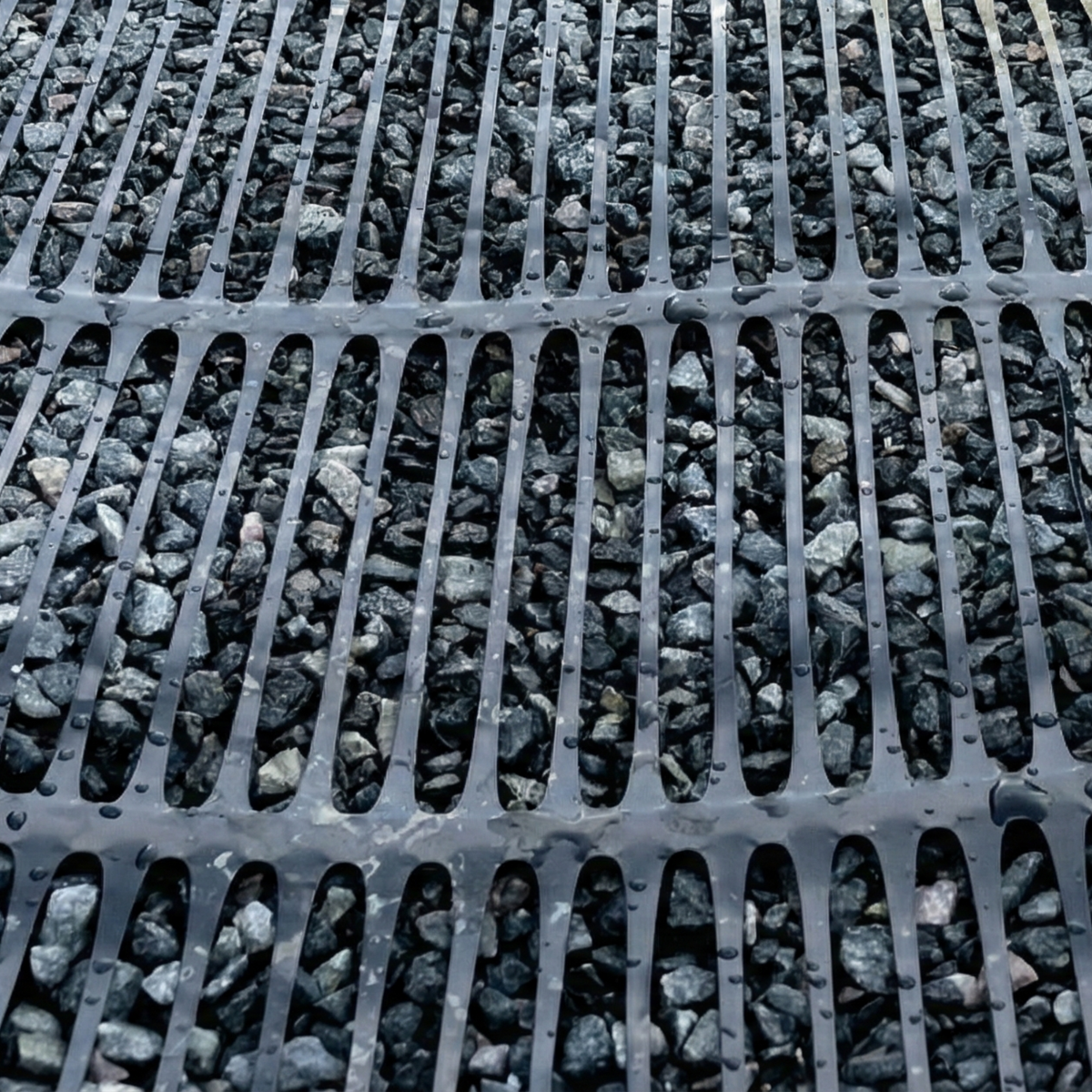
- Interlock with granular and cohesive backfill: Calibrated apertures allow for the embedment of angular aggregates and compatibility with cohesive soils under engineered design, expanding the versatility of usable backfill materials.
- Chemical and biological resistance for underground works: PP withstands moisture, acids, alkalis, and soil microorganisms for years, typical conditions in buried walls and saturated backfills.
- Economical alternative to reinforced concrete: MSE walls built with uniaxial geogrid significantly reduce the cost of traditional retaining walls, while maintaining or exceeding structural safety through engineered design.
Typical Applications and Uses
- Mechanically stabilized earth (MSE) walls for road, urban, and residential containment up to several meters high.
- Steep slopes and reinforced embankments in road and urban development projects on complex topography.
- Stabilization of landslide-prone slopes, especially in tropical areas with intense seasonal rainfall.
- Small bridge abutments and access ramps in road works with reinforced soil as a structural solution.
Quality and Durability
An economical uniaxial geogrid fails in two areas: creep under continuous loads is high (leading to progressive wall deformations over years with structural consequences) and directional stretching is deficient with actual strength significantly lower than declared (invalidating project engineering calculations). MOLTEXO works with stretched PP with low creep and auditable strength of 80 kN/m, which separates a safe structural MSE wall uniaxial geogrid from a mesh with a label that does not perform in critical structures.
Equivalences
Equivalent to these other-brand references:
- 80 kN/m (5.5 kip/ft) · Roll 3 m (9.8 ft) wide and 100 m (328 ft) long
- Tensar UX1400Tensar UX1500Solmax MIRAGRID 8XTMaccaferri MacGrid WG 80LAKA LK-Grid (family)ECOSEA Uniaxial Geogrid (family)
Brands and references mentioned belong to their respective owners; cited only for comparison and compatibility.
What's the difference between uniaxial and biaxial geogrid in a project?
What type of backfill can be used over uniaxial geogrid?
How is the geogrid oriented in an MSE retaining wall?
Is it resistant to soil moisture and chemicals over decades buried?
Still have questions?
Ask us and we will gladly help you with whatever you need.
| Material and construction | |
|---|---|
| Material | Polypropylene (PP) |
| Strength and performance | |
| Yield elongation | ≤10 % — GB/T17689-2008 |
| Tensile force at 2% elongation | ≥26 kN/m (≥1,782 lb/ft) — GB/T17689-2008 |
| Tensile force at 5% elongation | ≥48 kN/m (≥3,289 lb/ft) — GB/T17689-2008 |
| Yield tensile strength | ≥80 kN/m (≥5,482 lb/ft) — GB/T17689-2008 |
| Durability and protection | |
| UV protection | Yes (high) |
| Presentation and packaging | |
| Presentation | Roll 3 m (9.8 ft) wide × 100 m (328 ft) long |
| Standards and certifications | |
| Test methods | EN ISO 10319 (tensile strength) |
| Roll: Width | 38.0 cm (14.96 in) |
|---|---|
| Roll: Height | 38.0 cm (14.96 in) |
| Roll: Depth | 300.0 cm (118.11 in) |
| Roll: Weight | 29.0 kg |
Official MOLTEXO warranty
What's covered
Confirmed defect: replacement or refund of the amount paid.
What's not covered
Payment & Security

