
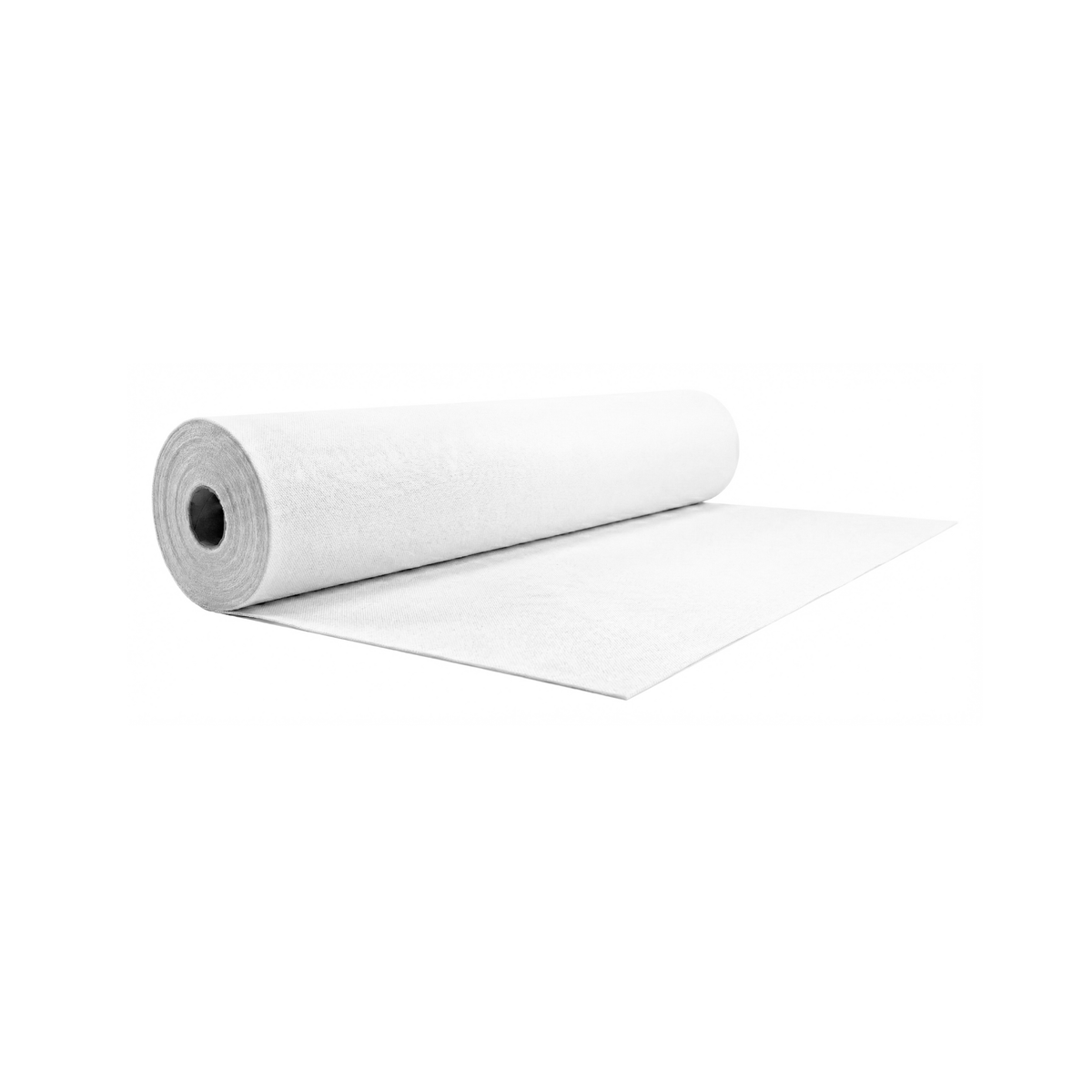
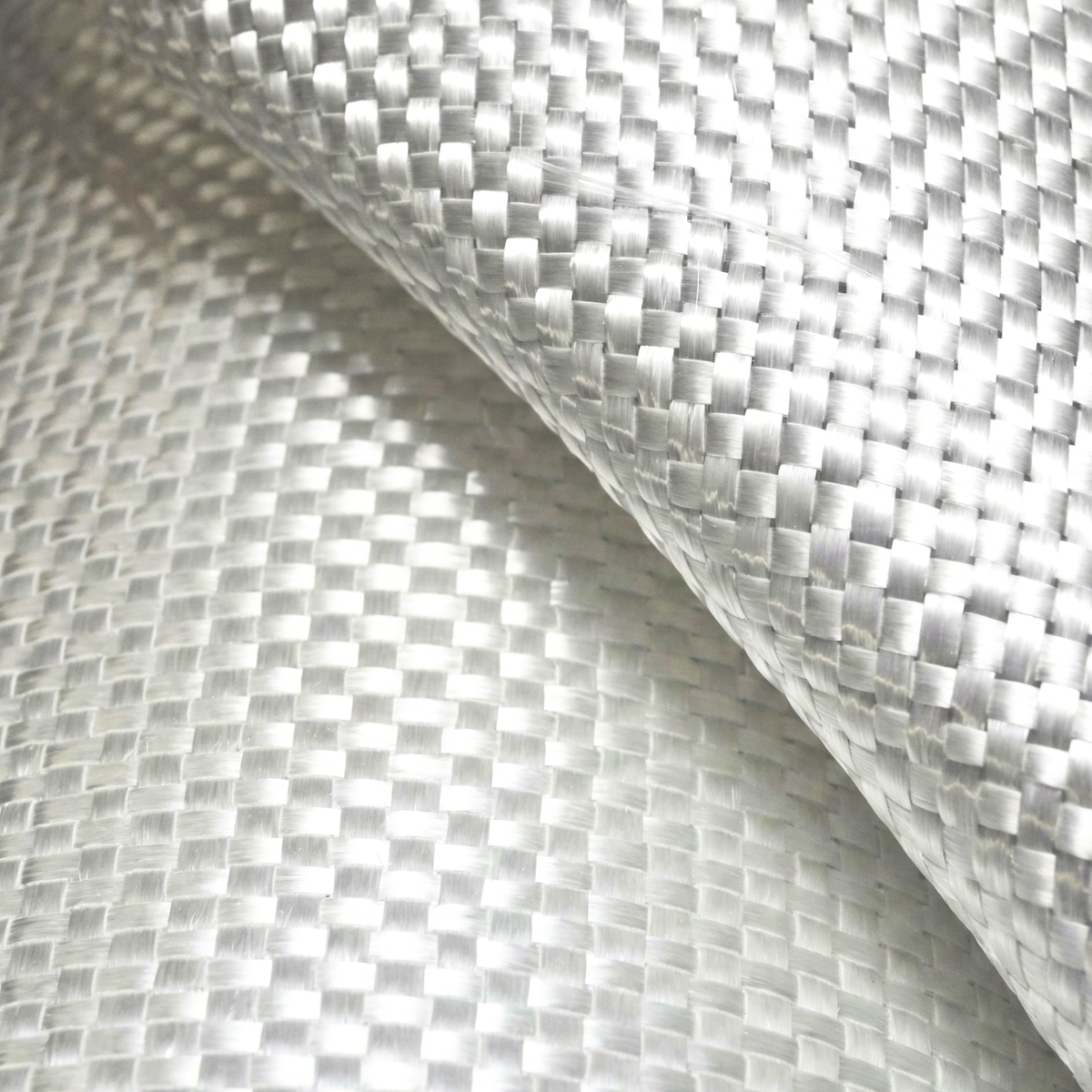
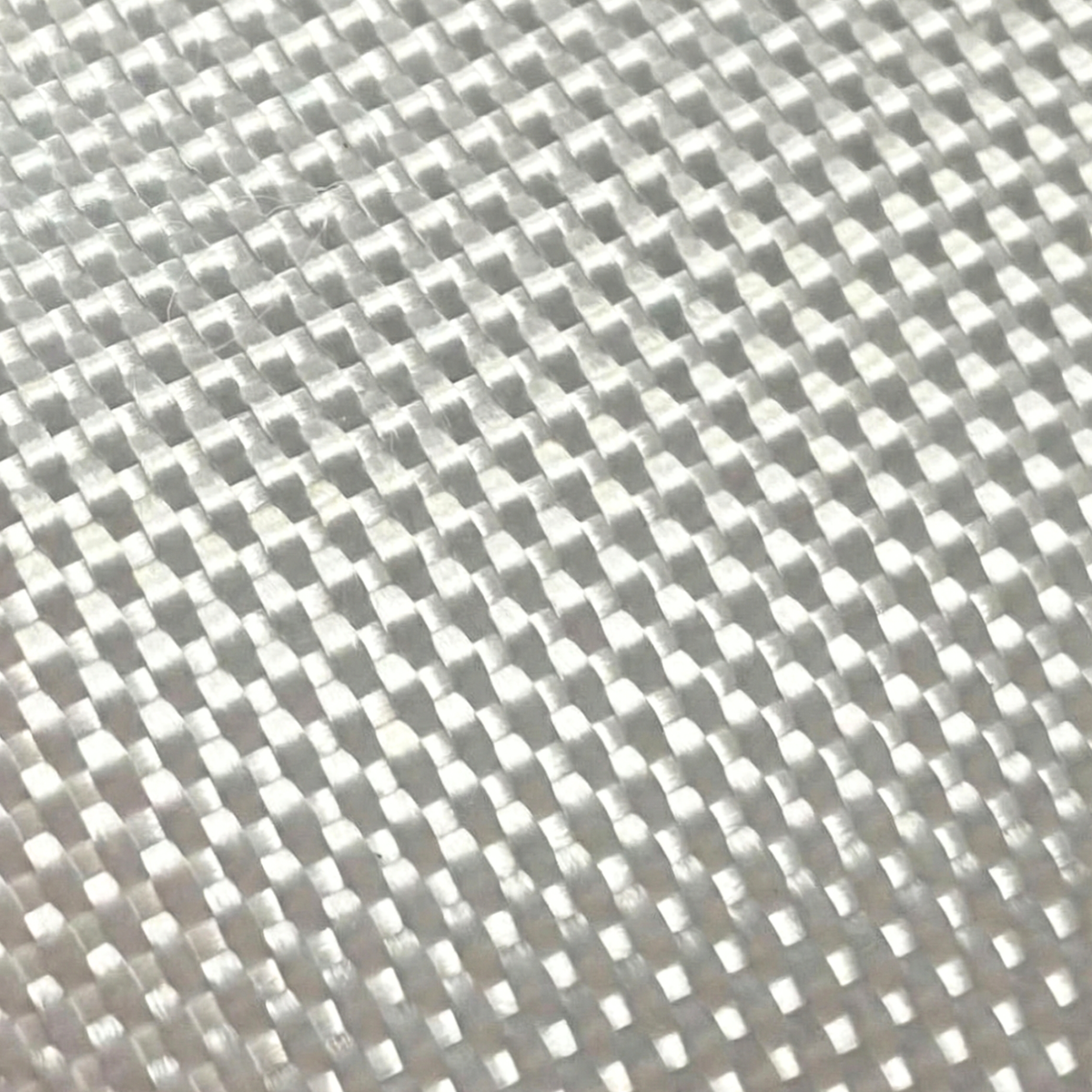
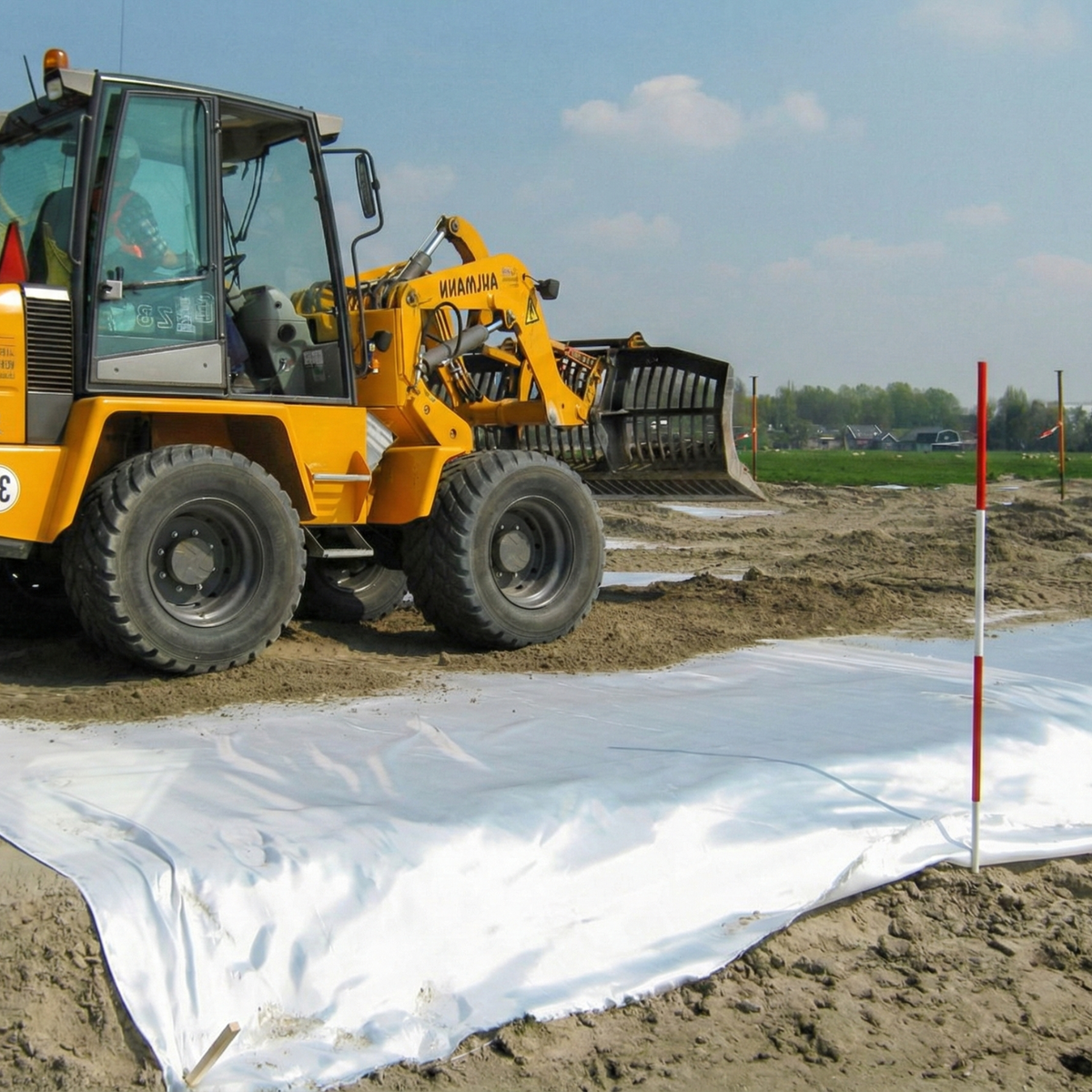
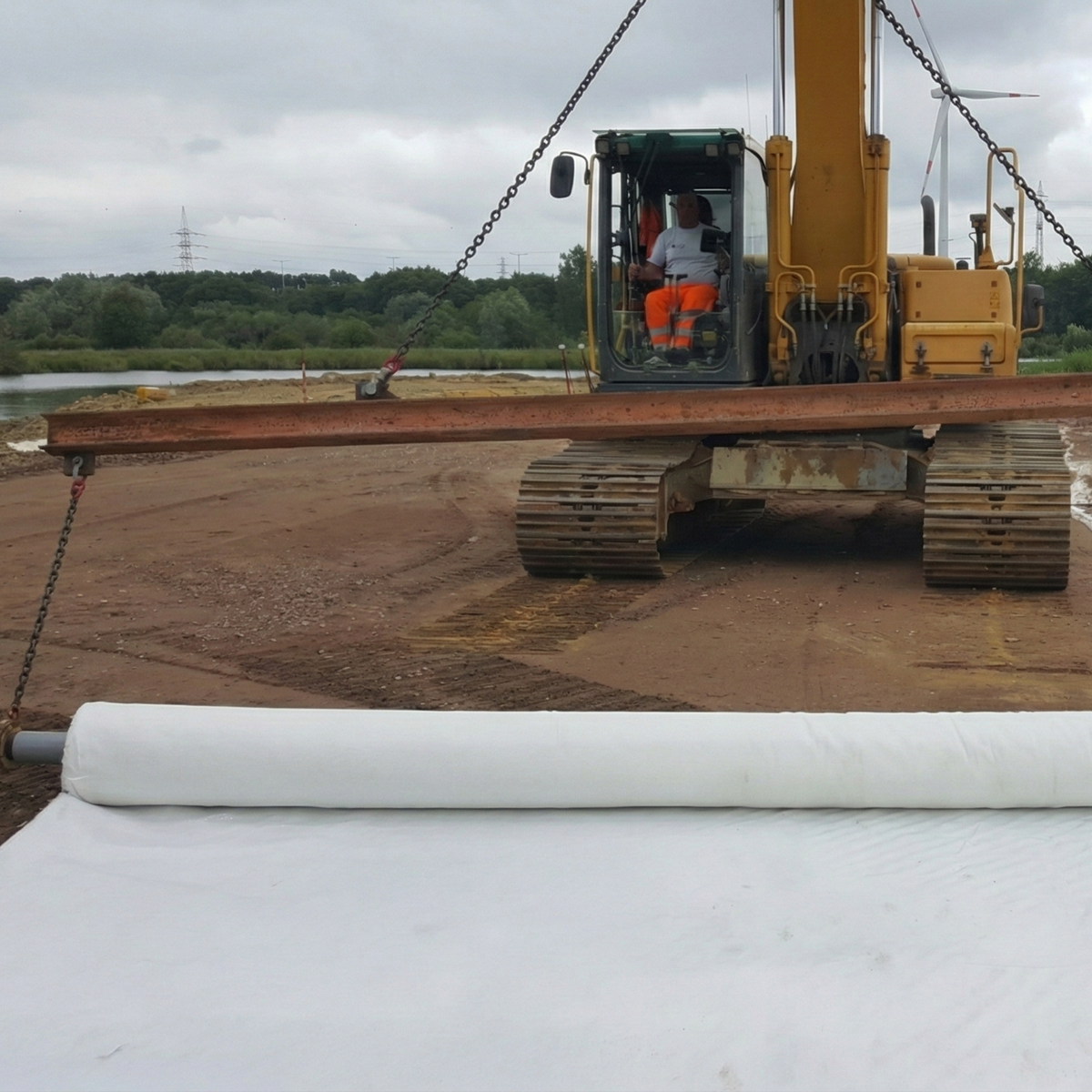
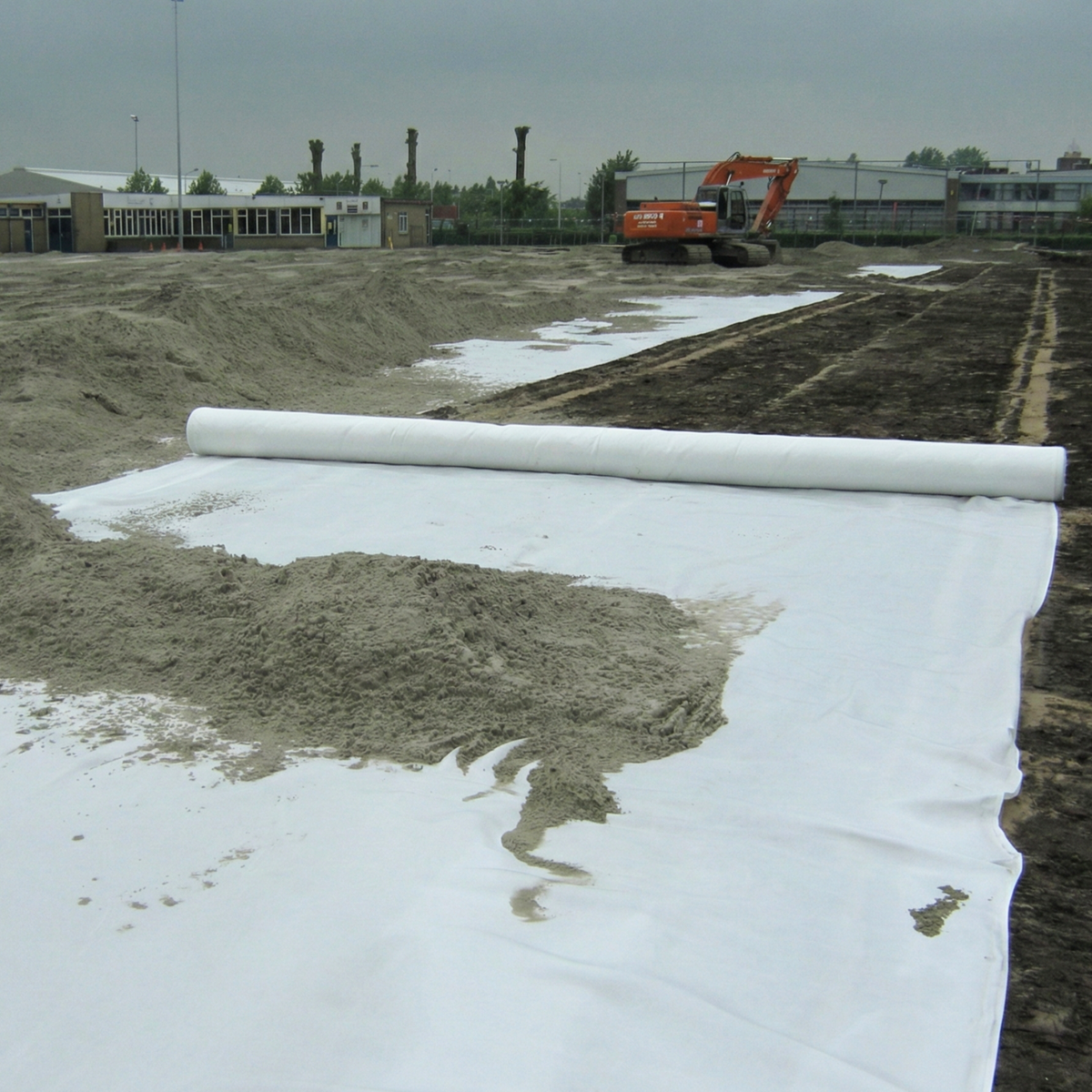


Reinforcing road bases on soft soils where aggregate sinks without structural geotextile, constructing mechanically stabilized earth (MSE) walls with a lifespan of decades, and separating layers in industrial platforms with continuous heavy loads, all require high-tenacity, low-creep (under sustained load) polyester woven geotextile. This polyester (PET) woven geotextile—also called woven geotextile PET, PET soil reinforcement mesh, or high-modulus technical fabric—is manufactured by MOLTEXO from interwoven high-modulus PET yarns, with a weight of 320 g/m² in white, in rolls 5.2 m wide and 100 m long, designed for professional road works, MSE walls, reinforced slopes, foundations on soft soil, and audited industrial platforms.
Key Benefits
- High tensile strength with low elongation: high-modulus PET yarns withstand high tensions with minimal deformation, a critical condition for MSE walls where the geotextile must support the earth mass for decades without allowing progressive movements.
- Low creep under continuous loads: PET maintains physical properties and dimensions under constant long-term loads, a superior advantage over standard PP, which experiences significant creep with decades of loading, an auditable condition in serious projects.
- Effective structural separation: the compact weave prevents costly aggregates (gravel, base, subbase) from mixing with soft soil and maintains the load-bearing capacity of the structure, extending the pavement's lifespan.
- Chemical and biological resistance for construction: inert to most typical soil acids and alkalis, it does not rot or get attacked by rodents or fungi, a condition for decades of buried lifespan.
- Controlled permeability to prevent hydrostatic pressure: the weave allows water to pass through while retaining fine soil particles, preventing the accumulation of hydraulic pressure behind walls and under road bases that could compromise stability.
Typical Applications and Uses
- Reinforcement of bases and subbases for paved roads, high-traffic access roads, and commercial parking lots with heavy loads.
- Construction of mechanically stabilized earth (MSE) walls and reinforced soil retaining walls.
- Stabilization of embankments over soft soils, marshy areas, and shallow foundations with low bearing capacity.
- Layer separation in urban paving projects, industrial yards, and storage platforms with structural auditing.
Quality and Durability
An economical woven geotextile fails in two ways: the PET is low-tenacity or recycled (which produces high elongation under load and accumulated deformations in the wall or base that compromise stability), and the manufacturing does not control yarn density (which produces areas with uneven strength). MOLTEXO works with virgin, high-modulus PET and controlled weaving, which differentiates a technical fabric for auditable structural work from a generic geotextile that fails in MSE walls with safety consequences.
Equivalences
Equivalent to these other-brand references:
- 320 g/m² (9.4 oz/yd²) and white · Roll 5.2 m (17 ft) wide and 100 m (328 ft) long
- Maccaferri MacTex W2Solmax MIRAFI Geolon PETBPM PET Woven Geotextile FabricHUESKER Stabilenka
Brands and references mentioned belong to their respective owners; cited only for comparison and compatibility.
What's the real difference between this woven fabric and a non-woven geotextile?
Is it resistant to Caribbean sun under prolonged exposure?
How does this woven geotextile help on unpaved dirt or gravel roads?
Still have questions?
Ask us and we will gladly help you with whatever you need.
| Material and construction | |
|---|---|
| Material | Polyethylene terephthalate (PET) |
| Weight per area | 326 g/m² (9.61 oz/yd²) (Specification: 320 g/m² (9.44 oz/yd²)) |
| Mandrel | Rigid plastic |
| Dimensions and format | |
| Roll width | 5.2 m (17.06 ft) (Specification: 5.2 m (17.06 ft)) |
| Strength and performance | |
| CBR (puncture) | 10 kN (2,248 lbf) (Specification: 10(-100) kN) |
| Elongation (MD/CD) | 10.9/10.4 % (Specification: 11 % ±2) |
| Dynamic puncture | 9 mm (0.354 in) (Specification: 9(+1) mm) |
| Strength @2% strain (MD/CD) | 35.7/14.2 kN/m (2,446/973 lb/ft) (Specification: 35/14 kN/m (2,398/959 lb/ft), -2 kN/m) |
| Strength @5% strain (MD/CD) | 73.9/30.5 kN/m (5,064/2,090 lb/ft) (Specification: 66/25 kN/m (4,522/1,713 lb/ft), -2 kN/m) |
| Tensile strength (MD/CD) | 160/56.1 kN/m (10,964/3,844 lb/ft) (Specification: ≥150/50 kN/m (≥10,278/3,426 lb/ft)) |
| Hydraulics and filtration | |
| Permeability | 0.026 m/s (0.0853 ft/s) (Specification: 0.026(-0.001 m/s)) |
| Pore size O90 | 0.25 mm (0.0098 in) (Specification: 0.25(-0.005) mm) |
| Presentation and packaging | |
| Presentation | Roll 5.2 m (17 ft) wide × 100 m (328 ft) long |
| Standards and certifications | |
| Test methods | EN ISO 10319, 12236, 11058 and 12956 |
| Roll: Width | 30.0 cm (11.81 in) |
|---|---|
| Roll: Height | 30.0 cm (11.81 in) |
| Roll: Depth | 520.0 cm (204.72 in) |
| Roll: Weight | 170.0 kg |
Official MOLTEXO warranty
What's covered
Confirmed defect: replacement or refund of the amount paid.
What's not covered
Payment & Security

