
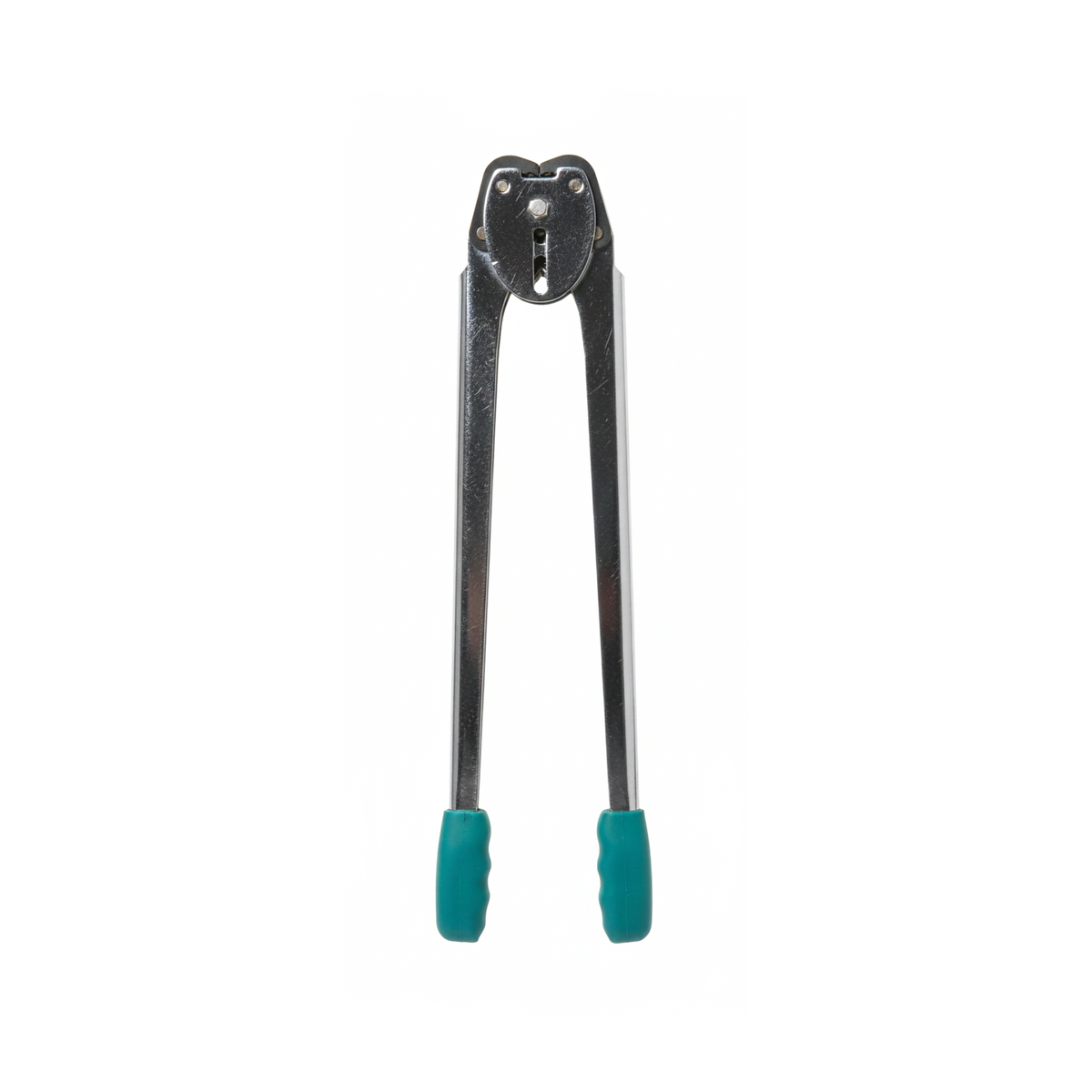
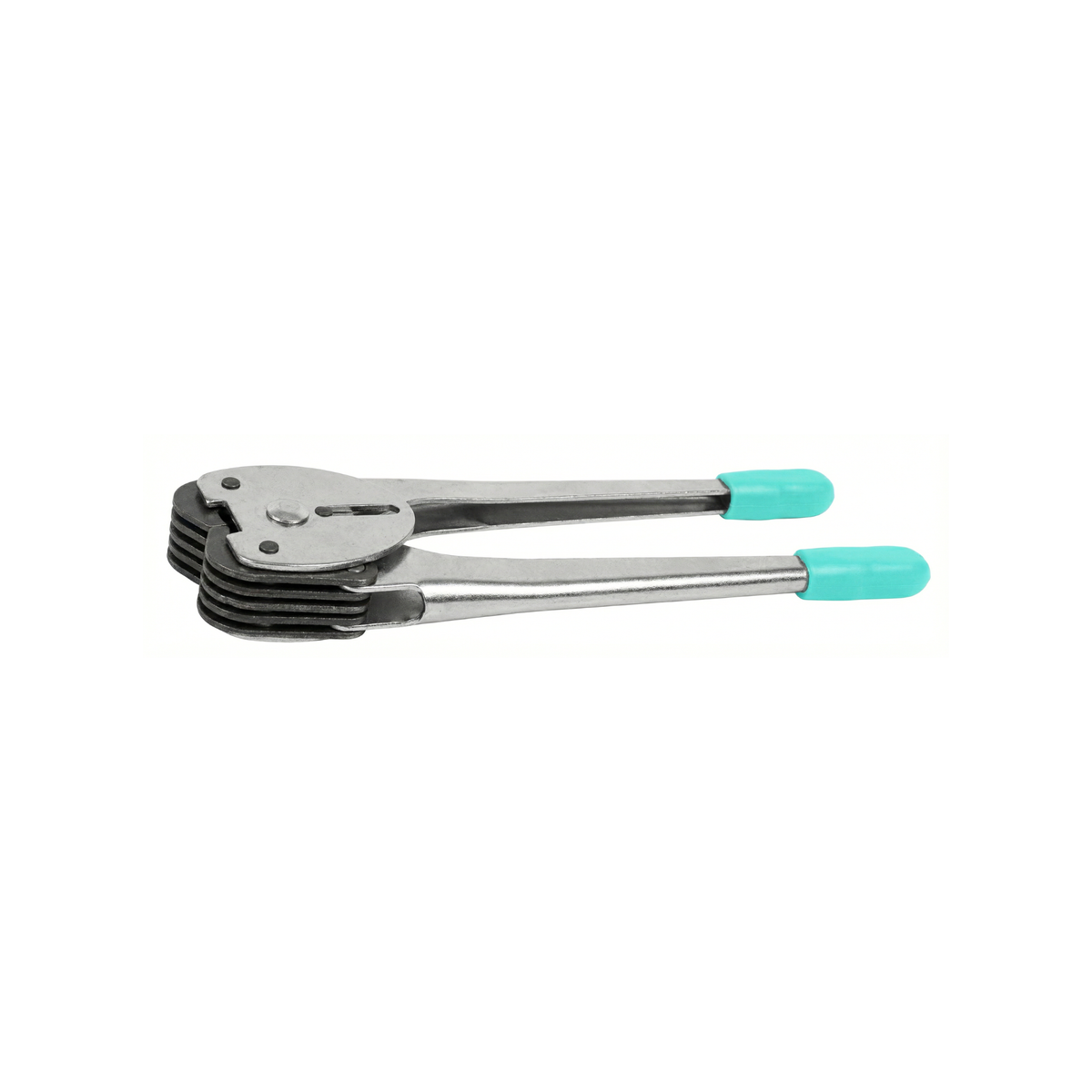


Closing the PP strap strapping cycle requires a pair of pliers that seals the metal clip with uniform pressure and withstands intensive use without the jaws deforming. This manual PP strapping plier —also called a sealer, crimper, or strapping tool— is manufactured by Maxtens from heat-treated steel with long, lever-multiplied handles, designed for warehouses, distribution centers, and palletizing operations where serial strapping is part of the daily flow.
Main benefits
- Heat-treated steel jaws: the biting area resists intensive use without deforming, which maintains the quality of the seal for thousands of closures.
- Long handles with multiplied leverage: the length of the arm allows the necessary pressure to be applied with little physical force, reducing fatigue during long strapping shifts.
- Calibration for PP metal clips: the bite is sized to deform the clip over polypropylene plastic strap without breaking it or leaving it loose, which is the typical problem with PET pliers used with PP.
- Non-slip grip: the handle's coating maintains a firm grip with gloves and prevents slipping with sweaty hands or operation in dusty areas.
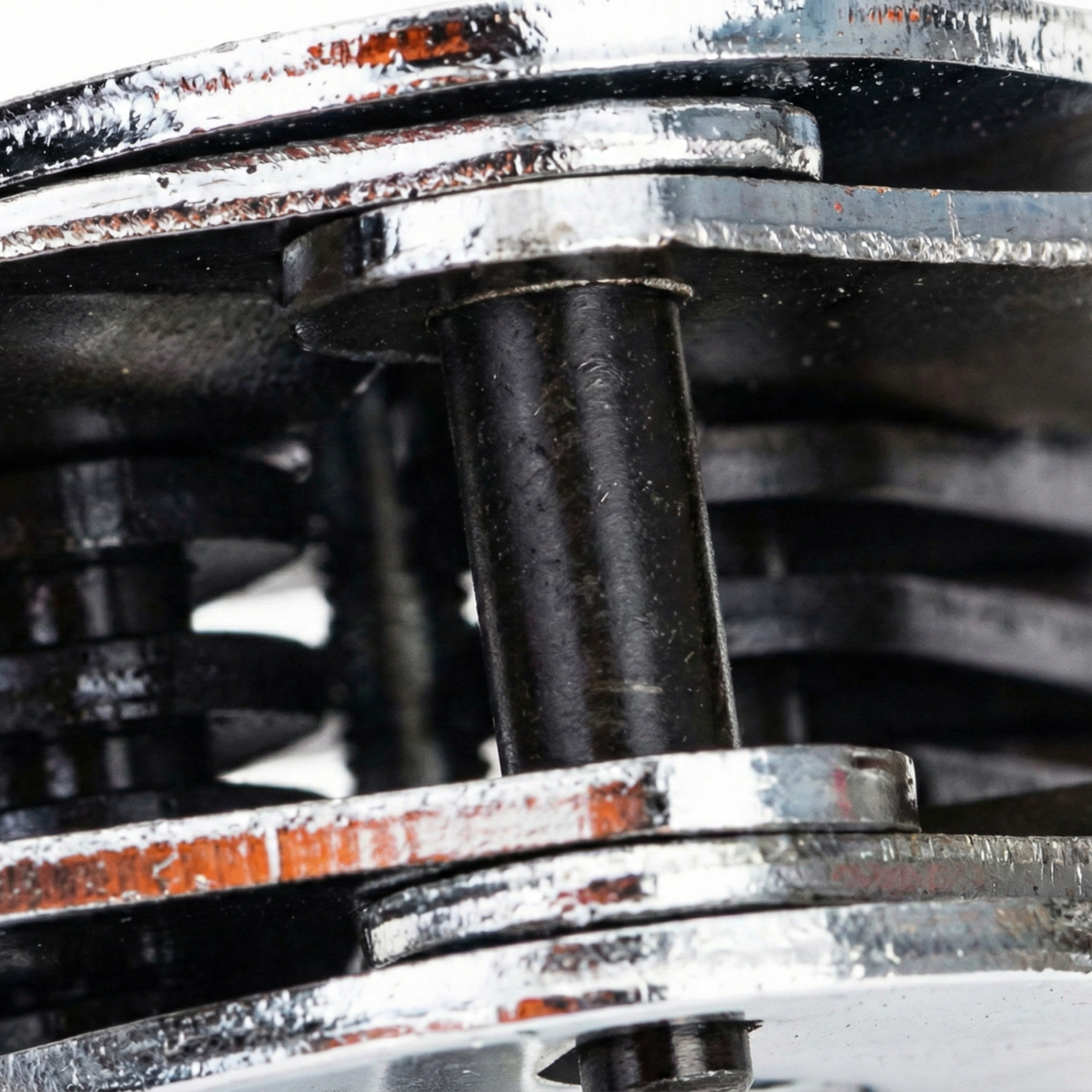
- Careful Maxtens manufacturing: reinforced joints and a closing mechanism with controlled tolerances, which is noticeable in the smoothness of continuous work.
Typical applications and uses
- Closing palletized corrugated cardboard boxes in logistics warehouses and distribution centers.
- Sealing packages and light groupings in hardware stores, businesses, and parcel operations.
- Closing bundles of plastic pipe, light profiles, or material grouped in a workshop.
- Sealing compacted cardboard bags, regional export boxes, and packaged products.
Quality and durability
An inexpensive pair of pliers fails in two ways: the jaws deform with intensive use and the central joint loses fluidity with dust or debris. Maxtens works with heat-treated steel and factory-lubricated joints, which separates a pair of pliers that will last for years of professional operation from one that will fail after a few thousand closures.
Does this crimping tool work for PET strap or only PP?
Does the crimper also cut the excess strap, or does it only seal?
Does it withstand outdoor use without rusting?
What's the difference between a professional crimper and a budget one of the same format?
Still have questions?
Ask us and we will gladly help you with whatever you need.
| Material and construction | |
|---|---|
| Material | Stainless steel |
| Compatibility and use | |
| Strap compatibility | Polypropylene (PP), 12-16 mm (1/2-5/8 in) wide |
Official MAXTENS warranty
What's covered
Confirmed defect: replacement or refund of the amount paid.
What's not covered
Pago & Seguridad

