
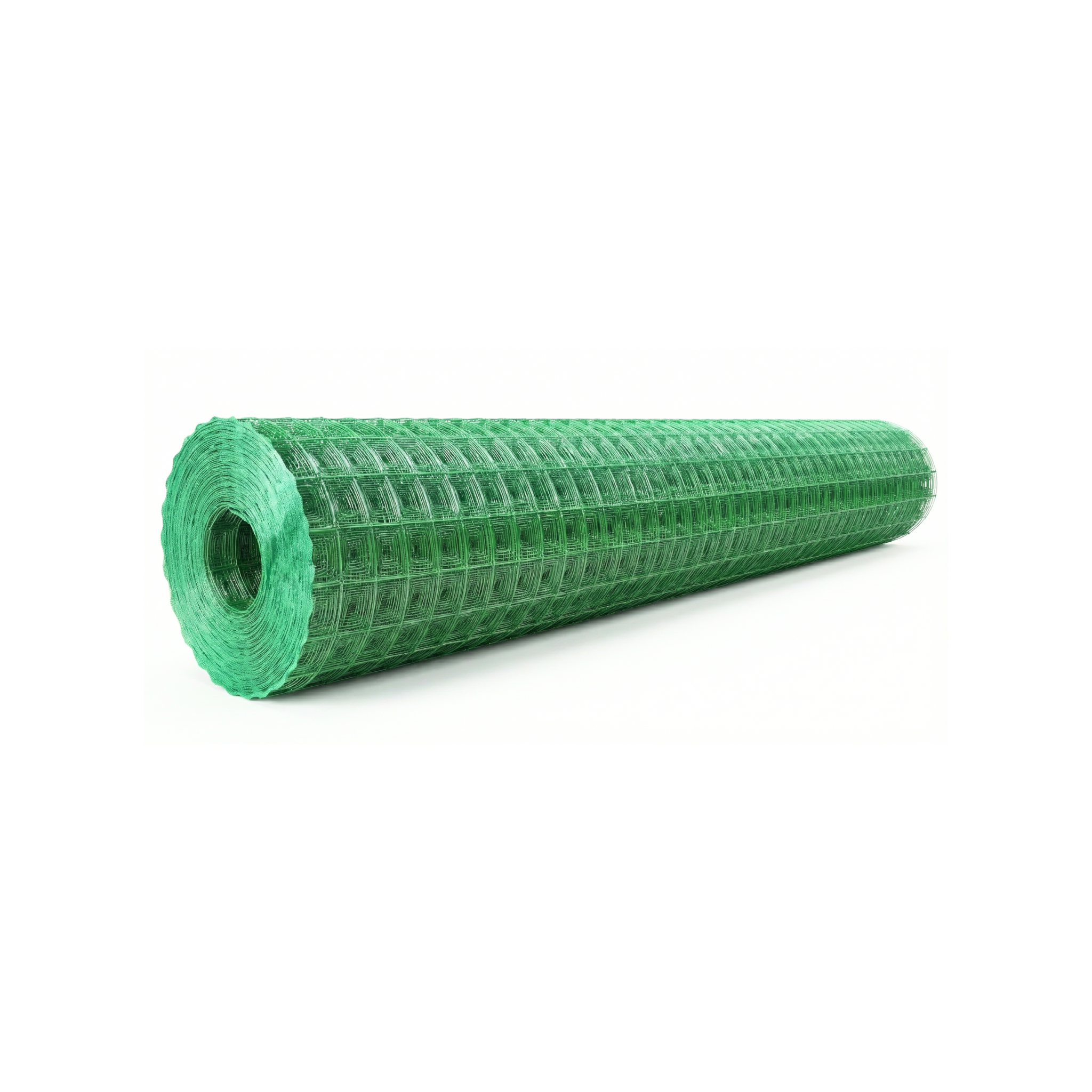
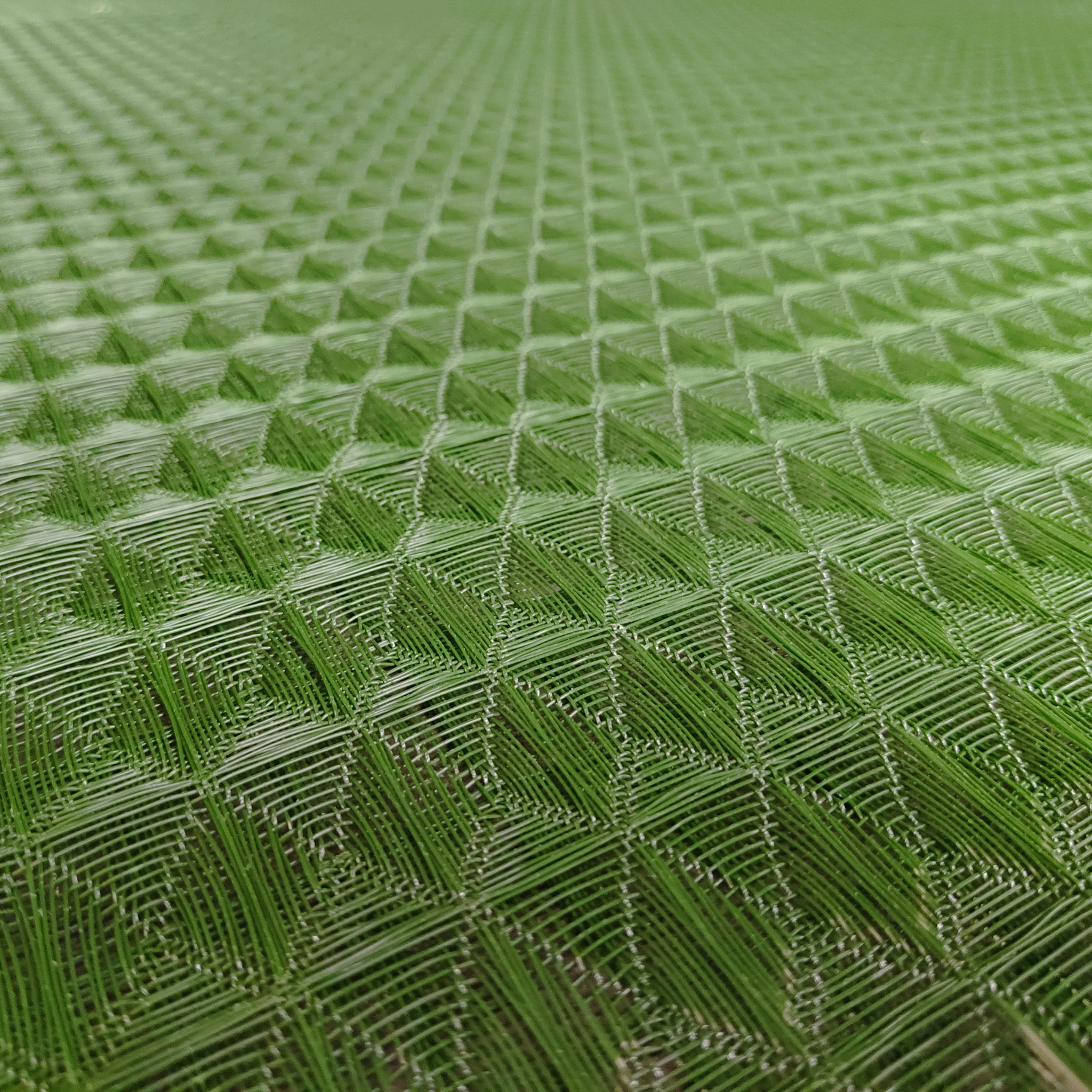
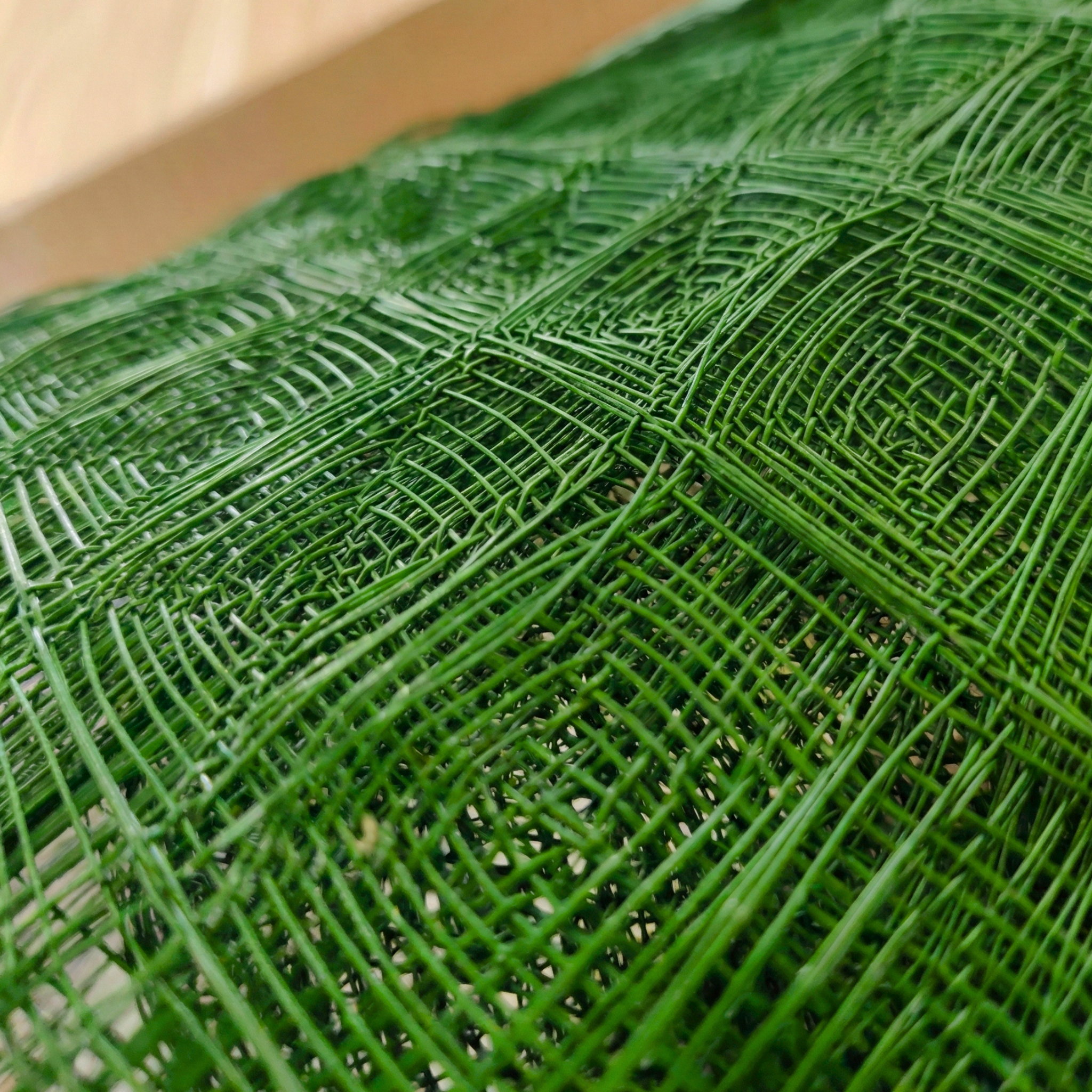
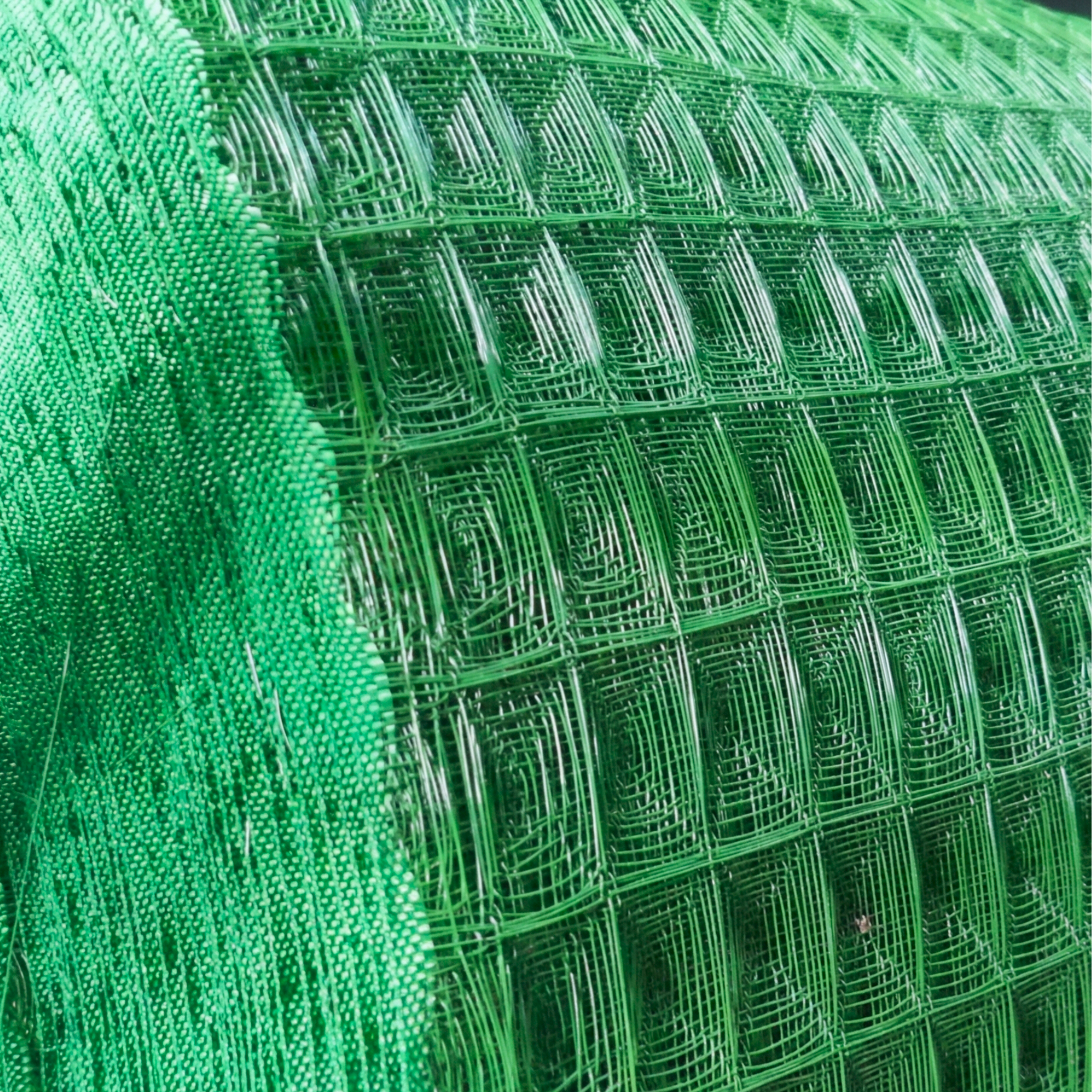
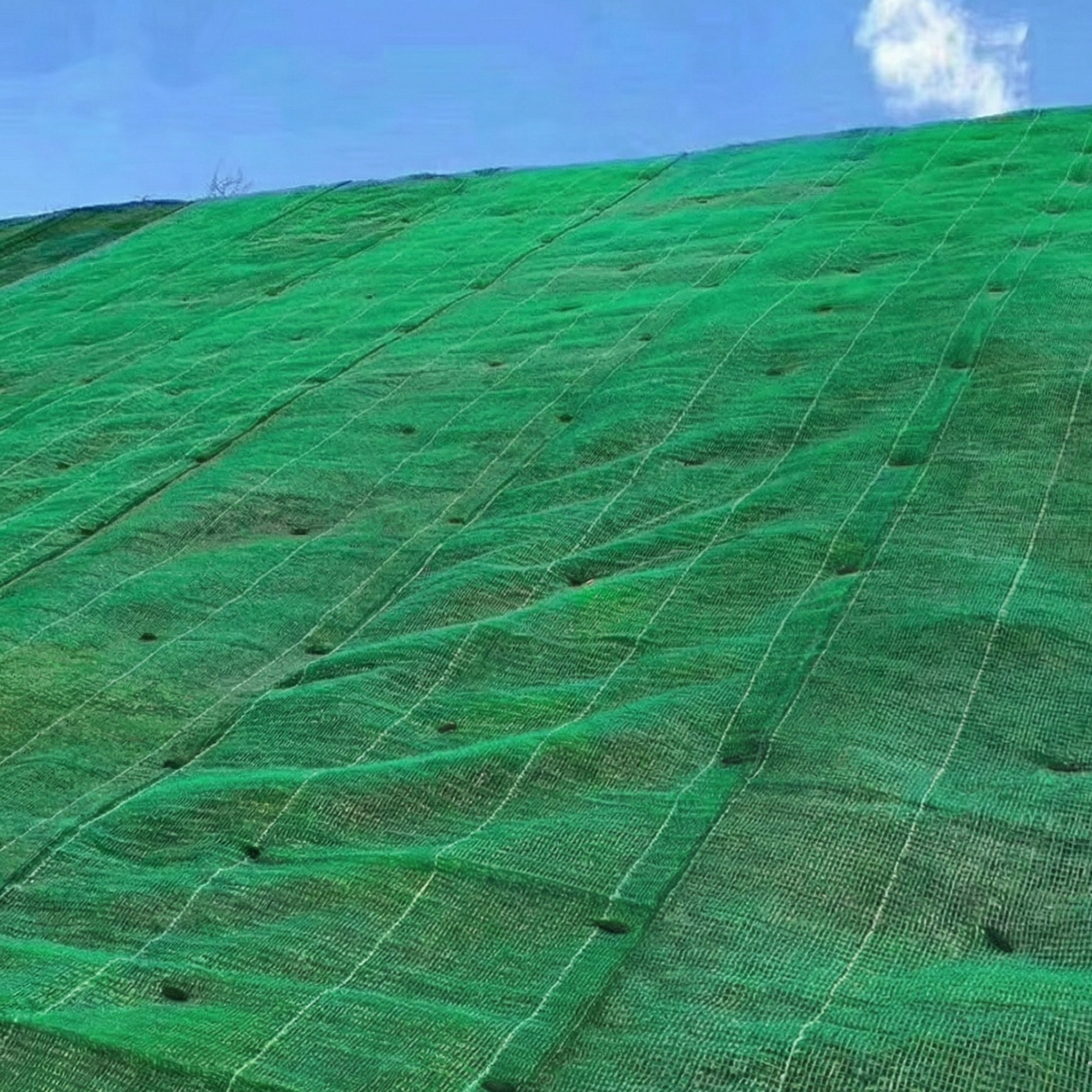


Reinforcing vegetation on steep slopes exposed to intense Caribbean rain where coir biomats biodegrade prematurely, anchoring grass and plant roots with a permanent system that adds three-dimensional structure to the substrate, and lining channels with water flow where erosion control must last for decades, requires a three-dimensional polypropylene geomat with high-strength filaments and an open 3D matrix. This polypropylene (PP) geomat—also known as a turf reinforcement mat, TRM, 3D geomat, or volumetric revegetation mesh—is manufactured by MOLTEXO from stabilized PP filaments intertwined in a three-dimensional matrix, with a weight of 100 g/m² in green, in rolls 5.2 m wide and 100 m long, designed for permanent slopes, flowing channels, riverbanks, reclaimed landfills, and landscaping projects with a long service life.
Key Benefits
- Permanent three-dimensional structure for root anchorage: the open 3D matrix is filled with topsoil and accommodates grass and plant roots, which interweave with the PP filaments, creating a double-reinforcement system (vegetation + synthetic) that significantly increases resistance to water erosion.
- Long-lasting UV-stabilized PP: unlike coir biomats that biodegrade in 2-5 years, the synthetic geomat maintains its structural function for decades, which is essential for permanent applications where vegetation alone does not provide sufficient resistance under extreme conditions.
- High permeability for natural infiltration: the open matrix allows rainwater to pass through without generating significant lateral runoff, maintaining natural water flow into the subsoil and reducing the risk of surface saturation.
- Immediate protection from installation: before vegetation is established, the PP filaments reduce direct rain impact and runoff velocity, preventing substrate loss during the critical period of germination and initial growth.
- Flexible and adaptable to irregular terrain: the material conforms to uneven surfaces, curves, and complex slope shapes, ensuring continuous contact with the surface without gaps where water could flow under the mat and wash away the substrate.
Typical Applications and Uses
- Permanent stabilization of slopes and hillsides in road, urban development, and residential projects.
- Lining drainage channels, ditches, and trenches with continuous or intense intermittent water flow.
- Protection of riverbanks, lagoons, and coastal areas from water and wind erosion.
- Covering reclaimed landfills, environmental closure zones, and landscaping projects with permanent native vegetation.
Quality and Durability
An economical geomat fails in two areas: the PP filaments lack adequate UV additive (leading to embrittlement and disintegration after a few years in direct sunlight) and the three-dimensional matrix is thin or not calibrated (which does not properly house substrate or roots, losing the combined reinforcement effect). MOLTEXO works with UV-stabilized PP in a calibrated 3D matrix, which distinguishes a permanent construction geomat with a lifespan of decades from a generic geomat that fails before vegetation establishes itself.
Structural and functional difference. The erosion mat has an open three-dimensional matrix of voluminous filaments (several millimeters thick), designed to be filled with topsoil and let grass and plant roots interweave with the synthetic material, creating a combined vegetation-plastic reinforcement system. The conventional geotextile is flat (thin 2D structure) and is used mainly to separate soil layers, filter water or protect geomembranes, with no role in supporting surface vegetation. For permanent revegetation with root reinforcement, an erosion mat is used; for drainage and separation, a geotextile.
With U-shaped metal staples (15-30 cm long), treated wood stakes or barbed plastic anchors, depending on soil firmness and slope inclination. It is critical to ensure tight, continuous contact between mat and ground surface: any gaps or air pockets allow rainwater to flow under the mat and wash away substrate, compromising the system. Anchor density depends on slope: gentle slopes accept 1-2 anchors/m²; steep slopes (1:2 or more) require 3-4 anchors/m² in uniform distribution with reinforcement at edges and overlaps.
Not significantly within professional project timeframes. Polypropylene incorporates HALS stabilizers against UV-A and UV-B, calibrated to resist direct Caribbean radiation for decades without losing structural properties. The typical declared service life of the synthetic erosion mat is several decades, keeping its reinforcement function even after vegetation has established. This differential vs. coir blanket (2-5 years) is what defines when to choose one or the other: for projects with long declared service life and permanent exposure, synthetic erosion mat; for revegetation with ecological criteria and temporary project life, coir blanket.
Yes, with a limitation. Without vegetation, the mat acts only as physical protection against rain impact and reduces runoff velocity — conditions that control moderate erosion in arid zones or low-water-flow areas. However, its maximum structural efficiency is reached when combined with vegetation: the roots of grass or native plants interweave with the synthetic filaments, creating a double reinforcement matrix that multiplies resistance to water erosion. For arid-climate projects with no possibility of revegetation, combine the mat with decorative gravel cover that adds weight and extra protection.
Still have questions?
Ask us and we will gladly help you with whatever you need.
| Material | High-tenacity polypropylene (PP), monofilament yarns |
|---|---|
| Tensile strength (MD) | 60 kN/m (4111 lb/ft) — ASTM D6637 |
| Tensile strength (CD) | 50 kN/m (3426 lb/ft) — ASTM D6637 |
| Elongation at characteristic load (MD) | 19 % — ASTM D6637 |
| Elongation at characteristic load (CD) | 15 % — ASTM D6637 |
| UV resistance @ 500 hours | 100 % — ASTM D4355 |
| Thickness | 5–8 mm (0.20–0.31 in) — ASTM D6525 |
| Mass per unit area | 320 g/m² (9.44 oz/yd²) — ASTM D6566 |
| UV protection | Yes (high) |
| Roll: Width | 58.0 cm (22.83 in) |
|---|---|
| Roll: Height | 58.0 cm (22.83 in) |
| Roll: Depth | 520.0 cm (204.72 in) |
| Roll: Weight | 165.0 kg |
Payment & Security
