
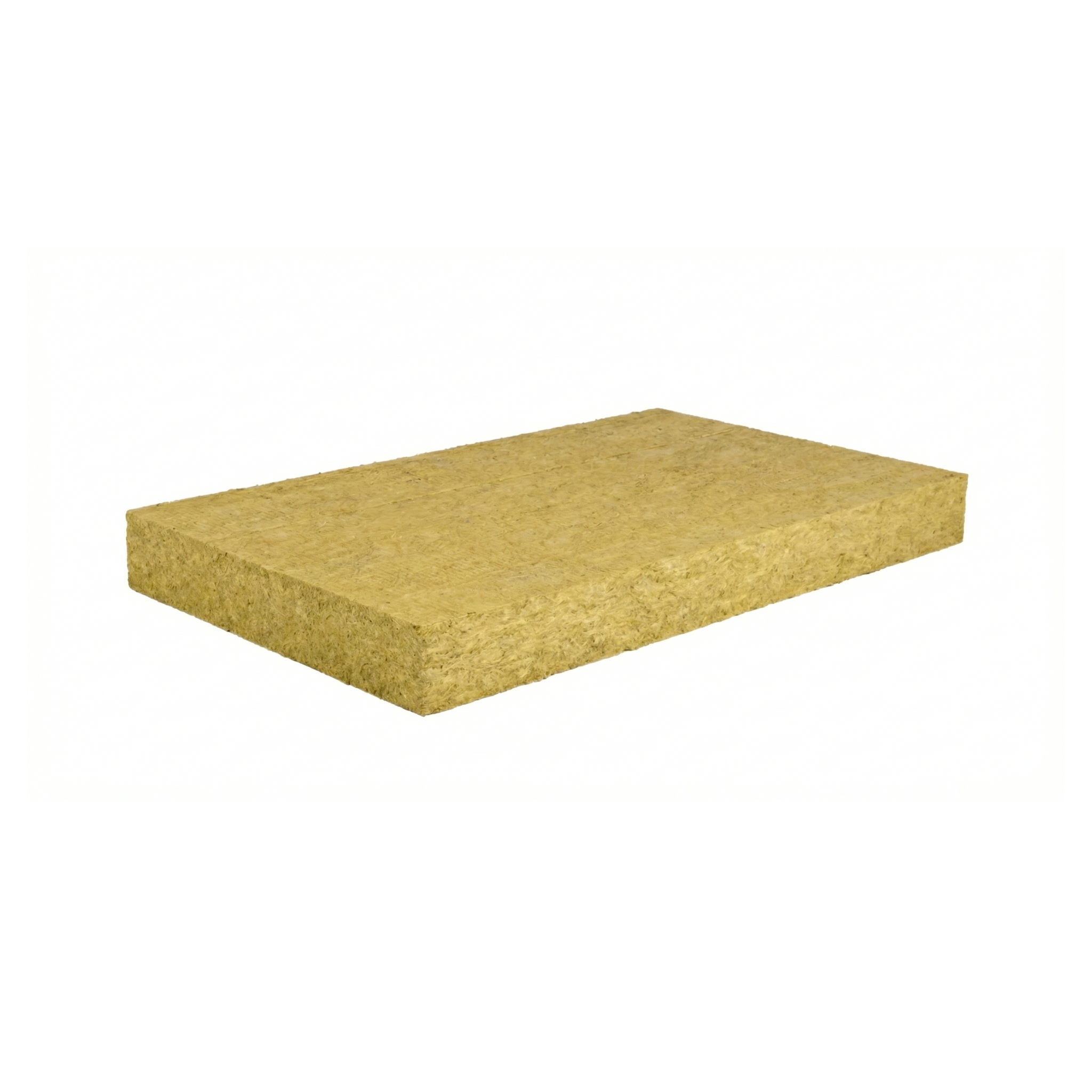


To thermally and acoustically insulate residences, offices, and industrial facilities in a Caribbean climate where facades heat up in the sun and noise transmission between rooms compromises comfort, while also adding passive fire protection, requires a semi-rigid volcanic rock wool panel with calibrated density and hydrophobic treatment. This rock wool panel—also known as stone wool, mineral wool, or rock wool—is manufactured by MOLTEXO with a density of 100 kg/m³, in 120×60 cm format in three thicknesses (50, 75, 100 mm), designed for drywall/sheetrock construction, steel framing, false ceilings, and facade insulation in residential, commercial, and industrial settings.
Key Benefits
- Superior acoustic insulation due to calibrated density: 100 kg/m³ offers better sound wave absorption than standard fiberglass, significantly reducing noise transmission between rooms, a critical condition for residential partitions, offices requiring privacy, and rest areas adjacent to common areas.
- Class A1 non-combustible fire resistance: melting point above 1000°C that acts as a barrier against flame spread during a fire, a necessary condition for machine rooms, emergency exits, and applications requiring auditable passive safety.
- Thermal comfort in Caribbean climate: low thermal conductivity (typical range 0.035-0.040 W/mK depending on density) that reduces heat transfer from sun-exposed facades to the interior, significantly decreasing air conditioning demand.
- Hydrophobic and vapor permeable: the hydrophobic treatment repels liquid water, preventing capillary absorption; vapor permeability allows the wall to breathe without condensation, an essential condition in the humid Dominican climate to avoid hidden mold between the sheetrock and the exterior facade.
- Dimensional stability without settling: the material does not expand, contract, or settle with thermal changes, maintaining the declared thickness for decades without creating thermal bridges due to gaps between panels.
Typical Applications and Uses
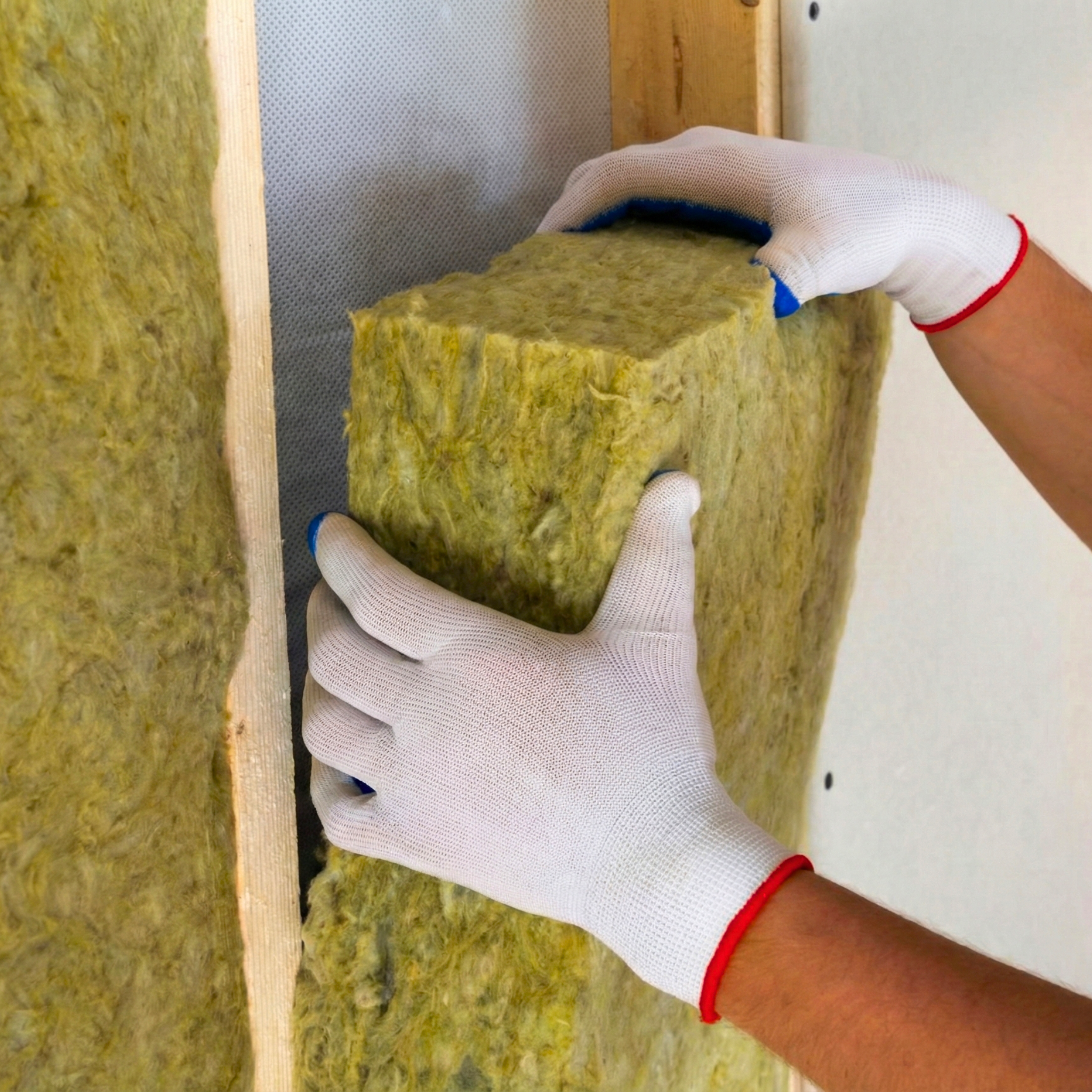
- Filling for plasterboard (sheetrock) partition walls and steel framing structures in residential and commercial settings.
- Insulation above false ceilings and suspended ceilings against tropical rain noise and noise from upper floors.
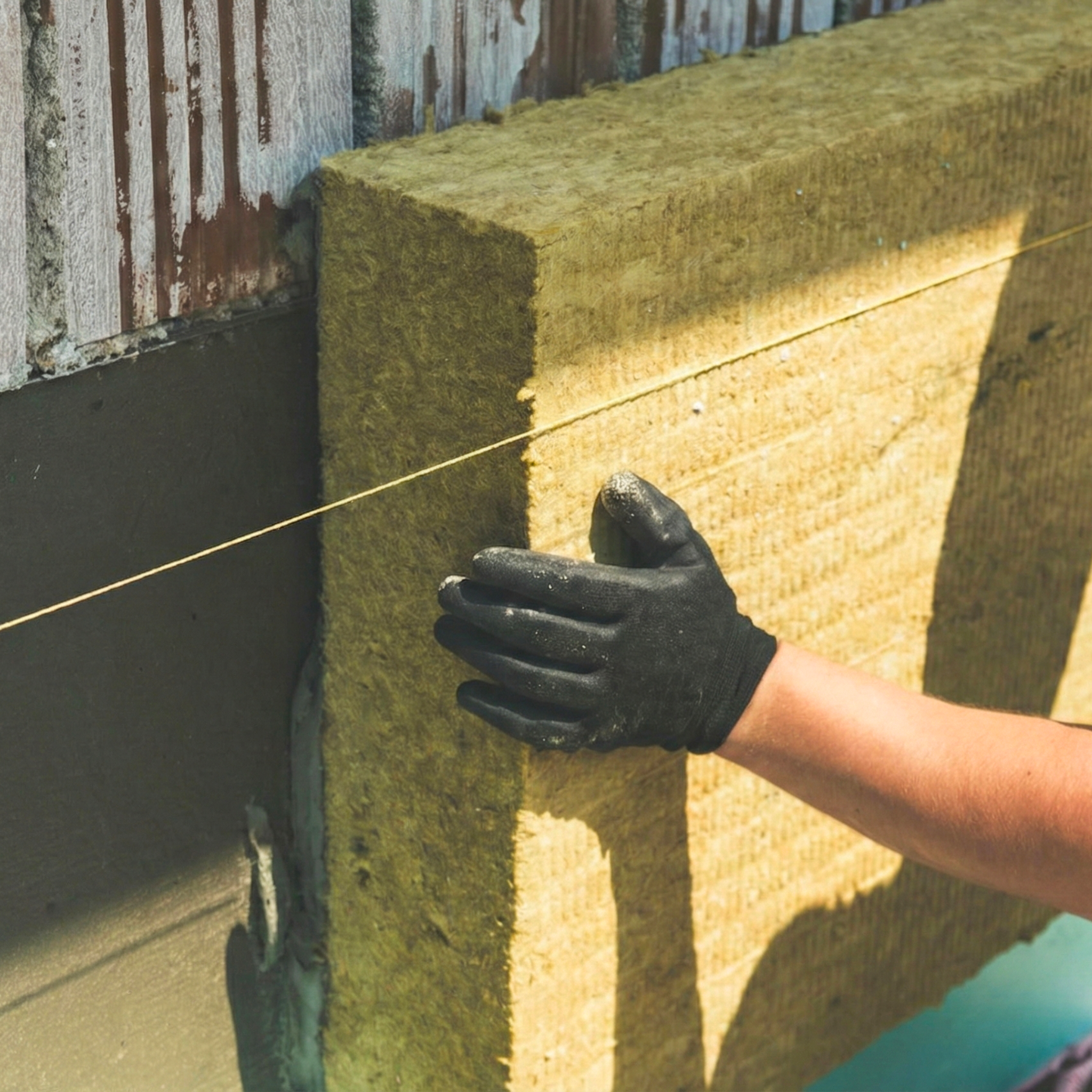
- Facade cladding for thermal insulation in Caribbean climates with high solar incidence.
- Enclosures requiring passive fire safety: machine rooms, emergency exits, fire-rated separators.
Quality and Durability
An economical rock wool panel fails in two ways: the actual density is lower than declared (which significantly reduces expected acoustic insulation and allows noise to pass through) and the hydrophobic treatment is deficient (which leads to absorption of ambient moisture and a progressive loss of insulating capacity). MOLTEXO works with verifiable 100 kg/m³ density and controlled hydrophobic treatment, which distinguishes a professional insulation panel from generic mineral wool that does not deliver the expected acoustic insulation.
What's the real difference between rock wool and fiberglass?
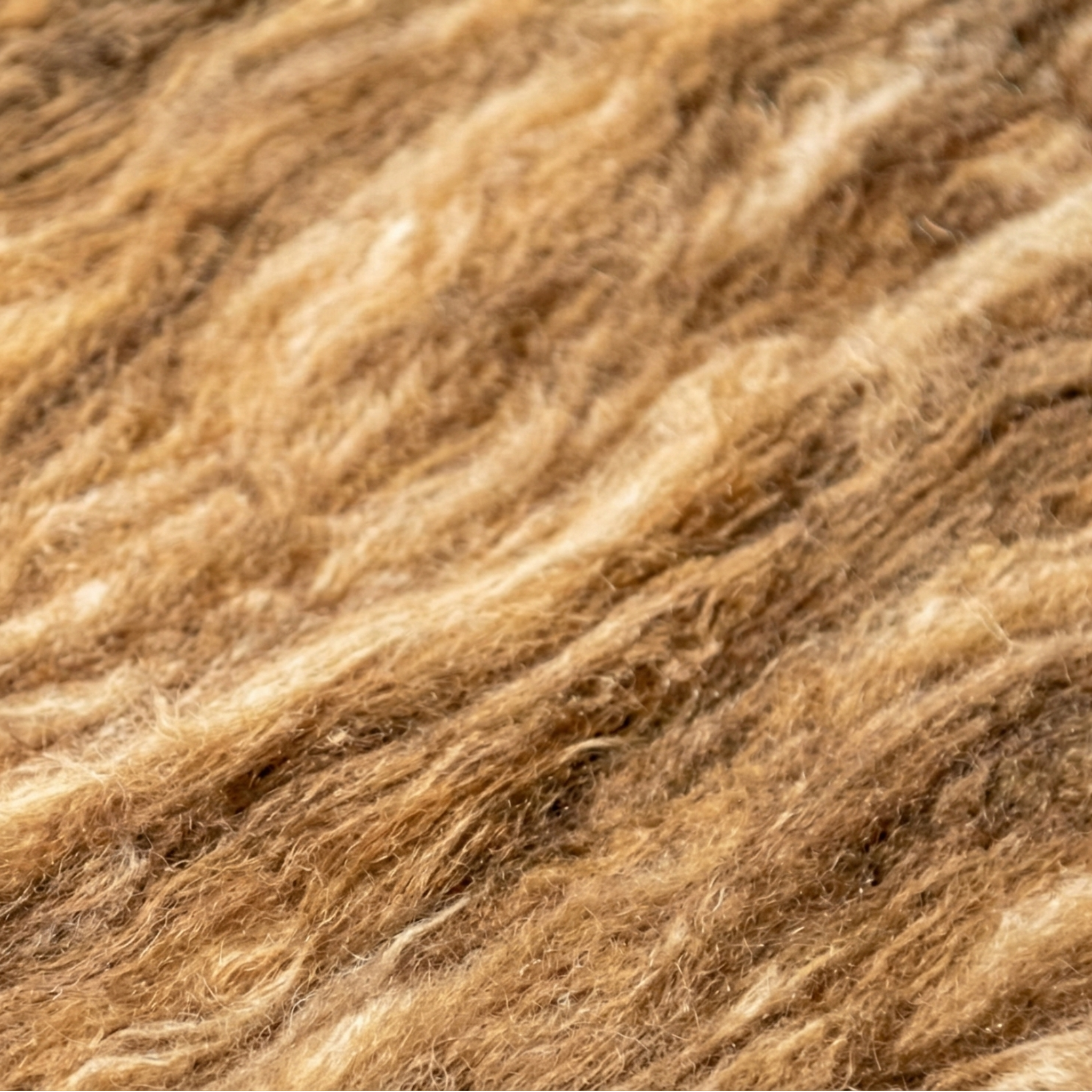
Raw material, density and fire behavior. Rock wool comes from basaltic volcanic rock melted at high temperature: it produces denser fibers with better acoustic insulation (sound waves dissipate in dense material) and higher fire resistance, with a melting point above 1000°C. Fiberglass is made from melted silica: lighter, cheaper and with good thermal performance, but less efficient acoustically and with lower fire resistance. For partitions between rooms where sound transmission matters, rock wool; for standard low-cost thermal insulation, fiberglass.
Is it really resistant to water and ambient humidity?
Yes, with an important technical caveat. Rock wool is hydrophobic: the fibers are treated to repel liquid water without absorbing it by capillary action — a critical condition vs. fiberglass, which does absorb water. It is also vapor-permeable: it lets the wall structure breathe without condensing ambient humidity inside, which prevents mold in the humid Caribbean climate. However, it should not be continuously submerged or exposed to direct dripping for months, since the hydrophobic treatment is surface-level and prolonged immersion would saturate the material, reducing insulating capacity until it dries again.
How is the panel handled and cut on site?
The semi-rigid panel is easy to handle without specialized machinery: manageable per-panel weight and stackable format. For cutting, use a dedicated insulation knife (long serrated bread-knife type) or industrial blade with replaceable blade, both inexpensive and available at professional hardware stores. Cuts must be clean and straight to keep a precise fit between profiles. For installation between drywall structure or steel framing, panels are press-fit between profiles, holding position without adhesive fixing. For ceilings with open profiles, mechanical fixing with screws or hooks is recommended.
Is it safe to install this product in residential interiors with children?
Yes, once installed and the partition closed. Rock wool is an inorganic, inert material that emits no volatile organic compounds (VOCs), formaldehyde or other contaminants into indoor air — an important condition for residences with children. Once installed between drywall or steel framing and the cavity is closed, the fibers are encapsulated and do not release dust into the room. The precaution applies during installation: handling and cutting release fibers that can irritate skin, eyes and airways by mechanical contact, so the worker should wear gloves, goggles, self-filtering mask and long sleeves throughout the shift.
Does it really help reduce indoor heat in a Caribbean climate?
Yes, significantly. The material's low thermal conductivity (in the 0.035-0.040 W/mK range depending on density) creates a barrier against heat transfer from sun-heated facades and roofs into the air-conditioned interior. In Caribbean tropical climates, the effect translates into lower air-conditioning demand and reduced electricity consumption — savings that typically pay back the initial investment within a few years of operation. Maximum effectiveness is achieved with careful installation without gaps or thermal bridges, combined with a vapor barrier in high-humidity zones to prevent intermediate condensation between the wool and the exterior wall.
Still have questions?
Ask us and we will gladly help you with whatever you need.
| Material and construction | |
|---|---|
| Material | Mineral rock wool |
| Finish / coating | Bare (uncoated) |
| Dimensions and format | |
| Panel width | 60 cm (23.62 in) |
| Coverage area (per panel) | 0.72 m² (7.75 ft²) |
| Total package coverage | 2.88 m² (31.00 ft²) |
| Panel thickness | 75 mm (2.95 in) |
| Panel length | 120 cm (47.24 in) |
| Physicochemical properties | |
| Density | 100 kg/m³ (6.24 lb/ft³) |
| Presentation and packaging | |
| Package contents | 4 panels |
| Packaging type | White shrink-film bag |
| Package: Width | 60.0 cm (23.62 in) |
|---|---|
| Package: Height | 120.0 cm (47.24 in) |
| Package: Depth | 30.0 cm (11.81 in) |
| Package: Weight | 21.6 kg |
Official MOLTEXO warranty
What's covered
Confirmado el defecto: sustitución o devolución del valor pagado.
What's not covered
Payment & Security
