
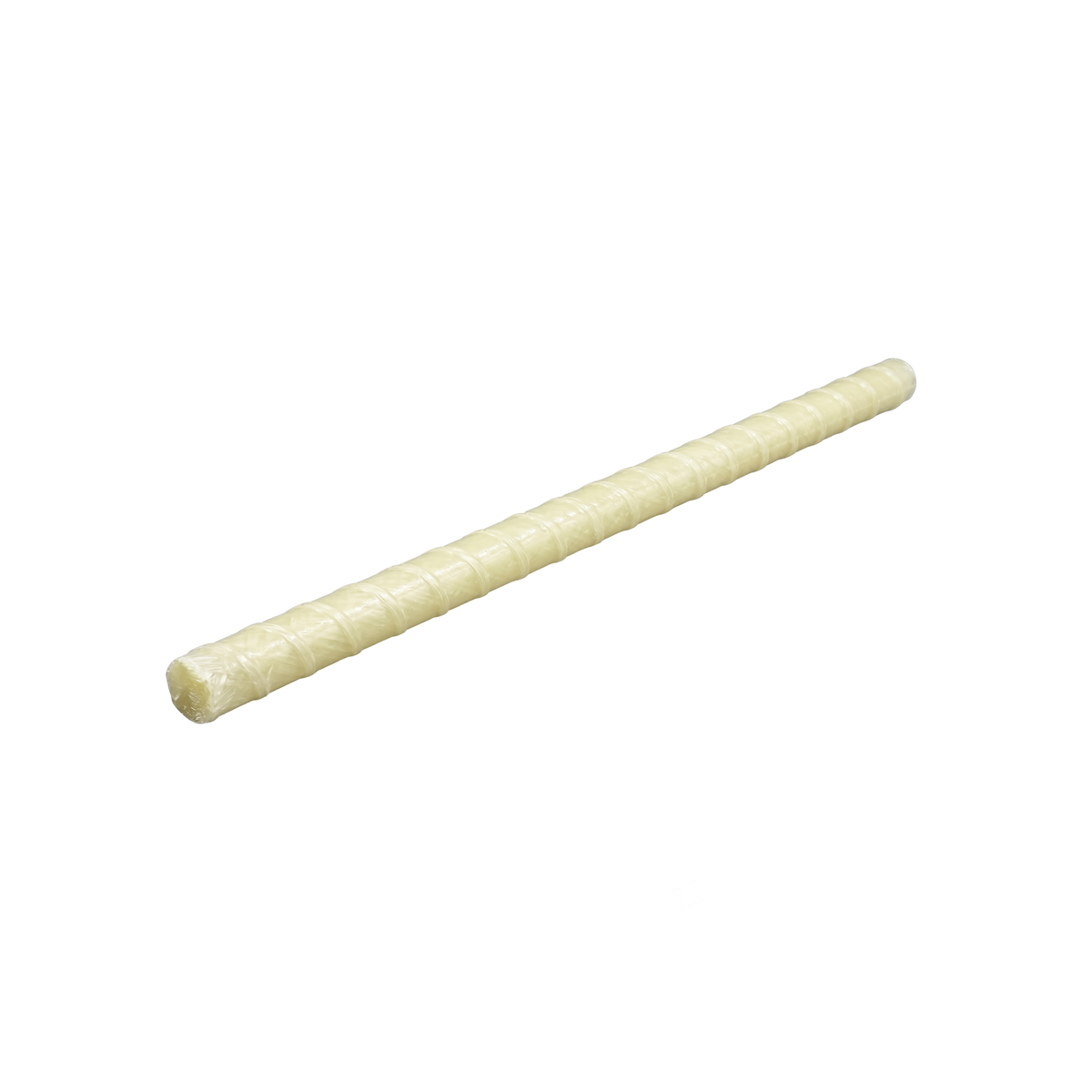
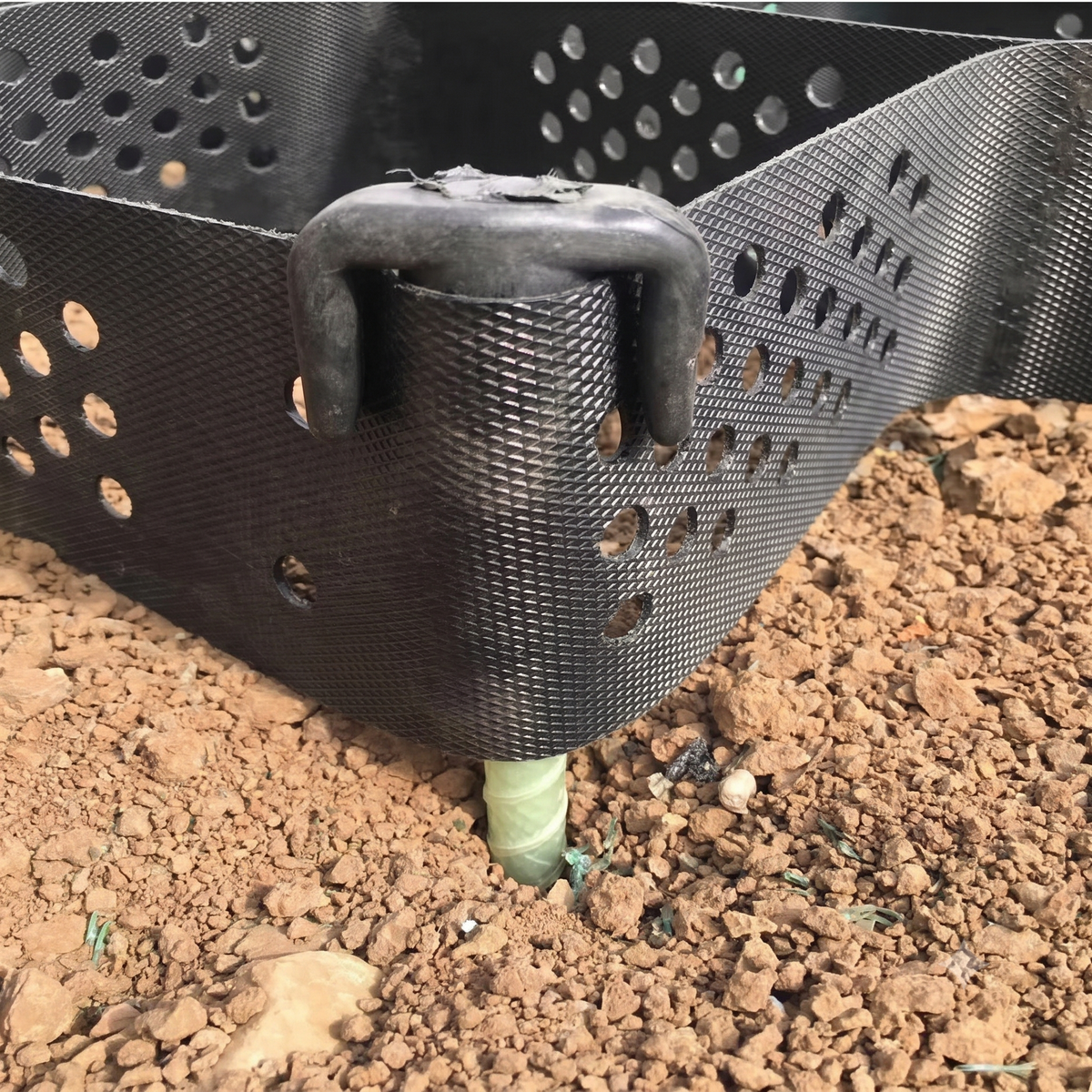


Installing and filling geocell panels on slopes and embankments requires holding the cellular mesh to the ground while it is spread and filled with aggregate, without the panel shifting or closing before the fill is confined. This fiberglass rod —also called a fiberglass stake or geocell anchor pin— is manufactured by MOLTEXO from professional-grade fiberglass, in a 12 mm (0.47 in) diameter and 50 cm (20 in) length format (pack of 50 units), and is the standard solution for temporarily securing geocells in combination with the anchor cap.
Key benefits
- Designed to secure geocells: a straight Ø12 mm bar designed specifically for this purpose, with the right strength to hold the cell during spreading and filling without oversizing the anchor.
- Does not rust or corrode: unlike a steel rod, fiberglass does not rust from soil moisture or stain the ground, keeping the anchor point clean throughout the installation.
- Lightweight and efficient to transport: the low weight of fiberglass, far below that of steel, makes transport and on-site handling cheaper and faster, and allows hundreds of anchor points to be placed without tiring the operator.
- Complete system with the anchor cap: designed to be used with the MOLTEXO anchor cap, which is inserted into the end and presses the geocell against the ground, forming the standard temporary fastening system.
- Non-conductive material: fiberglass does not conduct electricity, a safety advantage over metal rods on jobs with nearby electrical installations.
Typical applications and uses
- Temporary securing of geocells on slopes and embankments during spreading.
- Fastening geocell panels while they are filled with aggregate in soil stabilization.
- Geocell installation in gravel parking areas, access roads and erosion control works.
- Provisional anchoring of geocell in green walls and technical landscaping projects.
Quality and durability
Metal rods are sometimes used to anchor geosynthetics, but the fiberglass rod is designed specifically for the temporary fastening of geocells: it provides the right strength for that purpose without the weight or corrosion of steel. Being much lighter, it is more efficient to transport and handle when placing hundreds of anchor points, and because it does not rust, it neither stains the ground nor weakens with soil moisture. MOLTEXO works with professional-grade fiberglass, which together with the anchor cap forms a clean, fast temporary fastening system for geocell work.
Equivalences
Equivalent to these other-brand references:
- 12 mm (0.47 in) in diameter and 50 cm (20 in) long · Pack of 50 sticks
- Presto GEOWEB ATRA GFRP Anchor 18 in (457 mm)
Brands and references mentioned belong to their respective owners; cited only for comparison and compatibility.
What is this rod for and how does it combine with the anchor cap?
Does it work in any kind of Caribbean soil?
What tools are needed for proper installation?
Does the fiberglass rod rust, and can it be reused?
Still have questions?
Ask us and we will gladly help you with whatever you need.
| Material and construction | |
|---|---|
| Material | Fiberglass |
| Dimensions and format | |
| Dimensions | 12 mm (0.47 in) diameter × 50 cm (20 in) long |
| Presentation and packaging | |
| Presentation | Pack of 50 rods |
| Package: Width | 12.0 cm (4.72 in) |
|---|---|
| Package: Height | 50.0 cm (19.69 in) |
| Package: Depth | 6.0 cm (2.36 in) |
| Package: Weight | 10.65 kg |
Official MOLTEXO warranty
What's covered
Confirmed defect: replacement or refund of the amount paid.
What's not covered
Payment & Security

