
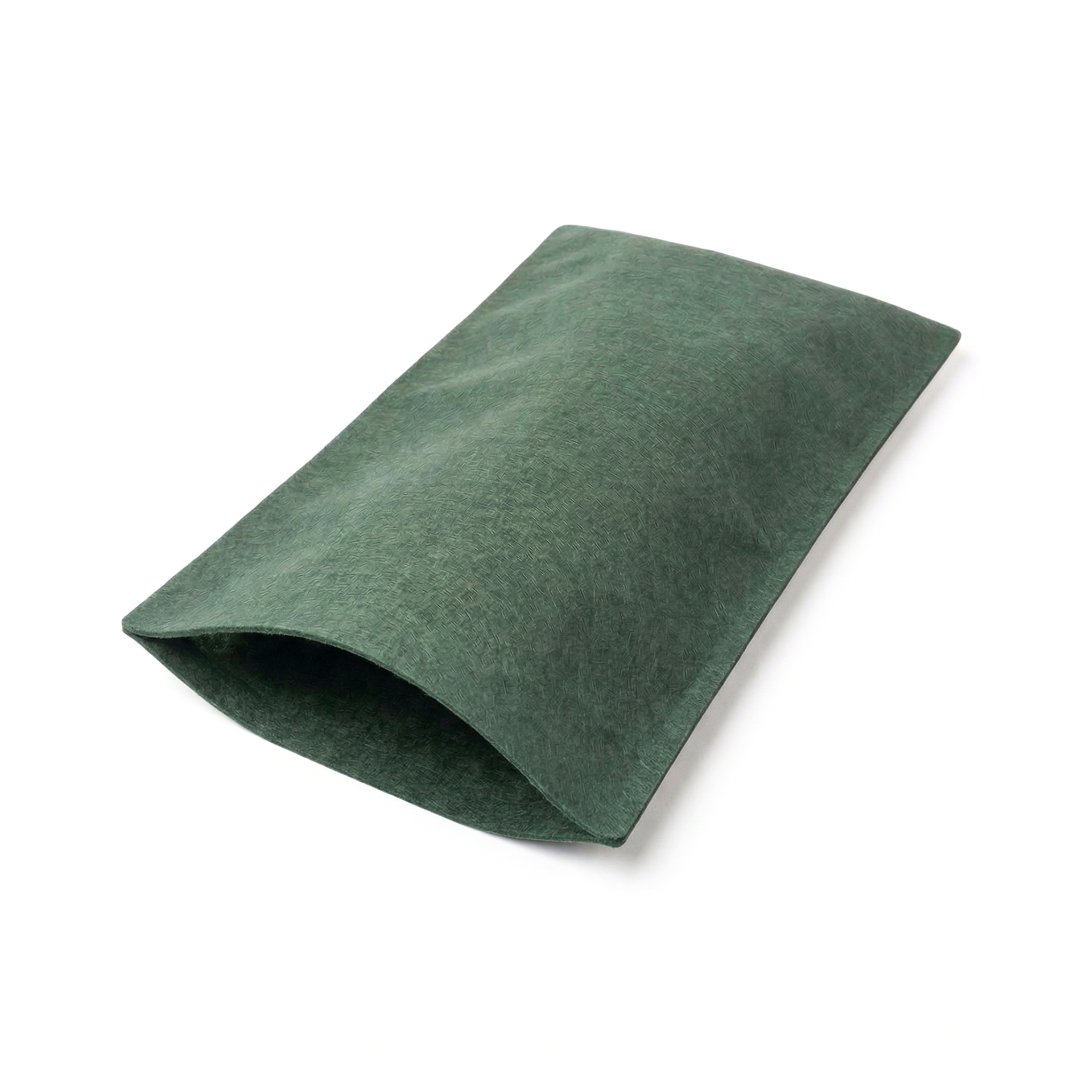
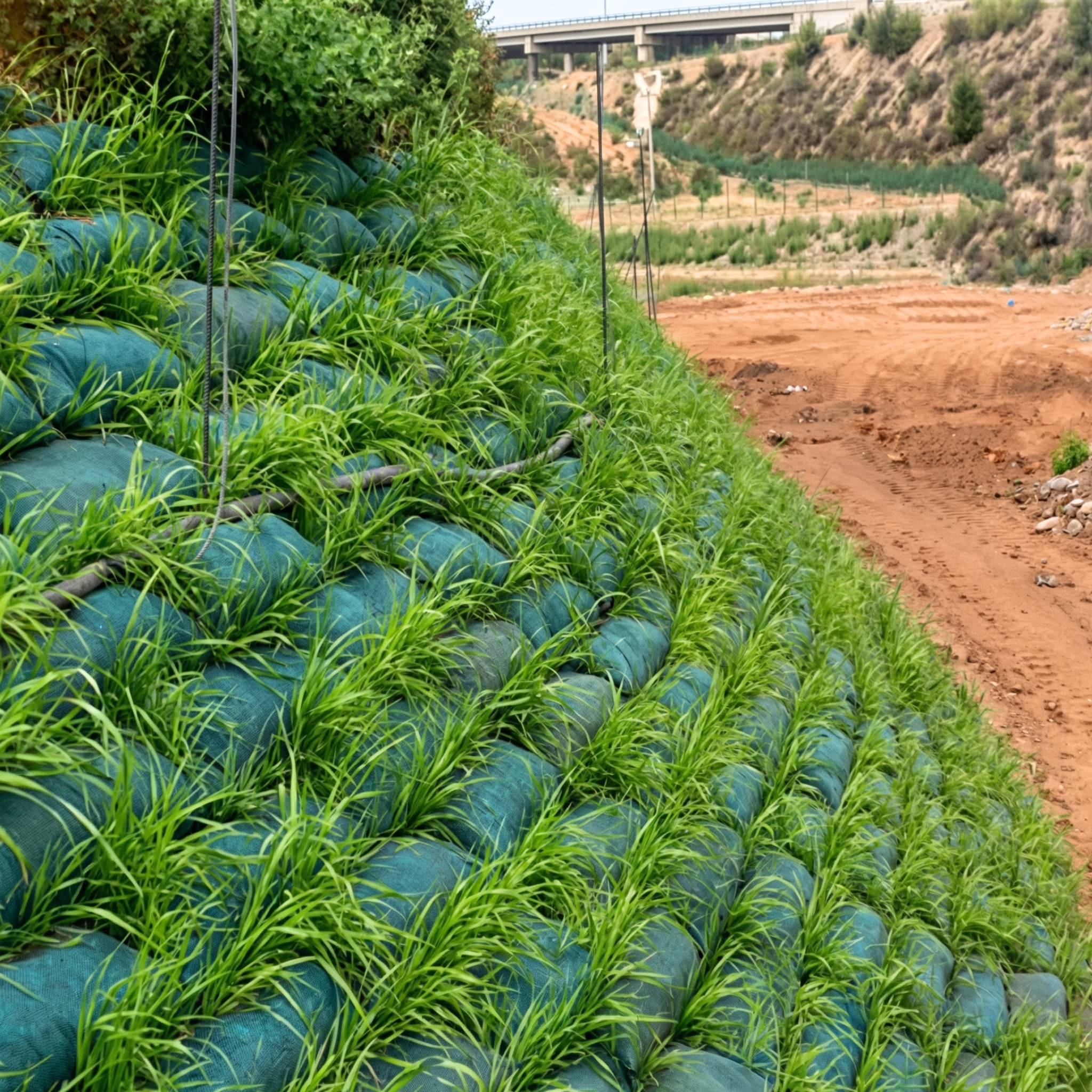
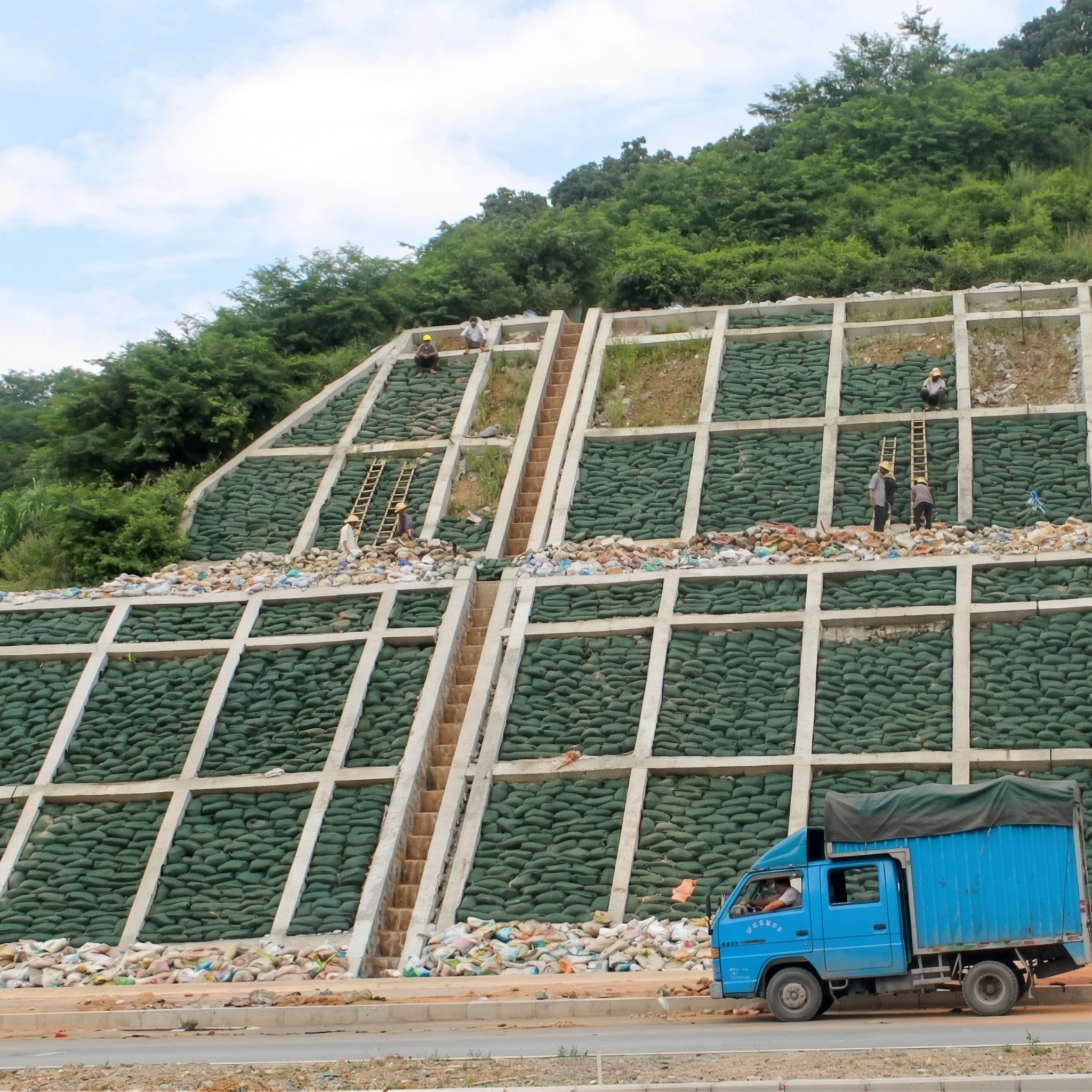
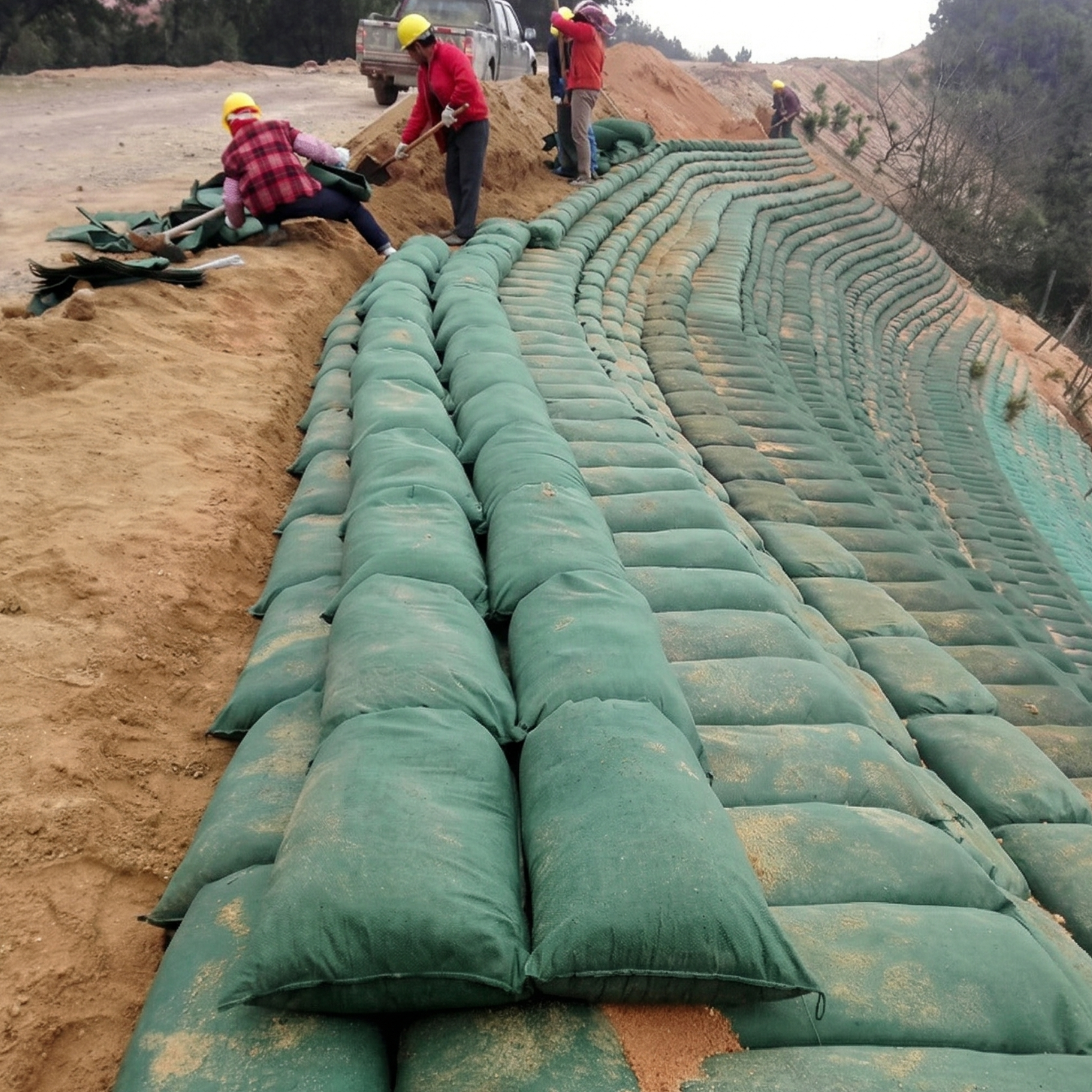
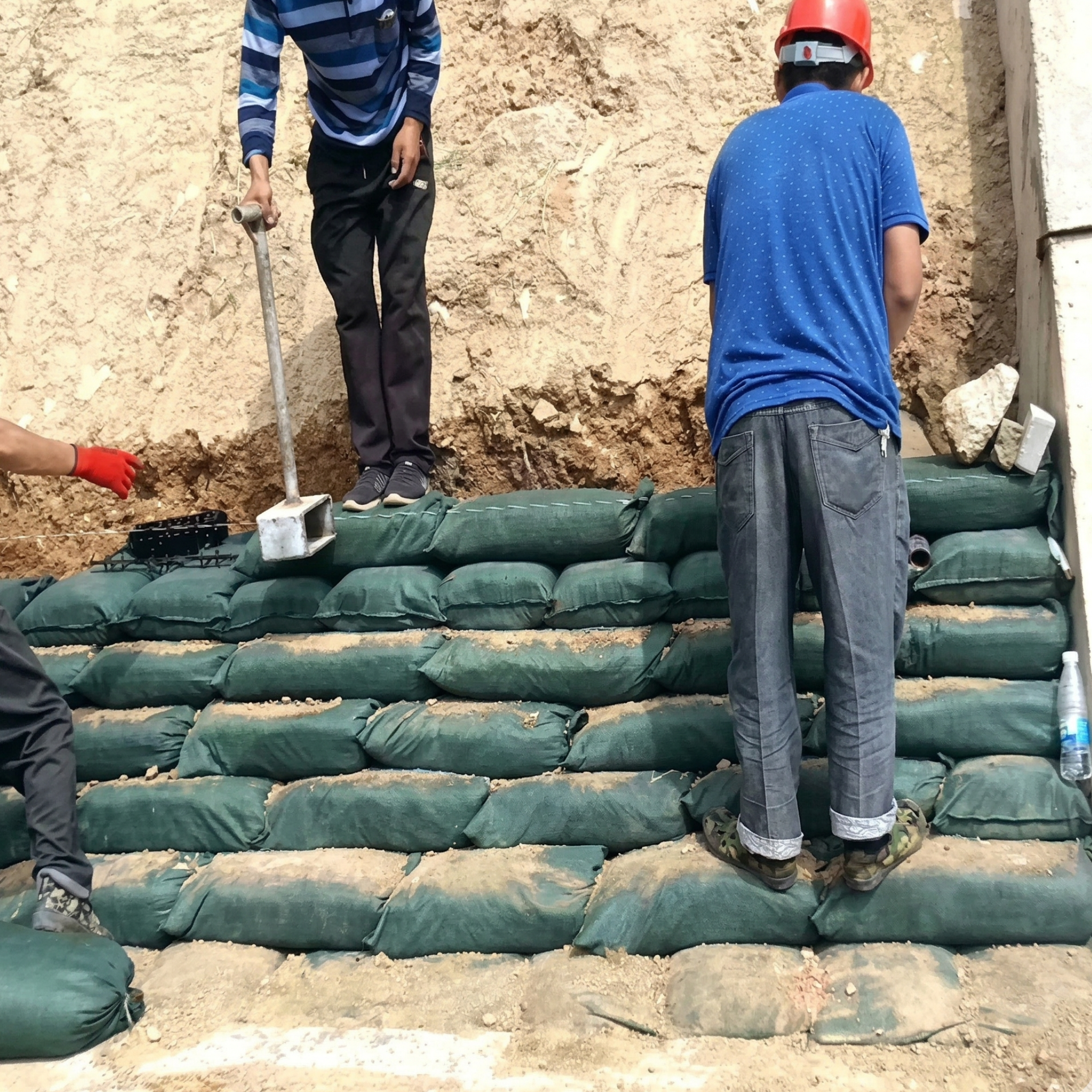


Building temporary flood barriers with materials available on site, stabilizing a slope or riverbank after flood damage, or erecting a provisional retaining wall without specialized machinery or concrete block transportation, requires a resistant geotextile geobag that is filled on-site with local soil, sand, or gravel. This geobag—also called a geotextile sandbag, geobag, or geotextile sand sack—is manufactured by MOLTEXO with 400 g/m² geotextile in black, dimensions 40x80 cm, a package of 50 units, designed for riverbank protection, erosion control, emergency flood barriers, and slope stabilization in civil and hydraulic engineering works.
Key Benefits
- Filled with local material without block transport: It is filled with soil, sand, or gravel available directly at the construction site, eliminating transport logistics and the cost of concrete blocks or gabions, a decisive advantage in remote areas or emergencies where heavy equipment access is unavailable.
- Controlled permeability with fine particle retention: The geotextile allows water to drain freely, reducing the hydrostatic pressure of saturated fill, while retaining the fine particles of the internal material, a critical condition for walls exposed to continuous rain without pressure accumulation.
- UV resistance for extended use: The 400 g/m² geotextile incorporates calibrated UV-HALS additives to withstand direct Caribbean sun exposure for seasons or years, a condition for extensive temporary use or partially exposed walls.
- Adaptation to irregular terrain: The bag conforms to curves, unevenness, and non-flat ground shapes, a differentiating condition compared to rigid blocks that require a perfectly level base and precise maneuvering.
- Stackable in stable block-type walls: Geobags are stacked in alternate courses (staggered joints like masonry) creating stable walls several meters high, a condition for permanent use on slopes and flood barriers.
Applications and Typical Uses
- Emergency barriers against floods and river surges in urban and agricultural areas.
- Protection of riverbanks, canal edges, and coastal areas against erosion by water flow.
- Construction of temporary or permanent retaining walls in road and landscaping projects.
- Reinforcement of coasts, beaches, and protection of structures against moderate waves or static flows.
Quality and Durability
An economical geobag fails in two ways: the geotextile is of low grammage (which tears with the weight of the fill and friction with stones during filling) and lacks adequate UV additive (which becomes brittle in the sun and breaks in a few months when exposed). MOLTEXO works with 400 g/m² geotextile with calibrated UV additive, which distinguishes a professional construction geobag from a generic bag that breaks during filling or disintegrates within the first month of exposure to the Caribbean sun.
Applications where it outperforms concrete blocks or gabions: slope stabilization with material available on site (no transport of external blocks), protection of riverbanks and canals with moderate flow, emergency barriers against flooding (rapid installation without machinery), reinforcement of coasts and beaches after wave erosion, construction of temporary or permanent retaining walls in remote areas. For walls of substantial height, critical structural retention with direct vehicle loads or environments with continuous high-flow water, traditional solutions (metal gabions, reinforced concrete) outperform thanks to superior structural capacity.
Any granular material available on site: sand (the most common and easiest to handle), local soil, gravel, and even crushed recycled construction material. Sand performs best in anti-flood barriers because of its density and how perfectly it adapts to the bag's shape. Soil is the typical choice for slopes and permanent retaining walls. Angular gravel adds bearing capacity and allows free drainage of water. Avoid materials with large pointed stones that could tear the geotextile from inside during handling. Filling is typically done at 70-80% capacity to allow proper mouth closure and effortless handling.
Yes. The 400 g/m² geotextile carries UV-HALS additives calibrated to withstand direct Caribbean radiation over seasons or years of continuous outdoor use. For temporary barriers (weeks or months, in flood emergency) durability is more than sufficient. For permanent walls with a stated service life of 5-10 years or more, it remains functional as long as continuous abrasion from sharp stones or water flow with abrasive sediment is avoided. For service lives beyond a decade, it pays to cover with topsoil and revegetate the exposed face, which significantly extends durability and improves landscape integration.
Yes — it is one of its main applications. Emergency advantages: rapid installation without heavy equipment (a 2-3 person crew can fill and place several bags per minute), filling with sand or soil available on site, adaptability to the geometry of the flood front, removability after the emergency. For fast-rising waters and low-to-moderate flows it performs adequately. For massive flooding with large flows and high speeds it pays to combine with more robust structural elements (gabions, heavy blocks). The system typically works by stacking bags in alternating courses with offset joints for the temporary wall's structural stability.
Yes. The usual technique: stack the bags in alternating courses (each course with offset joints relative to the course below, similar to block masonry), building a coherent wall with good structural stability. Friction between bags and the fill weight hold the wall in place. For moderate heights (several meters) stability is good with a wide base (rule of thumb: the base should be at least one-third to one-half of the wall height, depending on the fill and backfill load). For tall walls it pays to reinforce with intermediate anchors or specific engineering. Vertical overlaps and a first course on a level surface are critical to prevent progressive sliding.
Still have questions?
Ask us and we will gladly help you with whatever you need.
| Package: Width | 40.0 cm (15.75 in) |
|---|---|
| Package: Height | 80.0 cm (31.5 in) |
| Package: Depth | 40.0 cm (15.75 in) |
| Package: Weight | 12.8 kg |
Payment & Security
