
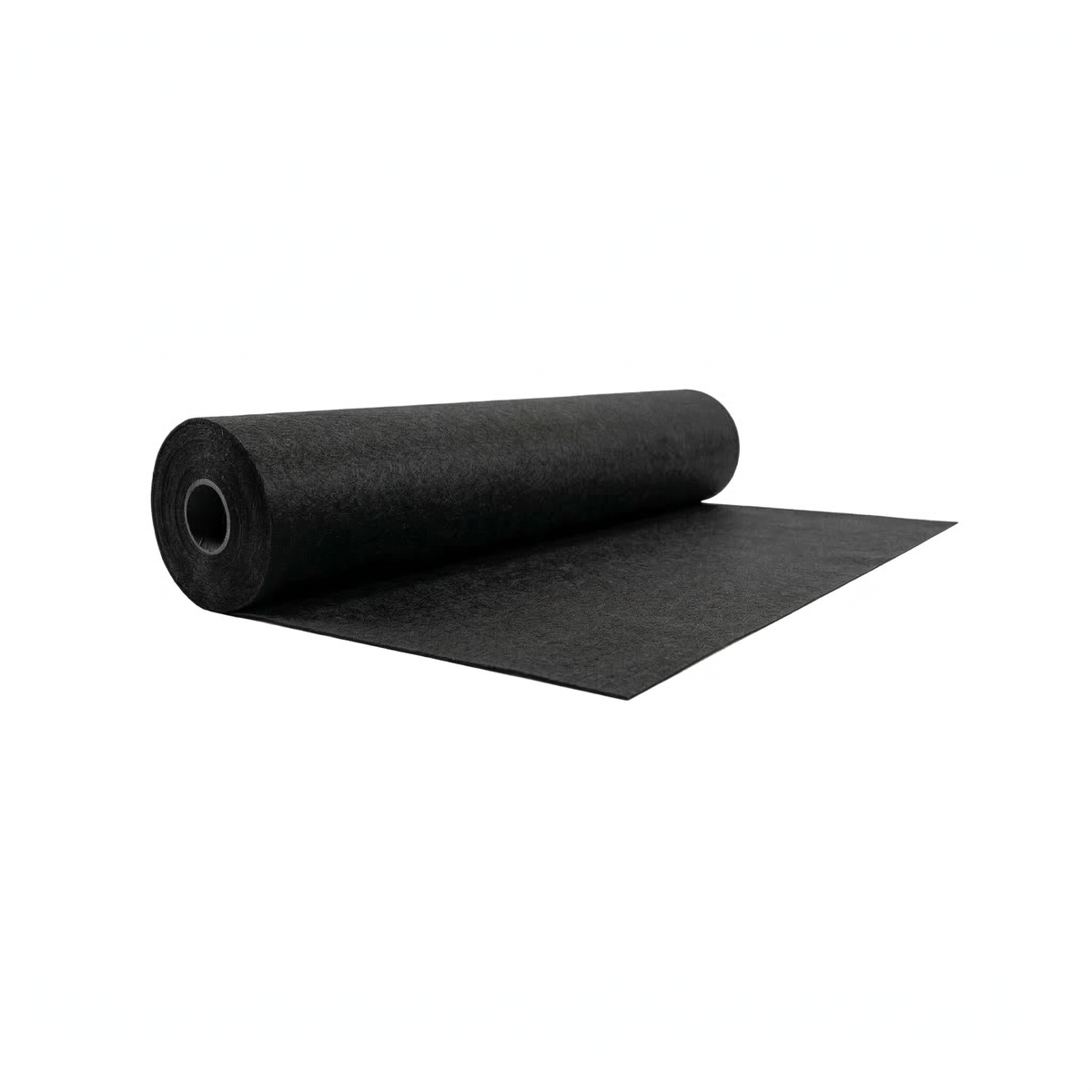
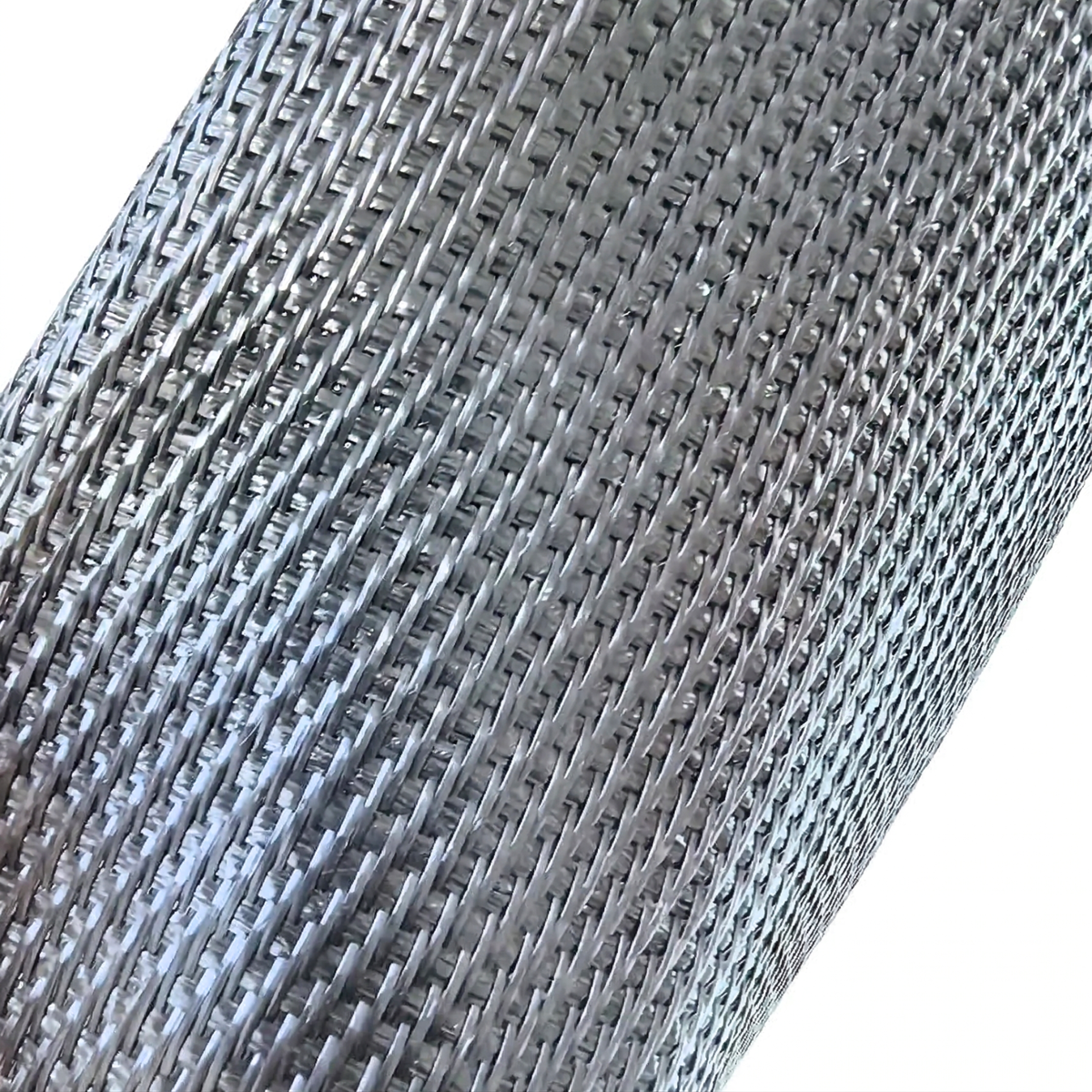
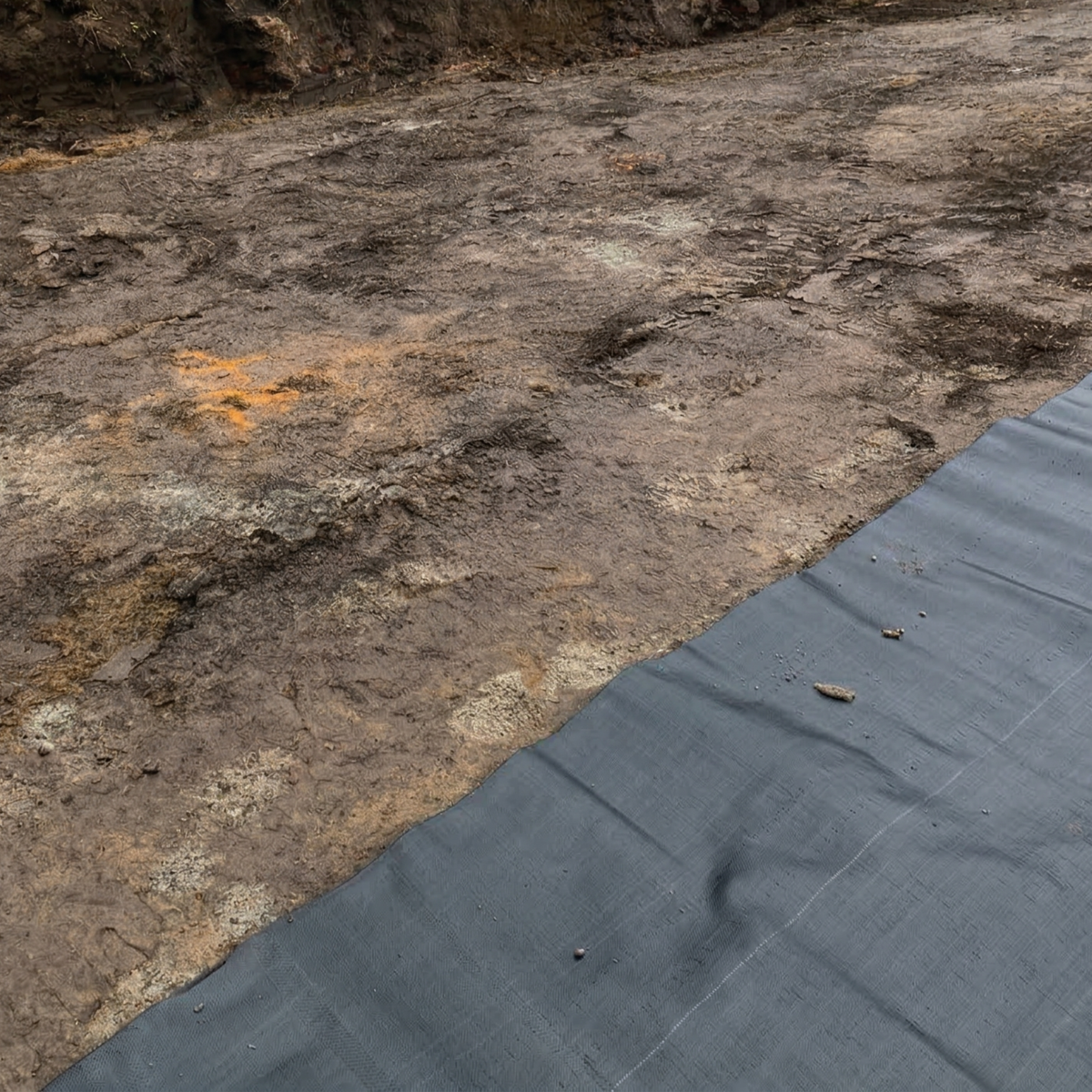
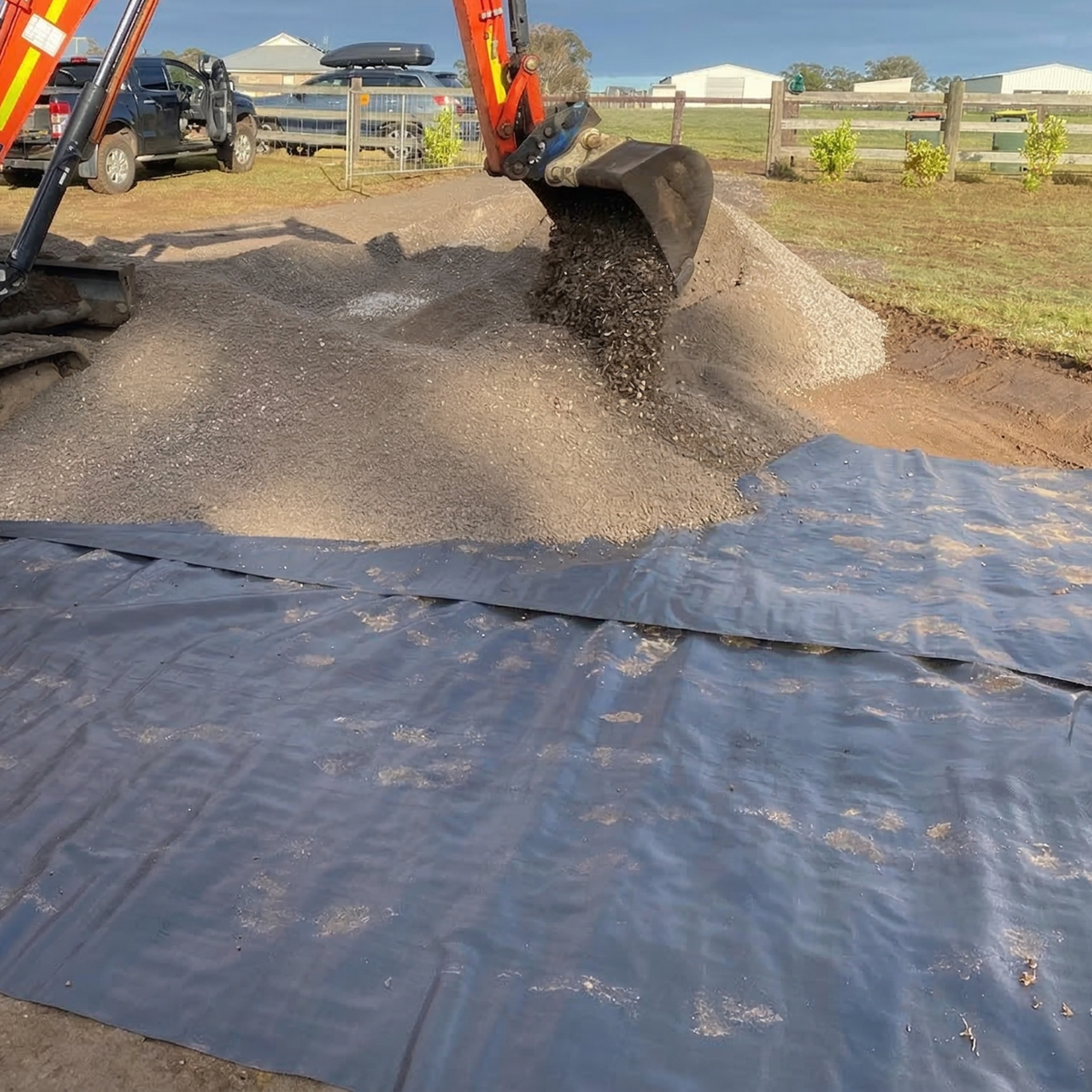
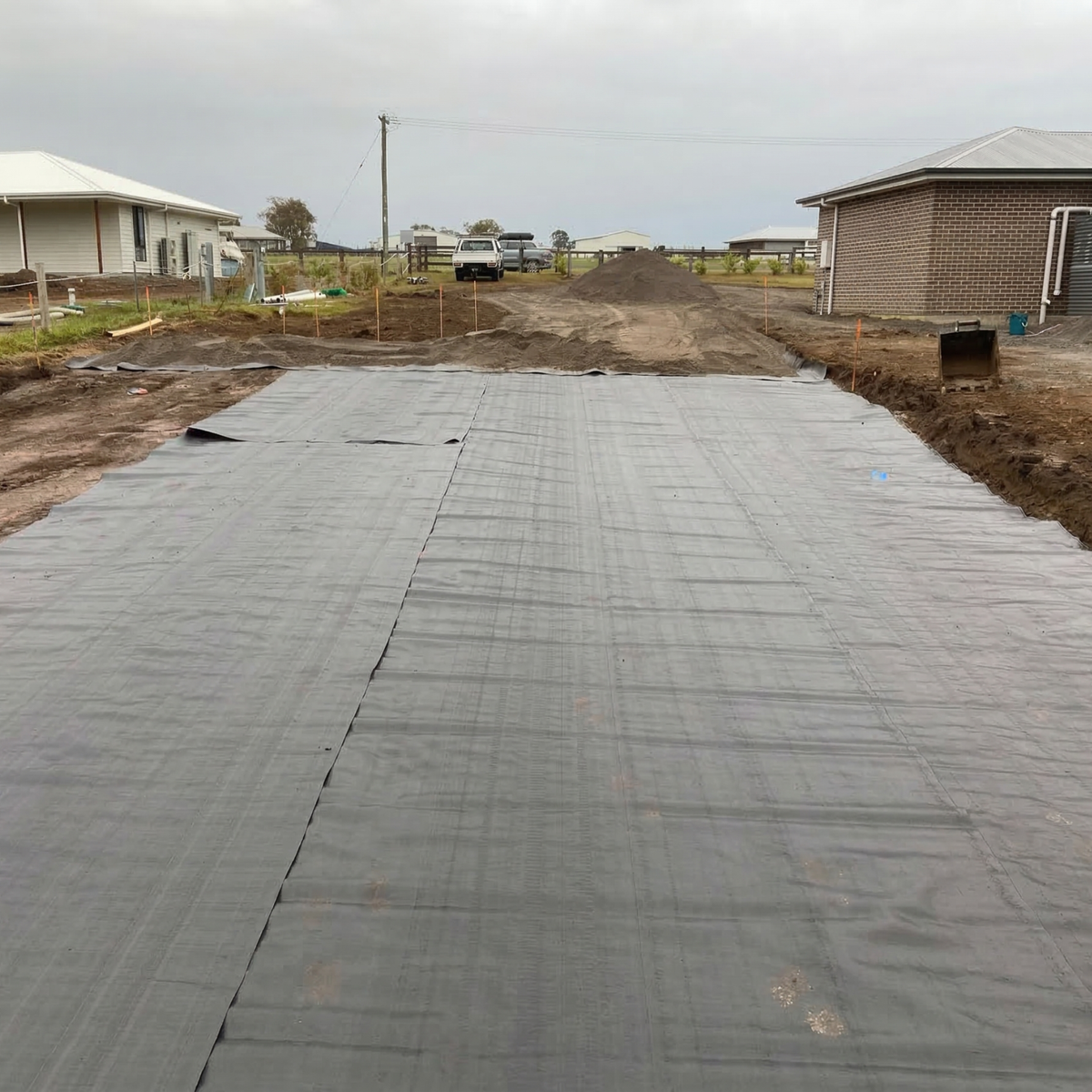


To stabilize farm roads, residential driveways, and unpaved parking lots where soft soil causes unseparated gravel to fail, adding structural reinforcement at an affordable cost for projects where decades of creep is not a critical factor, requires woven polypropylene geotextile with tensile strength calibrated in kN/m. This woven polypropylene (PP) geotextile—also called woven geotextile PP, woven geotextile mesh, or woven fabric for soils—is manufactured by MOLTEXO from interwoven PP threads, in two strengths (40 and 80 kN/m), in rolls 5.2 m wide and 100 m long, designed for standard road construction, landscaping with loads, erosion control, and extensive agriculture with structural weed barrier fabric.
Key Benefits
- Tensile strength calibrated in kN/m: two versions (40 and 80 kN/m) for different load scales: 40 kN/m for farm roads, landscaping, and low walls; 80 kN/m for standard road construction, commercial platforms, and areas with continuous loads.
- Effective structural separation: the compact weave of interwoven PP threads efficiently separates fill layers and subsoil, preventing aggregate subsidence in soft soil, a critical condition for unpaved driveways and roads.
- Chemically inert and resistant PP: withstands biological degradation, acidic or alkaline soils, water, roots, and typical underground construction conditions for years without losing properties.
- Controlled permeability for passive drainage: allows water to pass through, reducing hydrostatic pressure behind walls and under bases, while retaining fine subsoil particles, a condition to prevent washing and migration.
- Versatility for structural weed barrier fabric: the weave blocks light and prevents weed growth in extensive gardening and agricultural projects, adding an extra function to structural reinforcement.
Typical Applications and Uses
- Stabilization of farm roads, unpaved residential driveways, and unpaved parking lots with light to medium traffic.
- Construction of low retaining walls and slopes with reinforced soil in small residential and commercial projects.
- Structural weed barrier fabric in extensive agriculture, nurseries, and large-scale landscaping projects.
- Separation between soil and decorative gravel in professional landscaping with maintenance traffic (gardening carts, foot traffic).
Quality and Durability
An inexpensive woven PP geotextile fails in two ways: the declared tensile strength is not met in real tests (which disqualifies the geotextile for reinforcement under real load), and the weave is sparse with thin threads (which leads to tearing with the first pass of equipment or uneven tension). MOLTEXO works with PP woven fabric of verifiable calibrated strength at 40 and 80 kN/m, which differentiates a professional construction geotextile mesh from a generic woven fabric that tears during installation.
Equivalences
Equivalent to these other-brand references:
- 40 kN/m (2.7 kip/ft) · Roll 5.2 m (17 ft) wide and 100 m (328 ft) long
- Solmax MIRAFI HP370Pavco Wavin T2400US Fabrics US 4800Maccaferri MacTex W1 045SSolmax MIRAFI Geolon PP 40/40FasTrack 40/40PolyTape 40 kN/mLAKA LK-Tex (family)RBK Builds Woven Geotextile (family)
- 80 kN/m (5.5 kip/ft) · Roll 5.2 m (17 ft) wide and 100 m (328 ft) long
- Solmax MIRAFI HP570Solmax MIRAFI HP665Pavco Wavin TR5000ProFab PP80BEFORCE 80 kN/mLAKA LK-Tex (family)RBK Builds Woven Geotextile (family)
Brands and references mentioned belong to their respective owners; cited only for comparison and compatibility.
What is the difference between this PP woven geotextile and the PET woven version?
Can it be left exposed to the sun permanently?
How is it cut on site without fraying?
Still have questions?
Ask us and we will gladly help you with whatever you need.
| Strength and performance | |
|---|---|
| Elongation MD/CD | <15% |
| Ultimate strength CD | 41 kN/m (2809.4 lb/ft) |
| Ultimate strength MD | 41 kN/m (2809.4 lb/ft) |
| Hydraulics and filtration | |
| Water flow | 10 - 180 L/m²/s (0.25 - 4.42 gal/ft²/s) |
| Pore size O90 | 0.3 - 0.8 mm (0.012 - 0.031 in) |
| Durability and protection | |
| UV resistance | ≥85% |
| Presentation and packaging | |
| Presentation | Roll 5.2 m (17 ft) wide × 100 m (328 ft) long |
| Standards and certifications | |
| Test methods | EN ISO 10319, 12236, 11058 and 12956 |
| Roll: Width | 29.0 cm (11.42 in) |
|---|---|
| Roll: Height | 29.0 cm (11.42 in) |
| Roll: Depth | 520.0 cm (204.72 in) |
| Roll: Weight | 122.0 kg |
Official MOLTEXO warranty
What's covered
Confirmed defect: replacement or refund of the amount paid.
What's not covered
Payment & Security

