
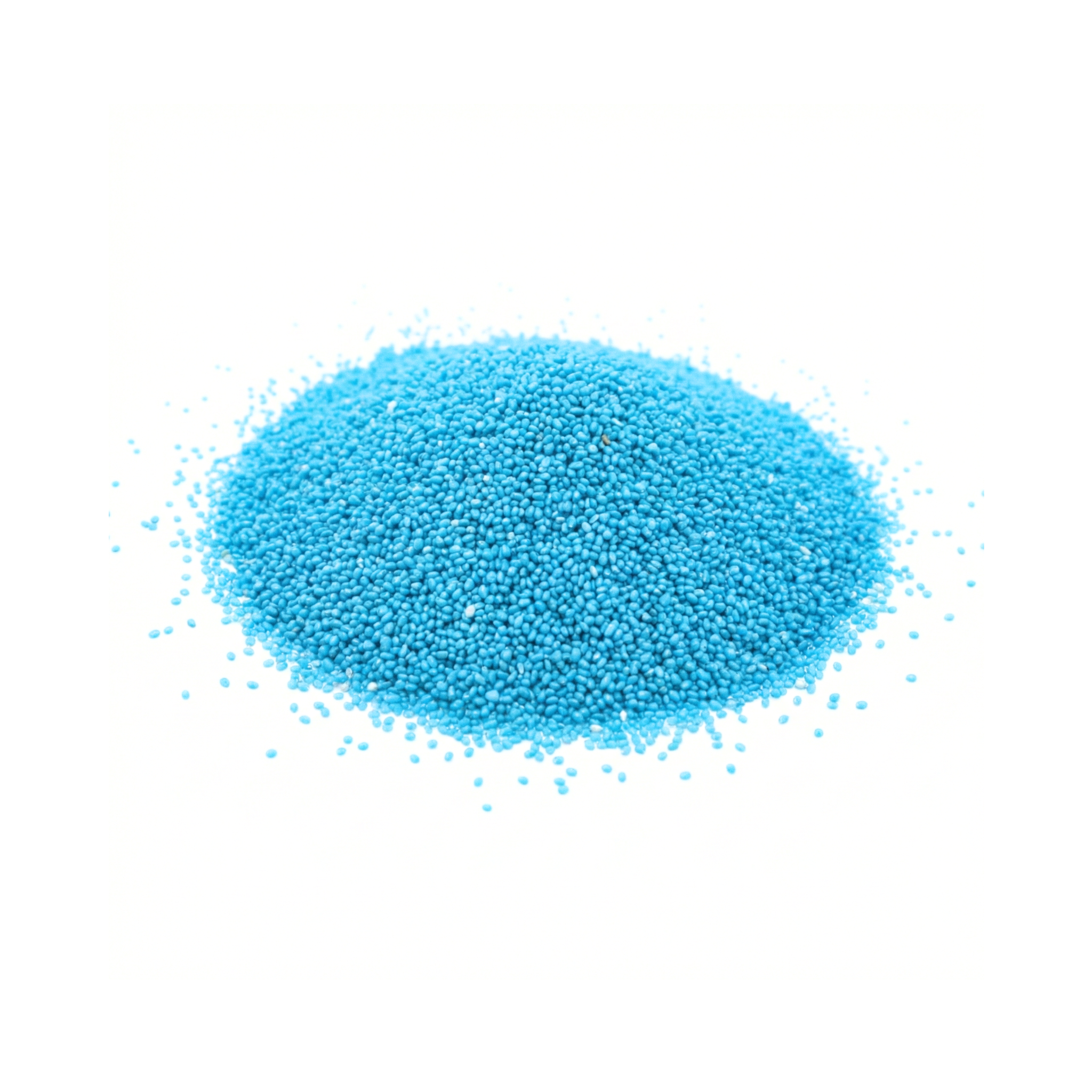
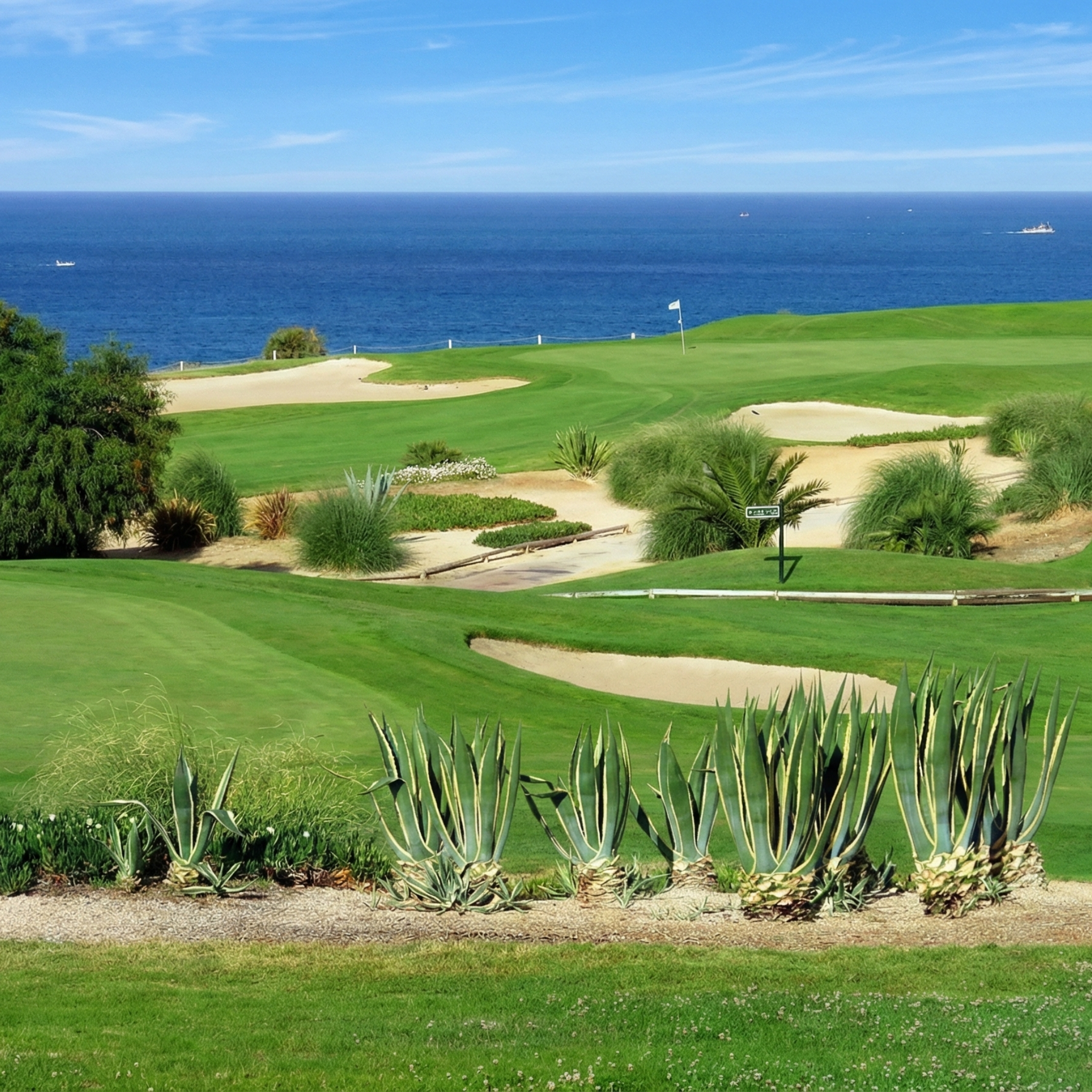
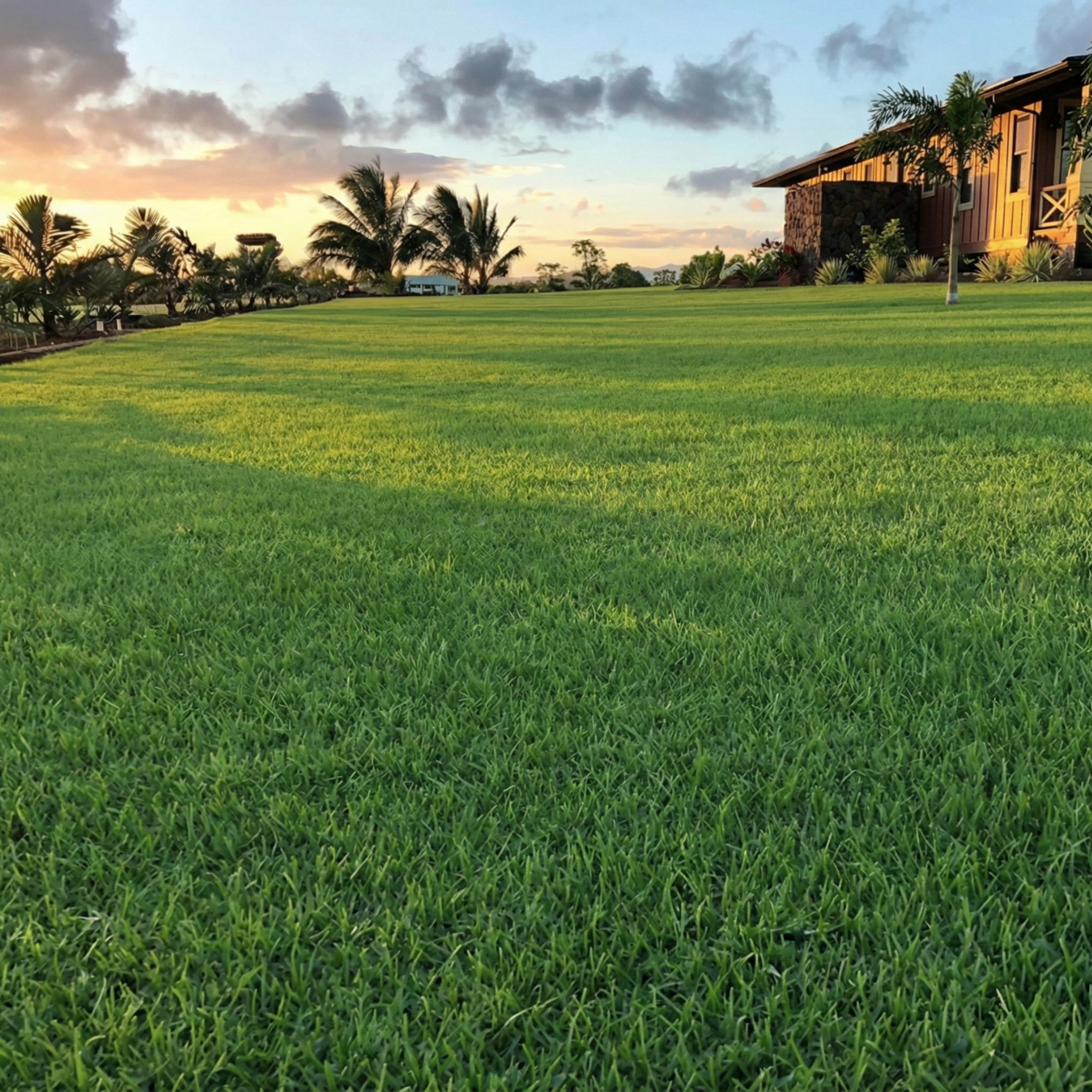


Maintaining a dense, green lawn in a coastal area where irrigation introduces salt and sea breeze degrades conventional grasses requires a variety selected for extreme salt tolerance. These Paspalum grass seeds (Paspalum vaginatum) —also called Seashore Paspalum— are supplied by Floralen, hulled and coated, in 22.7 kg (50 lb) bags, the standard variety for golf courses, coastal gardens, and beachfront landscaping projects where other grasses die due to salinity.
Key benefits
- Extreme salt tolerance: The only variety that tolerates irrigation with brackish water, recycled water, or water with high salt content without losing density or color, making it standard in coastal areas of the Caribbean.
- Golf course aesthetics: Produces a dense, uniform, deep dark green carpet with a fine texture characteristic of professional golf course tees, fairways, and greens.
- Moderate waterlogging resistance: Tolerates brief periods of flooding and slow-draining soils better than most tropical grasses, a common condition in coastal gardens with high water tables.
- Stolon recovery: Horizontal growth by stolons and rhizomes regenerates coverage after moderate traffic or localized wear, maintaining the overall appearance of the garden without visible patches.
- Floralen selected variety: Coated seed with high varietal purity, which produces a homogeneous lawn in color and texture from the first germination.
Typical applications and uses
- Residential gardens on the beachfront: Punta Cana, Bávaro, Las Terrenas, Samaná, North Coast.
- Golf courses: tees, fairways, greens, and perimeter areas in professional projects.
- Social areas of hotels, resorts, and coastal tourism projects with recycled or brackish irrigation.
- Public parks and coastal landscaping projects where environmental salinity makes standard grasses unviable.
Quality and durability
An inexpensive Paspalum seed fails in two ways: the varietal purity is low (which mixes Paspalum with other grasses that do die with salt and leave progressive bare spots) and germination is irregular. Floralen works with selected and coated seed for high purity, which separates a professional project grass from a generic mix that degrades in a few months when irrigation with coastal well water begins.
Yes — that is its defining feature. Paspalum tolerates salinity levels far higher than Bermuda grass or other conventional varieties, which makes it the only real choice for beachfront gardens where well water carries salts or where reclaimed water is used for irrigation. It withstands contact with sea breeze without leaf burn and keeps color and density even with water that would kill a standard grass within weeks.
It tolerates partial shade better than Bermuda grass, which makes it suitable for coastal gardens with scattered palm trees or areas with moderate shade for part of the day. In dense, constant shade (areas always covered by very leafy trees) it loses density and underperforms. For optimal results, sow it in areas with good sun exposure for at least a significant portion of the day.
Yes — it has good trampling tolerance thanks to its growth by rhizomes and stolons, which gives it the ability to self-regenerate after use. It suits family gardens with moderate traffic, hotel social areas, coastal restaurant terraces and event venues. For intensive sports use (football, baseball fields with daily play) Bermuda grass is more resistant; paspalum belongs in projects where aesthetics and salinity matter more than traffic.
Three key differentiators. Salinity: paspalum tolerates brackish water, reclaimed water and sea breeze; Bermuda does not withstand salts for long. Aesthetics: paspalum produces a golf-course-like finish with a finer texture and a more intense green; Bermuda is more rustic. Traffic: Bermuda withstands more intensive sports use. For a coastal area with brackish irrigation and an aesthetic focus, paspalum is the right choice; for an inland garden with full sun and heavy traffic, Bermuda.
Still have questions?
Ask us and we will gladly help you with whatever you need.
| Origin | Oregon, USA |
|---|---|
| Pure seed | 48.79% |
| Inert matter | 51.19% |
| Other crop seeds | 0.00% |
| Weed seeds | 0.02% |
| Noxious weed seeds | None found |
| Germination rate | 70% |
| Inert matter composition | 50% Pure Coat coating material |
| Sack: Width | 38.1 cm (15.0 in) |
|---|---|
| Sack: Height | 81.3 cm (32.01 in) |
| Sack: Depth | 7.6 cm (2.99 in) |
| Sack: Weight | 22.7 kg |
Payment & Security
