
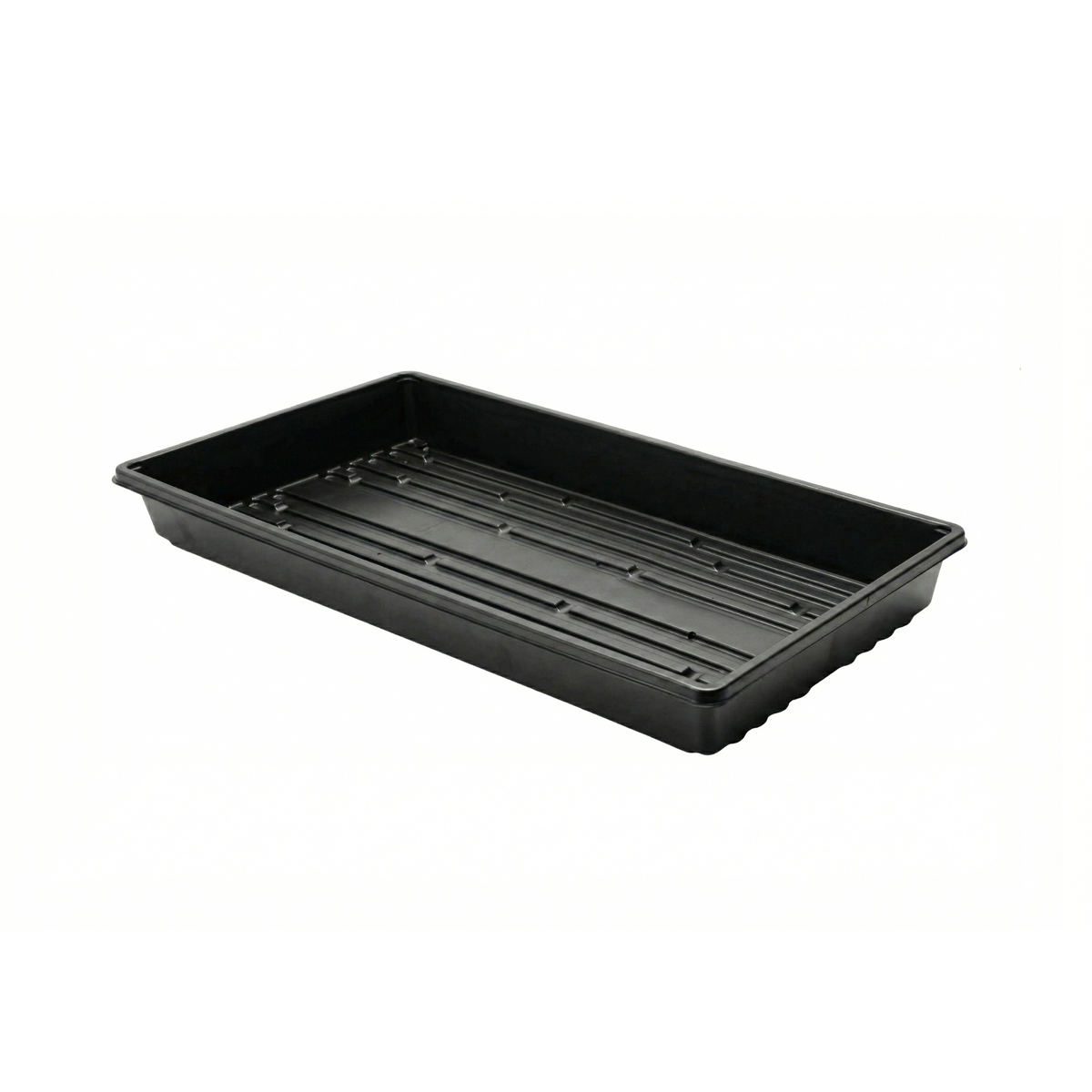
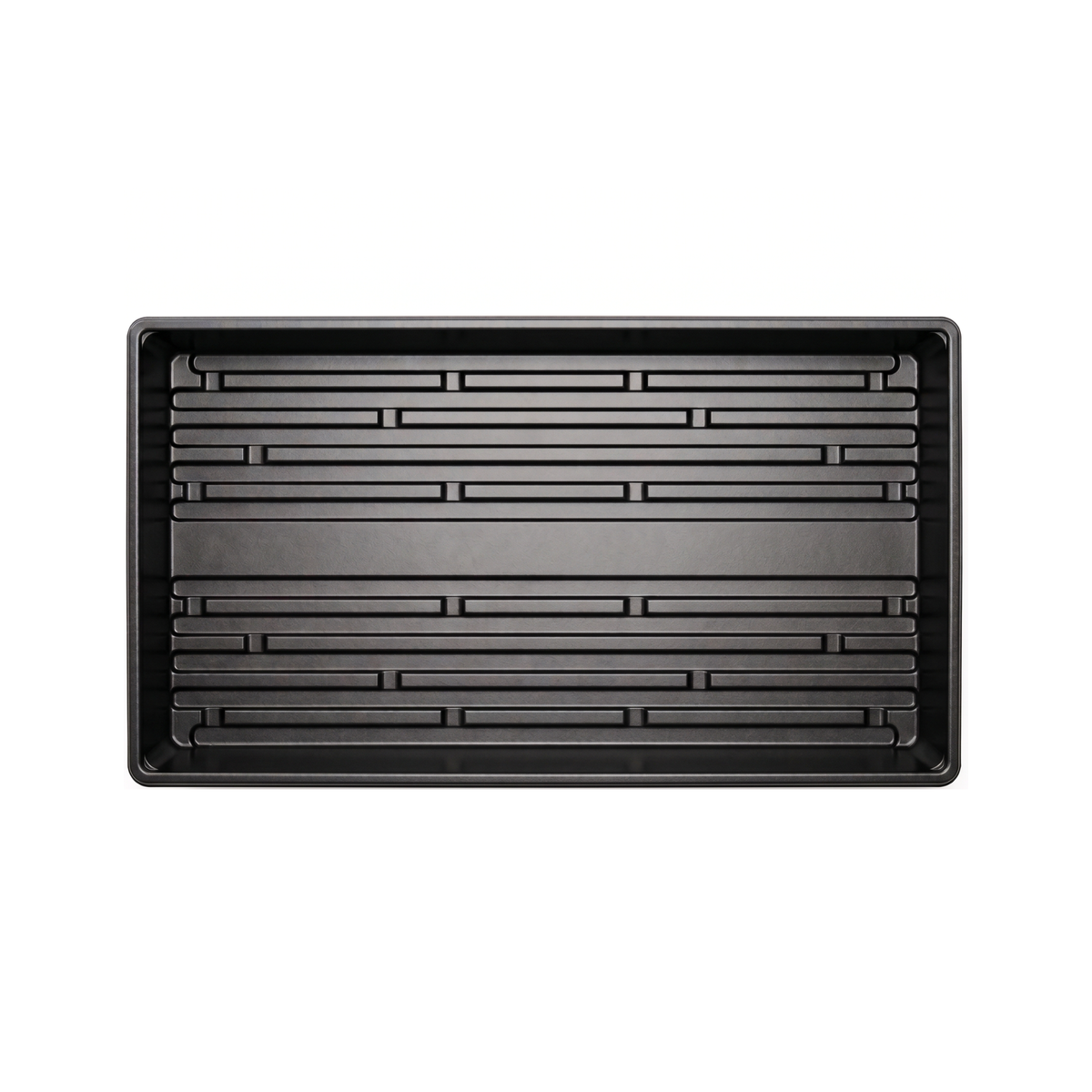
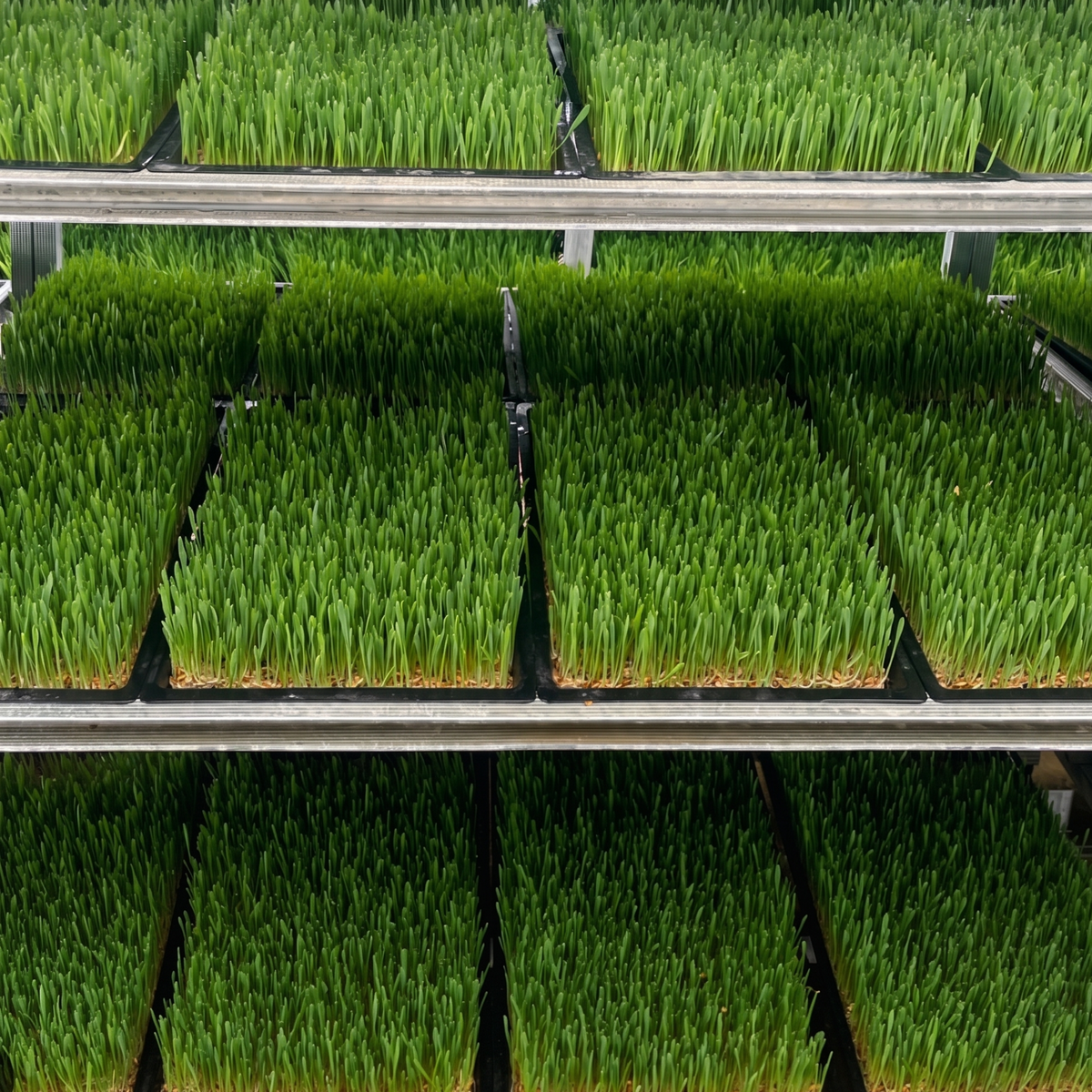


Producing hydroponic green fodder for animal feed, high-nutritional-density microgreens for human consumption, or massive germination with a dense root mat for harvesting as a single piece, requires a smooth, cell-free tray with chemical resistance to nutrient solutions and prolonged solar radiation. This plastic hydroponic tray—also called a fodder tray, microgreens tray, or HGF tray—is manufactured by Gardese from virgin plastic resistant to UV and nutrient solutions, in boxes of 180 units, designed for the production of hydroponic green fodder, microgreens, massive germination, and intensive urban agriculture projects.
Key Benefits
- Smooth, cell-free surface for root mat: the geometry allows for the development of a continuous root mat that is harvested as a single piece, a critical condition for hydroponic green fodder (HGF) and microgreens where block harvesting optimizes time and production.
- Virgin plastic resistant to nutrient solutions: the material withstands continuous exposure to soluble fertilizers, salts, and chemical additives used in hydroponics without structural degradation or transfer of compounds to the crop.
- UV treatment for outdoor use: the additive protects against prolonged solar radiation in the Caribbean, preventing the embrittlement and cracking suffered by conventional trays without protection.
- Light stacking for logistical management: the geometry allows empty trays to nest, optimizing warehouse space; with product loaded, they stack on shelves or growing racks while maintaining ventilation.
- Continuous surface hygiene: the absence of cells eliminates accumulation points for organic waste, allowing for pressure washing and disinfection between cycles to prevent cross-contamination.
Applications and typical uses
- Production of hydroponic green fodder (HGF) from corn, barley, wheat, and oats for feeding cattle, sheep, goats, and poultry.
- Cultivation of microgreens and sprouts for haute cuisine, restaurants, gourmet supermarkets, and home consumption.
- Mass germination of seeds for initial production before transplanting to the field, nursery, or larger hydroponic system.
- Base tray for pots in growing racks and intensive urban agriculture projects.
Quality and durability
An inexpensive hydroponic tray fails in two ways: the plastic is low-density recycled (which deforms with the weight of saturated substrate and roots, losing geometry) and lacks adequate UV additive (which causes embrittlement and cracking after a few seasons). Gardese uses UV-stable virgin plastic, which distinguishes a continuous professional production tray from a generic tray that breaks after the first intensive cycle.
Equivalences
Equivalent to these other-brand references:
- Box of 180 trays
- SUNPACK 1020 Shallow Tray, no holes (CN-ST-NHBK)Bootstrap Farmer 1020 Shallow Microgreen Tray, no holes
Brands and references mentioned belong to their respective owners; cited only for comparison and compatibility.
Which crops perform best in this cell-less tray?
Can it be used outdoors under continuous Caribbean sun?
Is it compatible with automatic hydroponic irrigation systems?
Still have questions?
Ask us and we will gladly help you with whatever you need.
| Material and construction | |
|---|---|
| Material | Polystyrene (PS) |
| Dimensions and format | |
| Dimensions | 540 x 282 x 60 mm (21.3 x 11.1 x 2.4 in) |
| Top rim height | 8 mm (0.31 in) |
| Presentation and packaging | |
| Presentation | Box of 180 trays |
| Box: Width | 29.0 cm (11.42 in) |
|---|---|
| Box: Height | 55.0 cm (21.65 in) |
| Box: Depth | 46.0 cm (18.11 in) |
| Box: Weight | 27.0 kg |
Official GARDESE warranty
What's covered
Confirmed defect: replacement or refund of the amount paid.
What's not covered
Payment & Security

