
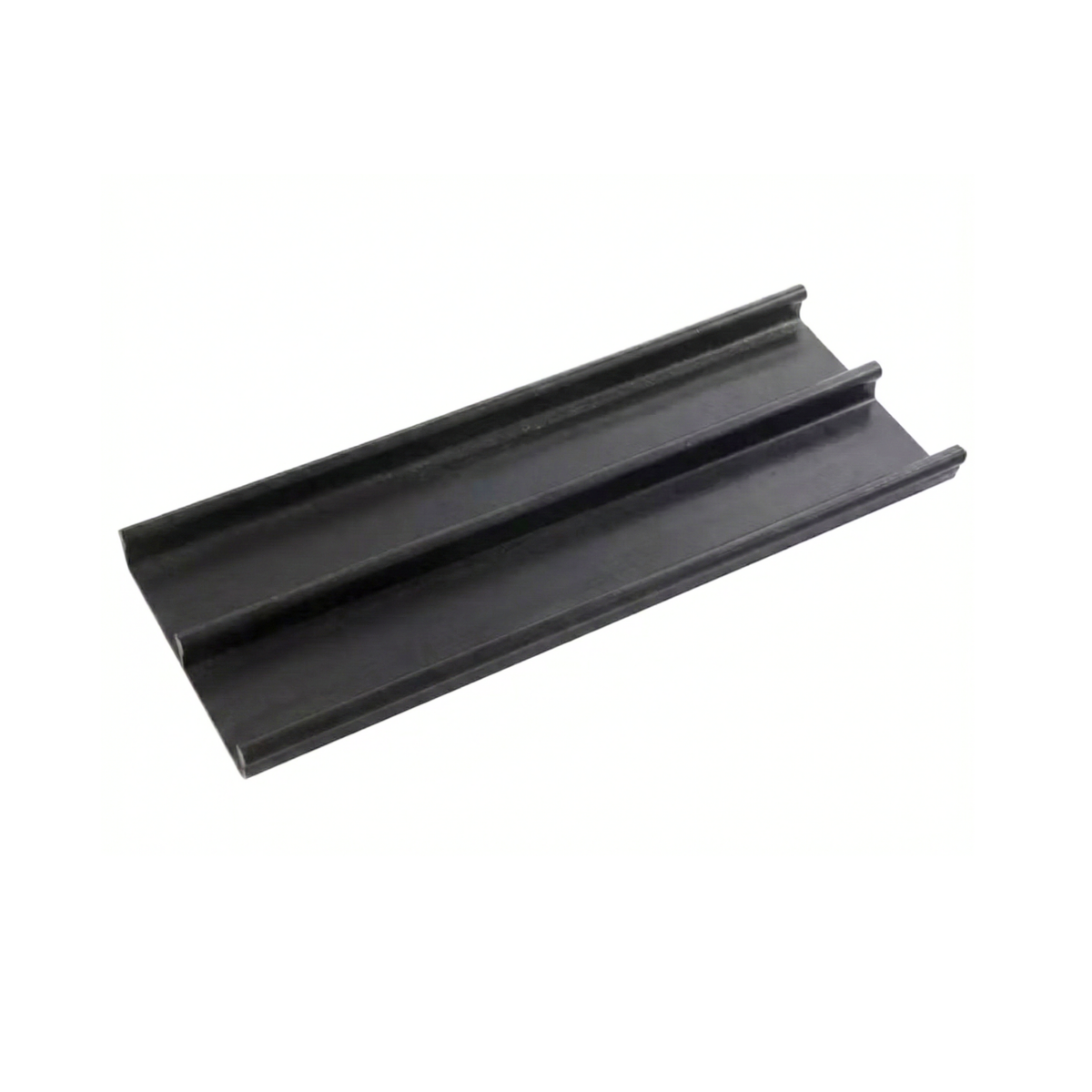
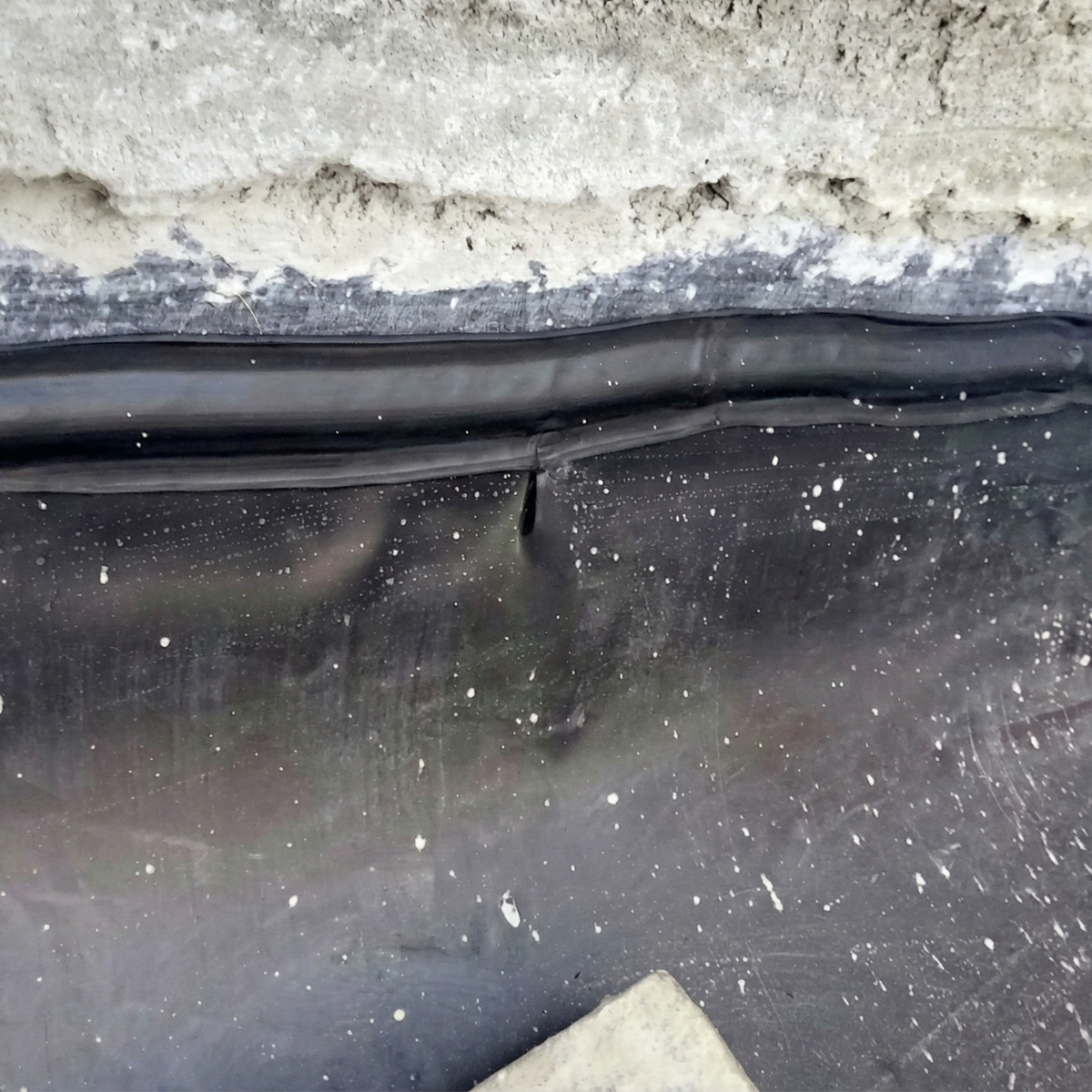
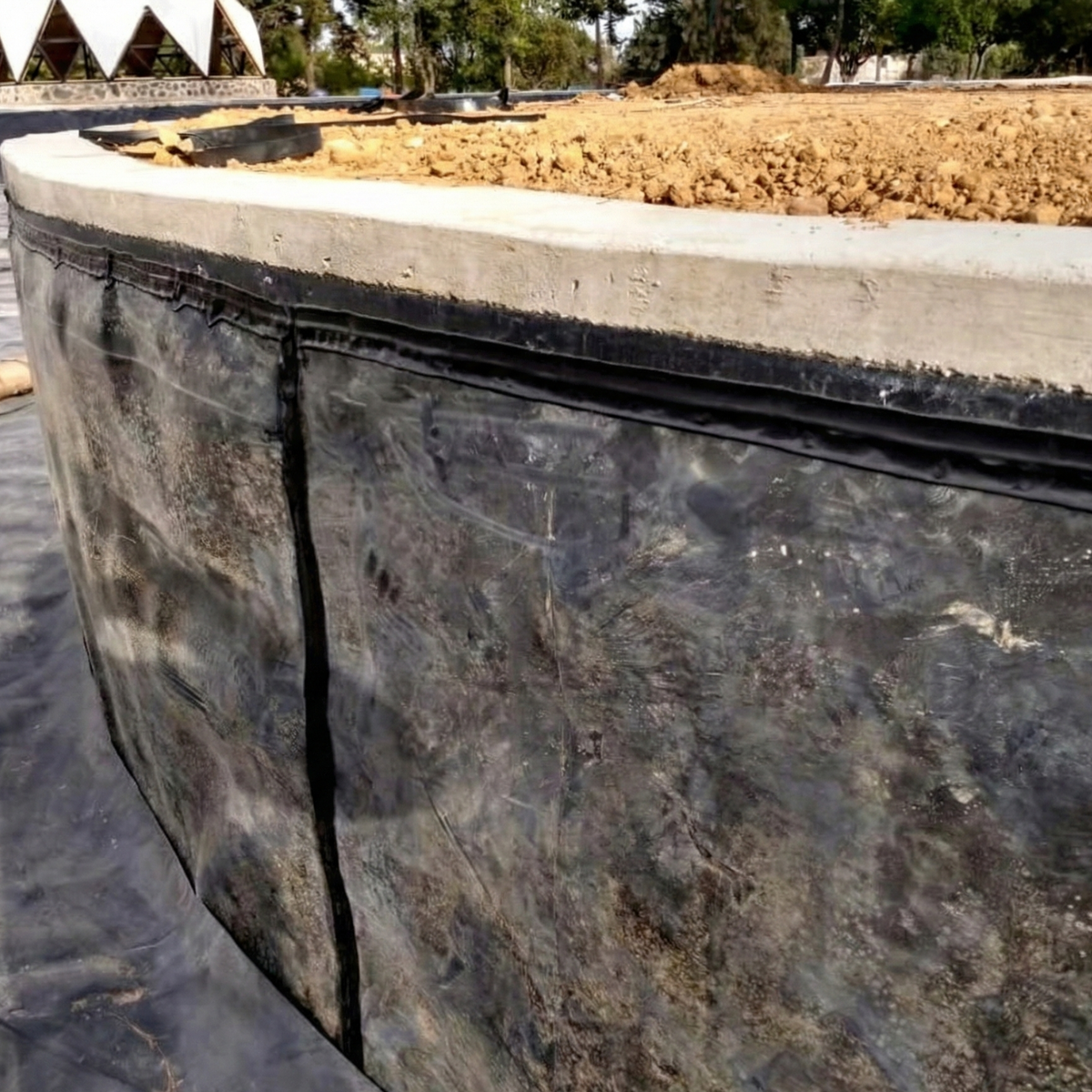


Creating a watertight seal between a concrete structure and an HDPE geomembrane in auditable hydraulic works such as oxidation ponds, sanitary landfills, industrial tanks, and treatment plants, where direct welding to concrete is impossible and mechanical systems with bolts can fail due to sealing leaks, requires an anchor profile embedded in virgin HDPE with an exposed face for extrusion welding. This Poly Lock—also known as E-profile, HDPE anchor profile for concrete, or E-lock—is manufactured by MOLTEXO in virgin HDPE, dimensions 100×40 mm × 3 m long, in packs of 10 units, designed for lining tanks, ponds, canals, landfills, and hydraulic works with auditable sealing criteria.
Key Benefits
- Mechanical anchoring to fresh concrete: the rear anchor "fingers" of the profile are embedded in the concrete mass during curing, creating immovable mechanical retention that withstands hydrostatic pressure and thrusts throughout the useful life of the structure.
- Virgin HDPE for monolithic welding: the Poly Lock material is identical to that of common HDPE geomembranes, a critical condition for extrusion welding to create a complete molecular bond where the profile and geomembrane become a single watertight piece.
- Chemical resistance in hydraulic works: HDPE withstands contact with wastewater, landfill leachates, aggressive chemicals typical of treatment plants, mild alkalis and acids, conditions for decades of useful life in continuous hydraulic operation.
- Smooth exposed face ready for welding: after demolding, the exposed face of the Poly Lock is perfectly accessible for extrusion welding with an HDPE filler rod, a condition for professional operation without additional surface preparation.
- UV resistance during pre-lining exposure: virgin HDPE withstands exposure to the Caribbean sun during the period between demolding and geomembrane welding without degradation or loss of welding properties.
Typical Applications and Uses
- Lining of tanks, irrigation canals, water reservoirs, and industrial reservoirs with HDPE geomembrane.
- Sealing of bottoms and slopes in oxidation ponds, sanitary landfills, and water treatment plants.
- Joints between concrete and geomembrane in dikes, dams, tunnels, and hydraulic works with contractual auditing.
- Protection of concrete structures exposed to corrosive agents in industrial plants and chemical works.
Quality and Durability
An inexpensive Poly Lock fails in two ways: the HDPE is not virgin but low-quality recycled (which produces weak welds with a risk of leakage under auditable hydrostatic pressure) and the rear anchors are short or ineffective (which causes the profile to loosen from the concrete under backfill thrust or water pressure, compromising watertightness). MOLTEXO works with virgin HDPE and a calibrated anchor design, which distinguishes an E-profile for auditable hydraulic works from a generic consumable that fails in the first watertightness tests.
When during construction should the Poly Lock be installed?
What type of welding is used with this profile?
Is it compatible with PVC geomembranes?
Can it be installed on already-cured concrete?
Still have questions?
Ask us and we will gladly help you with whatever you need.
| Material and construction | |
|---|---|
| Material | High-density polyethylene (HDPE) |
| Color | Black |
| Dimensions and format | |
| Thickness | 5 mm (0.2 in) |
| Profile height | 40 mm (1.6 in) tall |
| Profile width | 100 mm (4 in) |
| Profile length | 3 m (9.84 ft) |
| Durability and protection | |
| UV protection | Yes (high) |
| Presentation and packaging | |
| Presentation | Pack of 10 Poly Locks |
| Package: Width | 40.0 cm (15.75 in) |
|---|---|
| Package: Height | 10.0 cm (3.94 in) |
| Package: Depth | 300.0 cm (118.11 in) |
| Package: Weight | 30.0 kg |
Official MOLTEXO warranty
What's covered
Confirmed defect: replacement or refund of the amount paid.
What's not covered
Pago & Seguridad

