
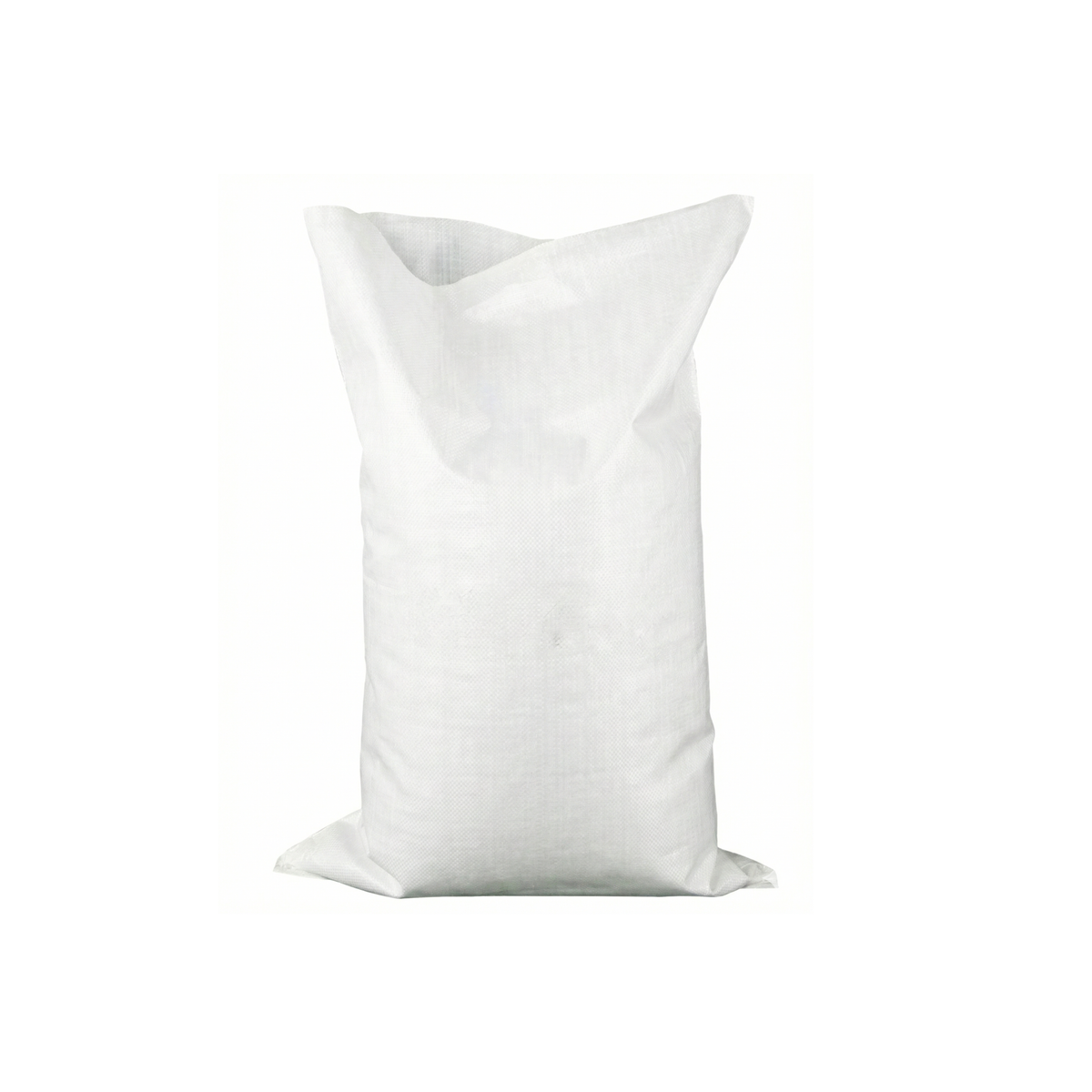
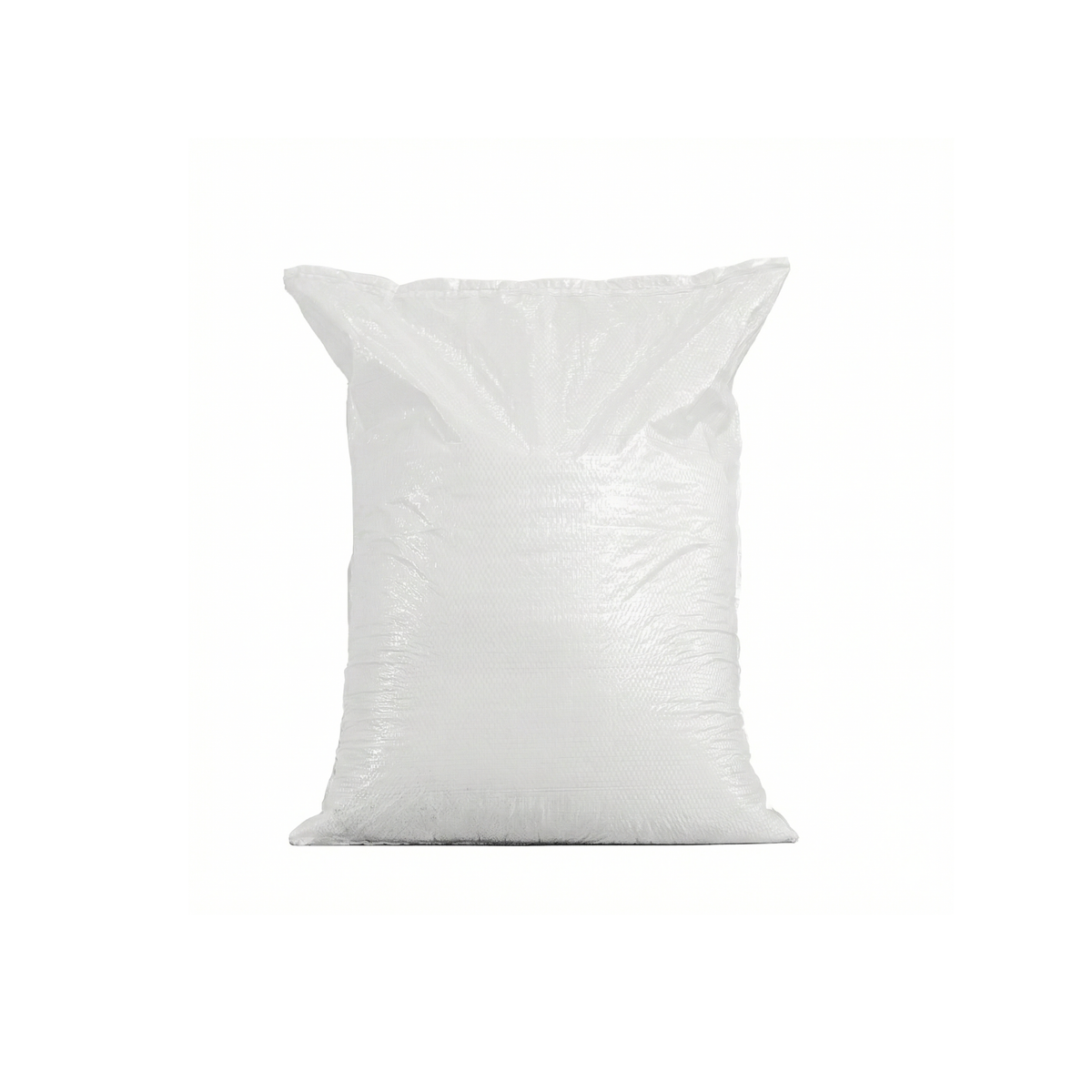


Moving and storing grains, fertilizers, seeds, rubble, and aggregates without the container giving way during handling is a daily challenge for farms, construction sites, and industrial warehouses. This polypropylene raffia sack—also called polypropylene sack, woven PP sack, costalilla, or industrial PP bag—is manufactured in the medium-high quality range: virgin polypropylene tape woven at high tenacity (1,000–1,200 denier), basis weight calibrated by size (95 to 125 g/m²) and compliant with the technical reference ISO 23560:2015 for PP sacks used in bulk food packaging. Designed for professional packaging, agricultural harvest, rubble management, and industrial storage under the demanding conditions of the Dominican market.
Key benefits
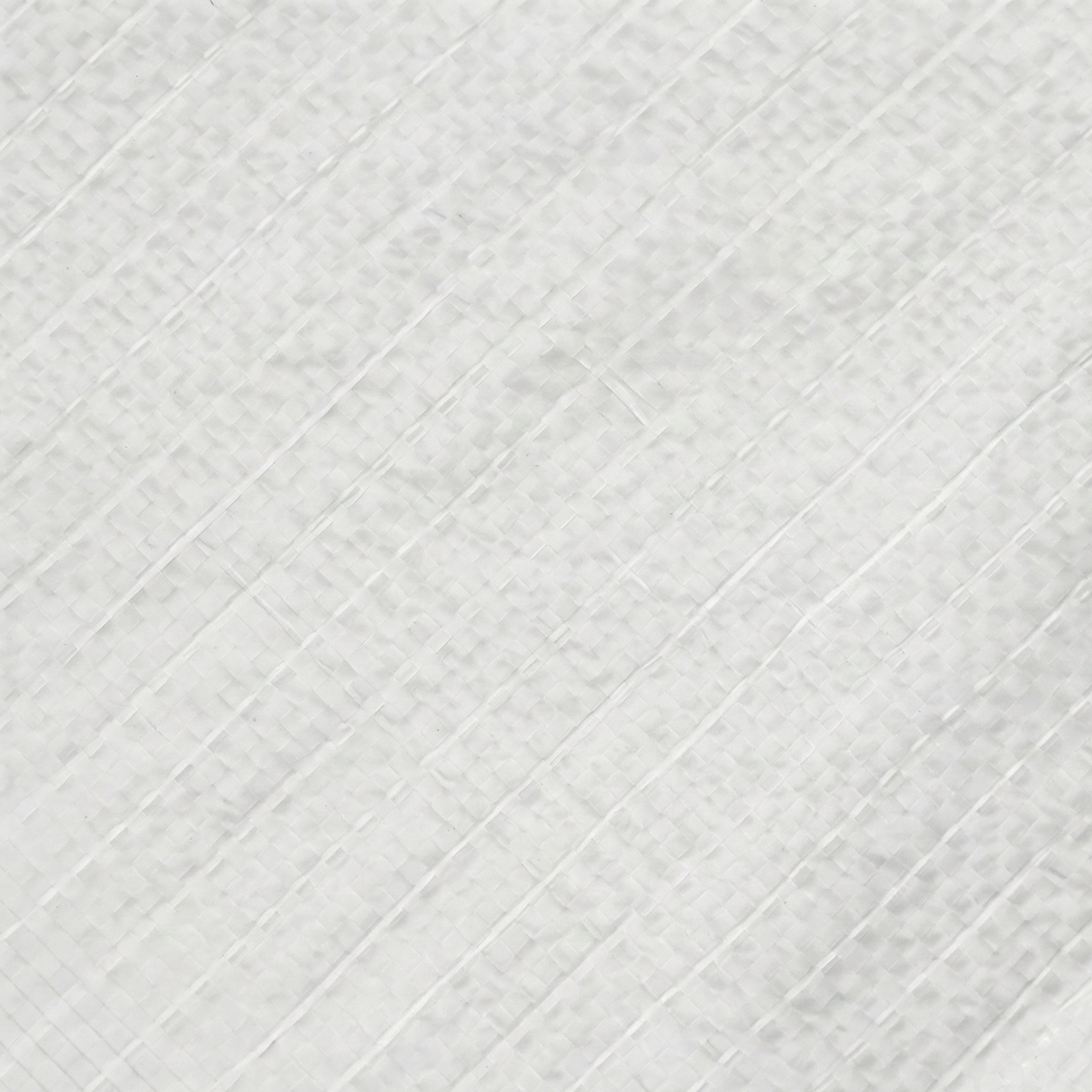
- High-tenacity PP tape, 1,000–1,200 denier: a matrix of virgin polypropylene fibers woven in a 12 × 12 threads-per-inch mesh that withstands load tension and manual and mechanical handling without tearing—an indispensable condition for sacks that are filled, transported, and unloaded several times before leaving the logistics cycle.
- Medium-high basis weight calibrated by format: 95 g/m² in the 10 and 25 lb sacks, 105 g/m² in the 50 lb, 120 g/m² in the 100 lb quintal, and 125 g/m² in the 125 lb rice sack. Each size raises its basis weight in line with the nominal load, rather than a single low value applied to the whole catalog.
- 100% virgin PP resin, no recycled content: homopolymer MFI 3.0–3.8 g/10 min with controlled CaCO₃ content ≤3.7% by weight (ash ≤2.2%). No weak zones or brittle fibers—the difference between a professional sack and a generic one shows up on the first heavy load.
- Laminated variants with BOPP inner barrier: a transparent BOPP film laminated on the inside face of the sack (≈20 g/m², 18–25 µm, ≈100 gauge) that acts as a moisture and dust barrier during storage, a technical alternative to a loose PE liner recognized by WFP PS00019 v6 (inside layer lamination).
- Inert and resistant to common chemicals: polypropylene tolerates oils, greases, inorganic fertilizers, and common chemical products without degrading or transferring odors to the cargo.
- Stowing and handling stability: anti-slip additive incorporated into the outer tapes allows safe stacking of more than 5 sacks on pallets, minimizing slippage and falls during transport.
- Compatible with professional closures: open mouth suitable for industrial sewing with PP multifilament thread 1,200–2,000 denier, tying with soft wire, or plastic security seals depending on the level of security the operator requires.
- Food-contact suitability per FDA 21 CFR 177.1520: resin compliant for indirect contact with dry food (cereals, legumes, sugar, flour, salt).
- Reinforced UV resistance with HALS: UV-944 stabilizer at 0.5% in masterbatch. ≥12 months under Caribbean sun in the unlaminated version (≥1,600 h QUV) and ≥24 months in the version with BOPP lamination (≥3,000 h QUV).
Typical applications and uses
- Packaging of local rice, beans, corn, flour, sugar, salt, locally roasted coffee, animal feed, fertilizers, and other bulk grains or agricultural products for the Dominican market.
- Collection and management of rubble, sand, aggregates, and waste in civil works and construction.
- Industrial storage of parts, minerals, granulates, and materials in plants and warehouses.
- Pallet logistics, organization of recyclable waste, and temporary containment in landscaping.
For green coffee and cocoa beans intended for export, the international standard is the jute sack (IJO 98/01 standard); this product is not designed for that use.
Technical construction (medium-high range)
- Compliance: ISO 23560:2015 reference + FDA 21 CFR 177.1520 + AQL 1.5 per lot.
- Weave: mesh 12 × 12 threads/in across the entire line, denier 1,000 D × 1,000 D (10, 25, and 50 lb formats), 1,100 D × 1,100 D (100 lb), and 1,200 D × 1,200 D (125 lb).
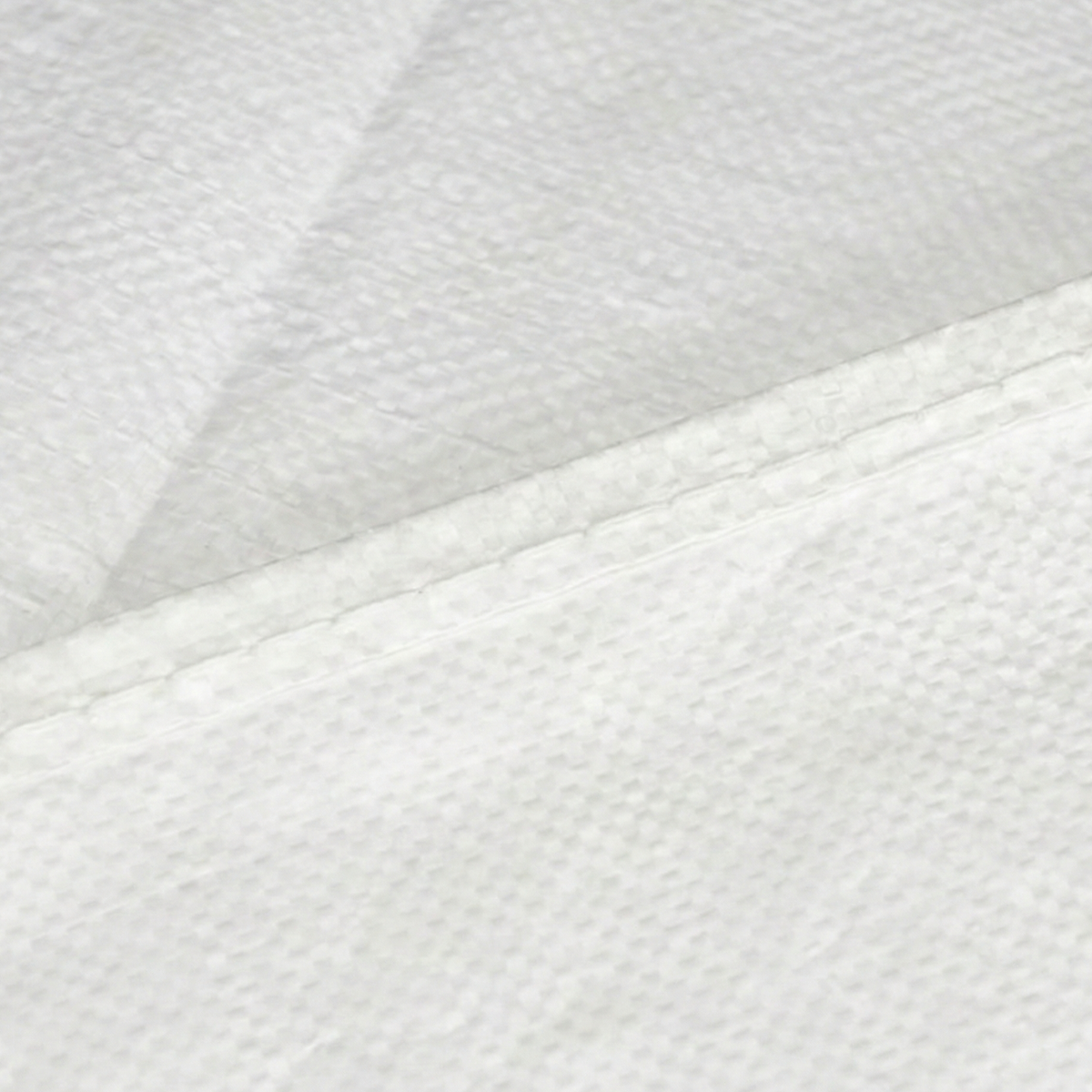
- Stitching: chain stitch class 401, 7–10 SPI, minimum strength ≥60 lb/in (≈267 N/in), PP multifilament thread.
- Tests per lot: drop test ASTM D5276 (1.2 m drop with nominal load), tensile ASTM D5034 (warp/weft), and seam strength ASTM D1683.
- Tolerance: ±3% in length and width, ±5% in sack weight; ±5% in fabric basis weight.
- Factory certification: ISO 9001:2015 mandatory; BRCGS optional for declared food-grade.
Quality and durability
An economical raffia sack fails at two points: low-density PP tape that tears when filled with heavy loads and perimeter stitching that comes apart on the first lift by crane or operator. This reference works with virgin polypropylene tape woven at high tenacity (1,000–1,200 denier) with basis weight calibrated by format and controlled industrial perimeter stitching (≥60 lb/in), in a careful manufacturing process that sets a serious sack apart from the generic one that breaks mid-load and forces the operation to stop.
Does this sack work for damp or wet materials?
Is it reusable?
How does it behave under sun exposure?
Still have questions?
Ask us and we will gladly help you with whatever you need.
| Material and construction | |
|---|---|
| Tape denier | 1,000 D × 1,000 D |
| Fabric density | 12 × 12 threads per inch |
| Weight per area | 95 g/m² (2.80 oz/yd²) |
| Inner liner | No liner — single bag (for bags with PE liner, see the custom bag line) |
| Strength and performance | |
| Maximum recommended load | Safety factor 5:1 (working load = nominal capacity) |
| Durability and protection | |
| Recyclability | Recyclable, resin identification code 5 (PP) |
| UV resistance | ≥12 months under Caribbean sun (≥1,600 h QUV) |
| Compatibility and use | |
| Food-grade suitability | Virgin PP resin compliant with FDA 21 CFR 177.1520 (indirect contact with dry food) |
| Recommended use | Local rice, beans, corn, flour, sugar, salt, fertilizers, aggregates, rubble, palletizing and waste. Not designed for export-grade green coffee or cocoa. |
| Presentation and packaging | |
| Presentation | Pack of 500 sacks |
| Standards and certifications | |
| Reference standard | ISO 23560:2015 — Woven polypropylene sacks for bulk packaging of food products |
| Paquete: Weight | 22.0 kg |
|---|
Official MAXTENS warranty
What's covered
Confirmed defect: replacement or refund of the amount paid.
What's not covered
Pago & Seguridad

