
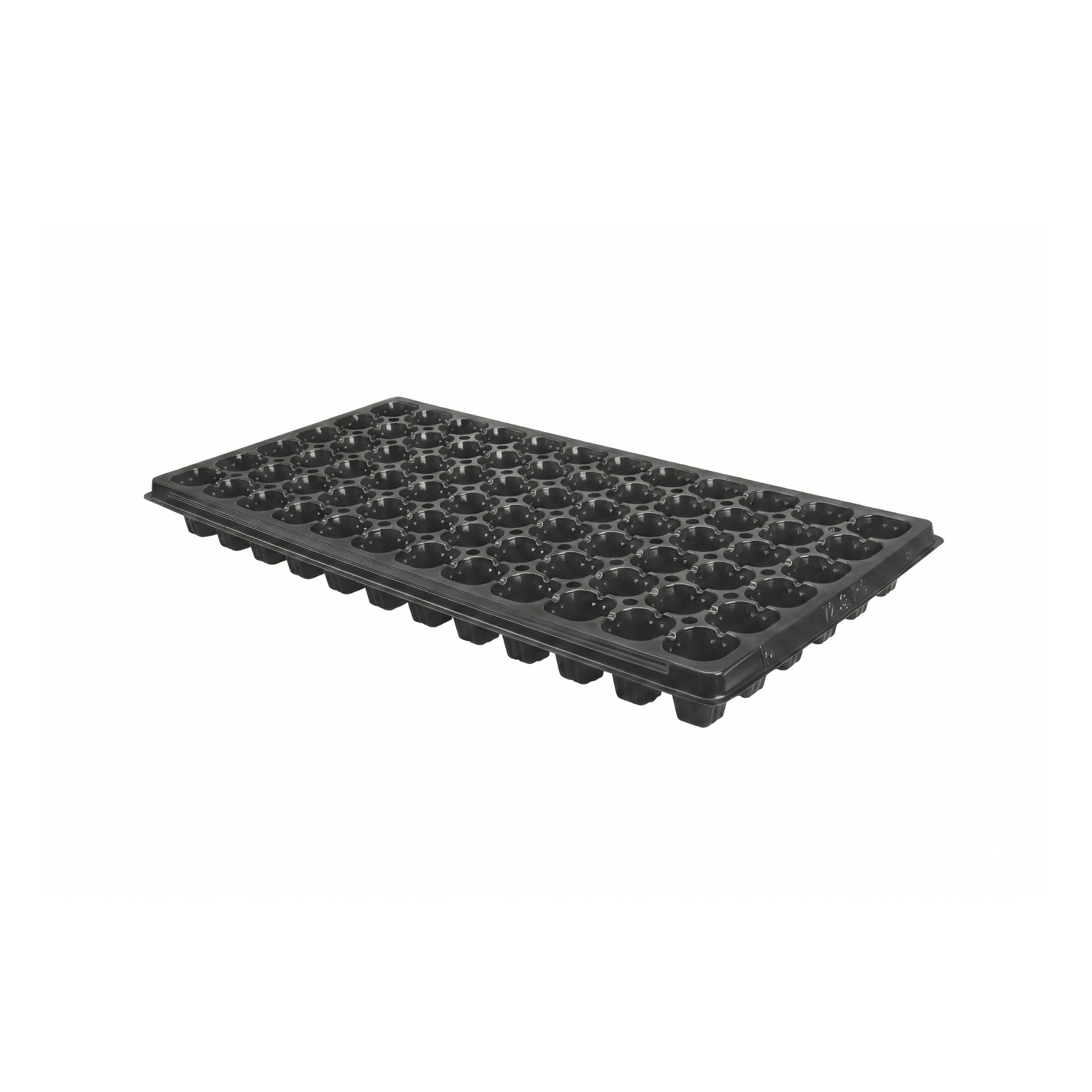
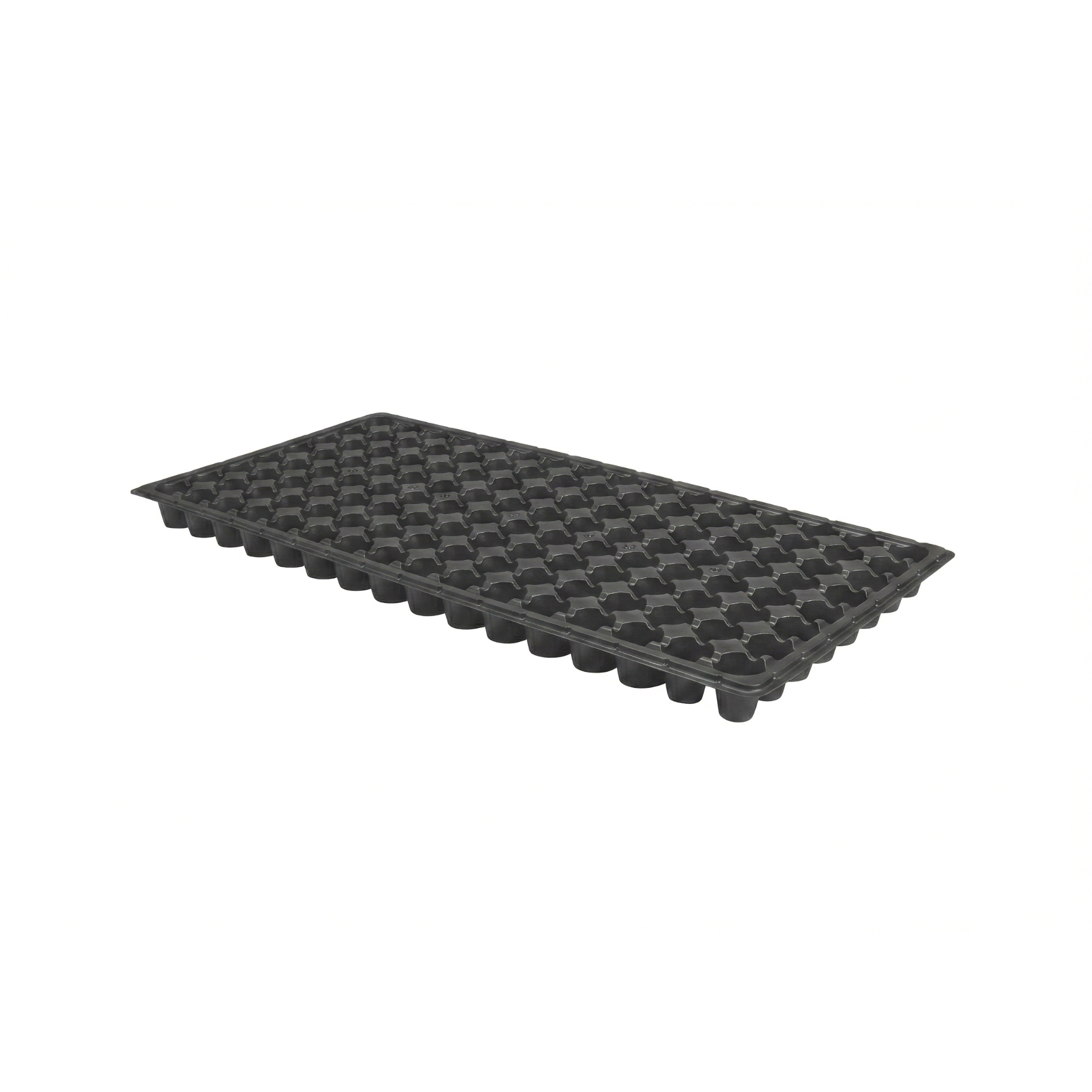
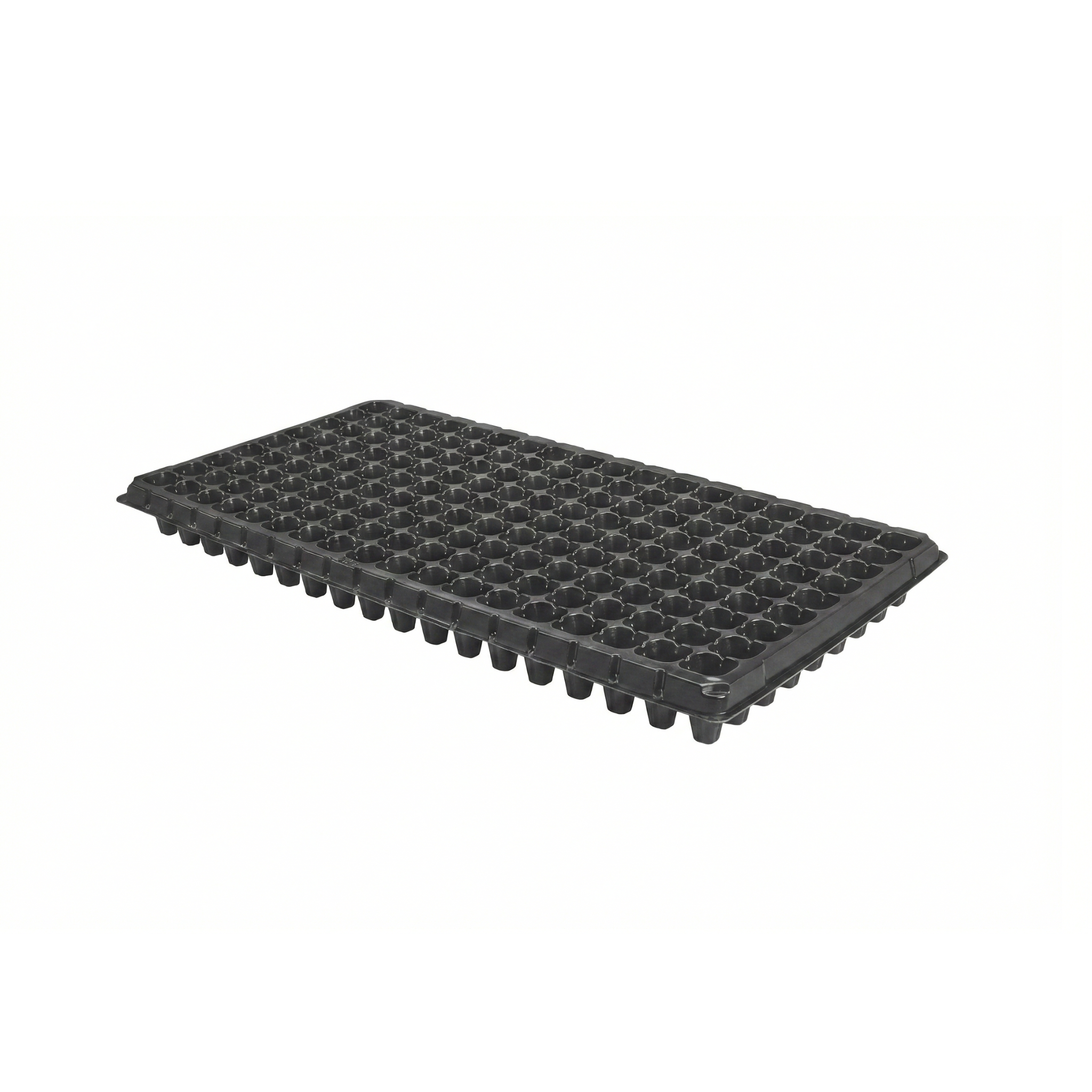
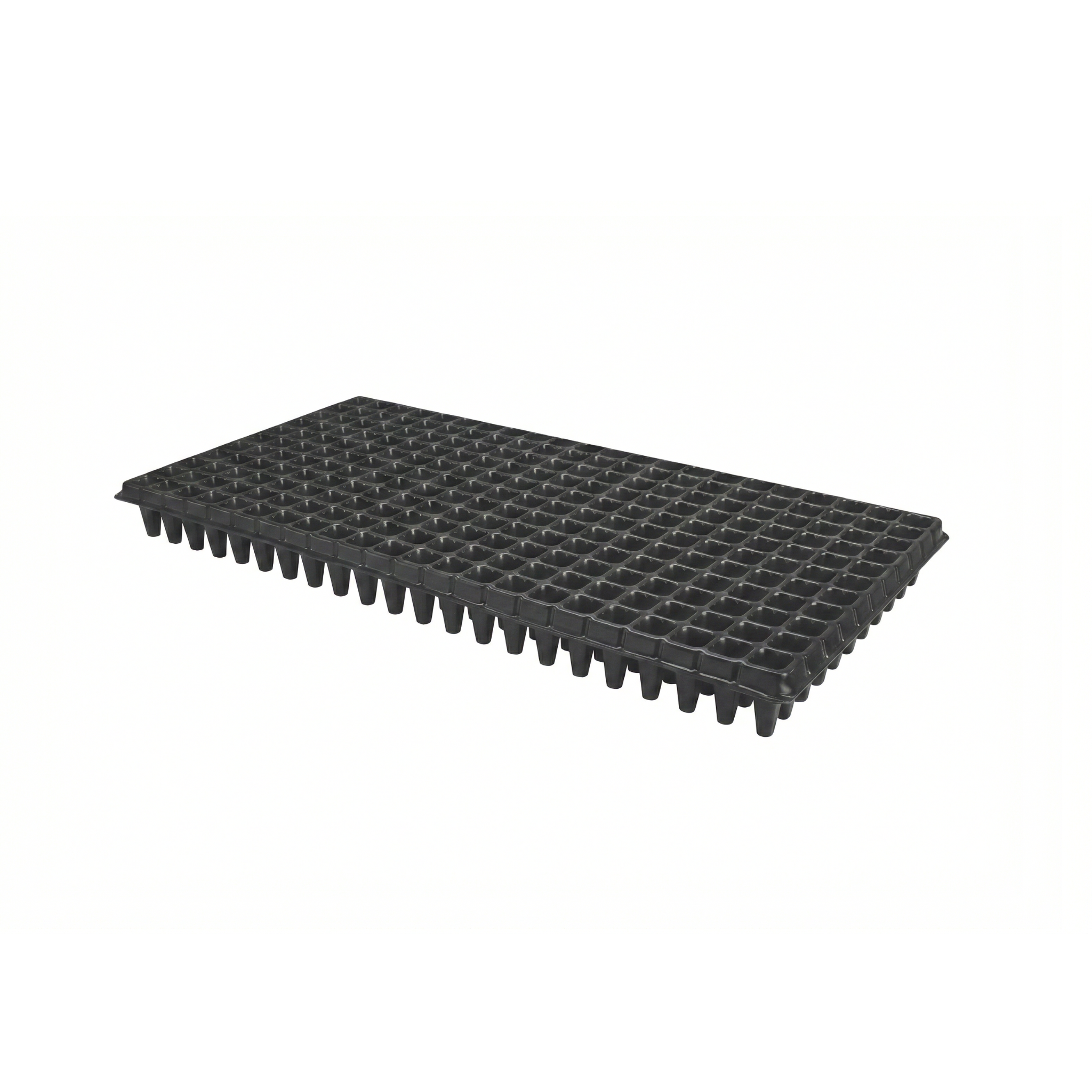
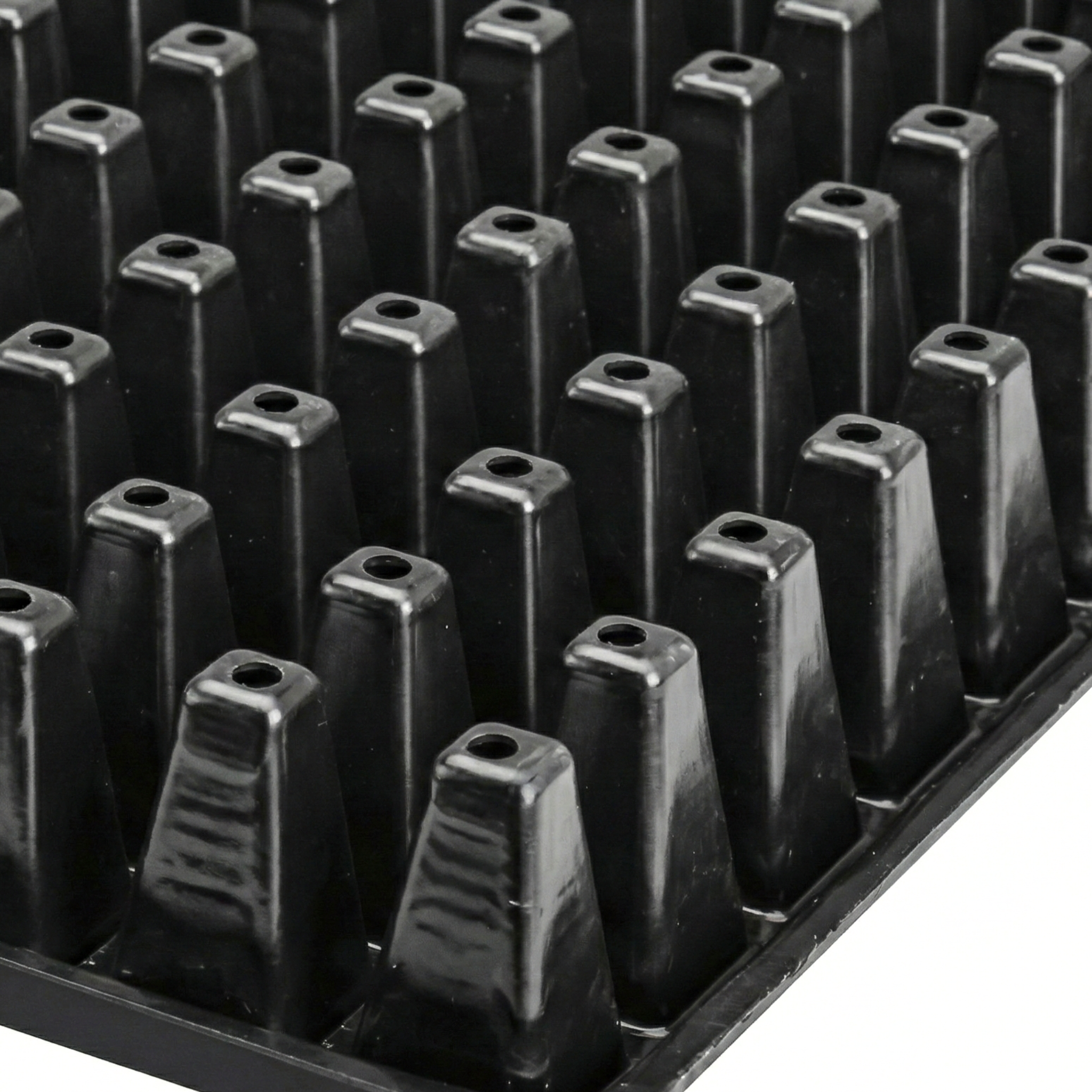
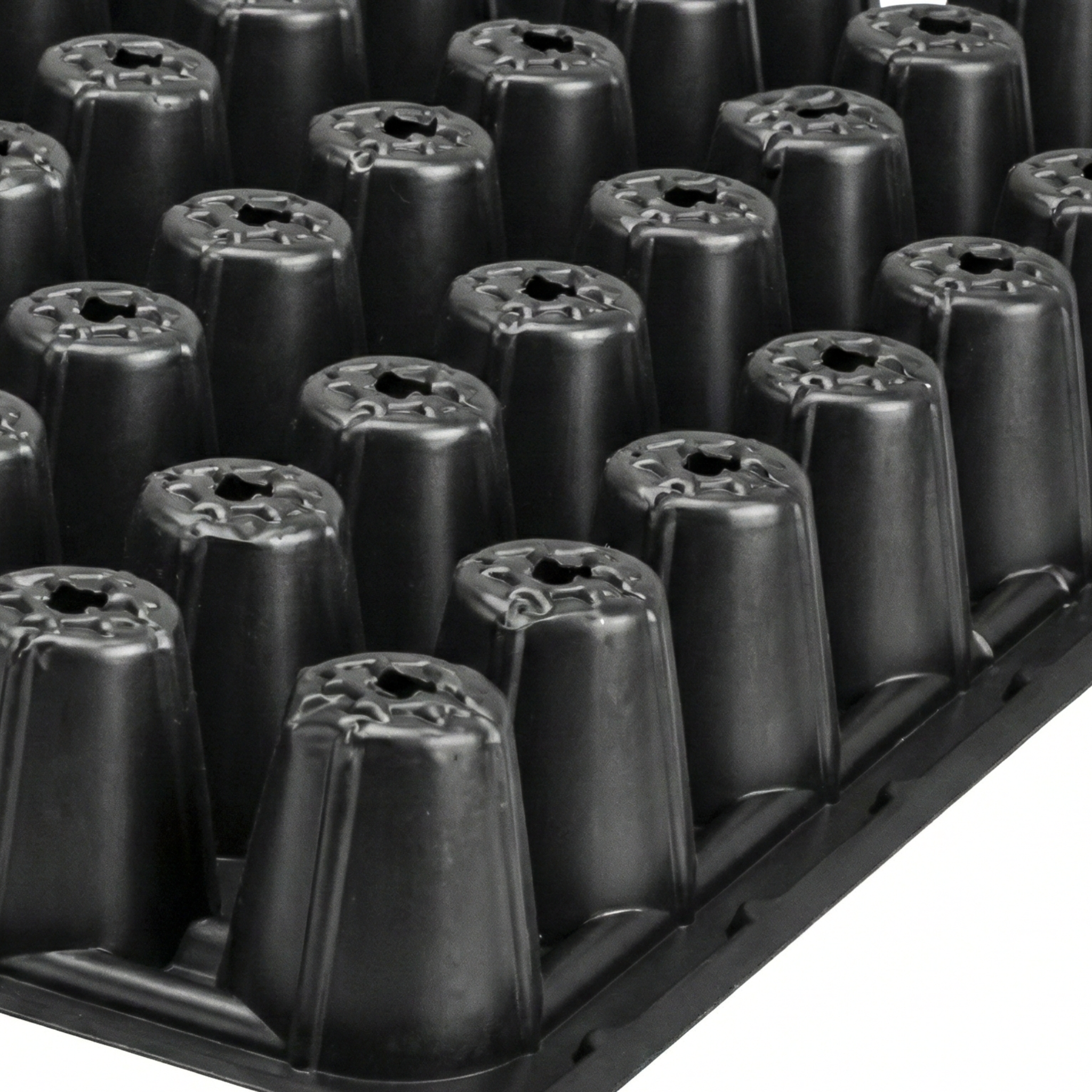
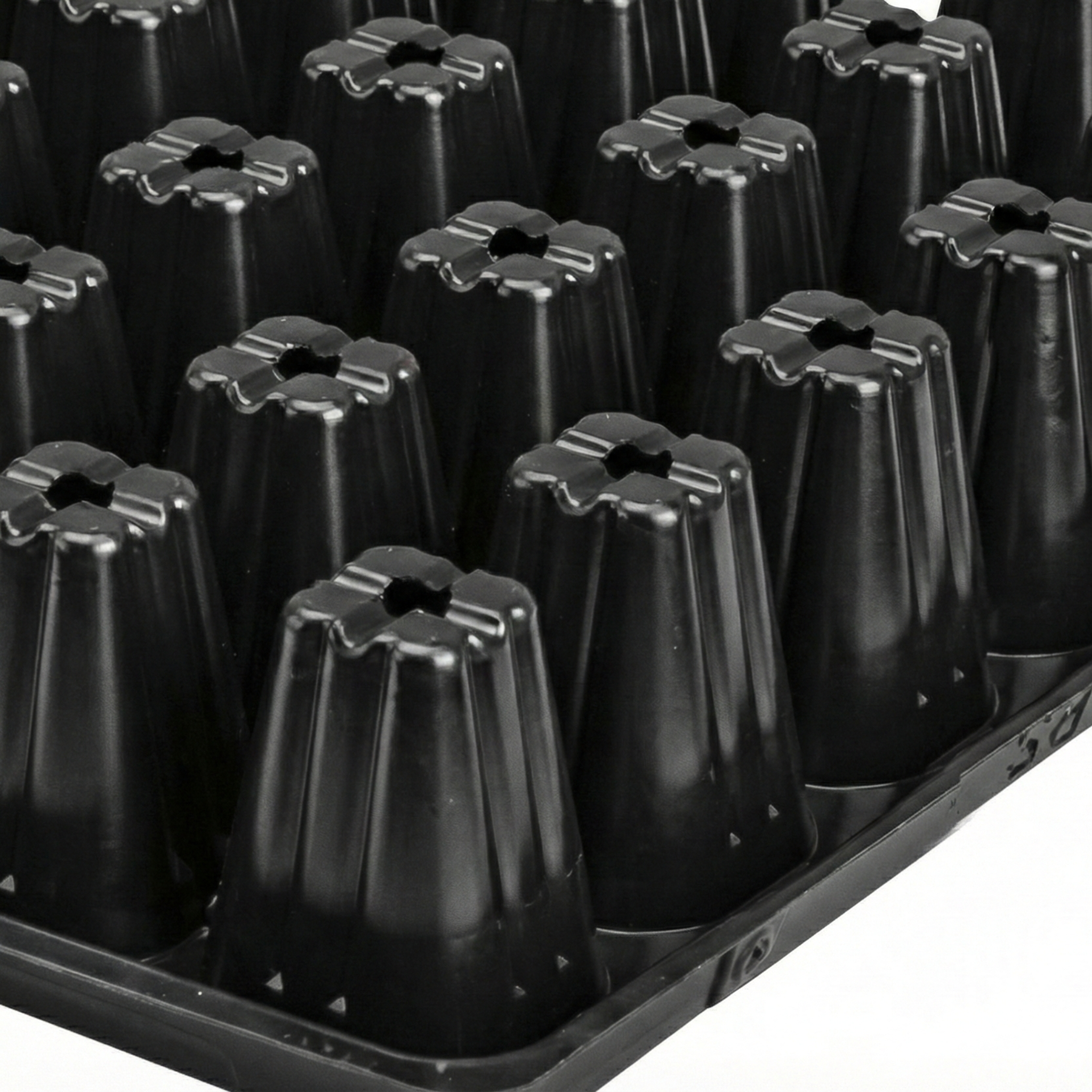
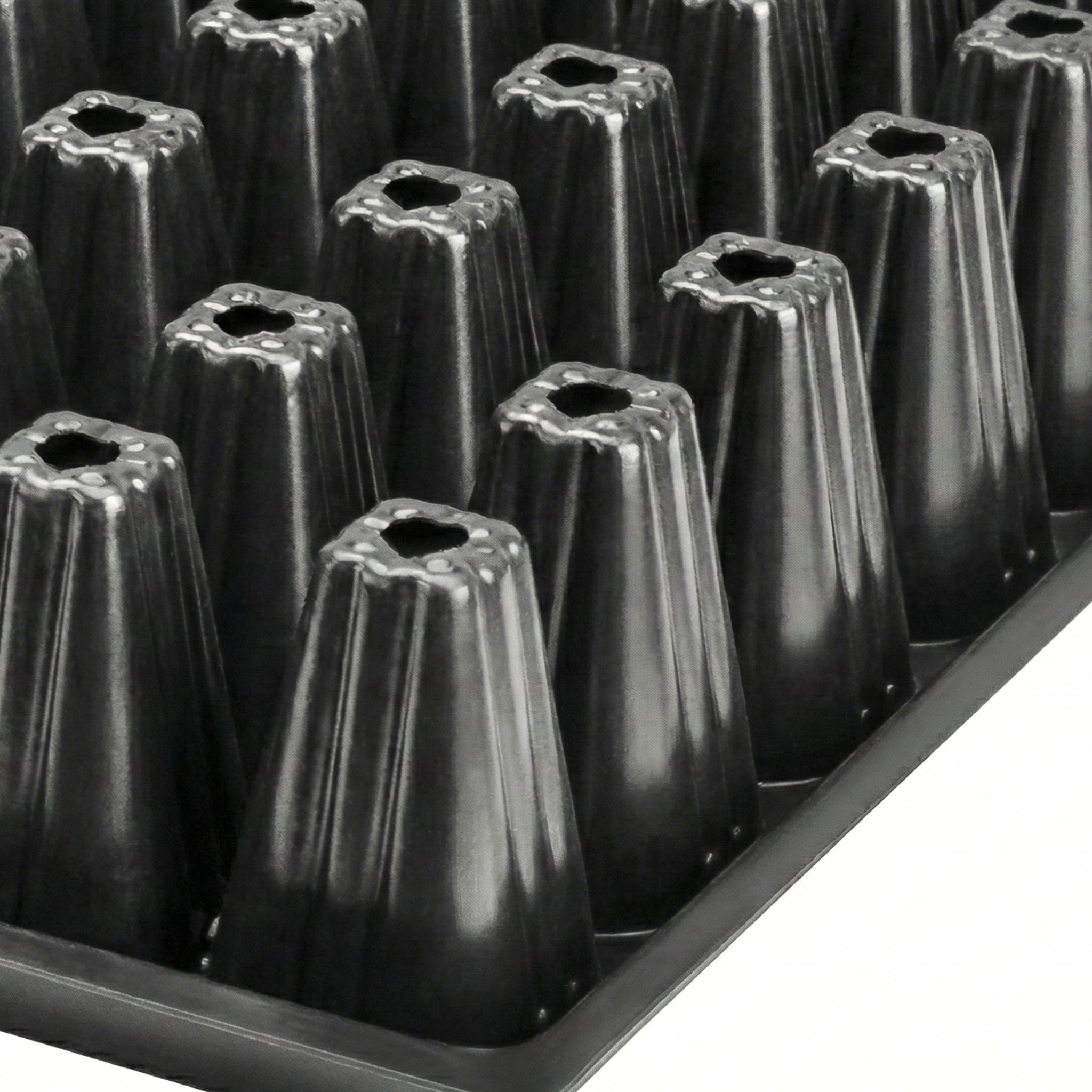
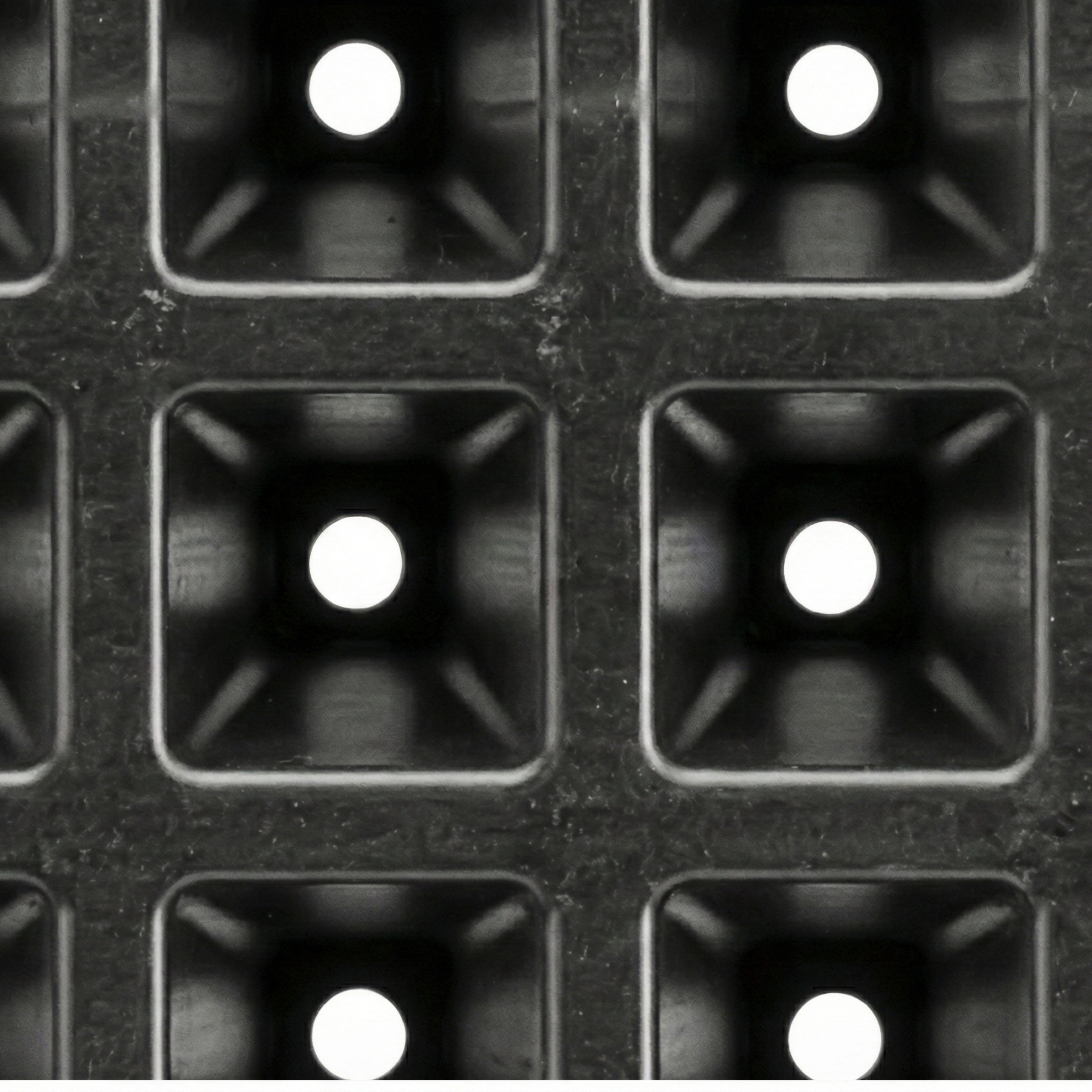
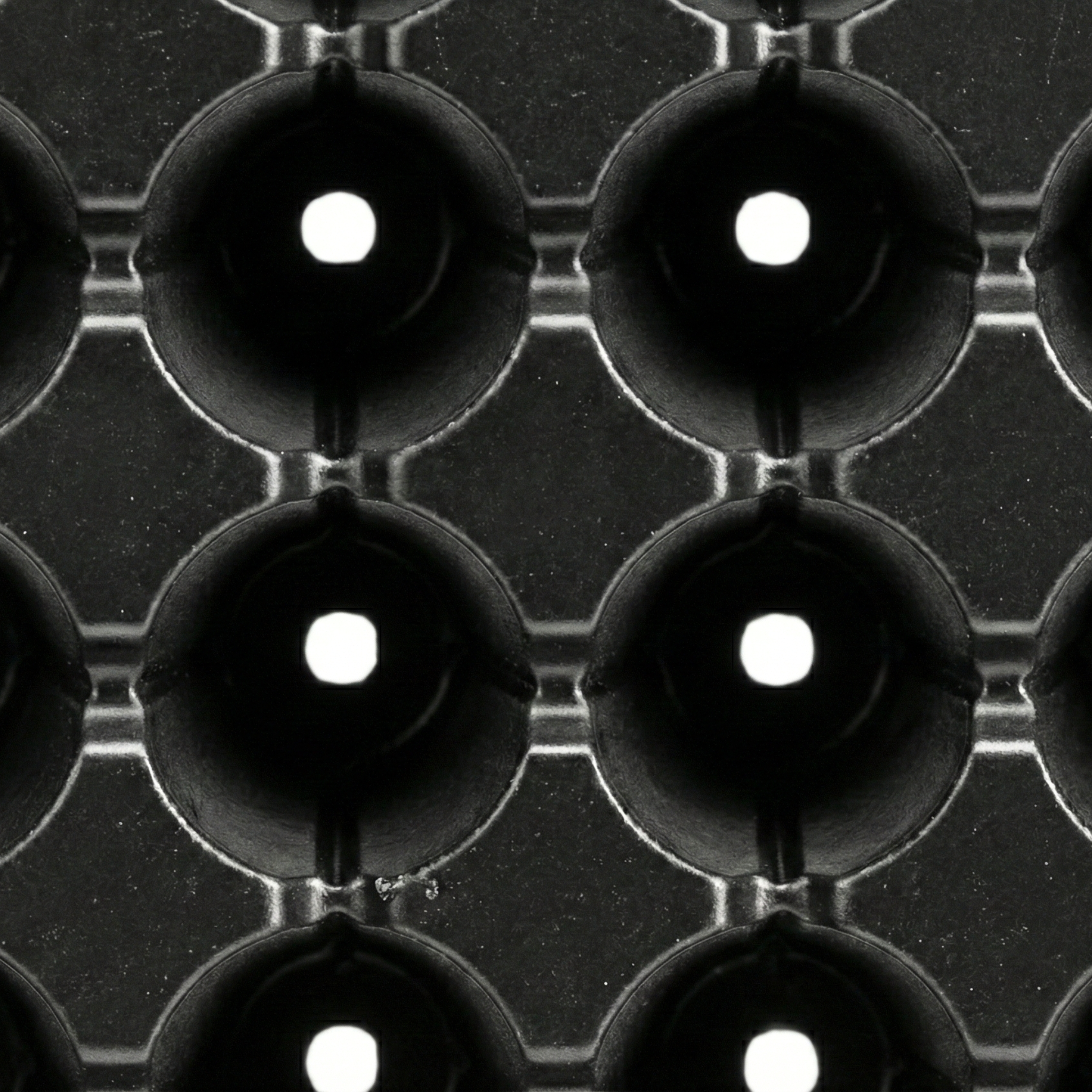
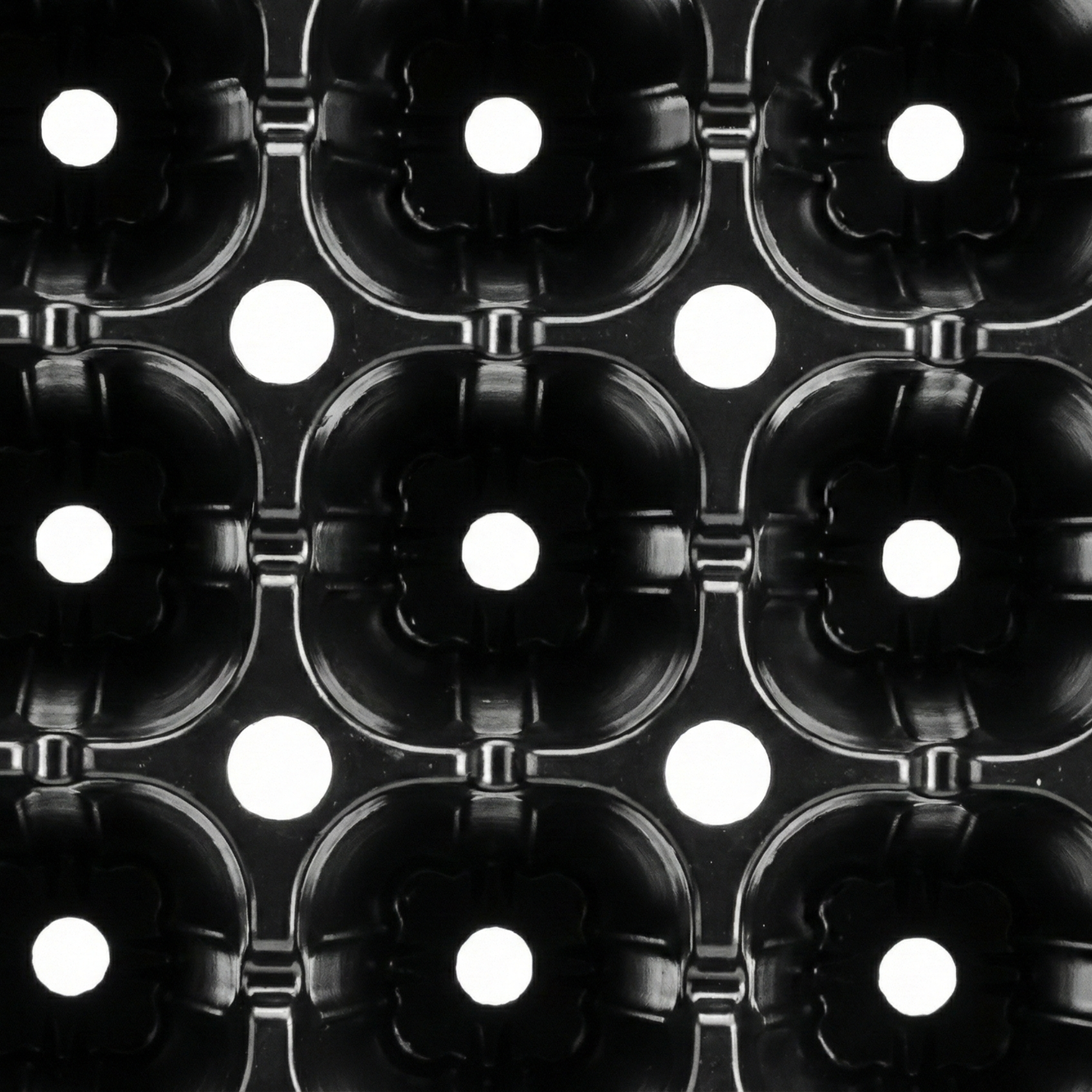
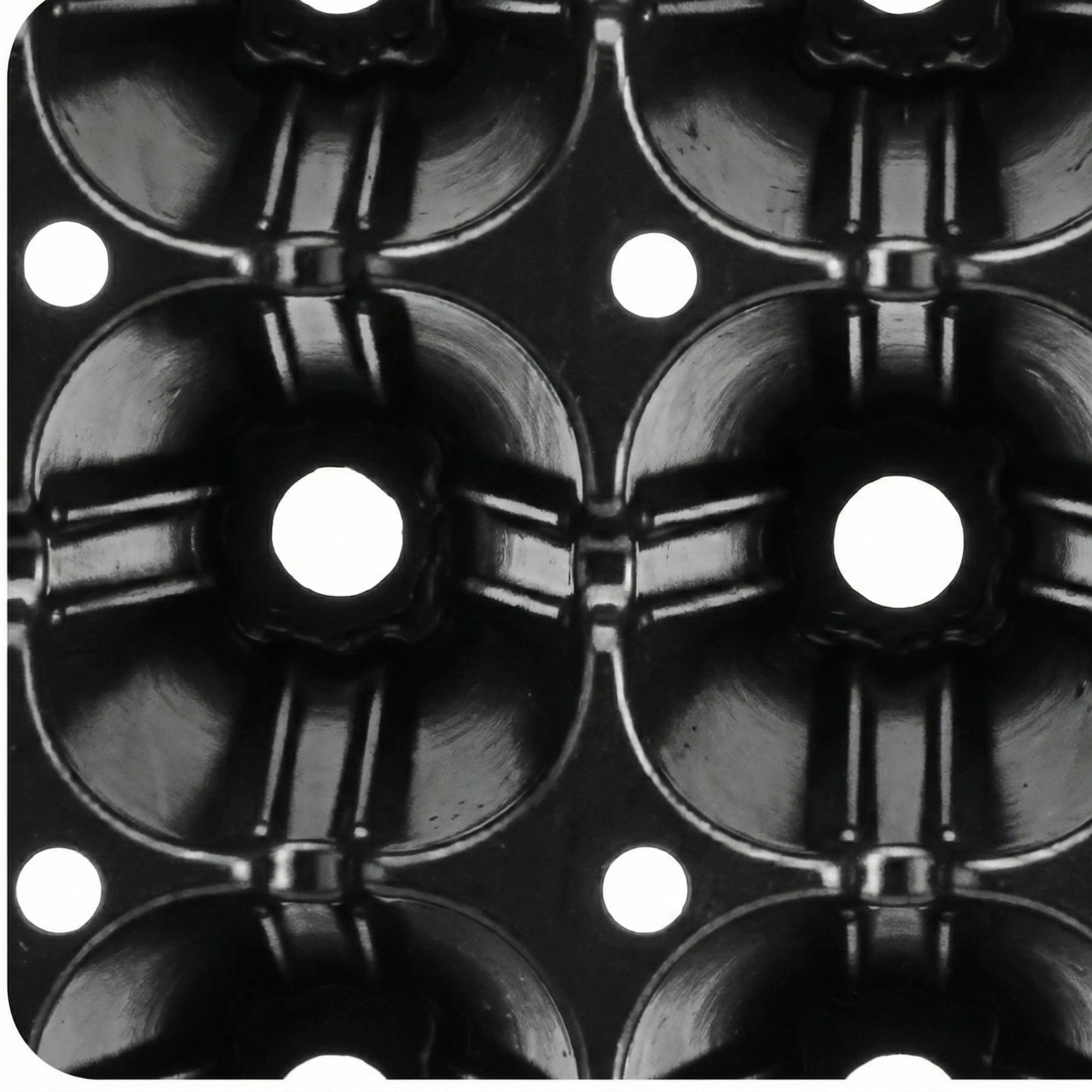


Producing seedlings in series with clean root ball extraction and uniform root development requires a germination tray with UV treatment, calibrated drainage, and cell geometry that respects the growth rate of the cultivated species. This horticultural and ornamental tray—also called a seedbed, plug tray, or propagation tray—is manufactured by Gardese from reinforced plastic resin with UV treatment, in four cavity configurations (72, 128, 200, 288 cells) in boxes of 140-160 units, designed for nursery owners, horticultural producers, ornamental plant producers, and professional gardening enthusiasts.
Key Benefits
- Integrated UV treatment: the additive in the plastic compound protects the tray against Caribbean solar radiation, preventing the material from becoming brittle or breaking after a few seasons in full sun or in a greenhouse with inadequate covering.
- Calibrated drainage per cell: the bottom holes of each cell are sized to drain excess irrigation without losing substrate, a critical condition for preventing damping-off, collar rot, and root rot typical of mass germination.
- Plastic resin resistant to intensive handling: the material flexes without breaking during seedling extraction, transport of loaded trays, and daily nursery handling, offering multiple use cycles without cracking.
- Four configurations for crop type: 72 cells for cuttings and ornamental plants with prolonged time in the tray, 128 for medium horticultural crops (tomato, bell pepper, eggplant), 200 and 288 for short-cycle vegetables (lettuce, fast-growing citrus, leafy plants).
- Conical concave cell geometry: the shape of the root ball facilitates directed root development and clean extraction of seedlings with an intact root ball, a condition for successful transplanting to open field or large pots.
Typical Applications and Uses
- Commercial vegetable nursery with mass production of seedlings for open field or greenhouse.
- Production of ornamental and forest plants in serial cultivation.
- Cuttings of woody and semi-woody plants with prolonged time in the tray before transplanting.
- Intensive domestic professional gardening and urban gardens with own seedling production.
Quality and Durability
An economical tray fails in two points: the resin does not incorporate sufficient UV additive (which produces trays that become brittle and break in a few months in the sun) and the cells are poorly sized or have irregular drainage (which results in substrate loss and uneven germination). Gardese works with UV-stable resin and controlled cell geometry, which separates a professional nursery tray from a generic seed tray that only lasts one season.
The choice depends on how long the seedling will stay in the tray and the final root-ball size needed for clean transplanting. Few cells (72) are ideal for woody cuttings, ornamental plants and species that need more root development before transplant. Intermediate configurations (128) cover most vegetables (tomato, pepper, eggplant, young citrus). Many cells (200, 288) optimize space for fast-cycle vegetables such as lettuce, escarole, spinach and leafy plants with transplant in a few weeks.
Yes. UV-treated plastic resin and the geometry sized for clean extraction allow multiple use cycles. For professional production, wash and disinfect the tray between sowings (pressurized water with neutral soap, or 1-2% chlorine bath) to remove substrate residue, fungal spores and bacteria that could carry pathologies to the next cohort. Real service life depends on handling care: forced extractions with screwdriver or knocking against the edge last less than gentle base-pressure extractions.
For germination the usual base substrate is light peat or coconut fiber with perlite or vermiculite in a 70/30 ratio — mixes that retain moisture without becoming saturated. Sowing depth follows the rule of 2-3 times the seed diameter: fine seeds such as lettuce go in shallow with light cover, medium seeds such as tomato at 0.5-1 cm, large seeds such as peach and passionfruit at 1-2 cm. Keep a steady temperature of 20-28°C and 60-80% humidity for uniformity. Substrate should not protrude above the cell rim.
Still have questions?
Ask us and we will gladly help you with whatever you need.
| Tray dimensions | 54 x 28 x 4.6 cm (21.3 x 11 x 1.8 in) |
|---|---|
| Cell bottom dimensions | 2 x 2 cm (0.8 x 0.8 in) |
| Cell top dimensions | 3.9 x 3.9 cm (1.5 x 1.5 in) |
| Volume per cell | 44 cc (1.5 fl oz) |
| Material | Plastic resin |
| Color | Black |
| Volume per tray (sum of all its cells) | 3.2 L (0.84 gal) |
| Presentation | Box of 160 trays |
| Volume per box (sum of all cells in all trays) | 506 L (134 gal) |
| Box: Width | 29.0 cm (11.42 in) |
|---|---|
| Box: Height | 55.0 cm (21.65 in) |
| Box: Depth | 46.0 cm (18.11 in) |
| Box: Weight | 24.0 kg |
Payment & Security
