
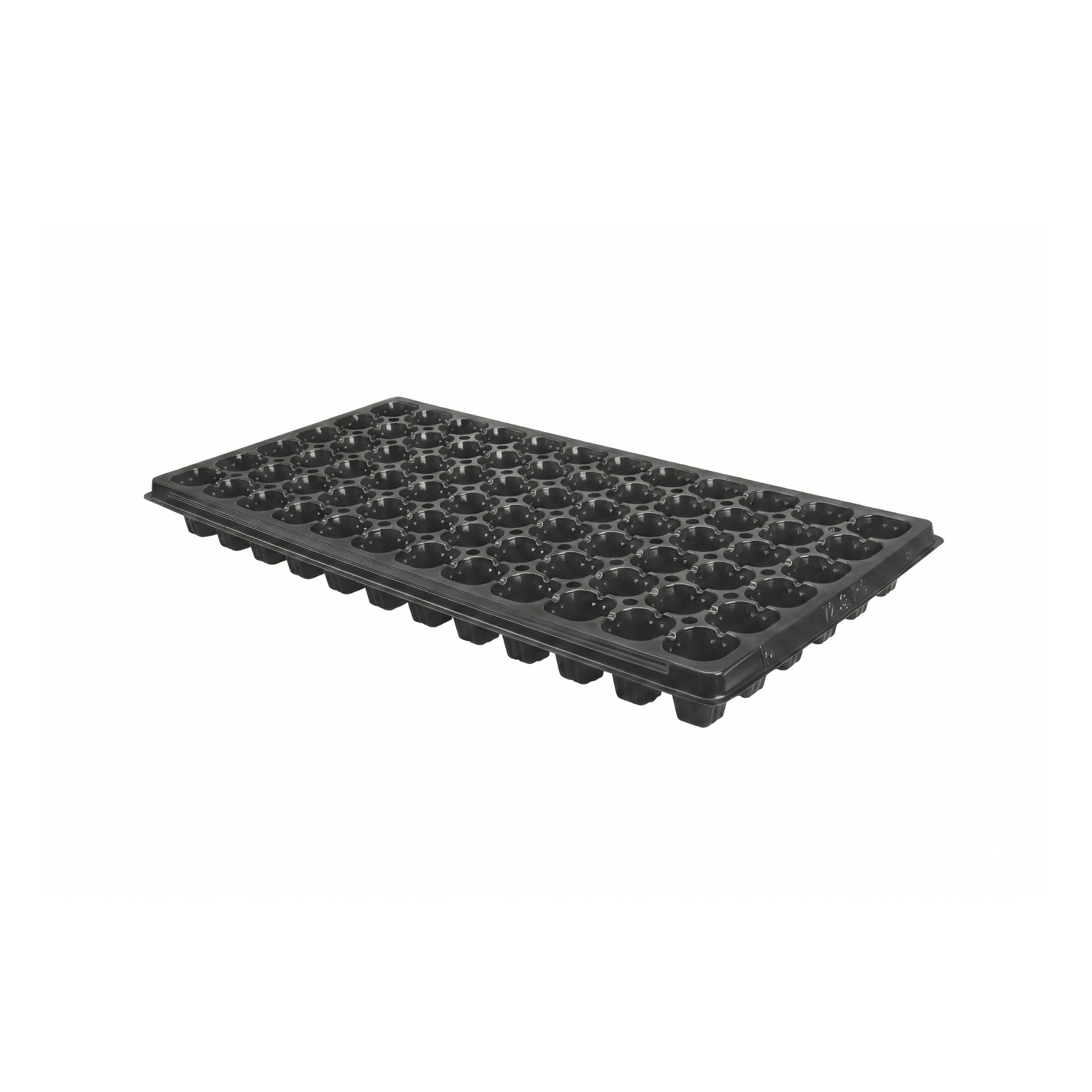
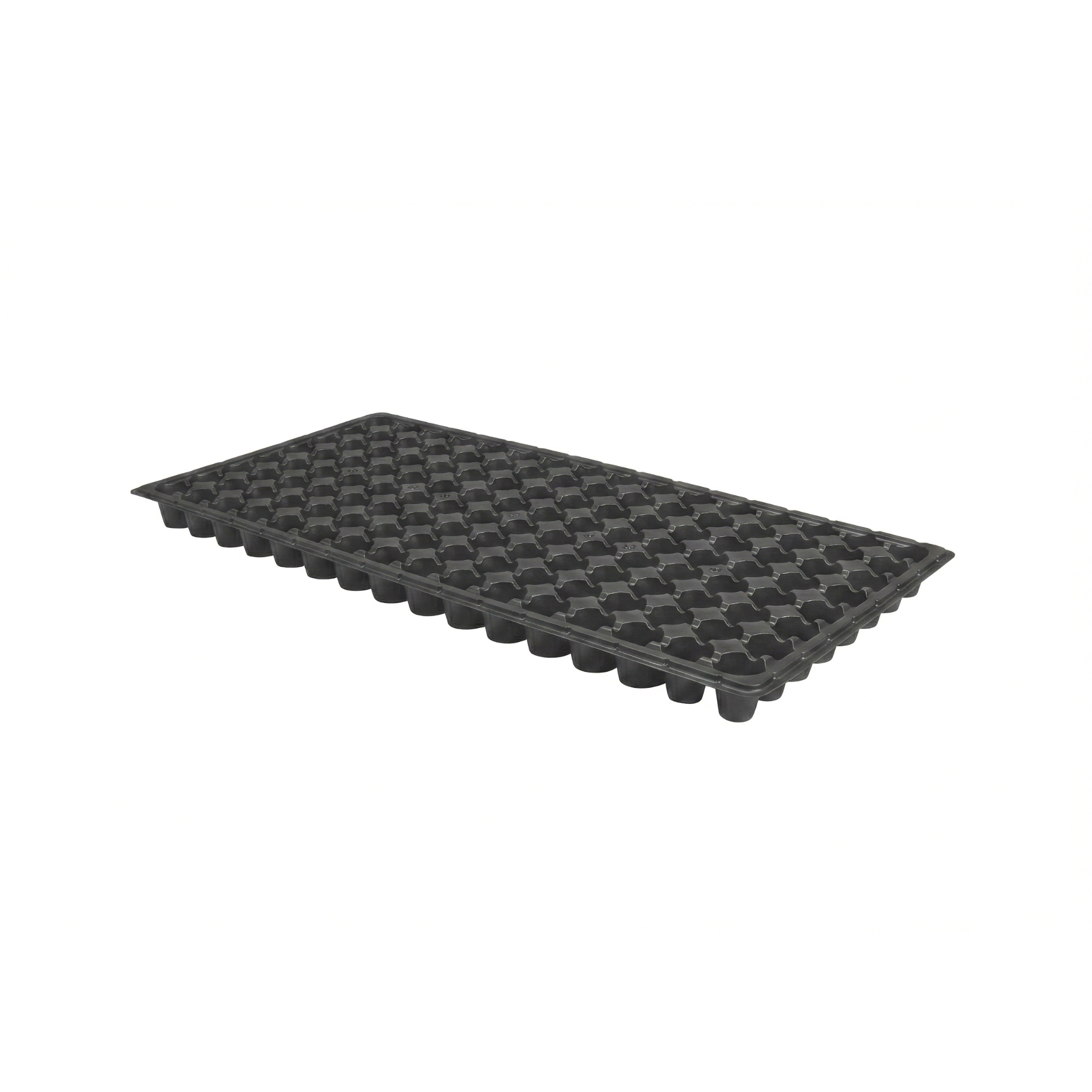
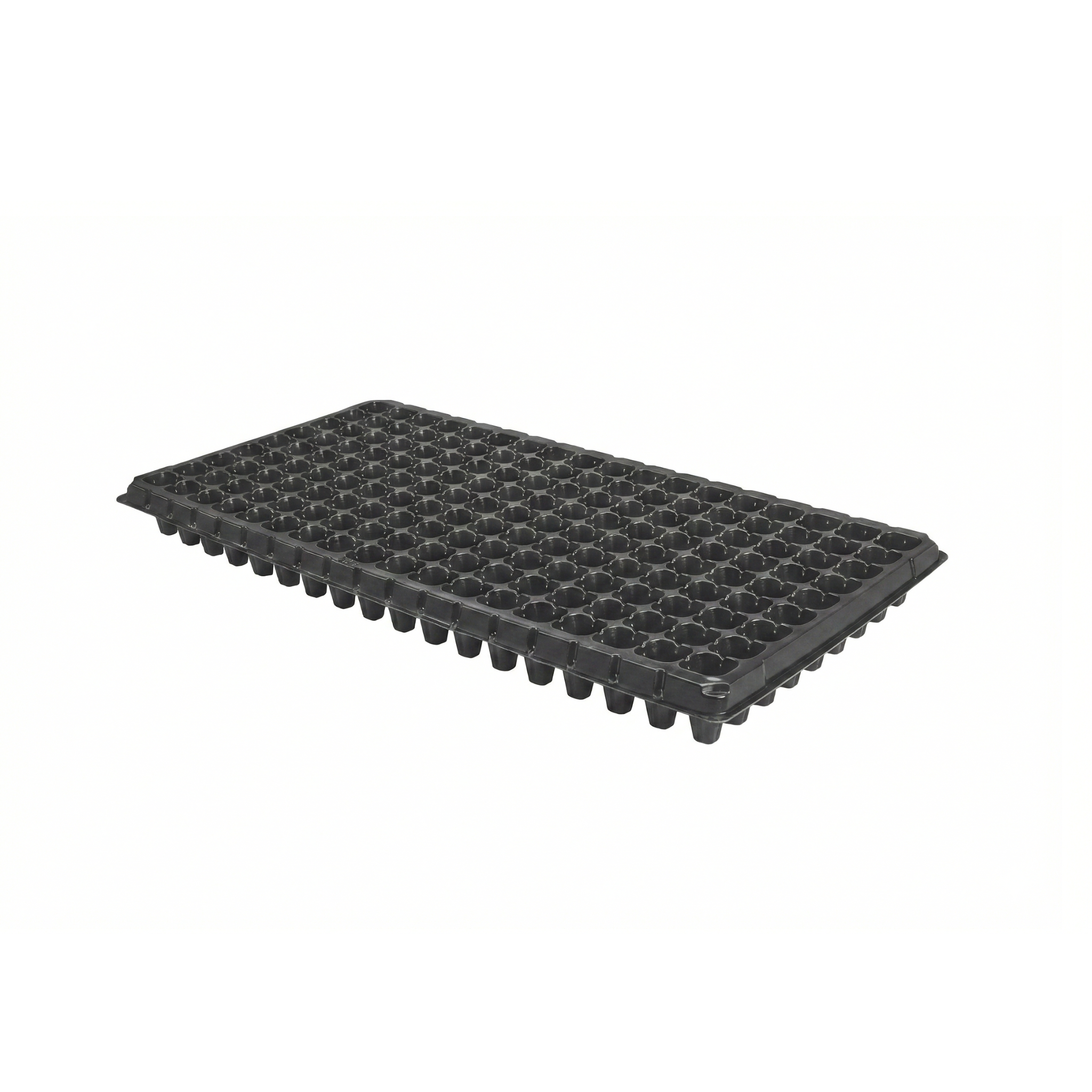
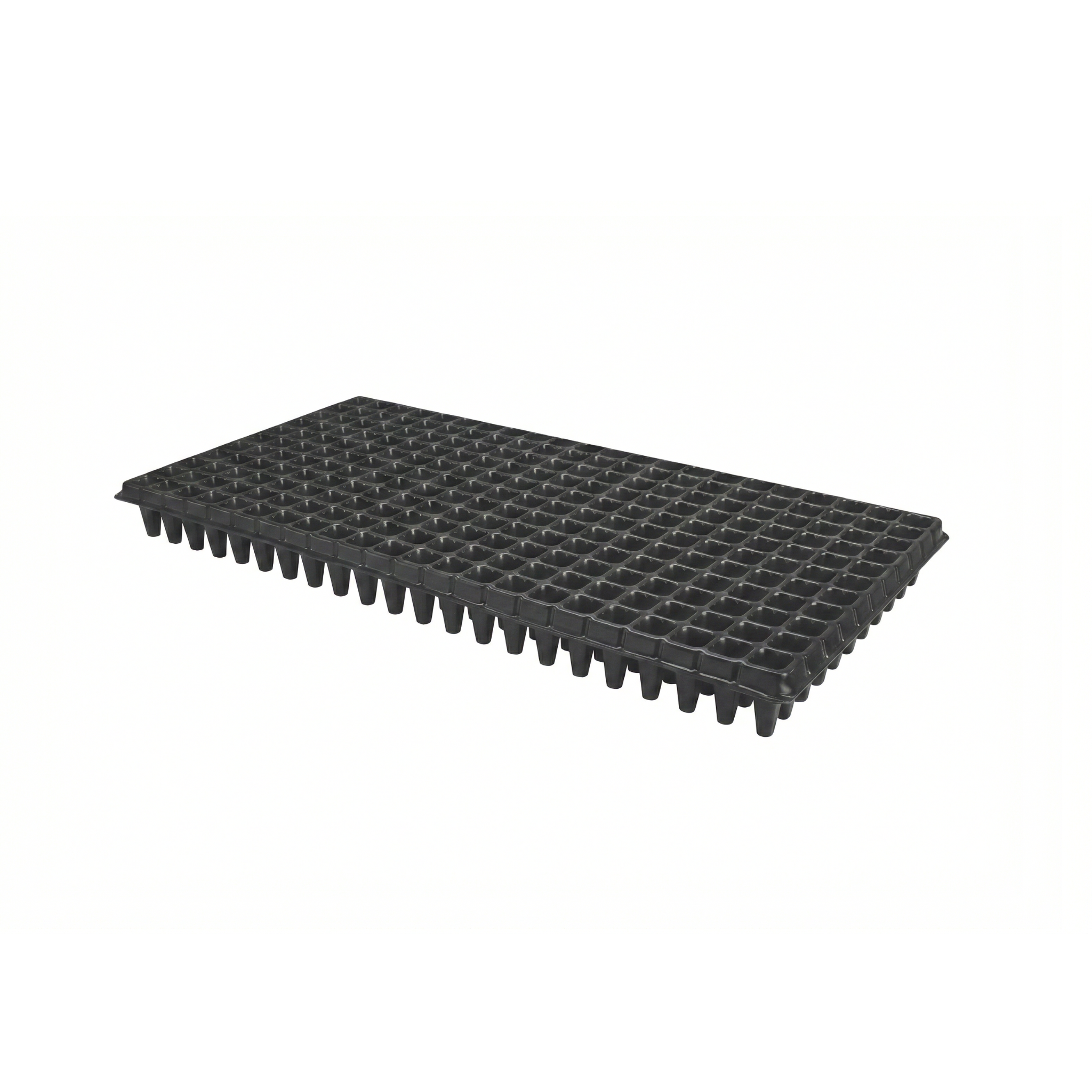
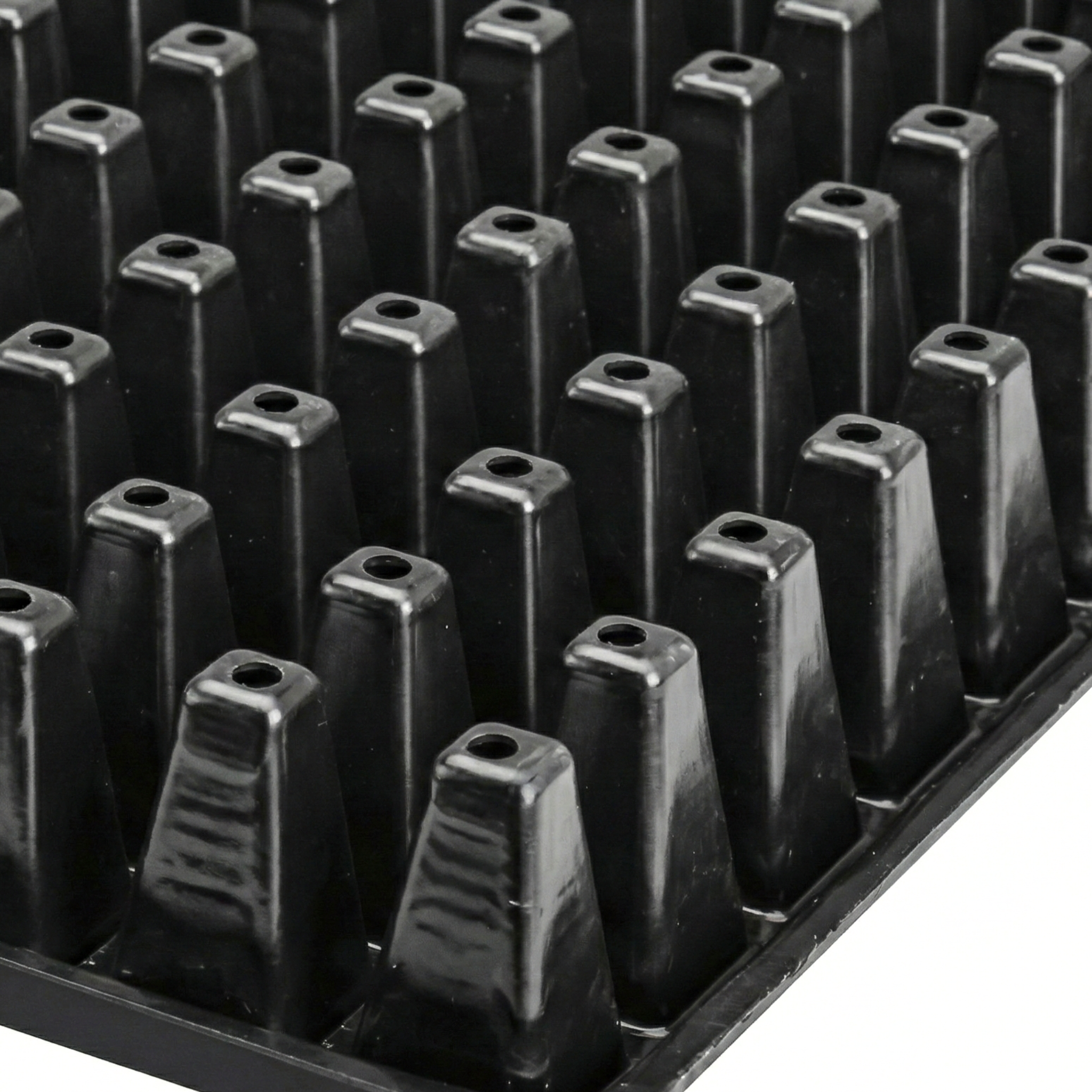
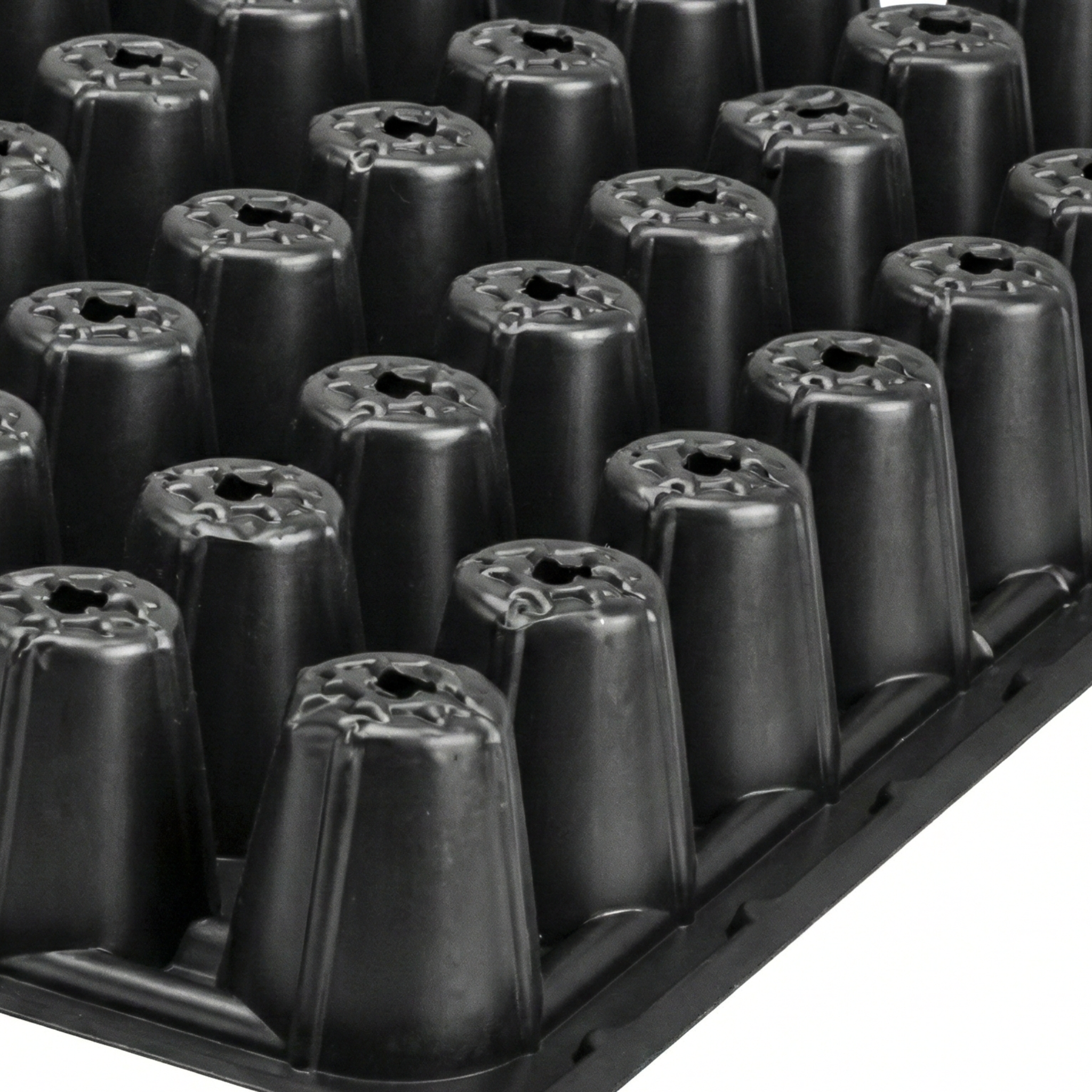
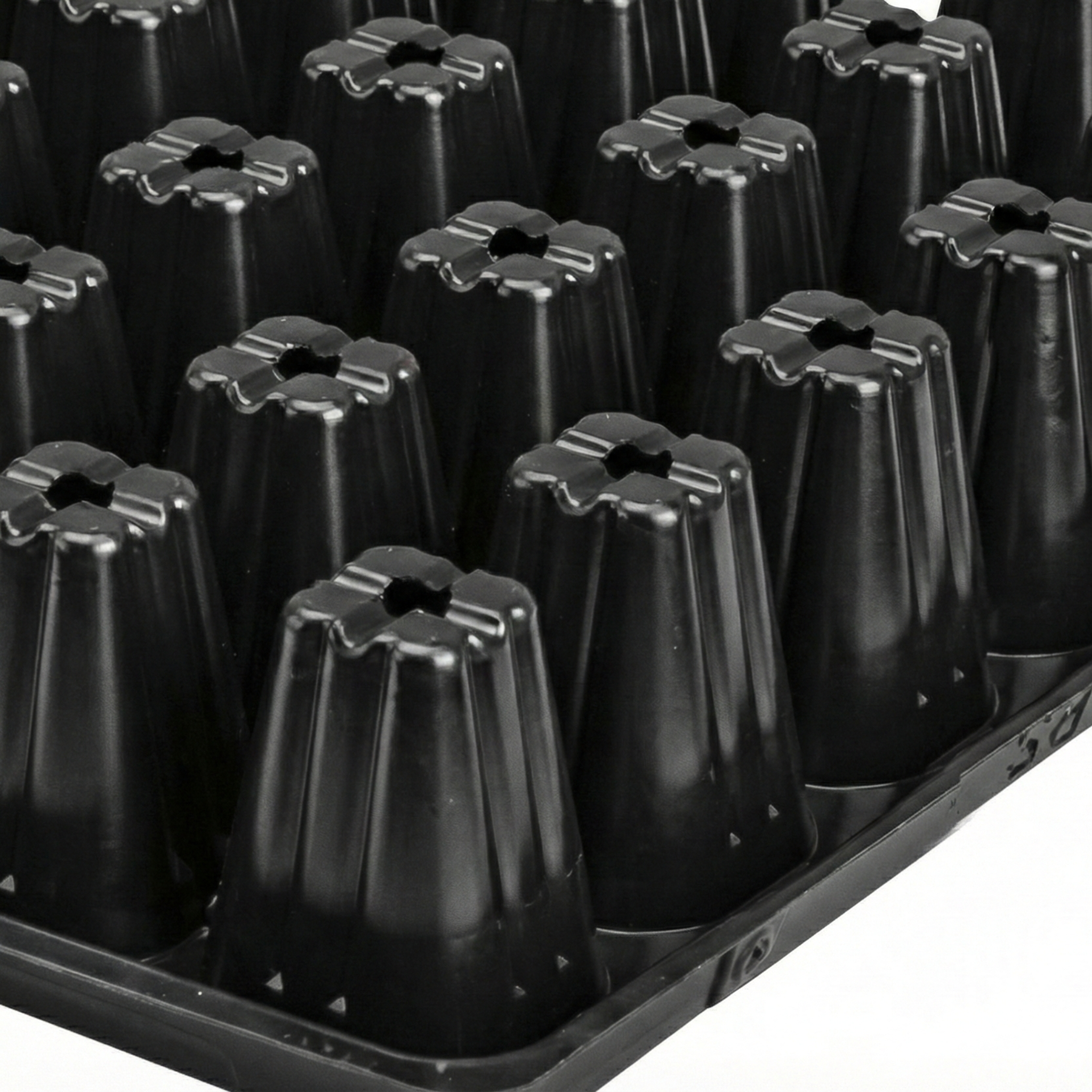
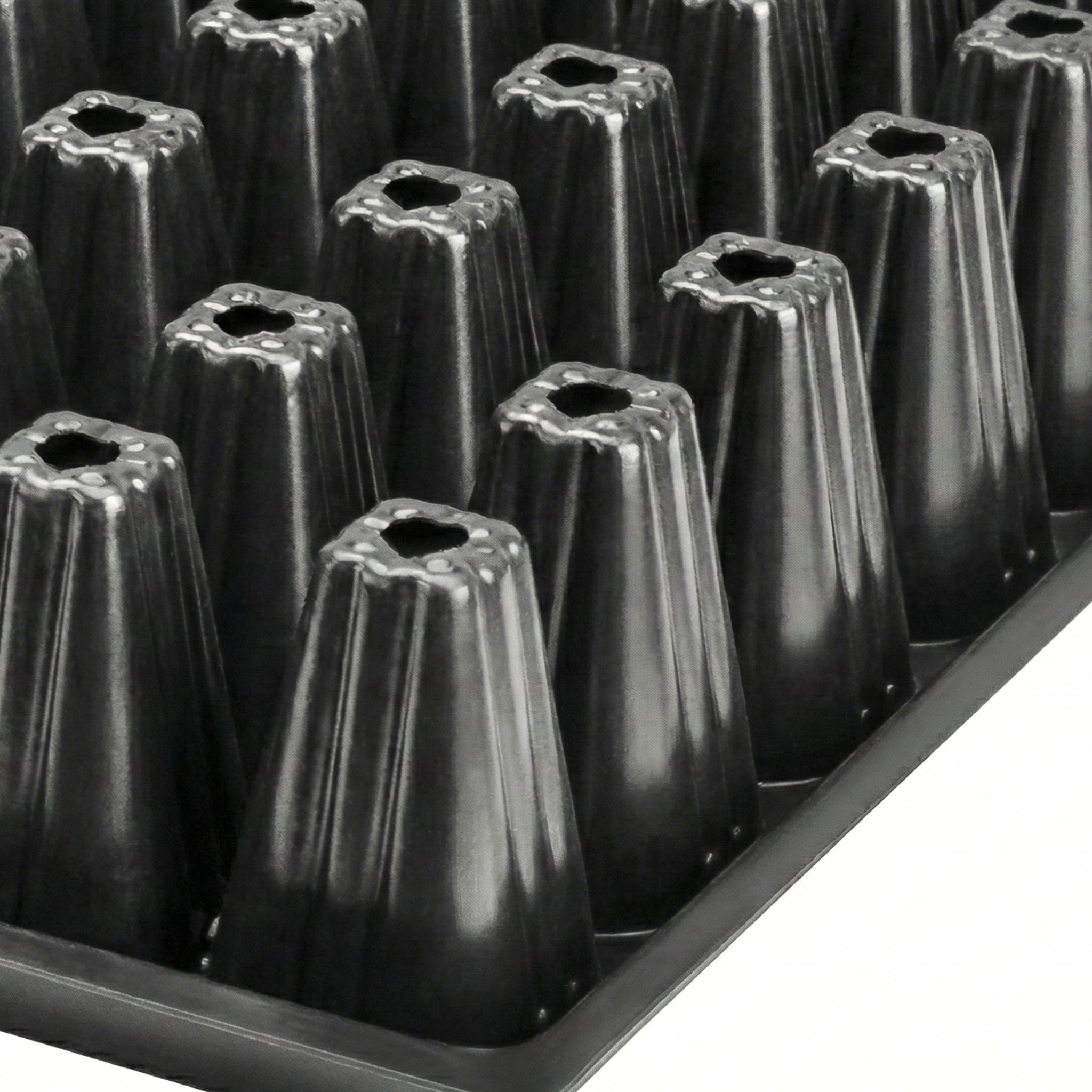
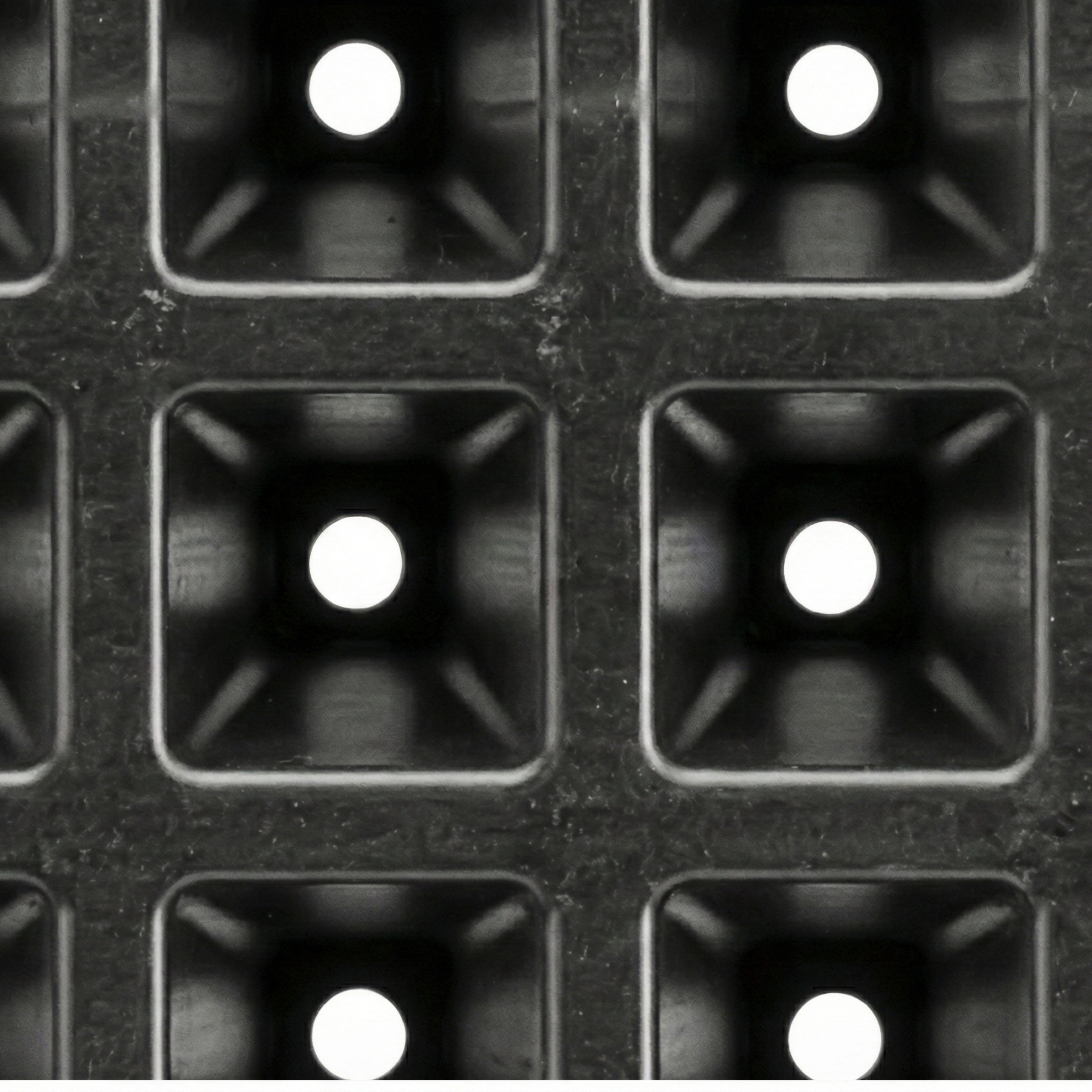
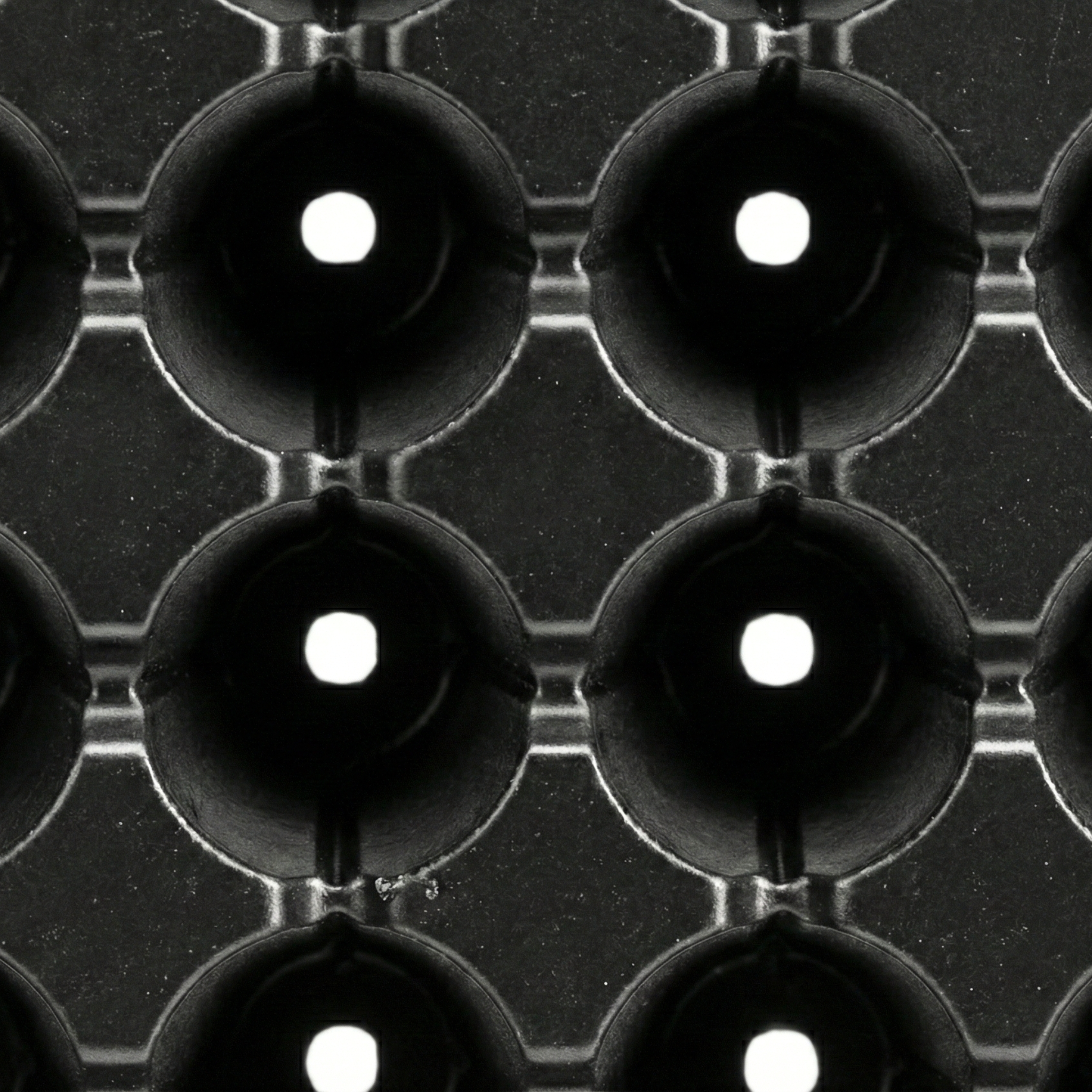
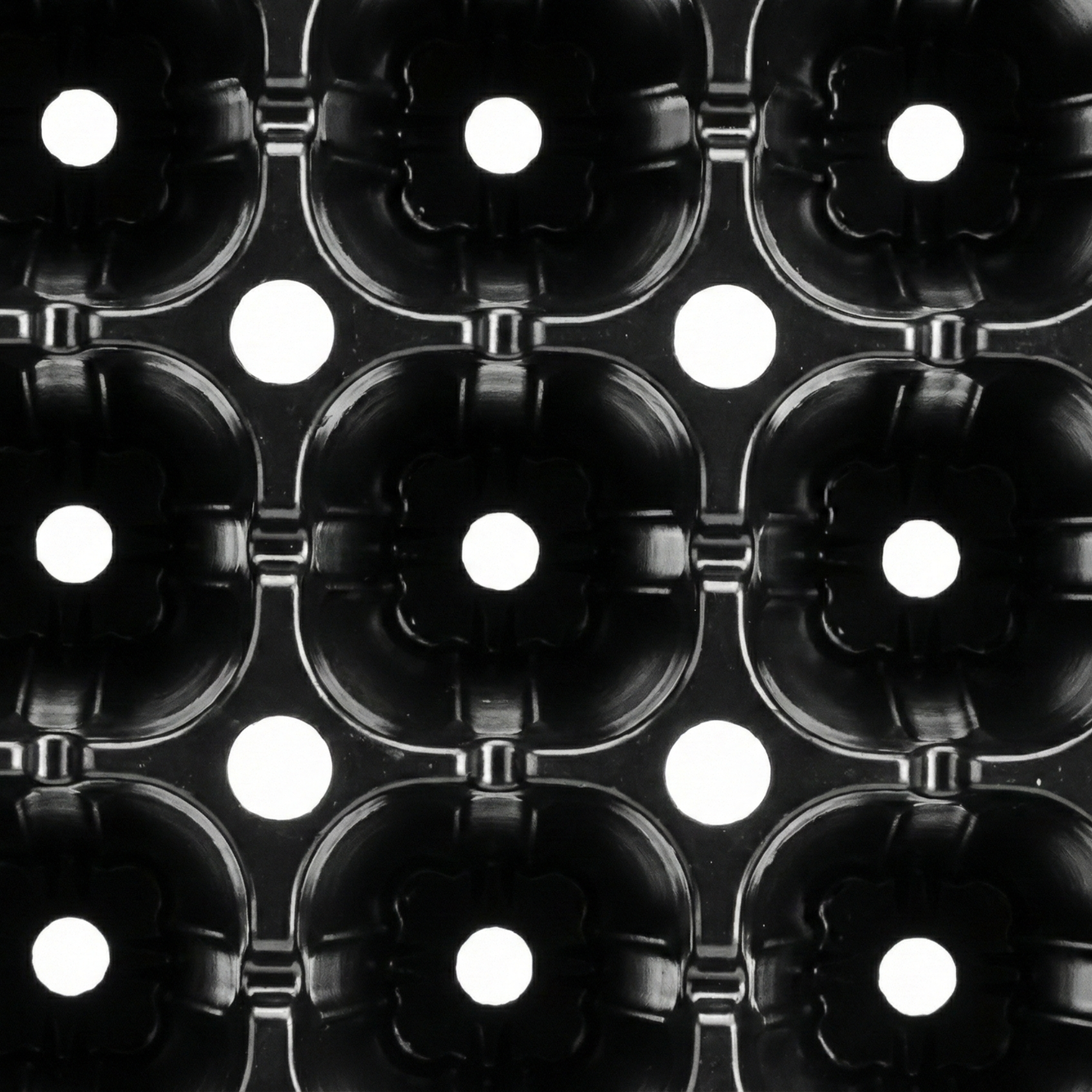
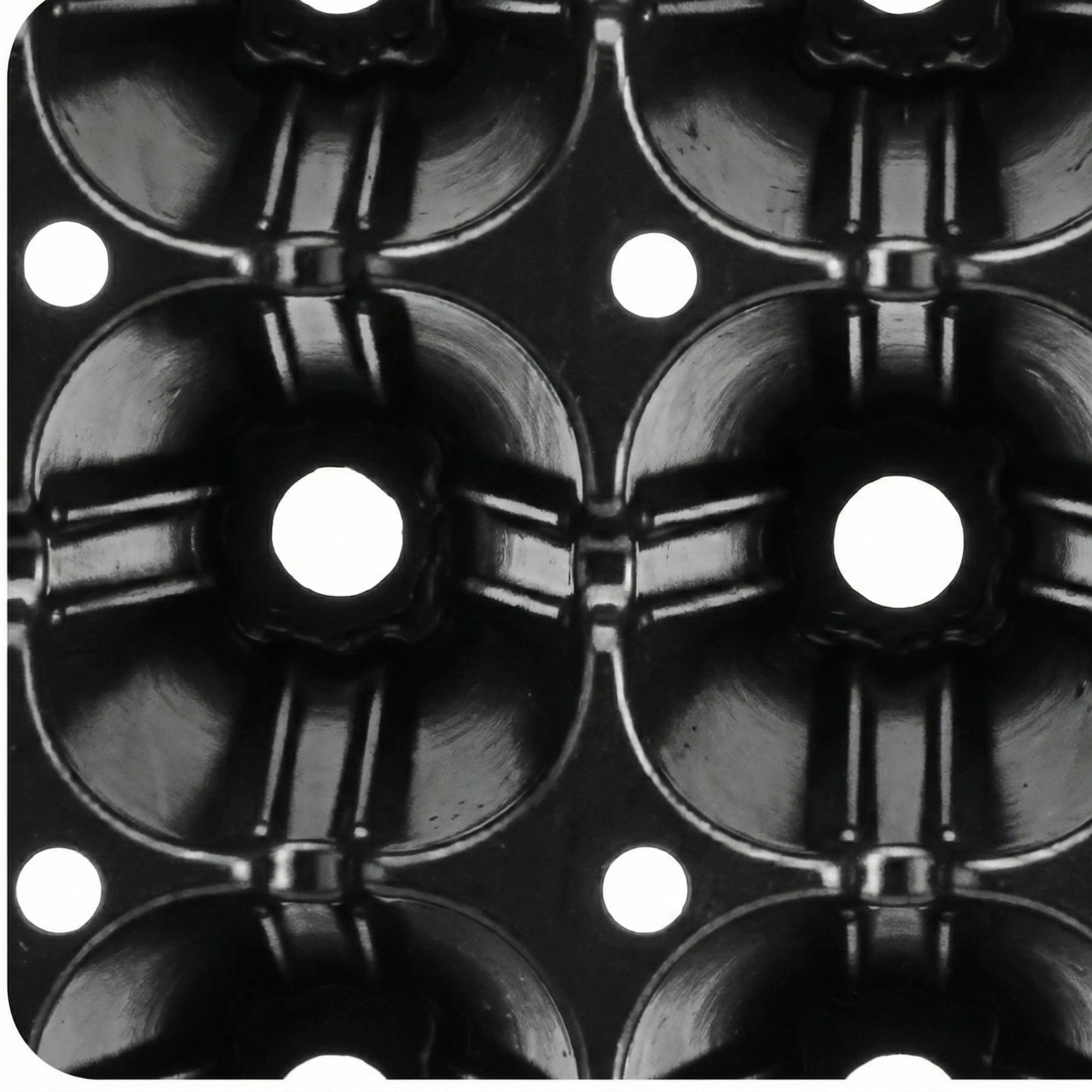


Producing seedlings in series with clean root ball extraction and uniform root development requires a germination tray with UV treatment, calibrated drainage, and cell geometry that respects the growth rate of the cultivated species. This horticultural and ornamental tray—also called a seedbed, plug tray, or propagation tray—is manufactured by Gardese from reinforced plastic resin with UV treatment, in four cavity configurations (72, 128, 200, 288 cells) in boxes of 140-160 units, designed for nursery owners, horticultural producers, ornamental plant producers, and professional gardening enthusiasts.
Key Benefits
- Integrated UV treatment: the additive in the plastic compound protects the tray against Caribbean solar radiation, preventing the material from becoming brittle or breaking after a few seasons in full sun or in a greenhouse with inadequate covering.
- Calibrated drainage per cell: the bottom holes of each cell are sized to drain excess irrigation without losing substrate, a critical condition for preventing damping-off, collar rot, and root rot typical of mass germination.
- Plastic resin resistant to intensive handling: the material flexes without breaking during seedling extraction, transport of loaded trays, and daily nursery handling, offering multiple use cycles without cracking.
- Four configurations for crop type: 72 cells for cuttings and ornamental plants with prolonged time in the tray, 128 for medium horticultural crops (tomato, bell pepper, eggplant), 200 and 288 for short-cycle vegetables (lettuce, fast-growing citrus, leafy plants).
- Conical concave cell geometry: the shape of the root ball facilitates directed root development and clean extraction of seedlings with an intact root ball, a condition for successful transplanting to open field or large pots.
Typical Applications and Uses
- Commercial vegetable nursery with mass production of seedlings for open field or greenhouse.
- Production of ornamental and forest plants in serial cultivation.
- Cuttings of woody and semi-woody plants with prolonged time in the tray before transplanting.
- Intensive domestic professional gardening and urban gardens with own seedling production.
Quality and Durability
An economical tray fails in two points: the resin does not incorporate sufficient UV additive (which produces trays that become brittle and break in a few months in the sun) and the cells are poorly sized or have irregular drainage (which results in substrate loss and uneven germination). Gardese works with UV-stable resin and controlled cell geometry, which separates a professional nursery tray from a generic seed tray that only lasts one season.
How do I choose the right number of cells for my crop?
Are these trays reusable across multiple sowings?
Which substrate and sowing depth work best in these trays?
Still have questions?
Ask us and we will gladly help you with whatever you need.
| Material and construction | |
|---|---|
| Material | Polystyrene (PS) |
| Color | Black |
| Dimensions and format | |
| Tray dimensions | 54 x 28 x 4.6 cm (21.3 x 11 x 1.8 in) |
| Cell bottom dimensions | 2 x 2 cm (0.8 x 0.8 in) |
| Cell top dimensions | 3.9 x 3.9 cm (1.5 x 1.5 in) |
| Volume per tray (sum of all its cells) | 3.2 L (0.84 gal) |
| Volume per box (sum of all cells in all trays) | 506 L (134 gal) |
| Volume per cell | 44 cc (1.5 fl oz) |
| Presentation and packaging | |
| Presentation | Box of 160 trays |
| Box: Width | 29.0 cm (11.42 in) |
|---|---|
| Box: Height | 55.0 cm (21.65 in) |
| Box: Depth | 46.0 cm (18.11 in) |
| Box: Weight | 24.0 kg |
Official GARDESE warranty
What's covered
Confirmed defect: replacement or refund of the amount paid.
What's not covered
Pago & Seguridad

