
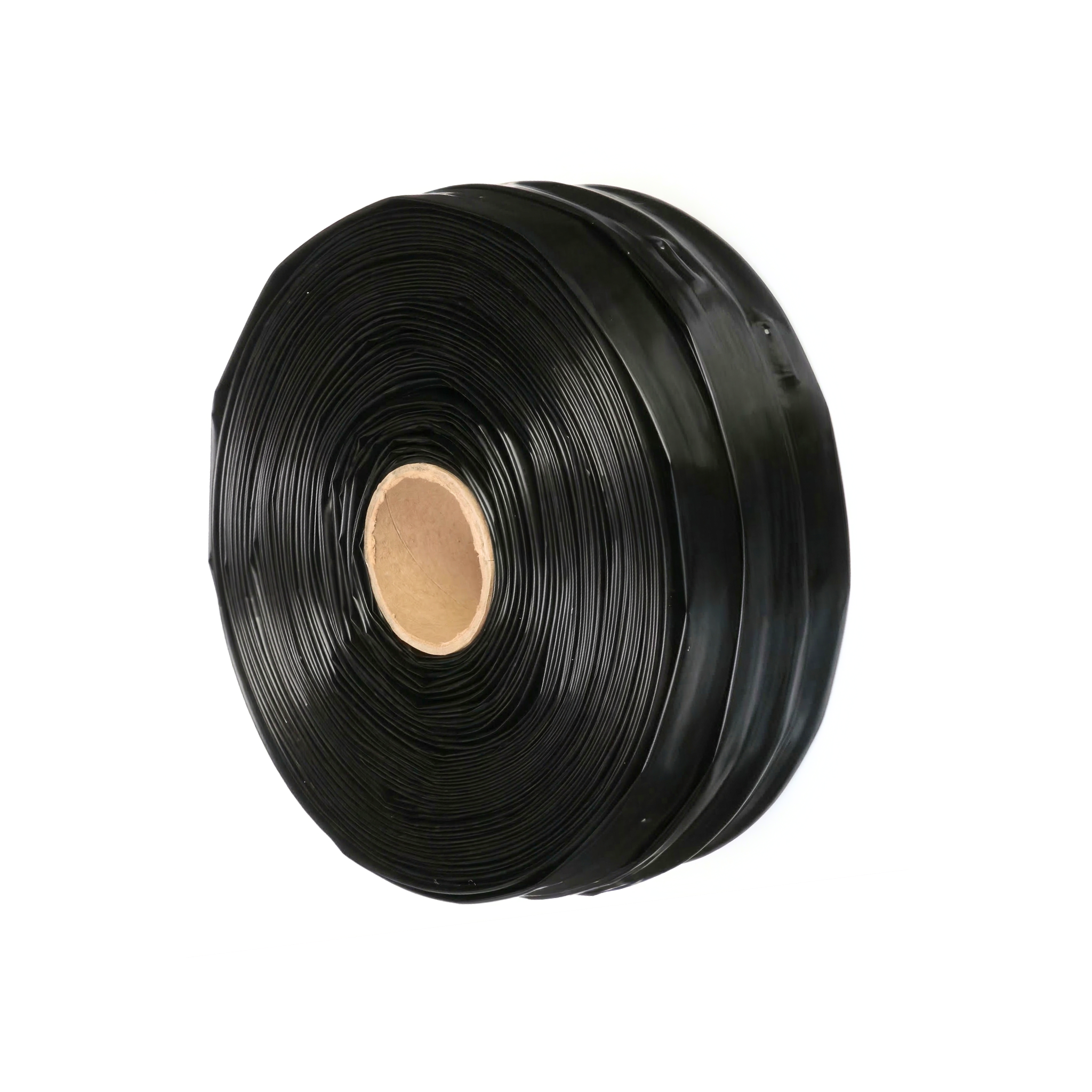
If you produce vegetables or row crops on steeply sloped plots in the direction of the line (hillsides, undulating terrain, ridges), require long lines (>100 m) that standard drip tape cannot support without losing uniformity, operate professional fertigation with short-pulse irrigation for biennial or triennial crops, or set up temporary SDI systems in perennial crops with renewal every 2-3 years, the GARDESE 240 gauge pressure-compensating drip tape with integrated PC, ND, and AS technologies is the calibrated tool for these scenarios. This guide explains how to leverage the PC operating range on sloped plots, how to size long lines that standard tape cannot support, how to choose between 20 cm and 30 cm spacing, and how to manage the 2-3 season cycle of the 240 gauge tape.
The pressure-compensating tape is the intermediate choice in the family: it takes advantage of pressure compensation for sloped plots without the extra cost of heavy wall tubing, with an intermediate lifespan of 2-3 seasons. For annual vegetables on flat ground where the extra cost of PC is not justified, the correct choice is the standard 120 gauge drip tape. For perennial fruit trees on slopes or permanent SDI that will be irrigated for years, upgrade to the heavy wall pressure-compensating tubing. For perennial fruit trees on flat ground where PC does not add value, the standard heavy wall tubing completes the four-product matrix.
Product Specifications
The pressure-compensating tape is offered in two emitter spacings (20 and 30 cm), both with a 16 mm diameter and 240 gauge thickness, in a 500 m roll. The following table shows the full technical specifications for both variants:
| Specification | 20 cm between emitters | 30 cm between emitters |
|---|---|---|
| SKU | 213457 | 234512 |
| Material | Flat LDPE | Flat LDPE |
| Diameter and thickness | 16 mm × 0.6 mm (240 gauge) | 16 mm × 0.6 mm (240 gauge) |
| Emitter type | Integrated PC with silicone diaphragm, AS and ND | Integrated PC with silicone diaphragm, AS and ND |
| Flow rate per emitter | 1.6 L/h (0.42 gal/h) | 1.6 L/h (0.42 gal/h) |
| Flow rate per meter | ~8 L/h (5 emitters/m) | ~5.3 L/h (3.3 emitters/m) |
| Labyrinth | Wide passage with dynamic self-cleaning | Wide passage with dynamic self-cleaning |
| Anti-siphon (AS) | Yes (suitable for temporary SDI) | Yes (suitable for temporary SDI) |
| Anti-drain (ND) | Yes (suitable for pulse irrigation) | Yes (suitable for pulse irrigation) |
| PC pressure range | ~0.5-2.5 bar (7-36 psi) | ~0.5-2.5 bar (7-36 psi) |
| Packaging | 500 m roll | 500 m roll |
| Lifespan | 2-3 agricultural seasons | 2-3 agricultural seasons |
| Typical crops | Lettuce, strawberry, herbs on slopes | Tomato, bell pepper, potato, melon on slopes |
PC tape is the choice when the extra cost of heavy wall PC tubing is NOT justified (biennial or triennial project, not permanent) BUT pressure compensation is needed due to elevation changes or long lines. 240 gauge vs. 120 gauge for flat tape: twice the thickness gives it 2-3 seasons instead of one. 240 gauge vs. 4000 gauge for tubing: one-sixth the thickness gives it a shorter lifespan but a significantly lower price per meter. The economic logic is the crop duration: biennial or triennial with elevation changes, PC tape; permanent with elevation changes, PC tubing.
Step-by-step guide to using it
The following procedure covers the PC tape cycle: sizing by leveraging the operating range, laying it on sloped plots, operating with pulse irrigation, and scheduled removal after 2-3 seasons.
Selecting the correct product in the matrix
Before buying PC tape, confirm it is the correct product: if the terrain is flat and the cycle is annual, save with 120 gauge standard drip tape; if the terrain has elevation changes and the crop is perennial (fruit trees that will be irrigated for years), upgrade to heavy wall PC tubing which lasts several years; if there are significant elevation changes but the crop is biennial, triennial, or requires system rotation with harvesting (potatoes, rotating vegetables, red berries in a periodically renewed system), the 240 gauge PC tape is the efficient choice. The correct choice within the matrix is what separates an optimized investment from an unreturned overspend or underinvestment with insufficient uniformity.
Sizing by leveraging the PC operating range
The PC operating range allows for significantly longer lines than standard flat tape (which on flat ground only supports 80-120 m while maintaining uniformity). With PC tape, on flat ground, lines can reach 180-220 m, and on plots with cumulative elevation changes of up to 10-15 m, lines up to 120-180 m maintain practically uniform flow between ends. Always verify that the pressure at the MOST UNFAVORABLE emitter (last emitter of the highest or furthest line) remains above 0.5 bar and that the pressure at the MOST FAVORABLE emitter (first emitter of the header) does not exceed 2.5 bar. Above that range, the PC stops compensating and flow becomes dispersed again. Standard filtration head: primary sand/disc filter + secondary 130 mesh screen filter, required as in any drip system.
Laying on sloped plots or long lines
Deploy the tape lengthwise along the crop row, with the emitters facing UP (the manufacturing folds indicate the correct orientation). On slopes, orient the lines along the contour when possible — this reduces the cumulative elevation change of each line and simplifies sizing. If the line must go on a slope, the PC compensates as long as the cumulative elevation change remains within the operating range. For temporary SDI in biennial crops, bury the PC tape at a moderate depth (8-15 cm below the effective root zone): the typical depth for permanent SDI with heavy wall PC tubing (15-25 cm) is excessive for 240 gauge tape that will be renewed every 2-3 seasons. Connect with a specific tape connector; do not improvise with round hose connectors that do not seal well on flat tape.
For plots with steep slopes in the direction of the line (>3% gradient), ALWAYS calculate the maximum viable PC line length for your specific slope and flow rate using agronomic design software (CropWat, IRRICAD, EPANET or similar) or the manufacturer's table. The rule of thumb "more or less 200 m" that works for flat terrain can leave plants at higher elevations outside the PC's operating range on a 5-7% slope, resulting in the paradoxical outcome of paying for PC tape and getting dispersed flow like flat tape. The minimal investment in prior agronomic calculation before purchasing the roll (professional advice or free software) costs a fraction of the cost of reinstalling the system with additional sectorization when you discover the limitation mid-season. For flat plots with long lines, the limitation comes from pressure loss due to length plus header pressure: the calculation is significantly simpler and can be solved with the manufacturer's table.
Operation with pulse irrigation and PC verification
Before closing the end-of-lines, open the manifold and purge for 5-10 minutes through the open ends. Then, close the ends with specific flat tape plugs. Verify the PC's operation by measuring actual flow rate during sampling: take samples at the first dripper of the manifold, in the middle of the line, and at the last dripper of the highest or furthest line. All three should deliver practically equal flow; if one end delivers significantly less or more, there is over or under-pressure outside the operational range, and you must adjust the manifold or sectorize. The ND function enables short pulse irrigation (15-30 minutes every 2-4 hours) which optimizes root absorption, reducing deep percolation losses. For fertigation, inject the nutrient solution using a venturi or dosing pump after the filter and before the laterals; wash with clear water for 5-10 minutes after each fertigation to prevent salt precipitation in the drippers.
Scheduled replacement in 2-3 seasons
240-gauge drip tape is sized for 2-3 agricultural seasons. At the end of the first season's crop cycle, depressurize and flush the line with 1-2% nitric acid to preserve the system in good condition for the next season. Visually inspect and sample flow before proceeding to the second season: if the dispersion between points rises above 10-15% of the nominal flow rate, there is significant degradation of the PC, and replacement should be scheduled. At the end of the second or third season (depending on the system's condition), remove the tape as 120-gauge tape is removed at the end of its single season. For permanent use that justifies a longer lifespan, move away from 240-gauge tape and consider the 4000-gauge heavy wall PC hose, which lasts for several years.
Do not confuse 240-gauge (PC tape) with 4000-gauge (PC hose) or consider them interchangeable: 240-gauge is sized for 2-3 seasons, NOT for permanent use in perennial fruit trees. Installing PC tape in a perennial plantation (mango, avocado, citrus) means replacing the system every 2-3 years with accumulated reinstallation labor costs, while 4000-gauge heavy wall PC hose lasts for several years with a single layout. Conversely, installing PC hose in a biannual vegetable crop is an unreturned overcost: 4000-gauge is not utilized in a crop that will be rotated before the 240-gauge becomes fragile. The simple rule: system lifespan should match crop duration; over or under-sizing the choice between 240-gauge tape and 4000-gauge hose is a waste of investment in either direction.
Flat tape, PC tape, standard hose or PC hose?
The choice between the four products depends on the combination of slope and crop duration: flat terrain + annual cycle = flat tape; flat terrain + multi-season = standard hose; sloped terrain + biannual or triannual cycle = PC tape; sloped terrain + perennial crop = PC hose. Ask the assistant with your plot, and we will guide you to the correct choice without over or under-sizing the investment.
Complementary products
To complement the pressure-compensating tape in sloped plots with biannual cycles, the following products cover the most common adjacent needs:
The standard 120-gauge flat drip tape is the more economical sister choice for annual vegetables on flat ground where the PC's extra cost is not justified. The heavy wall pressure-compensating hose is the choice when the crop is perennial (fruit trees, permanent plantations) and the system will remain installed for years with a pronounced slope or permanent SDI. The standard heavy wall hose is the choice for fruit trees on flat ground where duration requires 4000-gauge but the slope does not require PC. Expanded perlite is the complementary amendment to improve soil drainage and aeration in horticultural crops with intensive drip irrigation systems where the substrate is a limiting factor.
Maintenance and care
During each season, maintenance focuses effort on the filtration head (wash or replace filters according to schedule), inspection of the PC by measuring flow rate in sampling (dispersion greater than 7% nominal indicates diaphragm degradation or pressure outside range), preventive cleaning with 1-2% nitric acid quarterly or according to water quality, and punctual repairs for breaks with straight connectors and specific connectors for flat tape. Between seasons (in crops with rest between plantings), drain the line and apply deep cleaning with nitric acid to preserve the PC for the next season.
The silicone diaphragm of the PC in 240-gauge tape has an intermediate lifespan between flat tape without PC (which lacks a diaphragm) and 4000-gauge heavy wall PC hose (which has a more robust diaphragm). Maintaining cleaning concentrations within the recommended range (1-2% nitric acid, no higher) and verifying that the operating pressure remains within the PC range are the actions with the greatest impact on the system's service seasons. After the second or third season, schedule the removal of the roll and replacement with new PC tape (if the crop continues) or transition to heavy wall PC hose (if the system is to be made permanent).
Frequently Asked Questions (FAQ)
When to choose PC tape instead of PC hose?
PC tape when the crop duration is biannual or triannual (horticultural cycles in rotation, berry crops with periodic system renewal, potatoes with annual harvest and frame rotation) and the extra cost of 4000-gauge heavy wall PC hose is not amortized by the effective system duration. PC hose when the crop is permanent (perennial fruit trees, citrus, mango, avocado) and the system will be installed for years, where the 4000-gauge is fully utilized and reinstallation every 2-3 seasons with PC tape would be unnecessary accumulated labor cost. The simple rule: if the system needs to last more than 3-4 years, PC hose; if it will be renewed sooner, PC tape.
Real lifespan in Caribbean climate?
With professional management—correct manifold filtration, pressure within the PC range, quarterly nitric acid cleaning, indoor storage of the roll prior to installation—the 240-gauge tape offers 2-3 full agricultural seasons in the Caribbean climate. Without these cares, the lifespan drops to one season or less due to two combined effects: continuous UV radiation in the Caribbean embrittles the LDPE even with additives, and drippers with accumulated sedimentation progressively lose PC because the diaphragm does not move correctly. Combining PC tape with black plastic mulching significantly multiplies the available lifespan by protecting the tape from direct UV radiation, just as with standard flat tape.
Is it suitable for buried SDI?
Yes, PC tape can be installed buried (SDI) in biannual or triannual crops with limitations: the typical depth of permanent SDI with heavy wall PC hose (15-25 cm) is excessive for 240-gauge tape, which would be buried at a moderate depth (8-15 cm below the effective root zone) so that inspection and replacement every 2-3 seasons are viable without deep excavation. PC tape has AS and ND mechanisms like PC hose, so soil suction when turning off the system is controlled, but 240-gauge is more vulnerable to breaks from soil pressure and root growth than the 4000-gauge of the hose. For permanent SDI with a horizon of several years, the correct choice remains the heavy wall PC hose; PC tape in SDI is a solution for crops with a system lifespan aligned with the 2-3 seasons of the tape.